

Bacillus amyloliquefaciens with growth promotion and disease resistance effects and application thereof
A technology of amyloliquefaciens and bacillus, applied in the field of microorganisms, can solve the problems of unstable biocontrol effect, poor field colonization ability, poor comprehensive disease prevention effect, etc., so as to reduce the probability of disease occurrence, good colonization effect, good The effect of biocontrol
Patent Information
- Authority / Receiving Office
- CN · China
- Patent Type
- Applications(China)
- Current Assignee / Owner
- Publication Date
- 2019-09-06
Smart Images
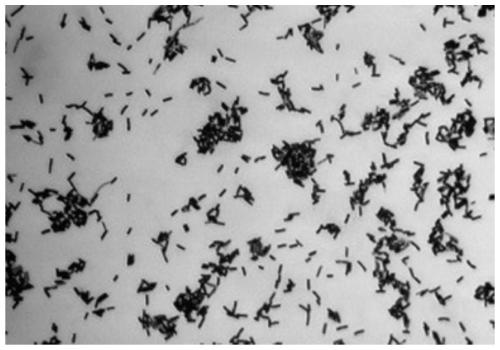
Figure 1 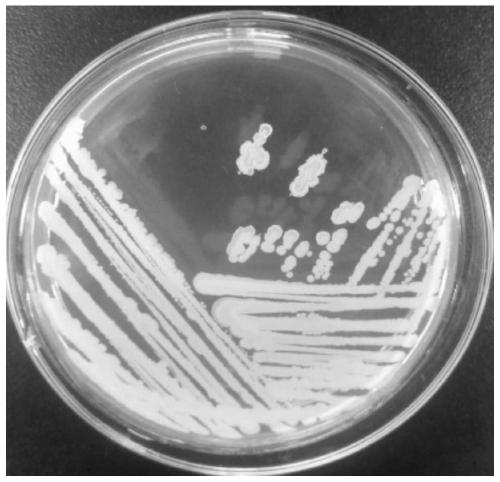
Figure 2 
Figure 3
Abstract
Description
Technical field
[0001] The present disclosure relates to the field of microbial technology, in particular to a Bacillus amyloliquefaciens 44 with growth-promoting and disease-resistant effects and its growth-promoting and disease-resistant applications. Background technique
[0002] Disclosure of the background information is only intended to increase the understanding of the overall background of the present disclosure, and is not necessarily regarded as an acknowledgement or in any form suggesting that the information constitutes the prior art known to those of ordinary skill in the art.
[0003] Plant roots have the functions of absorbing, synthesizing, transporting water and fixing nutrients, and can directly use mineral nutrients in the external environment. Some plant roots can also store nutrients and reproduce. Enhancing the root vitality of plants is beneficial to accelerating the photosynthesis of the above-ground parts of plants and accelerating the metabolism of crops, ...
Examples
Embodiment 1
[0055] 1. Screening and purification of strains
[0056] Collect soil samples from Ningyang County, Shandong Province, weigh 1g of the sample into 100ml sterile water, shake culture in a 30°C incubator for 5-7 days, and perform 10 5 -10 6 Multiple dilutions, the dilutions were spread on a plate containing 2% agar-containing NA solid medium, and incubated at 30°C overnight. The strains were isolated and purified from the plates on which the colonies grew, and stored in NA slant medium.
[0057] Two, strain identification
[0058] Observe the characteristics of the purified strain under the microscope ( figure 1 , figure 2 ): Bacterial straight rod with a size of 0.6×1.0-1.4μm, with rounded ends, grouped individually or in pairs to form endospores; spores are oval in shape, with a central or sub-apical location; sporangia are not swollen. After 48 hours of culture, the colony is smooth, opaque, irregular, gray, with a diameter of 2-4mm, with tooth-like edges and flat contours, slight...