
Antimicrobial peptide s2 targeting Staphylococcus aureus and its preparation method and application
A technology for Staphylococcus and Staphylococcus infection, which is applied in the field of targeting Staphylococcus aureus antimicrobial peptide S2 and its preparation, which can solve the problem of no further new drug resistance and achieve high targeting, high application value, and high cellularity. selective effect
Patent Information
- Authority / Receiving Office
- CN · China
- Patent Type
- Patents(China)
- Current Assignee / Owner
- Publication Date
- 2021-04-02
Smart Images
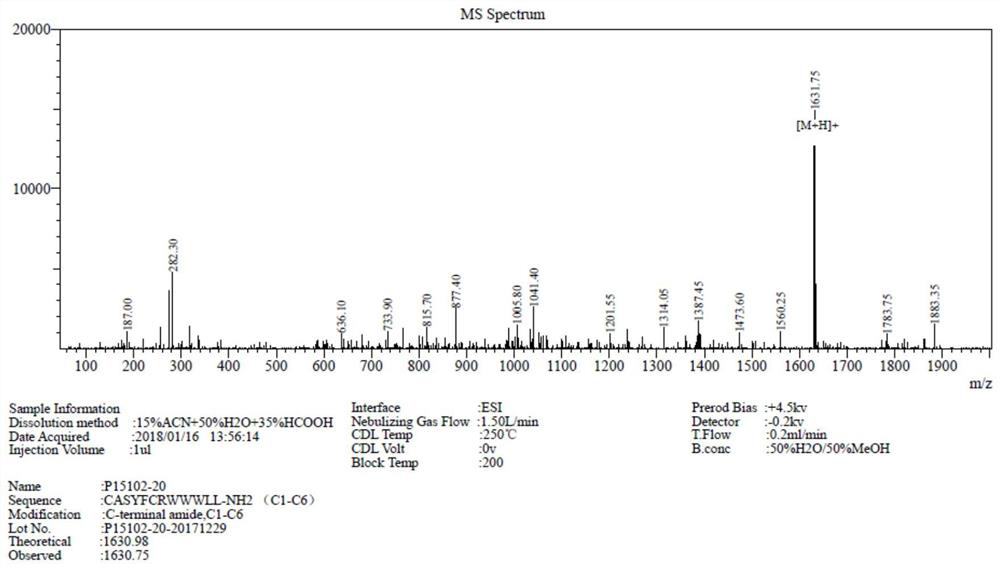
Figure 1 
Figure 2 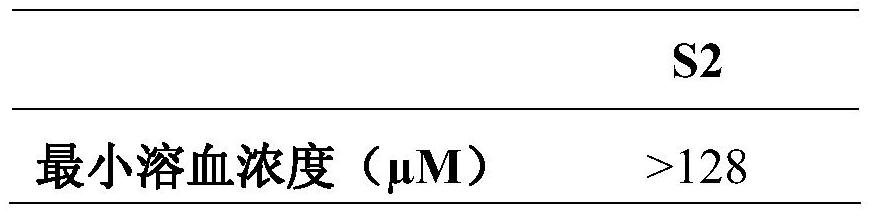
Figure 3
Abstract
Description
technical field
[0001] The invention relates to the field of biotechnology, in particular to a antimicrobial peptide S2 targeting Staphylococcus aureus and its preparation method and application. Background technique
[0002] Methicillin-resistant Staphylococcus aureus is a major cause of nosocomial infections worldwide, causing everything from local skin infections to systemic sepsis. As the last line of defense of Staphylococcus aureus, vancomycin has also emerged drug-resistant strains in recent years, making the treatment of vancomycin more and more ineffective.
[0003] Naturally occurring antimicrobial peptides (AMPs) with positively charged and hydrophobic amino acids are endogenous defense molecules of organisms. During the emergence of multidrug-resistant bacteria, antimicrobial peptides can not only kill bacteria, fungi, viruses, parasites, etc., but also have the ability to heal wounds, neutralize endotoxins, resist biofilms, and relieve septic shock. Therefore,...
Examples
Embodiment 1
[0015] Design of Antimicrobial Peptides
[0016] Firstly, the disulfide bond formed by cysteine is used to replace the thiolactone bond in the self-inducing polypeptide secreted by Staphylococcus. Amino acid design active short peptide, its sequence is RWWWLL, and connect the two.
[0017] Table 1 Amino Acid Sequence of Derived Peptides
[0018]
[0019] The charge numbers of S2 are +2 respectively. The S2 carboxyl terminus is amidated to increase a positive charge and increase the stability of the peptide. The method not only improves the selective killing activity of the antimicrobial peptide on different bacteria, but also reduces the hemolytic activity and cytotoxicity of the antimicrobial peptide. And it does not produce killing activity on beneficial bacteria, which improves its development potential as an antibiotic substitute.
Embodiment 2
[0021] Synthesis of Antimicrobial Peptide S2 by Solid Phase Chemical Synthesis
[0022] 1. The preparation of antimicrobial peptides is carried out one by one from the C-terminal to the N-terminal, and is completed by a peptide synthesizer. First, Fmoc-X (X is the first amino acid at the C-terminal of each antimicrobial peptide) is inserted into Wang resin, and then the Fmoc group is removed to obtain X-Wang resin; then Fmoc-Y-Trt-OH (9 -Fmoxy-trimethyl-Y, Y is the second amino acid at the C-terminus of each antimicrobial peptide); according to this procedure, it is synthesized from the C-terminus to the N-terminus until the synthesis is completed, and the side of the Fmoc group is removed chain protection resin;
[0023] 2. Add a cleavage reagent to the peptide resin obtained above, react for 2 hours at 20°C in the dark, filter; wash the precipitate with TFA (trifluoroacetic acid), mix the washing liquid with the above filtrate, concentrate with a rotary evaporator, and then...
Embodiment 3
[0027] Determination of antimicrobial activity of antimicrobial peptides
[0028] 1. Determination of antibacterial activity: the minimum inhibitory concentration of antimicrobial peptides was determined by micro broth dilution method. Using 0.01% acetic acid (containing 0.2% BSA) as the diluent, the peptide solution was sequentially diluted using the serial doubling dilution method. Take 50 μL of the above solution and place it in a 96-well cell culture plate, then add an equal volume of the bacteria solution to be tested (~10 5 individual / mL) in each well. Positive controls (containing bacterial fluid but not antimicrobial peptides) and negative controls (neither bacterial fluid nor peptides) were set up. Incubate at a constant temperature of 37°C for 24 hours, and the minimum inhibitory concentration is the one where no turbidity is seen at the bottom of the well with the naked eye. The test results are shown in Table 2.
[0029] Antibacterial activity of table 2 antimi...