
Method for preparing BiOCl with adjustable thickness at room temperature
Patent Information
- Authority / Receiving Office
- CN · China
- Current Assignee / Owner
- Publication Date
- 2020-01-10
- Estimated Expiration
- Not applicable · inactive patent
Smart Images
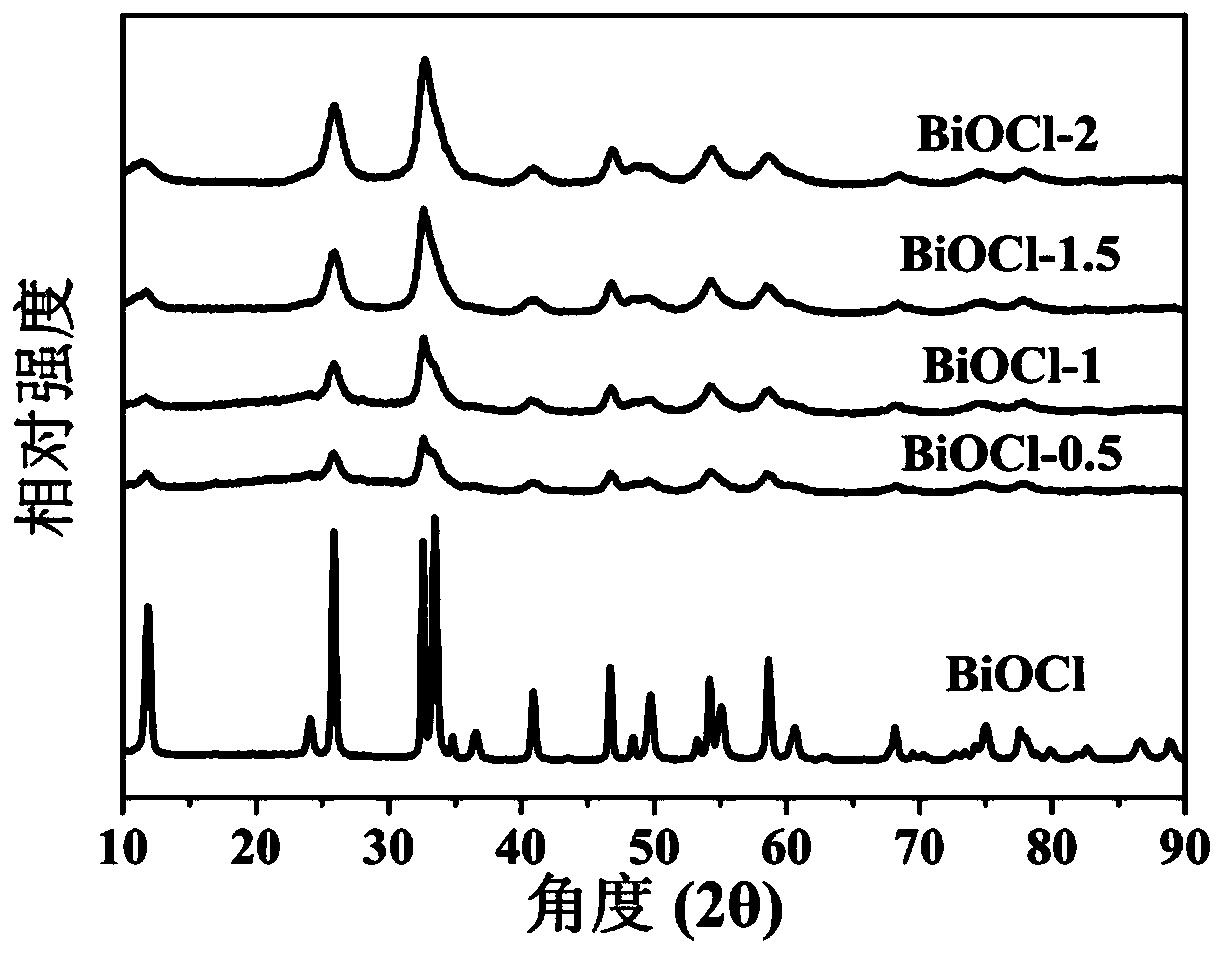
Figure 1 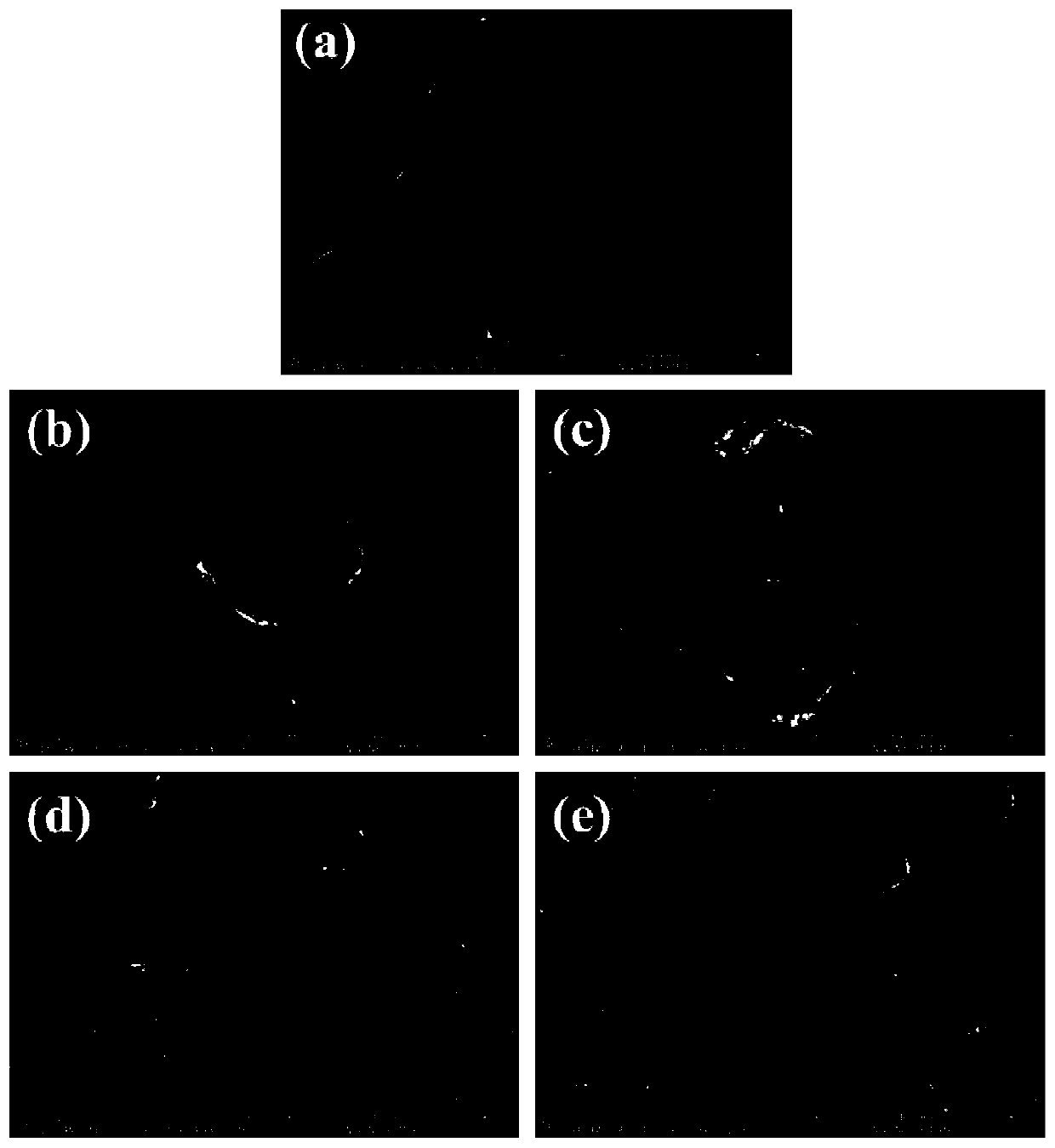
Figure 2 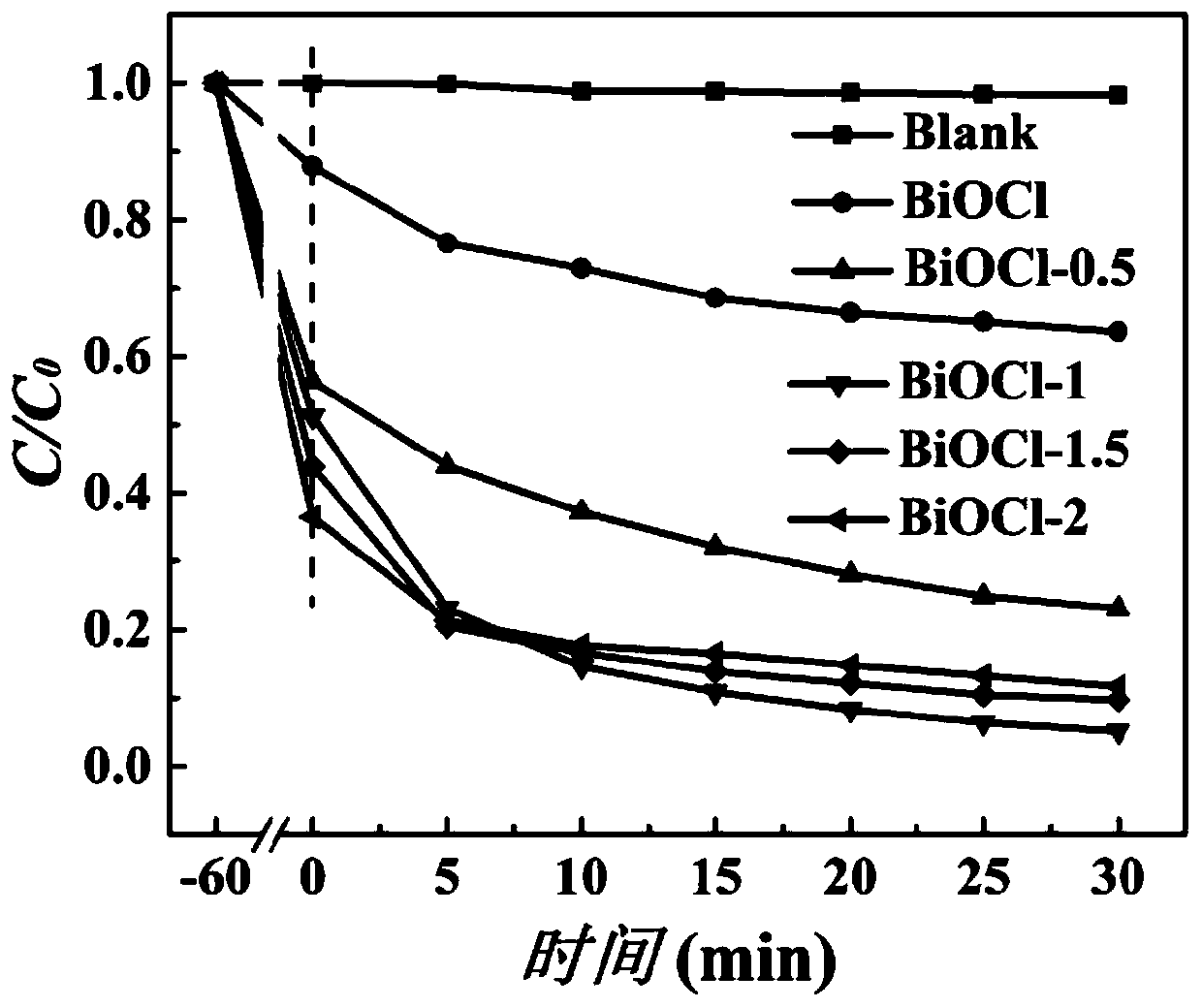
Figure 3
Abstract
Description
technical field
[0001] The invention belongs to the technical field of photocatalytic semiconductor material preparation, and in particular relates to a method for preparing BiOCl with adjustable thickness at room temperature. Background technique
[0002] The increase in microbial resistance and antibiotic resistance due to the presence of antibiotics in natural waters is of great concern. Many antibiotics detected in aquatic environments, even at varying concentrations, can cause antibiotic resistance and have adverse effects on aquatic wildlife, ecosystems, and human health. Tetracycline belongs to tetracyclic antibiotics. This kind of antibiotic drug is named after the common hydrogenated tetraphenyl ring in its molecular structure. It belongs to broad-spectrum antibiotics. Chlamydia, mycoplasma and protozoa all have inhibitory effect. Tetracycline is the antibiotic with the largest production and clinical use in the livestock and poultry industry. It is continuously d...
Examples
Embodiment 1
[0030] 1) Preparation of BiOCl monomer
[0031] First, 0.97 g of Bi(NO 3 ) 3 ·5H 2 O was added to 60 mL of aqueous solution and stirred for another 20 minutes. Then 10 mL of 1 mol / L hydrochloric acid solution was added. After stirring for 30 minutes, the precipitate was collected, washed repeatedly with ultrapure water and ethanol, and dried at 60°C to obtain BiOCl nanosheets, which were used for subsequent blank experiments.
[0032] 2) Preparation of BiCOl photocatalyst with adjustable thickness
[0033] Disperse 0.5, 1, 1.5, 2g (molar ratio 1:50-300) of mannitol respectively in 60mL of ultrapure water, stir well to dissolve, then add 0.97g of Bi(NO 3 ) 3 ·5H 2 O was added therein respectively, and after stirring for 20 minutes, 10 mL of 1 mol / L hydrochloric acid solution was added respectively. After stirring for 30 minutes, the obtained precipitate was centrifuged, washed repeatedly with ultrapure water and ethanol, and dried at 80°C to obtain BiOCl- 0.5, BiOCl-1, ...
Embodiment 2
[0038] 1) Preparation of BiOCl monomer
[0039] First, 0.97 g of Bi(NO 3 ) 3 ·5H 2 O was added to 60 mL of aqueous solution and stirred for another 20 minutes. Then 10 mL of 1 mol / L sodium chloride solution will be added. After stirring for 30 minutes, the precipitate was collected, washed repeatedly with ultrapure water and ethanol, and dried at 60°C to obtain BiOCl nanosheets, which were used for subsequent blank experiments.
[0040] 2) Preparation of BiCOl photocatalyst with adjustable thickness
[0041] Disperse 0.5, 1, 1.5, and 2 g of mannitol in 60 mL of ultrapure water, and stir to dissolve them, then add 0.97 g of Bi(NO 3 ) 3 ·5H 2 O was added therein respectively, after stirring for 20 minutes, 10 mL of 1 mol / L sodium chloride solution was added respectively, after stirring for 30 minutes, the precipitate obtained was centrifuged, washed repeatedly with ultrapure water and ethanol, and dried at 80°C to obtain BiOCl-0.5, BiOCl-1, BiOCl-1.5, BiOCl-2 nanosheets....
Embodiment 3
[0043] 1) Preparation of BiOCl monomer
[0044] First, 0.97 g of Bi(NO 3 ) 3 ·5H 2 O was added to 60 mL of aqueous solution and stirred for another 20 minutes. Then 10 mL of 1 mol / L potassium chloride solution will be added. After stirring for 30 minutes, the precipitate was collected, washed repeatedly with ultrapure water and ethanol, and dried at 60°C to obtain BiOCl nanosheets, which were used for subsequent blank experiments.
[0045] 2) Preparation of BiCOl photocatalyst with adjustable thickness
[0046] Disperse 0.5, 1, 1.5, and 2 g of mannitol in 60 mL of ultrapure water, and stir to dissolve them, then add 0.97 g of Bi(NO 3 ) 3 ·5H 2 O was added therein respectively, after stirring for 20 minutes, 10 mL of 1 mol / L potassium chloride solution was added respectively, after stirring for 30 minutes, the obtained precipitate was centrifuged, washed repeatedly with ultrapure water and ethanol, and dried at 80°C to obtain BiOCl-0.5, BiOCl-1, BiOCl-1.5, BiOCl-2 nanos...