
Nickel boride/boron-doped porous carbon material and preparation thereof, and application in lithium-sulfur battery
A technology of porous carbon materials and lithium-sulfur batteries, applied in the direction of lithium batteries, battery electrodes, non-aqueous electrolyte batteries, etc., can solve the problem of weak adhesion between catalytic materials and carbon substrate materials, difficulty in exerting the catalytic performance of materials, and difficulties in industrial application and other problems, to achieve excellent capacity, excellent rate, excellent adsorption effect
Patent Information
- Authority / Receiving Office
- CN · China
- Current Assignee / Owner
- Publication Date
- 2020-05-29
Smart Images
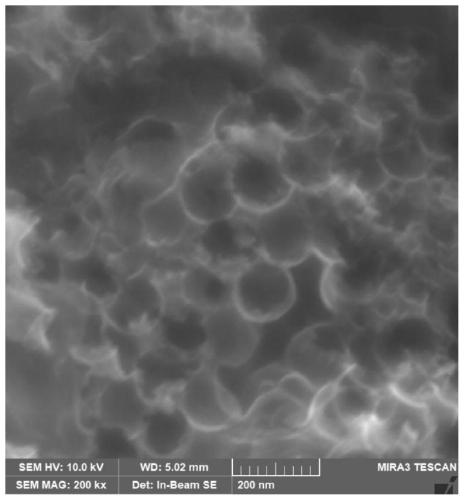
Figure 1 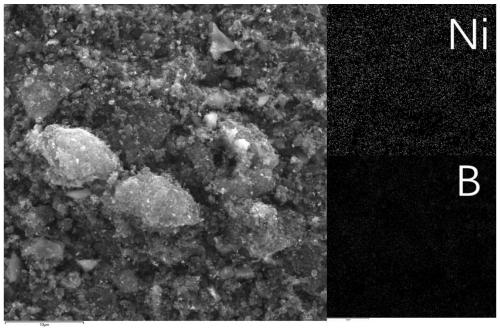
Figure 2 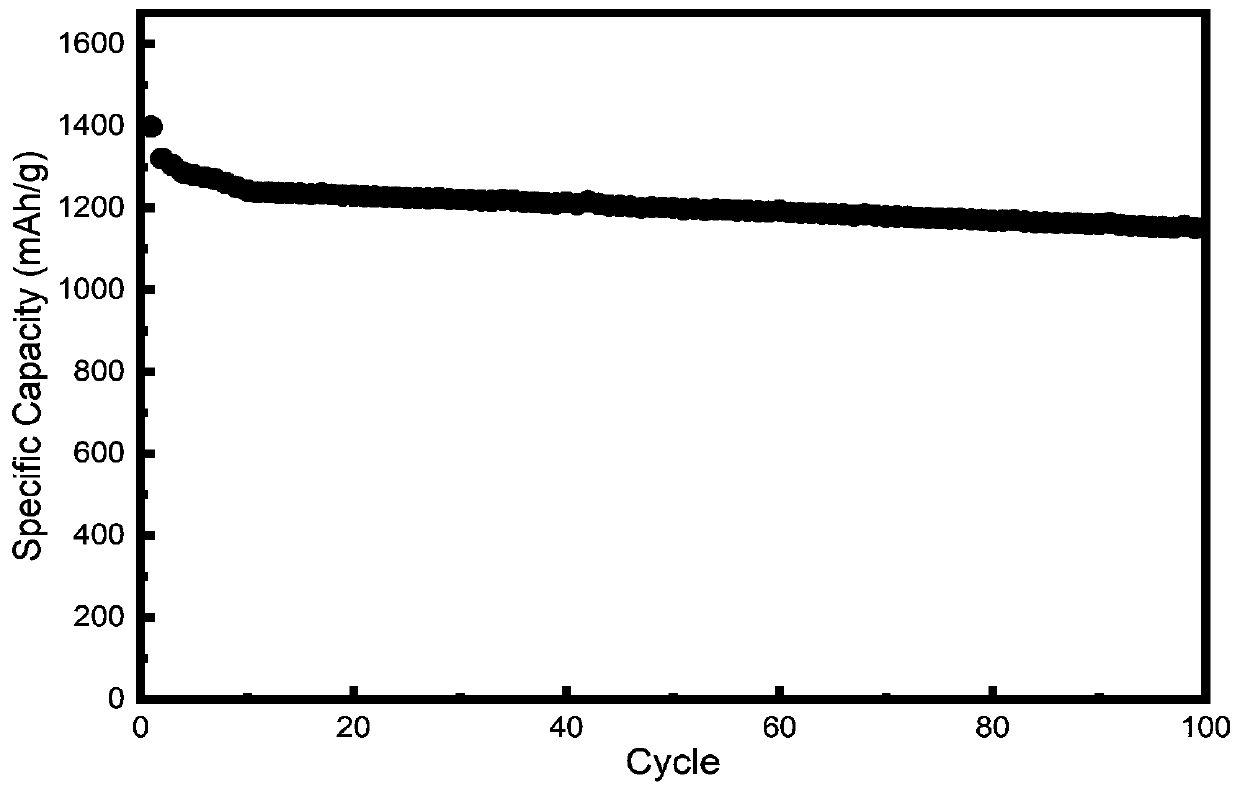
Figure 3
Abstract
Description
technical field
[0001] The invention relates to the field of battery electrode material preparation, in particular to a lithium-sulfur battery cathode material. Background technique
[0002] Lithium-sulfur batteries have outstanding advantages such as high theoretical energy density and low cost, and have unique advantages in achieving the "long-term research goal of high specific energy and long-life power batteries". However, problems such as the insulation of elemental sulfur, the shuttle effect of soluble lithium polysulfide, the polarization effect of the sulfur electrode and the volume expansion and contraction effect lead to low sulfur utilization, limited power density and short cycle life of the battery have become its practical application. bottleneck. Although the theoretical energy density of lithium-sulfur batteries is high, there is a large gap between the actual value and the theoretical value, and the rate performance is limited and the cycle life is short. ...
Examples
Embodiment 1
[0076] 5 kg of tapioca starch, 5 kg of 100nm SiO 2 Add the template dispersion, 40 grams of nickel acetate and 50 grams of sodium dodecylsulfonate into 10L of deionized water, stir at 80°C for 5 hours, dry the slurry at 120°C, and pulverize the dried slurry Finally, carbonize in a carbonization furnace at 1200°C for three hours under an argon atmosphere; the carbonized product is washed off SiO with 5M sodium hydroxide solution at a temperature of 100°C 2 template; use deionized water to wash repeatedly until the pH of the washing solution is neutral, and dry in the air for three days to oxidize the nickel atoms on the surface of the carbon material, and then add a newly prepared sodium borohydride solution (concentration of 0.2M , the solid-to-liquid ratio is 1:10), after stirring and reacting for three hours, filter and dry to obtain a localized graphitized boron-doped porous carbon material with rich pore structure and in-situ growth of nickel boride particles on the surfac...
Embodiment 2
[0079] Compared with Example 1, the difference mainly lies in increasing the consumption of nickel source, specifically:
[0080] 5 kg of tapioca starch, 5 kg of 100nm SiO 2 Add the template dispersion, 400 grams of nickel acetate and 50 grams of sodium dodecylsulfonate into 10L of deionized water, stir at 80°C for 5 hours, dry the slurry at 120°C, and pulverize the dried slurry Finally, carbonize in a carbonization furnace at 1200°C for three hours under an argon atmosphere; the carbonized product is washed off SiO with 5M sodium hydroxide solution at a temperature of 100°C 2 template; use deionized water to wash repeatedly until the pH of the washing solution is neutral, and dry in the air for three days to oxidize the nickel atoms on the surface of the carbon material, and then add a newly prepared sodium borohydride solution (concentration of 0.2M , the solid-to-liquid ratio is 1:10), after stirring and reacting for three hours, filter and dry to obtain a localized graphi...
Embodiment 3
[0083] Compared with Example 1, the only difference is that the carbonization temperature is 800°C, specifically:
[0084] 5 kg of tapioca starch, 5 kg of 100nm SiO 2 Add the template dispersion, 40 grams of nickel acetate and 50 grams of sodium dodecylsulfonate into 10L of deionized water, stir at 80°C for 5 hours, dry the slurry at 120°C, and pulverize the dried slurry Finally, carbonize in a carbonization furnace at 800°C for three hours under an argon atmosphere; the carbonized product is washed off SiO with 5M sodium hydroxide solution at a temperature of 100°C. 2 template; use deionized water to wash repeatedly until the pH of the washing solution is neutral, and dry in the air for three days to oxidize the nickel atoms on the surface of the carbon material, and then add a newly prepared sodium borohydride solution (concentration of 0.2M , the solid-to-liquid ratio is 1:10), after stirring and reacting for three hours, filter and dry to obtain a localized graphitized bo...