
Organic small-molecule semiconductor material containing rhodanine condensed (similar) isatin as well as preparation method and application of organic small-molecule semiconductor material
A rhodanine and small molecule technology, which is applied in the field of organic small molecule semiconductor materials containing rhodanine fused isatin and its preparation, can solve problems such as poor stability, achieve enhanced stability, simple preparation method, and molecular structure novel effects
Patent Information
- Authority / Receiving Office
- CN · China
- Patent Type
- Applications(China)
- Current Assignee / Owner
- Publication Date
- 2020-06-30
Smart Images
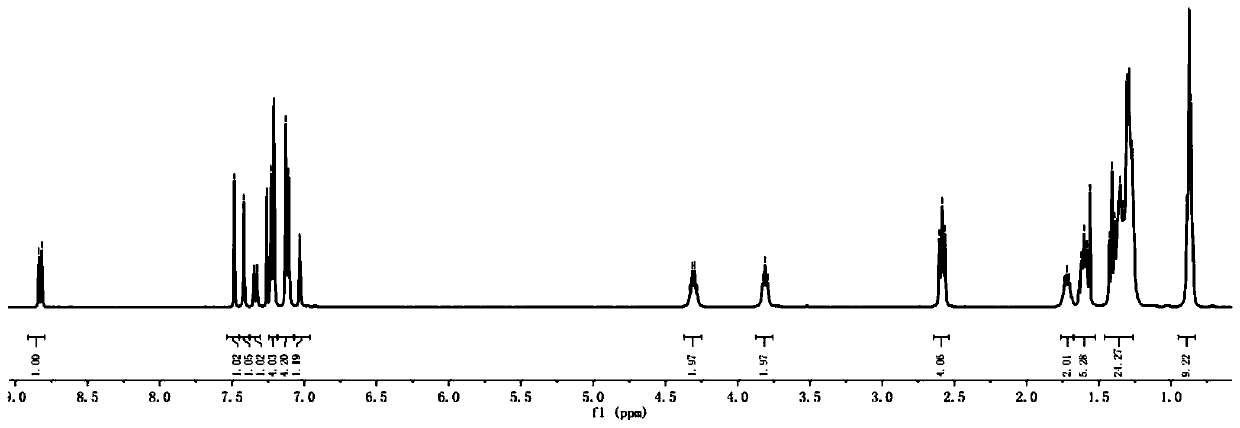
Figure 1 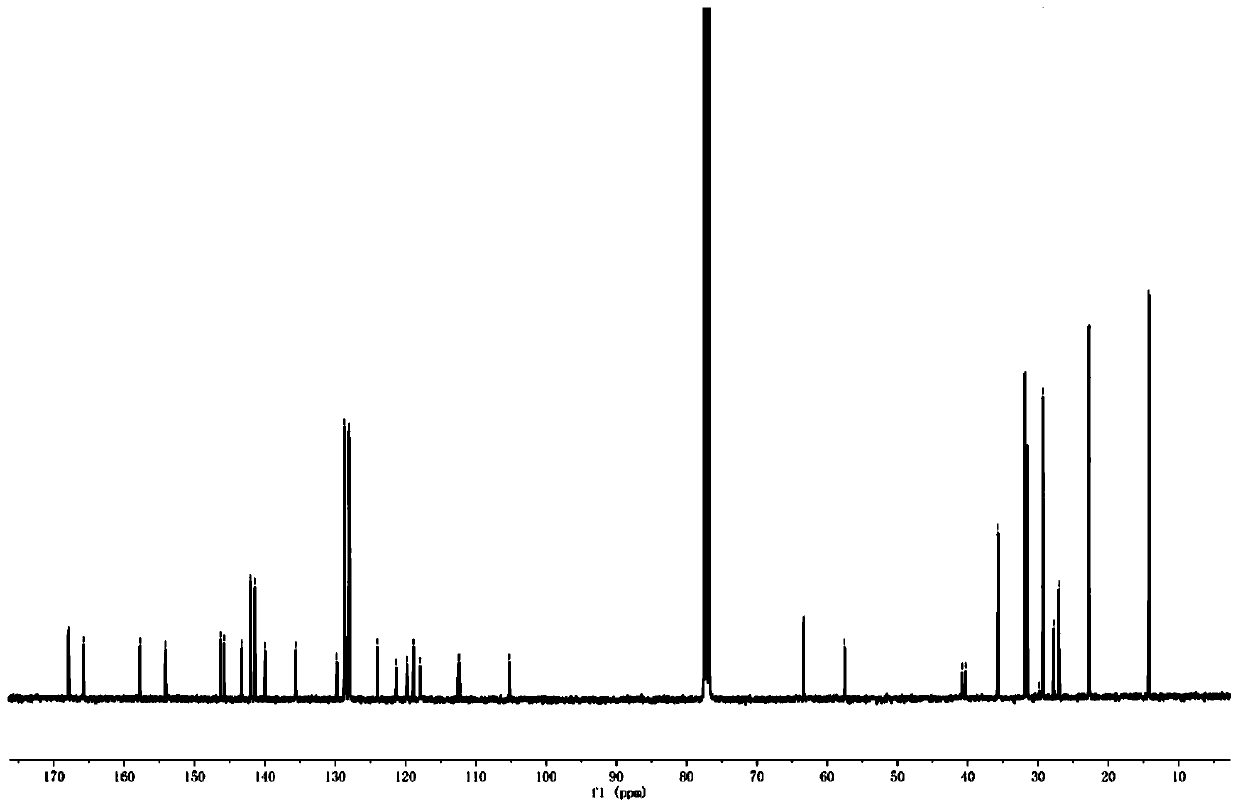
Figure 2 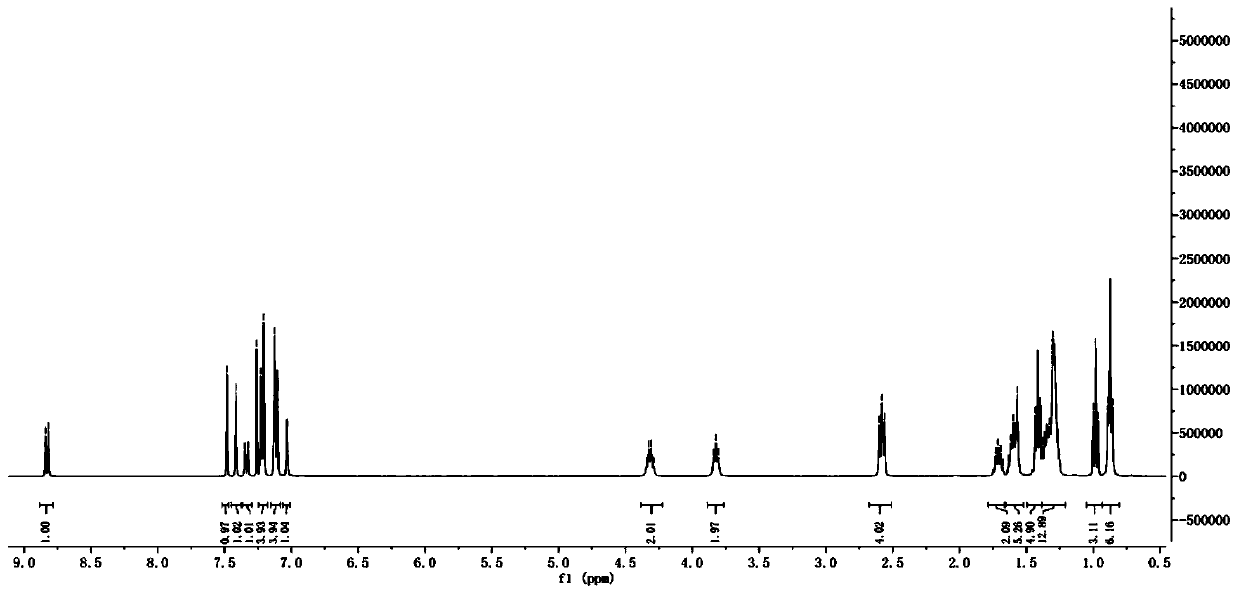
Figure 3
Abstract
Description
technical field
[0001] The invention belongs to the field of organic semiconductor materials, in particular to an organic small molecule semiconductor material containing rhodanine fused (like) isatin, a preparation method and application thereof. Background technique
[0002] A solar cell is a device that directly converts light energy into electrical energy through the photoelectric effect. Silicon solar cells that work by the photoelectric effect are the mainstream of current technology. However, the production of silicon solar cells consumes a lot of energy and causes great pollution to the environment. Therefore, it is imminent to develop new solar cell technologies. Organic solar cells use organic materials to form the core part, and also use the photoelectric effect to generate voltage and form current to achieve the effect of solar power generation. Organic solar cells are not only light in weight, but also can be prepared in a roll-to-roll method, which greatly red...
Examples
Embodiment 1
[0044] Add isatin (1equiv) and potassium carbonate (2.5equiv) to the reaction flask, add anhydrous DMF and tetrahydrofuran after ventilation, slowly add alkyl bromide to the flask, and react at 50°C after dripping overnight. After extraction with dichloromethane and water, the organic phases were combined and dried over anhydrous magnesium sulfate. After spin-drying dichloromethane, the product was separated and purified by column chromatography to obtain a yellow solid product. The H NMR and C NMR spectra of 6-bromoisatin are consistent with the literature (Li, J.-L.; Chai, Y.-F.; Wang, W.V.; Shi, Z.-F.; Xu, Z.-G .; Zhang, H.-L., Chem. Commun. 2017, 53, 5882. Luo, X.; Tran, D.T.; Kadlubowski, N.M.; ., Macromolecules, 2018, 51, 8486.)
[0045]The preparation of 6-bromo-1-methylindoline-2,3-dione, the reaction formula is as follows:
[0046]
[0047] The preparation of 6-bromo-1-butylindoline-2,3-dione, the reaction formula is as follows:
[0048]
[0049] The prepar...
Embodiment 2
[0058] Add four-p-hexylbenzene-indaprodithiophene bistin (1equiv) and 6-bromoisatin (2.5equiv) in the reaction flask, add ultra-dry toluene and catalyst Pd (PPh 3 ) 4 (5% equiv), heated to 125°C to react overnight. After cooling to room temperature, it was extracted with chloroform and water. The organic phases were combined and dried with anhydrous magnesium sulfate, evaporated to dryness and purified by column chromatography to obtain a black solid product. All the obtained compounds were verified as target products by H NMR and C NMR spectra.
[0059] When isatin is 6-bromo-1 methylindoline-2,3-dione, the reaction formula is as follows:
[0060]
[0061] When isatin is 6-bromo-1-octyl indoline-2,3-dione, the reaction formula is as follows:
[0062]
[0063] When isatin is 6-bromo-5-fluoro-1-octylindoline-2,3-dione, the reaction formula is as follows:
[0064]
[0065] When isatin is 6-bromo-5-fluoro-1-octylindoline-2,3-dione, the reaction formula is as follows...
Embodiment 3
[0072] Add the three compound intermediates (1equiv) and (alkyl) rhodanine (5equiv) obtained in Example 2 in the reaction flask, add chloroform after pumping, add a few drops of triethylamine after stirring for 5 minutes, room temperature React overnight. Extract with chloroform and water, combine the organic phases, and dry the organic phases with anhydrous magnesium sulfate. After evaporating chloroform to dryness, the product was purified by column chromatography to obtain a green solid product.
[0073]
[0074] The H NMR and C NMR spectra of compound WH7 are characterized as follows:
[0075] 1 H NMR (400MHz, CDCl 3 ,298K):8.83(s,1H),7.48(d,1H),7.41(s,1H),7.35(d,1H),7.23(d,4H),7.13(d,4H),7.03(s, 1H), 4.33(q, 2H), 3.81(t, 2H), 2.58(t, 4H), 1.72(m, 2H), 1.60(t, 4H), 1.45-1.19(m, 25H), 0.84(m ,9H). 13 C NMR (100MHz, CDCl 3 ,298K):182.18,159.05,157.80,154.20,151.91,145.52,144.59,144.04,142.17,141.24,135.61,128.70,127.96,122.23,120.08,118.07,116.23,106.06,63.37,40.37...