
Object image unequal measurement method based on multi-control-point mode
A technology of unequal images and measurement methods, which is applied in the fields of eye testing equipment, medical science, diagnosis, etc., can solve the problems of one-sided data and conclusions, patients' inability to obtain accurate disease descriptions and targeted treatment and treatment
Patent Information
- Authority / Receiving Office
- CN · China
- Patent Type
- Applications(China)
- Current Assignee / Owner
- Publication Date
- 2020-07-24
Smart Images
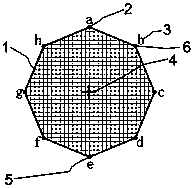
Figure 1 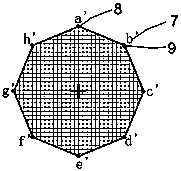
Figure 2 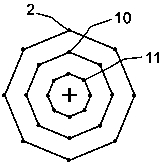
Figure 3
Abstract
Description
technical field
[0001] The invention relates to the field of ophthalmology measurement, and more specifically, to a method for measuring object-image anisotropy based on a plurality of control points. Background technique
[0002] Anisotropy between the two eyes is also known as anisotropy or binocular aberration in ophthalmology. This is when the retinal images of the two eyes are different in size or shape. The most advanced visual function of human beings is the binocular stereoscopic vision produced by the fusion of binocular object images in the visual center. The establishment of binocular stereoscopic vision depends on the aberration of the incoming object images of the two eyes. It is easier to fuse into a stereo image through the visual center. If the anisotropy of the two eyes exceeds the normal range, after the conduction enters the visual center, a series of visual and systemic symptoms will be caused according to the degree of difference between the two eyes. ...
Examples
Embodiment Construction
[0029] The drawings are for illustrative purposes only, and should not be construed as limitations on this patent; in order to better illustrate this embodiment, some parts in the drawings will be omitted, enlarged or reduced, with differences in contrast or color, and do not represent the size of the actual product and renderings.
[0030] For those skilled in the art, it is understandable that some well-known structures and descriptions thereof may be omitted in the drawings. The technical solutions of the present invention will be further described below in conjunction with the accompanying drawings and embodiments.
[0031] Implementation tools: wireless 3D stereo glasses (NVIDIA 3D VISION Pro 2nd generation), Asustek Computer, ASUS liquid crystal display (LCD MONITOR VG278, 27-inch TN liquid crystal display, display aspect ratio is 16:9, resolution 1920*1080, support 3D display, screen length*width=597.73mm×336.22mm), Logitech G502 RGB wired photoelectric mouse, computer...