
Application of small molecular compound MLN4924 in resisting to HBV by combining with IFN[alpha]
A small molecular compound, the technology of MN4924, applied in the field of medicine, can solve the problems that have not been reported in clinical trials of tumor inhibitor MN4924, and achieve strong anti-HBV activity and strong drug effect
Patent Information
- Authority / Receiving Office
- CN · China
- Patent Type
- Applications(China)
- Current Assignee / Owner
- Publication Date
- 2020-07-28
- Estimated Expiration
- Not applicable · inactive patent
Smart Images
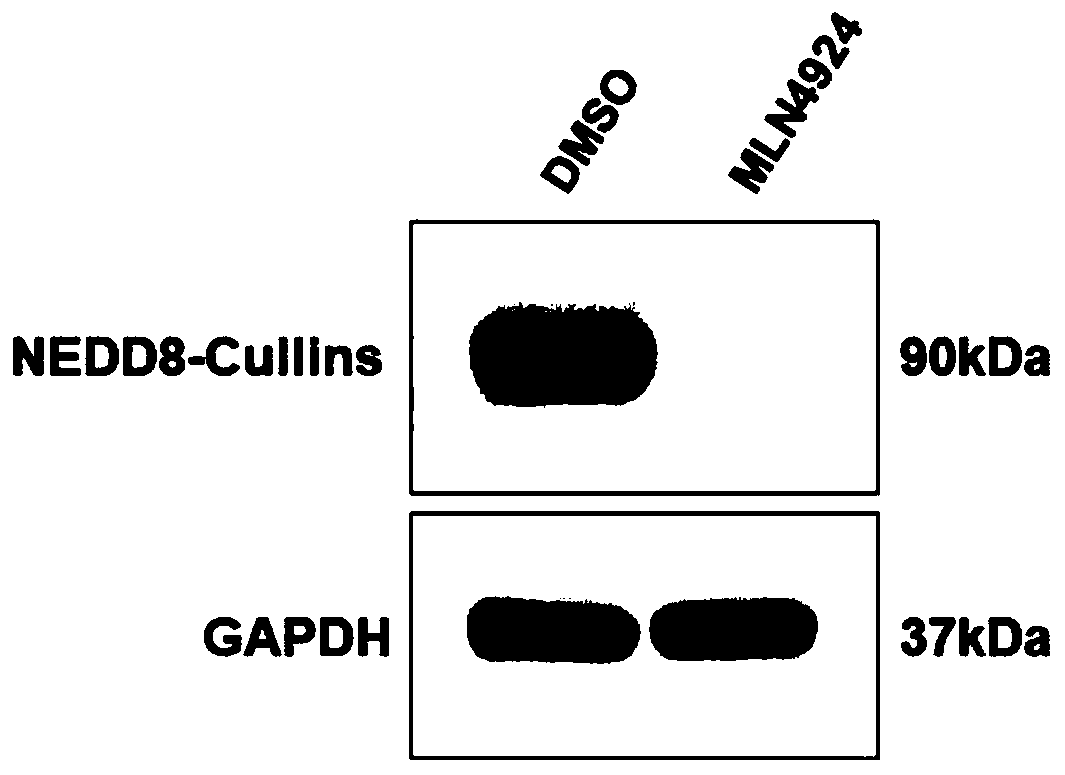
Figure 1 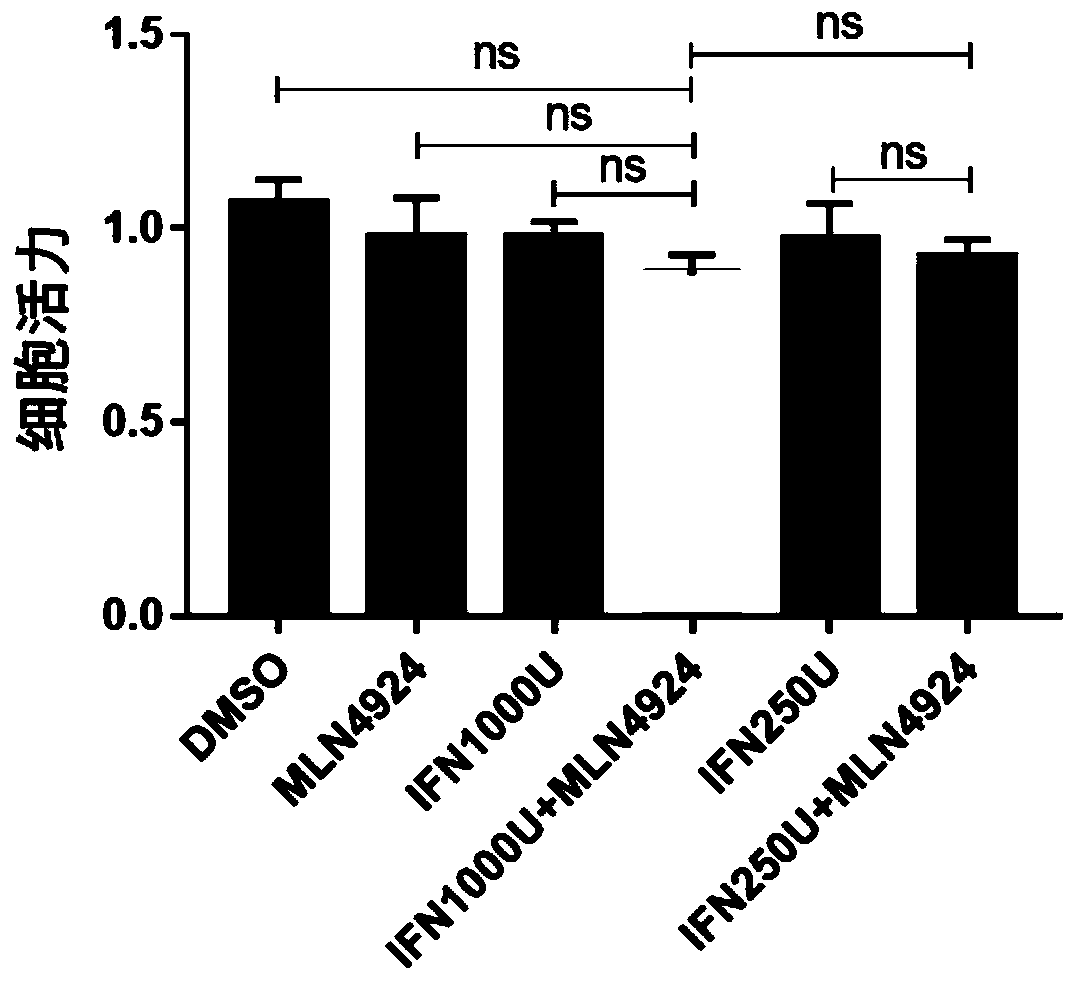
Figure 2 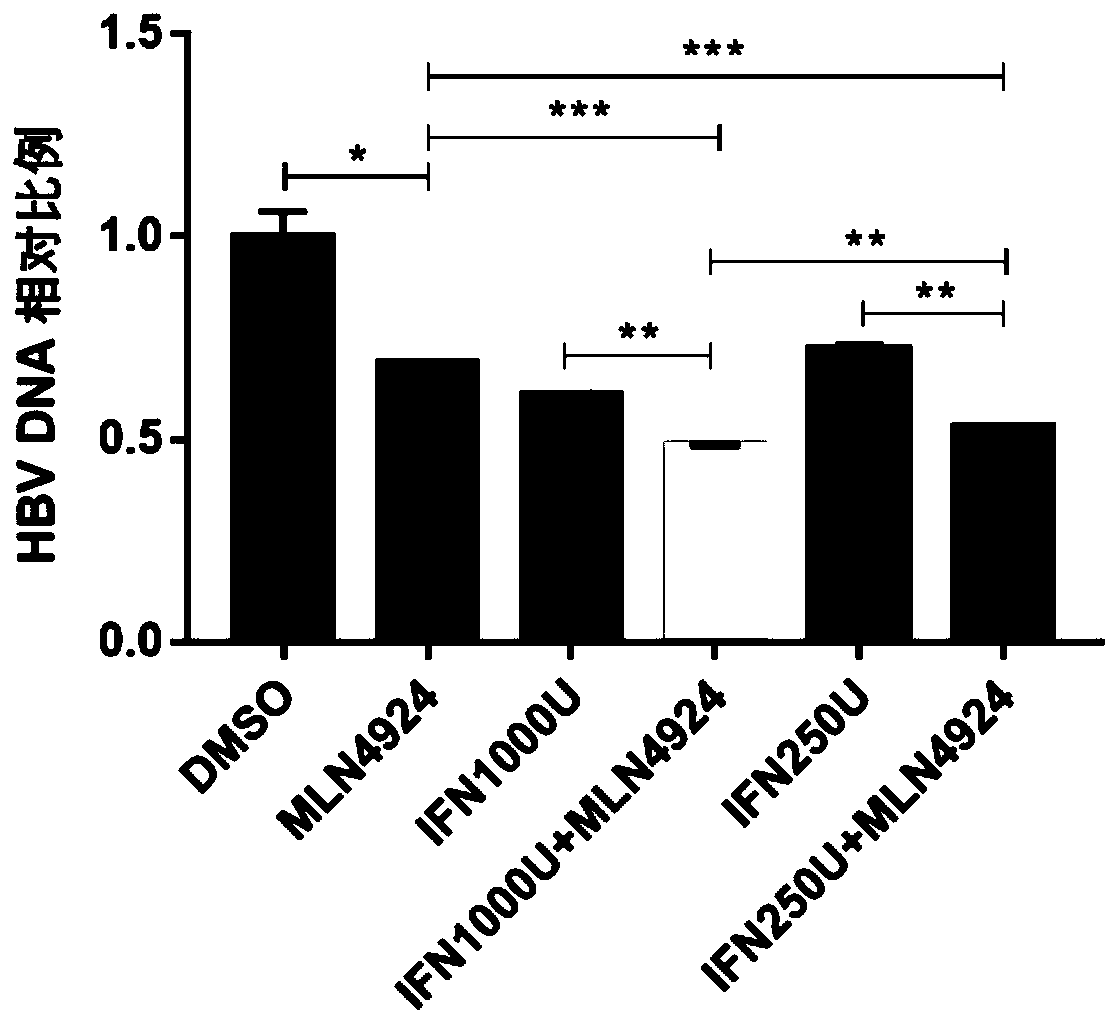
Figure 3
Abstract
Description
Technical field
[0001] The invention belongs to the field of medicine, and relates to the new use of the small molecule compound MLN4924, and in particular to the application of the combination of the small molecule compound MLN4924 and IFNα in the preparation of anti-hepatitis B virus (HBV) drugs. Background technique
[0002] Hepatitis B virus (HBV) is a small, enveloped double-stranded DNA virus, belonging to the family of hepatoviridae. Chronic HBV infection (CHB) is still a major public health problem worldwide. Although the current hepatitis B vaccine is more effective in preventing and treating HBV infection, its coverage in areas with high endemicity of hepatitis B is still not satisfactory. According to statistics, about 250 million people worldwide have been infected with HBV, of which 75% are located in Asia and 12% are located in Africa. The risk of chronic HBV patients with liver cirrhosis, liver failure and liver cancer is about 15%-40%. Approximately 75,000 peop...
Examples
Embodiment 1
[0018] MLN4924 (250nM) was used to act on HepG2.2.15 cells. The control group was incubated with the cells in DMSO. After 48 hours, the cells of each group were collected and the cellular protein was extracted. Western blotting method found that MLN4924 can effectively inhibit HepG2.2.15 intracellular ubiquitin The expression of the molecule NEDD8 further prevents the activation of the Neddylation pathway. See the results figure 1 .
Embodiment 2
[0020] After taking different concentrations of IFNα (250U, 1000U) combined with MLN4924 (250nM), after 48 hours of treatment on HepG2.2.15 cells, the drug toxicity was detected by cck8 reagent (Dojindo Laboratories). The results showed that the cell survival rate was up to Both reached more than 80%, see the results figure 2 .
Embodiment 3
[0022] Different concentrations of IFNα (250U, 1000U) were combined with MLN4924 (250nM) to act on HepG2.2.15 cells. In the control group, 250U IFNα or 1000UIFNα or 250nM MLN4924 was used to incubate with the cells alone. The cell supernatant was collected after 48 hours and HBV was used. DNA detection kit (ACON Biotech Co. Ltd, Hangzhou, China) extracts HBV DNA from the supernatant and uses quantitative PCR (RT-qPCR) to detect HBV DNA titer. The results show that the inhibitory effect of IFNα and MLN4924 on HBVDNA is better than that of IFNα alone. See the results image 3 .