
Method for preparing adenosine
An adenosine and hydrolysis reaction technology, which is applied in the preparation of sugar derivatives, chemical instruments and methods, sugar derivatives, etc., can solve the problems of unfriendly environment, long process route and high cost, and achieves less types of impurities, efficient hydrolysis, Yield-enhancing effect
Patent Information
- Authority / Receiving Office
- CN · China
- Patent Type
- Applications(China)
- Current Assignee / Owner
- Publication Date
- 2021-07-27
Smart Images
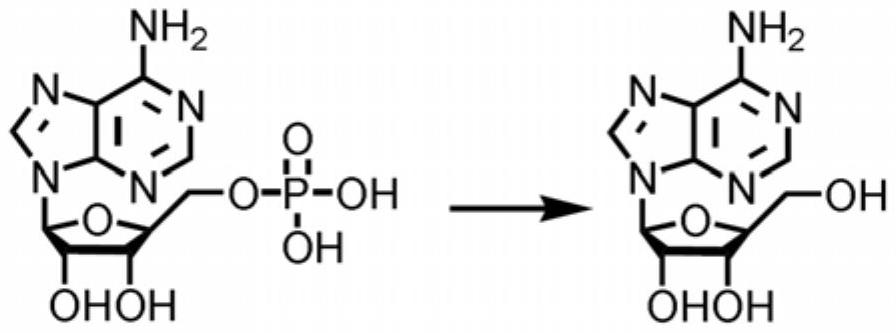
Figure 1 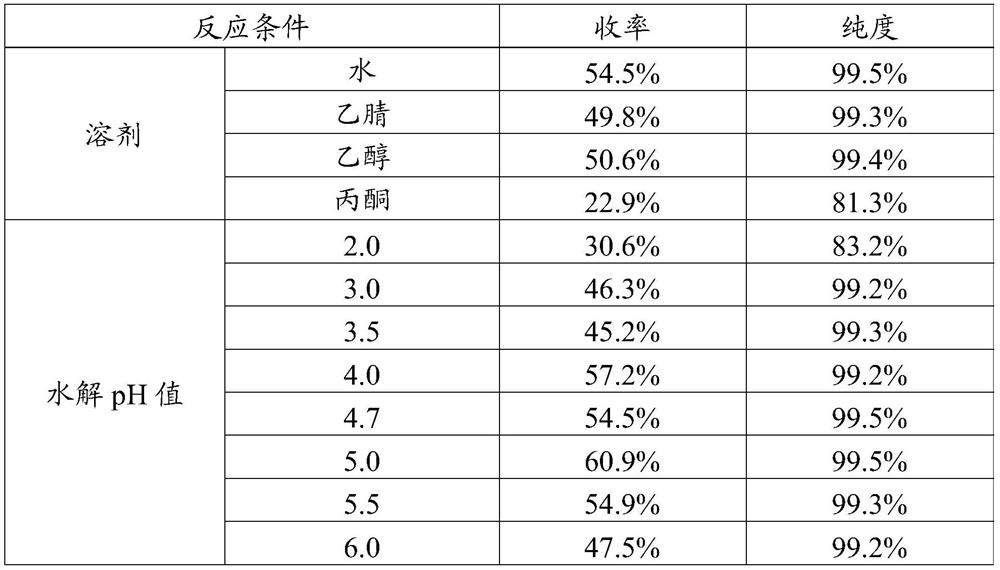
Figure 2 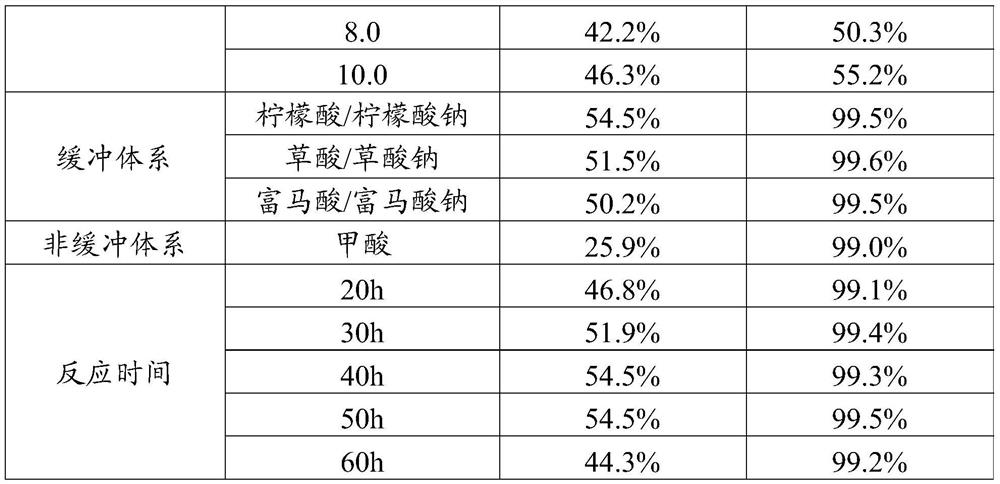
Figure 3
Abstract
Description
technical field
[0001] The invention relates to the field of drug synthesis, in particular, the invention relates to a preparation method of adenosine. Background technique
[0002] Adenosine is adenosine nucleoside, which is a compound formed by connecting N-9 of adenine and C-1 of D-ribose through β-glycosidic bonds, and its phosphate is adenosine. Adenosine is an endogenous nucleoside that widely exists in all types of cells and is also one of the important active ingredients in the body. Adenosine can directly enter the myocardium and undergo phosphorylation to generate adenosine acid, participate in myocardial energy metabolism, and also participate in dilating coronary vessels and increasing blood flow. It can be used to treat angina pectoris, myocardial infarction, arteriosclerosis, essential hypertension, and sequelae of stroke and other diseases. At the same time, it is also an important drug intermediate, which can be used to synthesize adenosine triphosphate (AT...
Examples
Embodiment 1
[0025] The preparation of embodiment 1 adenosine
[0026] Weigh 10.0 g of adenylic acid and add it to the reaction flask, add 75 mL of purified water, start stirring, and then slowly add NaOH aqueous solution to it until the adenylic acid is completely dissolved. First add 10.0 g of sodium citrate to the reaction solution, and then slowly add citric acid to adjust the pH to 4.7. Heat up, reflux for 40h, stop heating and allow the reaction solution to cool to room temperature naturally. The reaction solution was concentrated and desalted to obtain 4.2 g of adenosine with a yield of 54.5% and a purity of 99.5%.
Embodiment 2
[0027] The preparation of embodiment 2 adenosine
[0028] Weigh 10.0 g of adenylic acid and add it into the reaction flask, add 100 mL of purified water, start stirring, and then slowly add KOH aqueous solution to it until the adenylic acid is completely dissolved. Firstly, 10.0 g of ammonium citrate was added to the reaction solution, and then acetic acid was slowly added to adjust the pH value to 6.0. Raise the temperature to 90°C, keep it warm for 60h, stop heating and let the reaction solution cool down to room temperature naturally. The reaction solution was concentrated and desalted to obtain 5.8 g of adenosine with a yield of 75.3% and a purity of 99.3%.
Embodiment 3
[0029] The preparation of embodiment 3 adenosine
[0030] Weigh 10.0 g of adenylic acid and add it into the reaction flask, add 60 mL of methanol, start stirring, and then slowly add ammonia water thereinto until the adenylic acid is completely dissolved. First add 10.0 g of sodium oxalate to the reaction solution, and then slowly add formic acid to adjust the pH value to 3.0. Heat up, reflux for 20h, stop heating and allow the reaction solution to cool to room temperature naturally. The reaction solution was concentrated and desalted to obtain 6.0 g of adenosine with a yield of 77.9% and a purity of 99.4%.