
Secondary battery with hydroxide-ion-conducting ceramic separator
a technology of hydroxide ion-conducting ceramic separator and secondary battery, which is applied in the direction of cell components, cell components, and details of cell components, can solve the problems of increasing the resistance of the ceramic separator, reducing the energy density of the battery, or increasing the internal resistance of the battery, so as to prevent short circuit, increase the thickness of the hydroxide-ion-conducting ceramic separator, and reduce the energy density
Patent Information
- Authority / Receiving Office
- US · United States
- Patent Type
- Patents(United States)
- Current Assignee / Owner
- Publication Date
- 2019-11-19
Smart Images
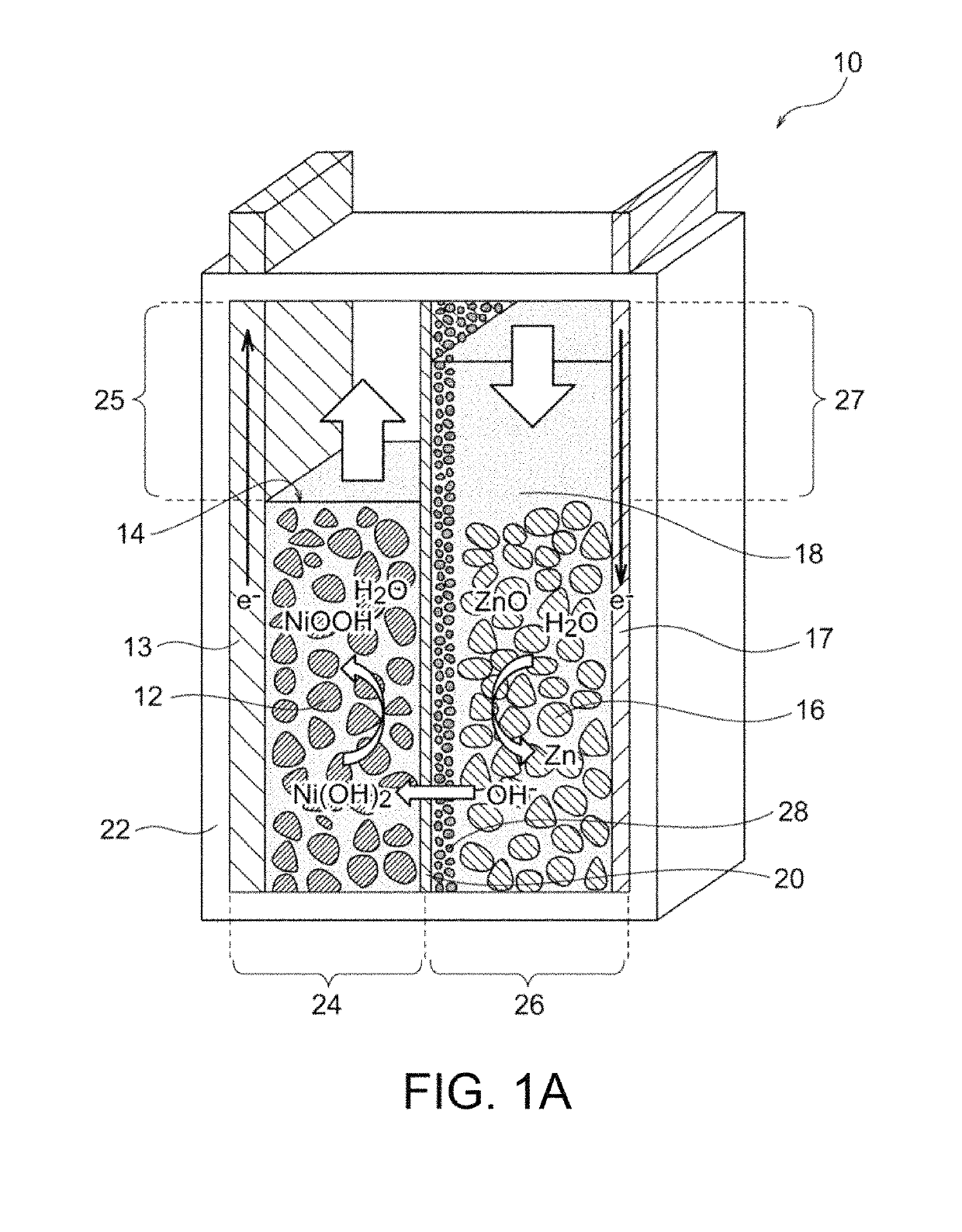
Figure 1 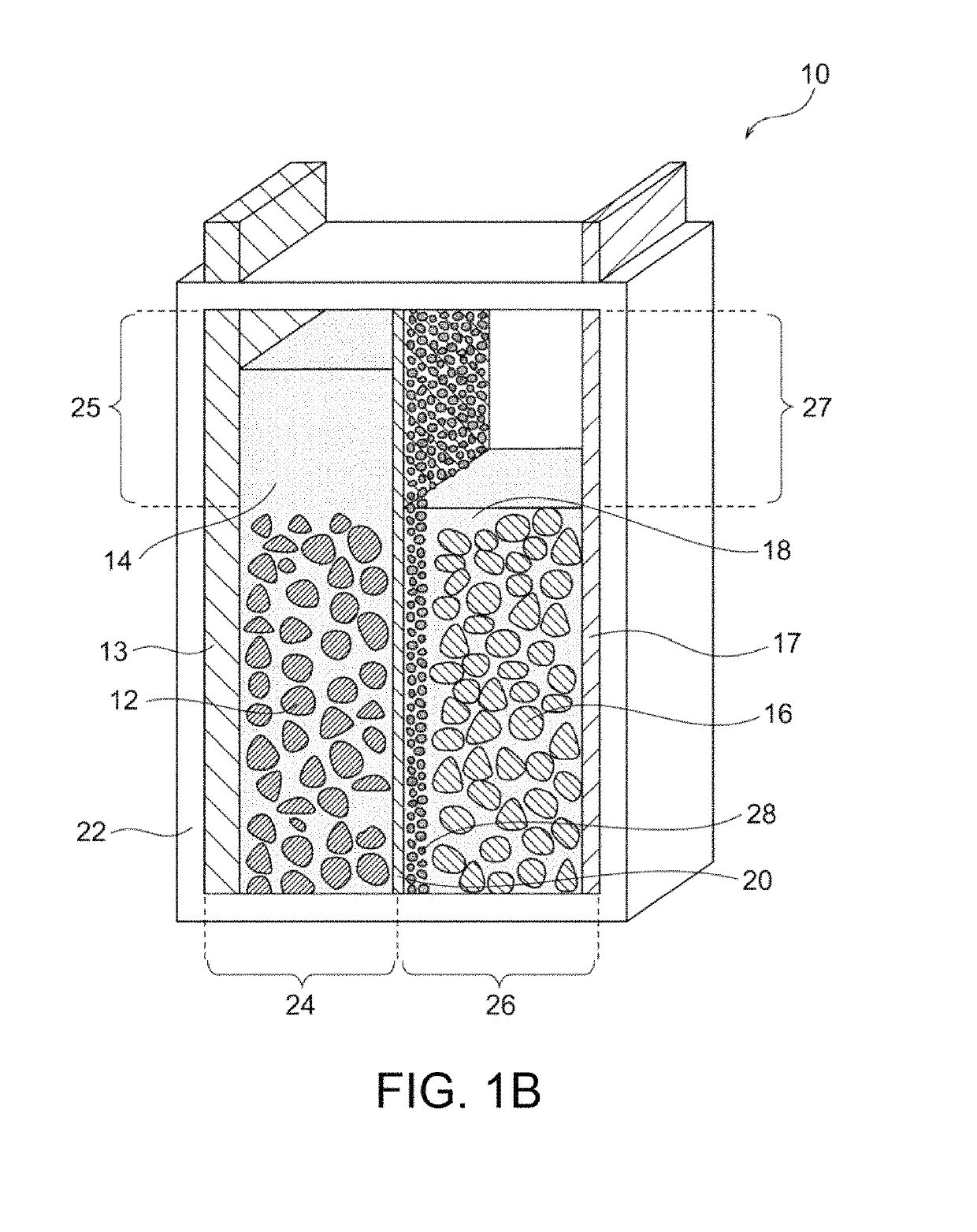
Figure 2 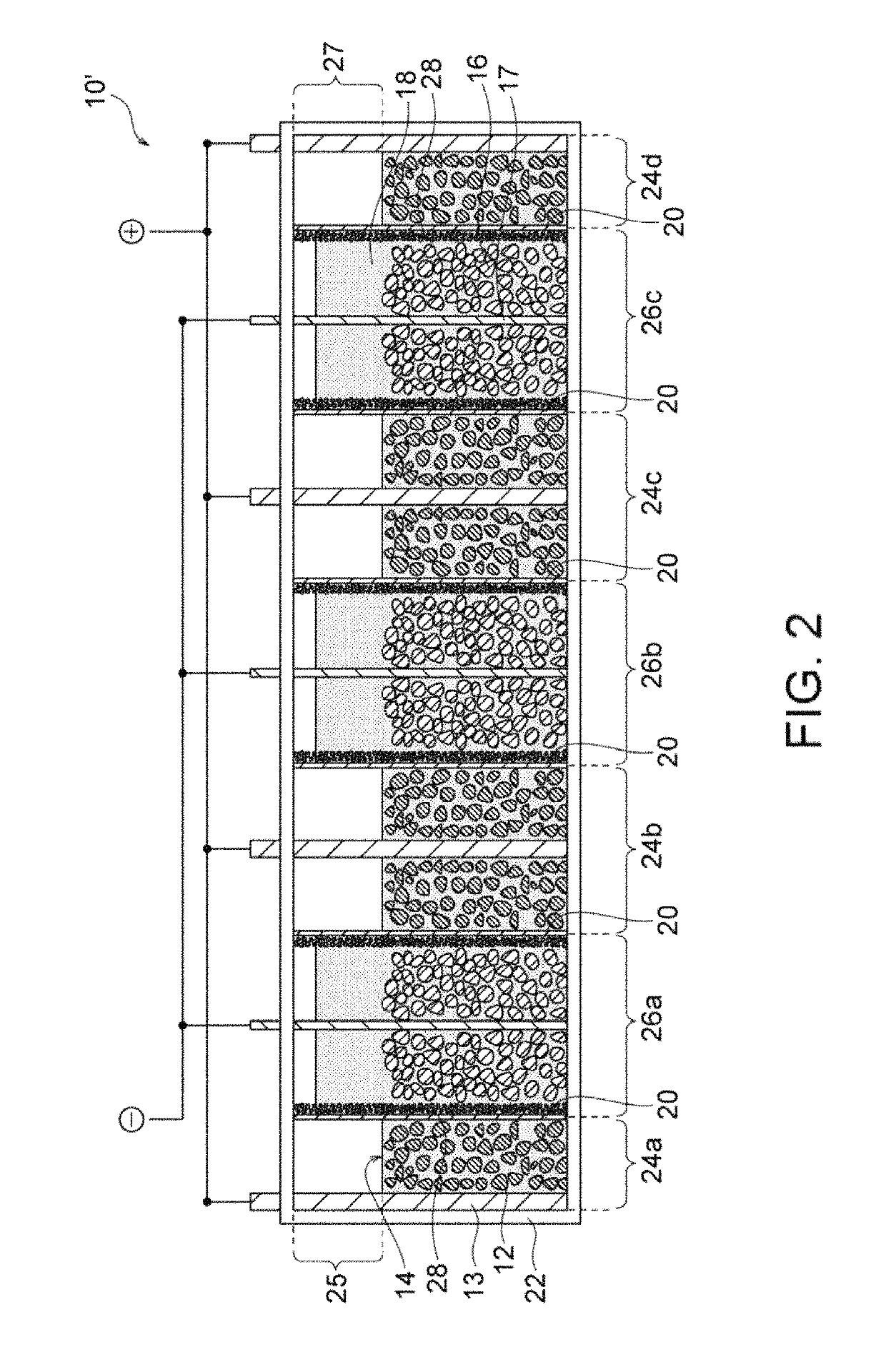
Figure 3
Abstract
Description
CROSS-REFERENCE TO RELATED APPLICATIONS
[0001] This application is a continuation application of PCT / JP2015 / 080931 filed Nov. 2, 2015, which claims priority to Japanese Patent Application No. 2014-238270 filed Nov. 25, 2014, the entire contents all of which are incorporated herein by reference.BACKGROUND OF THE INVENTION
[0002] 1. Field of the Invention
[0003] The present invention relates to a secondary battery including a hydroxide-ion-conductive ceramic separator.
[0004] 2. Description of the Related Art
[0005] Zinc secondary batteries, such as nickel-zinc secondary batteries and zinc-air secondary batteries, have been developed and studied over many years. Unfortunately, these batteries have not yet been put into practice. This is due to a problem that zinc contained in the negative electrode forms dendritic crystals, i.e. dendrites, during a charge mode of the battery and the dendrites break the separator to cause short circuit between the negative electrode and the positive electrode. T...
Examples
example 1
on and Evaluation of LDH Separator with Porous Substrate
(1) Preparation of Porous Substrate
[0106]Boehmite (DISPAL 18N4-80, manufactured by Sasol Limited), methyl cellulose, and ion-exchange water were weighed in proportions by mass of 10:1:5, and were then kneaded together. The kneaded product was subjected to extrusion molding with a hand press into a plate having a size sufficiently exceeding 5 cm×8 cm and a thickness of 0.5 cm. The resultant green body was dried at 80° C. for 12 hours and then fired at 1,150° C. for three hours, to prepare an alumina porous substrate. The porous substrate was cut into a piece of 5 cm×8 cm.
[0107]The porosity at the surface of the resultant porous substrate was determined by a method involving image processing. The porosity was 24.6%. The porosity was determined as follows: 1) a scanning electron microscopic (SEM) image of the surface microstructure of the porous substrate was taken with a scanning electron microscope (SEM; JSM-6610LV, manufactured...
example 2
n and Evaluation of Nickel-Zinc Secondary Battery
(1) Preparation of Separator with Porous Substrate
[0119]A separator provided with a porous substrate (LDH membrane on alumina substrate) (size: 5 cm×8 cm) was prepared as in Example 1.
(2) Preparation of Positive Electrode Plate
[0120]Particulate nickel hydroxide containing zinc and cobalt in the form of solid solution was prepared. The particulate nickel hydroxide was coated with cobalt hydroxide to yield a positive-electrode active material. The positive-electrode active material was mixed with a 2% aqueous carboxymethyl cellulose solution to prepare a paste. The paste was evenly applied to a collector composed of a nickel porous substrate having a porosity of about 95% and dried so that the porosity of the positive-electrode active material was 50% to prepare a positive electrode plate having a region of 5 cm×5 cm coated with the active material. The amount of coating was adjusted so that the active material contained particulate nic...
example 3
n of Properties of Batteries Including Various Porous Substrates
(1) Preparation of Separator with Porous Substrate
[0125]Various alumina porous substrates having dimensions of 2 cm by 3.2 cm, thicknesses of 100 to 2,000 μm, and porosities of 10 to 90% were prepared as in Example 1 (1) except that production conditions (e.g., proportions of raw materials, molding pressure, thickness, and firing temperature) were appropriately varied. The porosity of each porous substrate was determined as in Example 1 (1). For the sake of convenience, the resultant value was rounded to the nearest 10 and used as an index for evaluation.
[0126]An LDH separator provided with a porous substrate (dimensions: 2 cm by 3.2 cm) was prepared as in Example 2 (2) to (4) through washing of the porous substrate, preparation of an aqueous stock solution, and formation of a membrane by hydrothermal treatment, except that production conditions were appropriately varied.
(2) Preparation of Positive Electrode Plate
[0127]...