
Cancer risk stratification based on histopathological tissue slide analysis
a histopathological and tissue slide technology, applied in the field of computational pathology, can solve the problems of underlying risk of local or distant cancer recurrence, patients who experience recurrence exhibit an increased mortality rate, etc., and achieve the effect of reducing the computational cost of performing, reducing unnecessary hardship, and avoiding adverse side effects
Patent Information
- Authority / Receiving Office
- US · United States
- Patent Type
- Patents(United States)
- Current Assignee / Owner
- Publication Date
- 2022-02-22
Smart Images
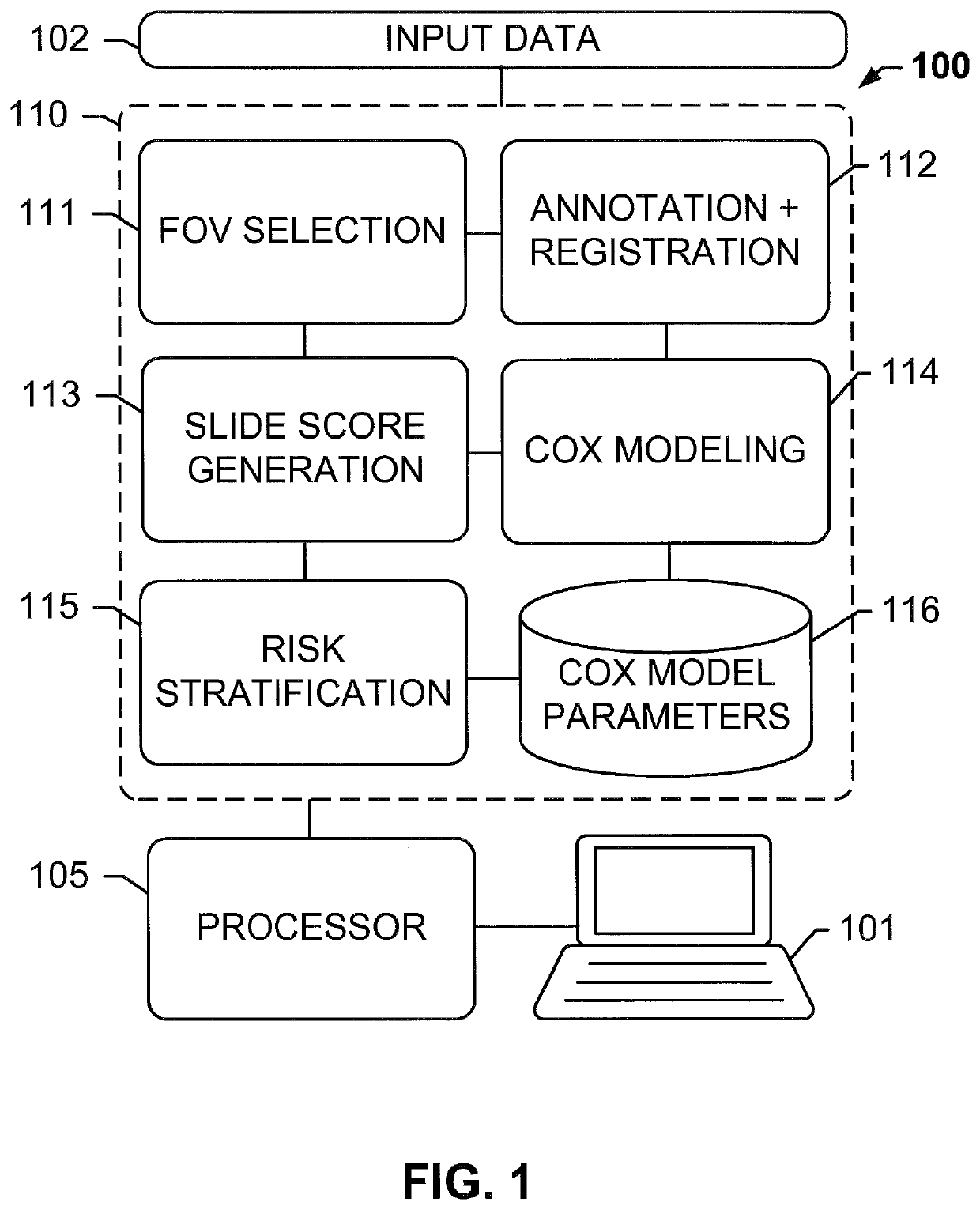
Figure 1 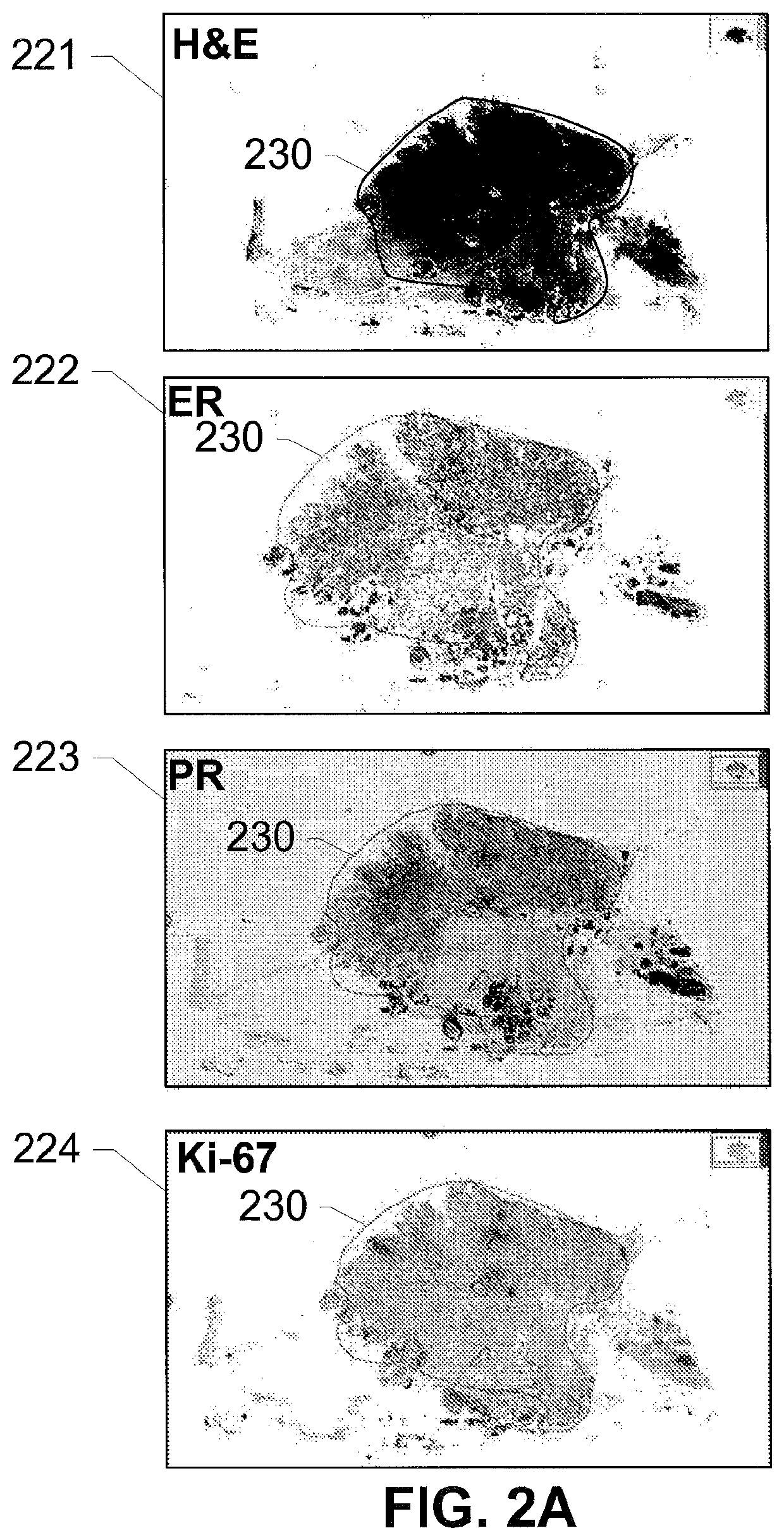
Figure 2 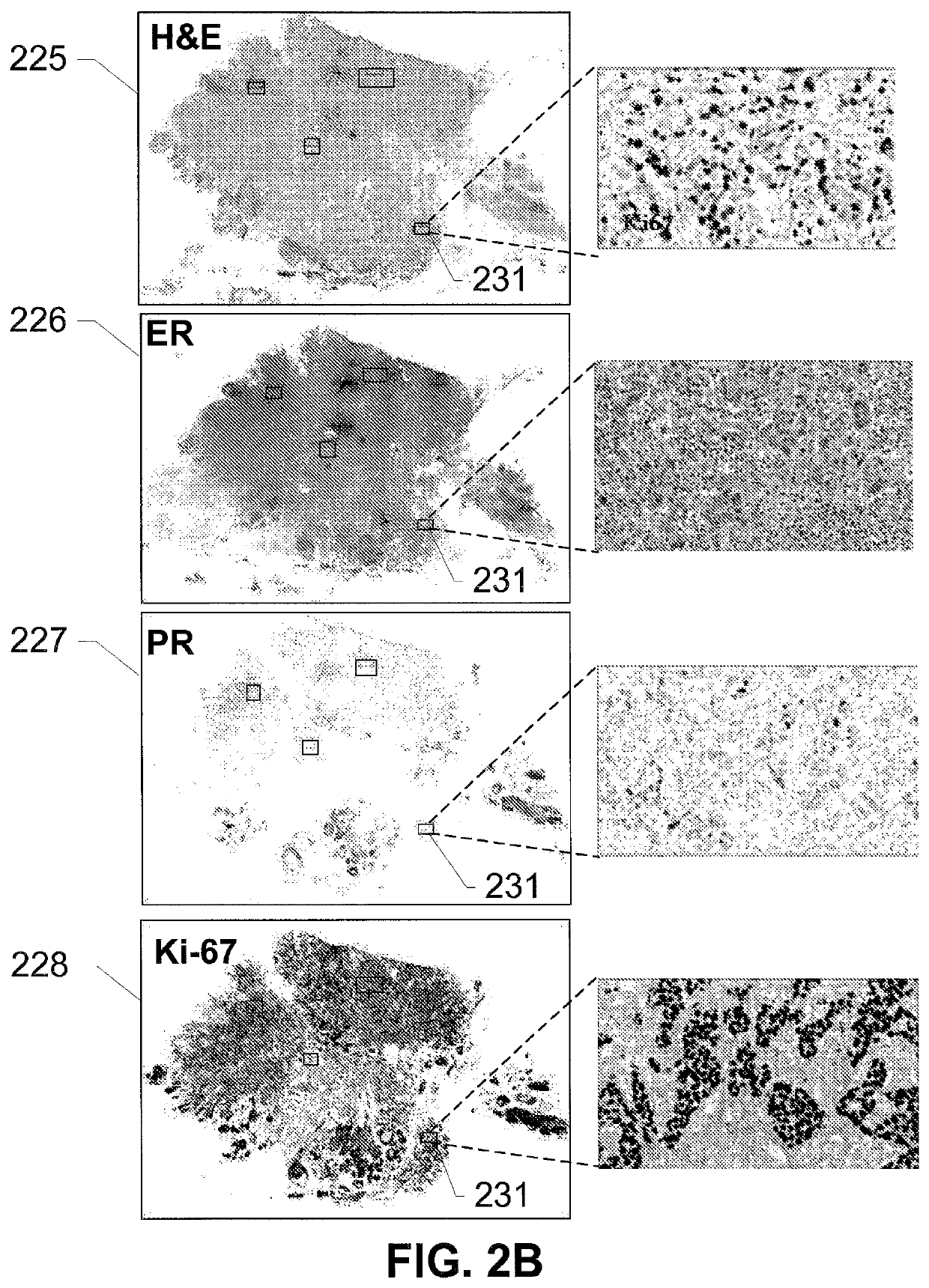
Figure 3
Abstract
Description
CROSS-REFERENCE TO RELATED APPLICATIONS
[0001] This patent application is a continuation of International Patent Application No. PCT / EP2015 / 078541 filed Dec. 3, 2015, which claims priority to the benefit of U.S. Provisional Patent Application No. 62 / 087,229, filed Dec. 3, 2014. Each of the above patent applications is incorporated herein by reference as if set forth in its entirety.BACKGROUND OF THE SUBJECT DISCLOSURE
[0002] Field of the Subject Disclosure
[0003] The present subject disclosure relates to computational pathology. More particularly, the present subject disclosure relates to predicting the risk of cancer recurrence among early-stage patients using histopathological images of tissue sections and patient survival outcome data.
[0004] Background of the Subject Disclosure
[0005] Biological specimens such as tissue sections, blood, cell cultures and the like may be stained with one or more stains to identify and quantify biomarker expressions in the tissue and subsequently analyzed b...
Examples
Embodiment Construction
[0037]The subject disclosure presents systems and computer-implemented methods for providing reliable risk stratification for early-stage breast cancer patients by providing a prognostic model to predict a recurrence risk of the patient and to categorize the patient into a high or low risk group. A risk stratification system may be trained using training data that includes tissue slides from several patients along with survival data for said patients. The tissue slides may represent the time of diagnosis of the patient. The tissue slides may be processed according to a specific staining protocol and stains or biomarkers may be scored using a specific scoring protocol. For example, a series of histopathological simplex and / or multiplex tissue slides from serial sections of cancerous tissue block corresponding to each patient and stained with H&E and multiple IHC tumor and immune markers (such as tumor markers ER, PR, Ki67, HER2, etc. and / or immune markers such as CD3, CD8, CD4 etc.) ...