
Method for separating a hydrogen isotope, and apparatus for separating the same hydrogen isotope
Patent Information
- Authority / Receiving Office
- US · United States
- Current Assignee / Owner
- Publication Date
- 2005-07-28
- Estimated Expiration
- Not applicable · inactive patent
Smart Images
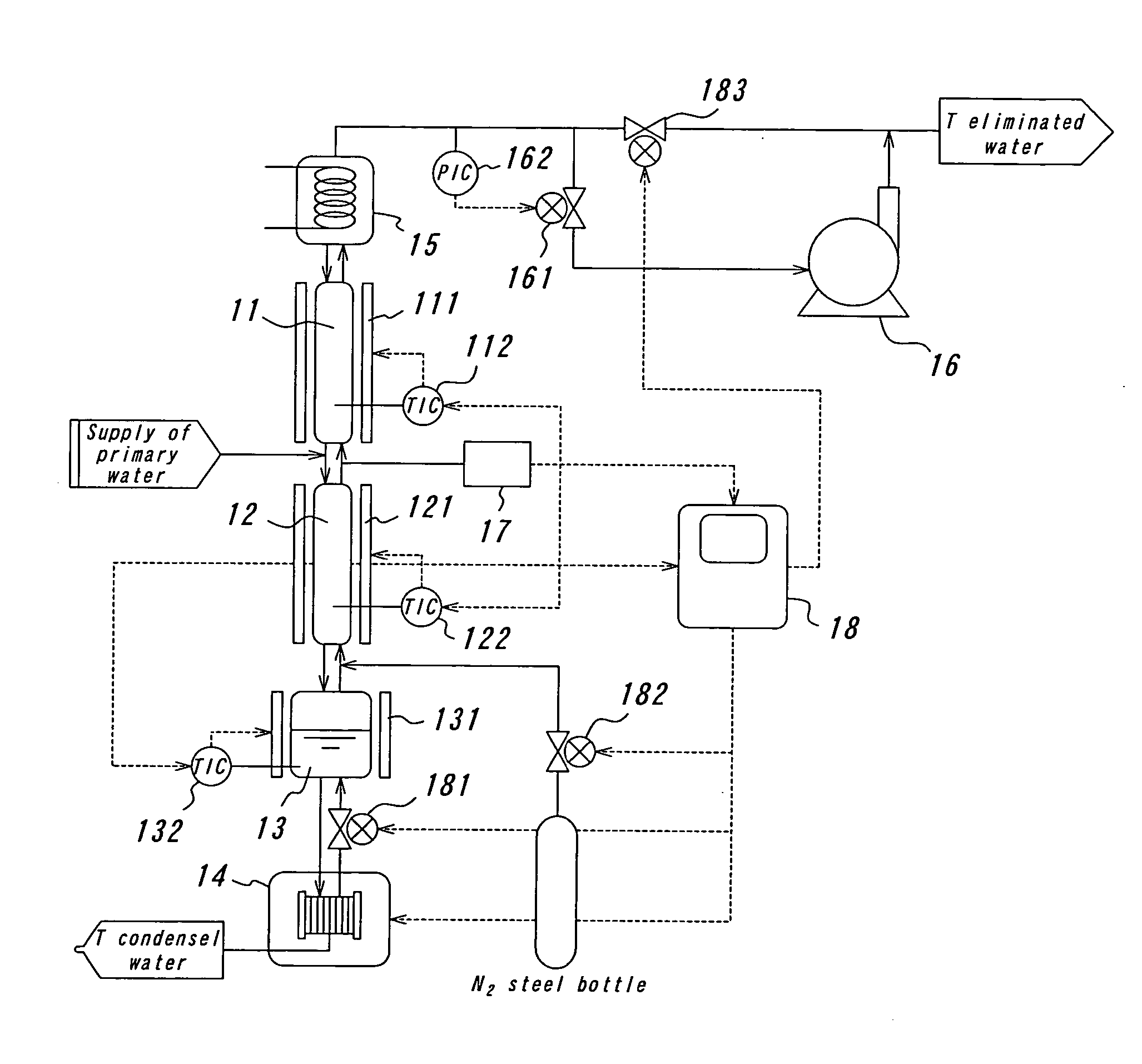
Figure 1 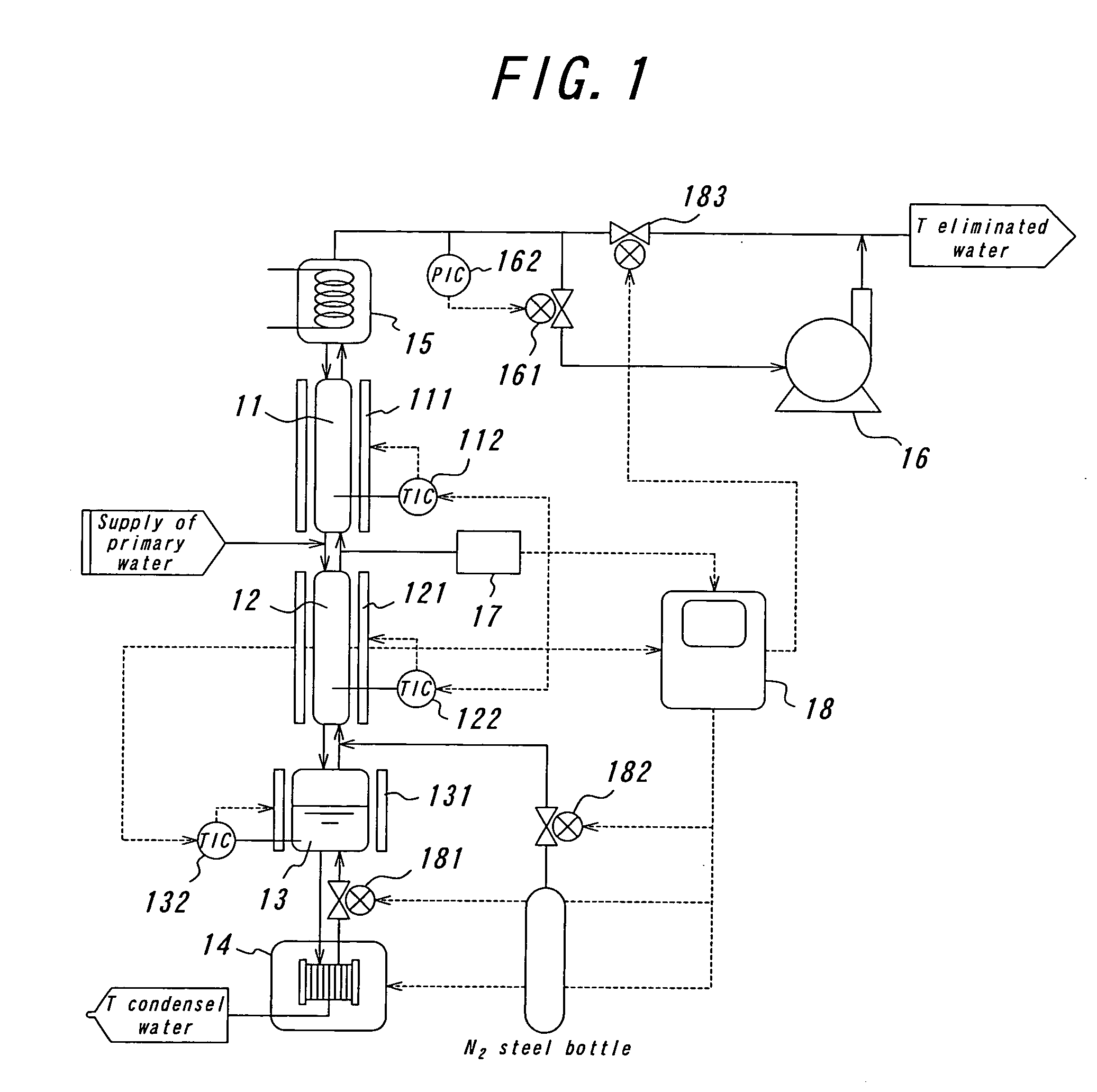
Figure 2 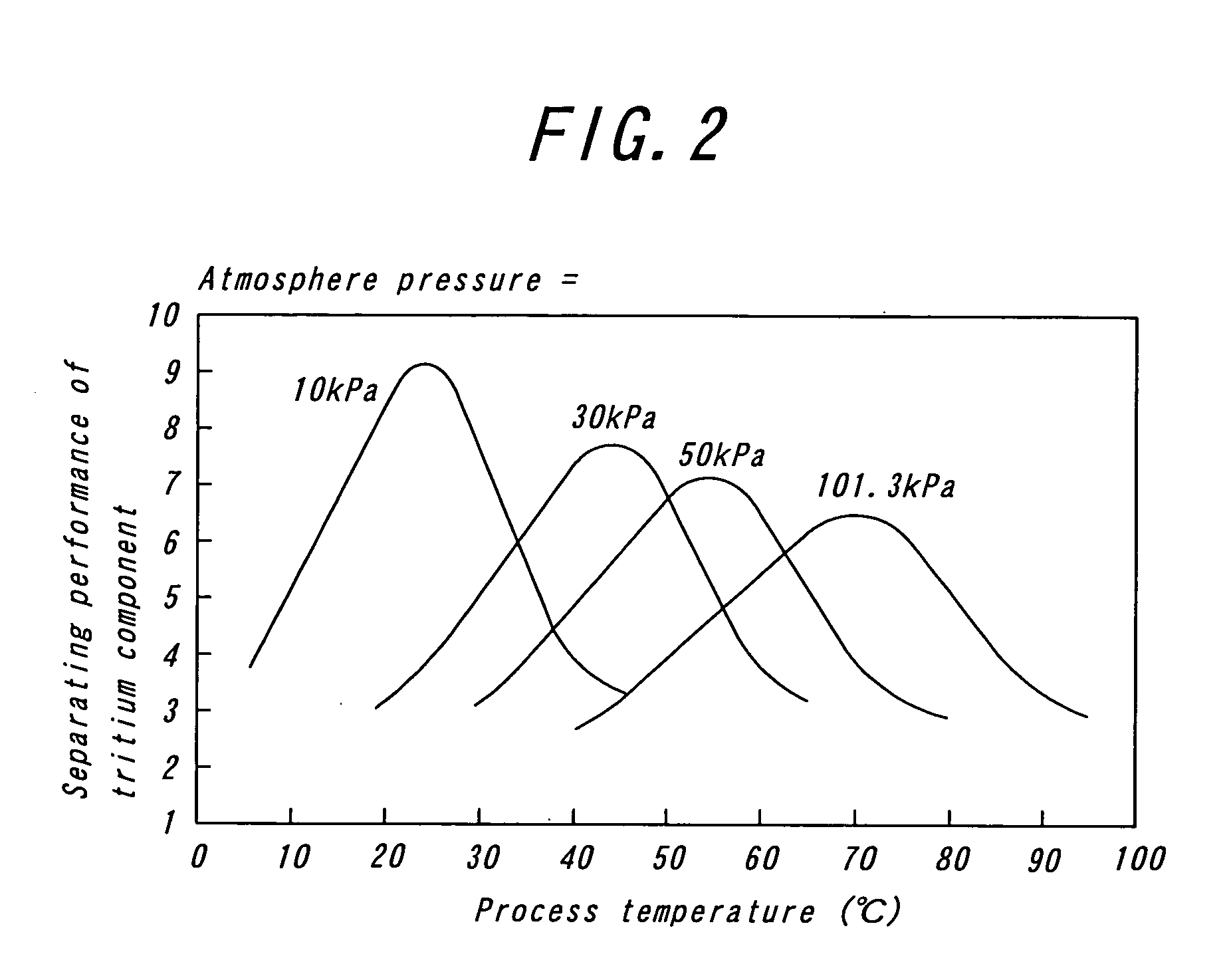
Figure 3
Abstract
Description
BACKGROUND OF THE INVENTION
[0001] 1. Field of the Invention
[0002] This invention relates to a method for separating a hydrogen isotope and an apparatus for separating the same hydrogen isotope.
[0003] 2. Description of the Prior Art
[0004] As a method for separating and concentrating a tritium component from a tritium-containing water is proposed a method utilizing hydrogen-water chemical exchange reaction which has a large separation factor and can treat a large amount of tritium-containing water. In the hydrogen-water chemical exchange reaction, since the equilibrium constants in isotope exchange reaction between a hydrogen gas and a water vapor and between the water vapor and a water are increased as the chemical exchange reaction temperature is decreased, it is expected that by decreasing the process temperature, the separating performance of the tritium component can be enhanced.
[0005] However, when the process temperature is decreased, the partial pressure of the water vapo...
Examples
Embodiment Construction
[0022] This invention will be described in detail with reference to the accompanying drawings.
[0023]FIG. 1 is a structural view illustrating a separating apparatus of hydrogen isotope according to the present invention. In this embodiment, a tritium component is separated from a light water by utilizing the separating apparatus illustrated in FIG. 1.
[0024] The separating apparatus illustrated in FIG. 1 includes separating columns 11 and 12 which are arranged vertically in two stage, a humidifier 13 and an SPE electrolytic bath 14 which are arranged downwardly and continuously from the separating columns, a condenser 15 and a vacuum pump 16 which are arranged upwardly and continuously from the separating columns, a tritium monitor 17 and a temperature monitor process controller 18 which are arranged continuously from between the separating columns 11 and 12.
[0025] In the separating columns 11 and 12 are formed catalyst layers (not shown) supporting platinum catalysts respectively ...