
Treatment of pain with combinations of nalbuphine and other kappa-opioid receptor agonists and opioid receptor antagonists
a technology of opioid receptor and combination, which is applied in the direction of heterocyclic compound active ingredients, drug compositions, biocides, etc., can solve the problems of significant adverse side effects and abuse potential, and achieve the effects of reducing symptoms, improving pain, and improving pain managemen
Patent Information
- Authority / Receiving Office
- US · United States
- Patent Type
- Applications(United States)
- Current Assignee / Owner
- Publication Date
- 2004-09-16
- Estimated Expiration
- Not applicable · inactive patent
Smart Images
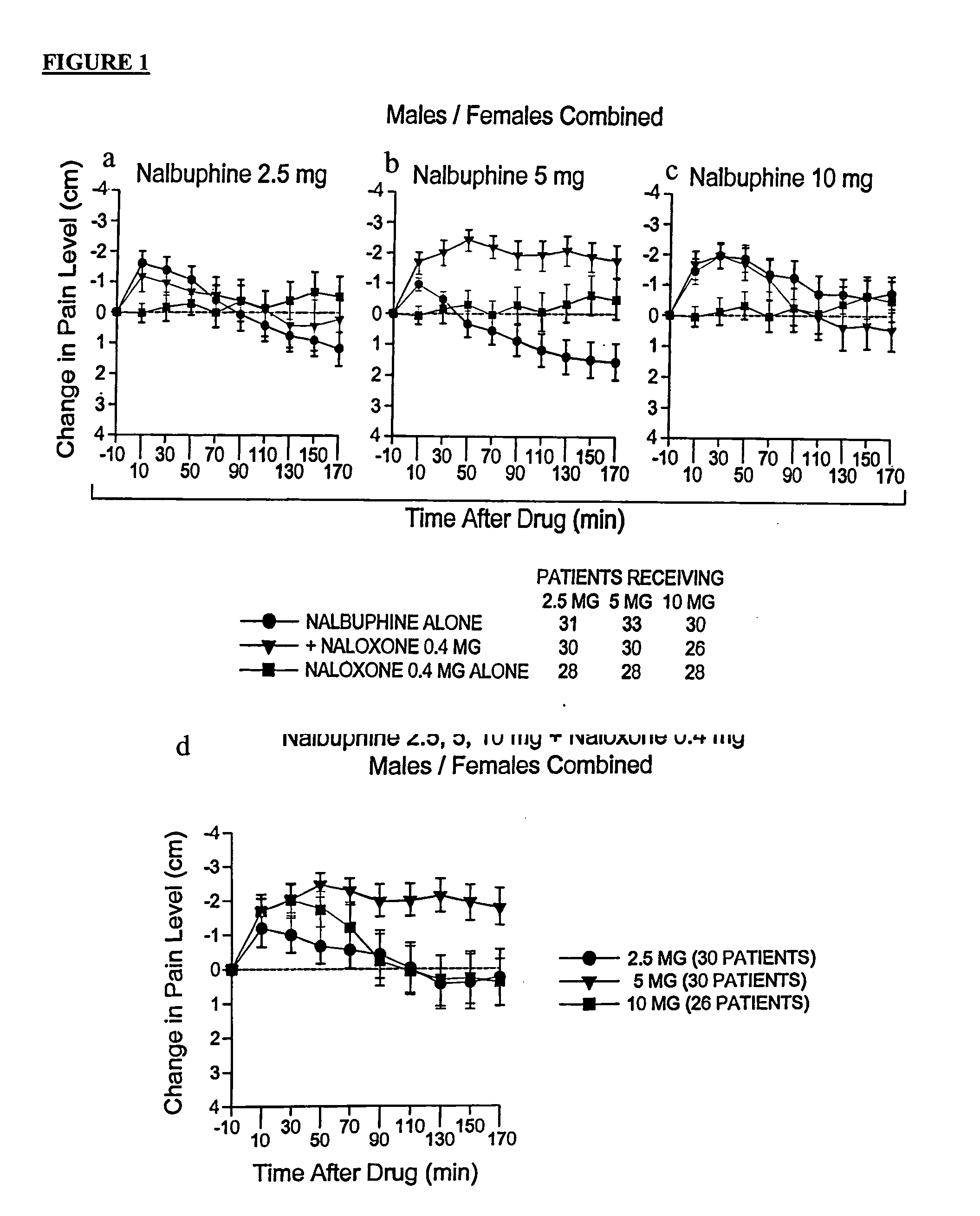
Figure 1 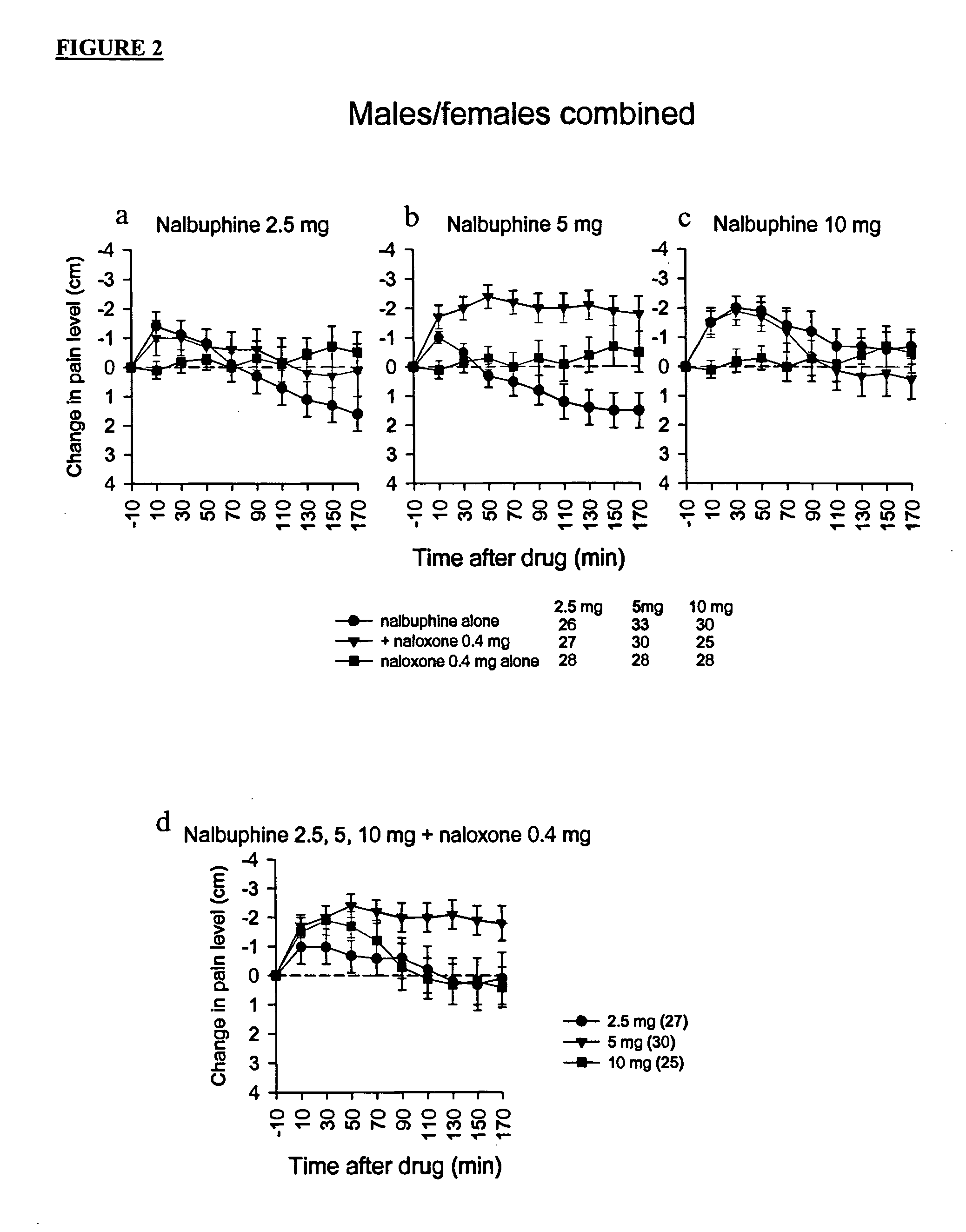
Figure 2 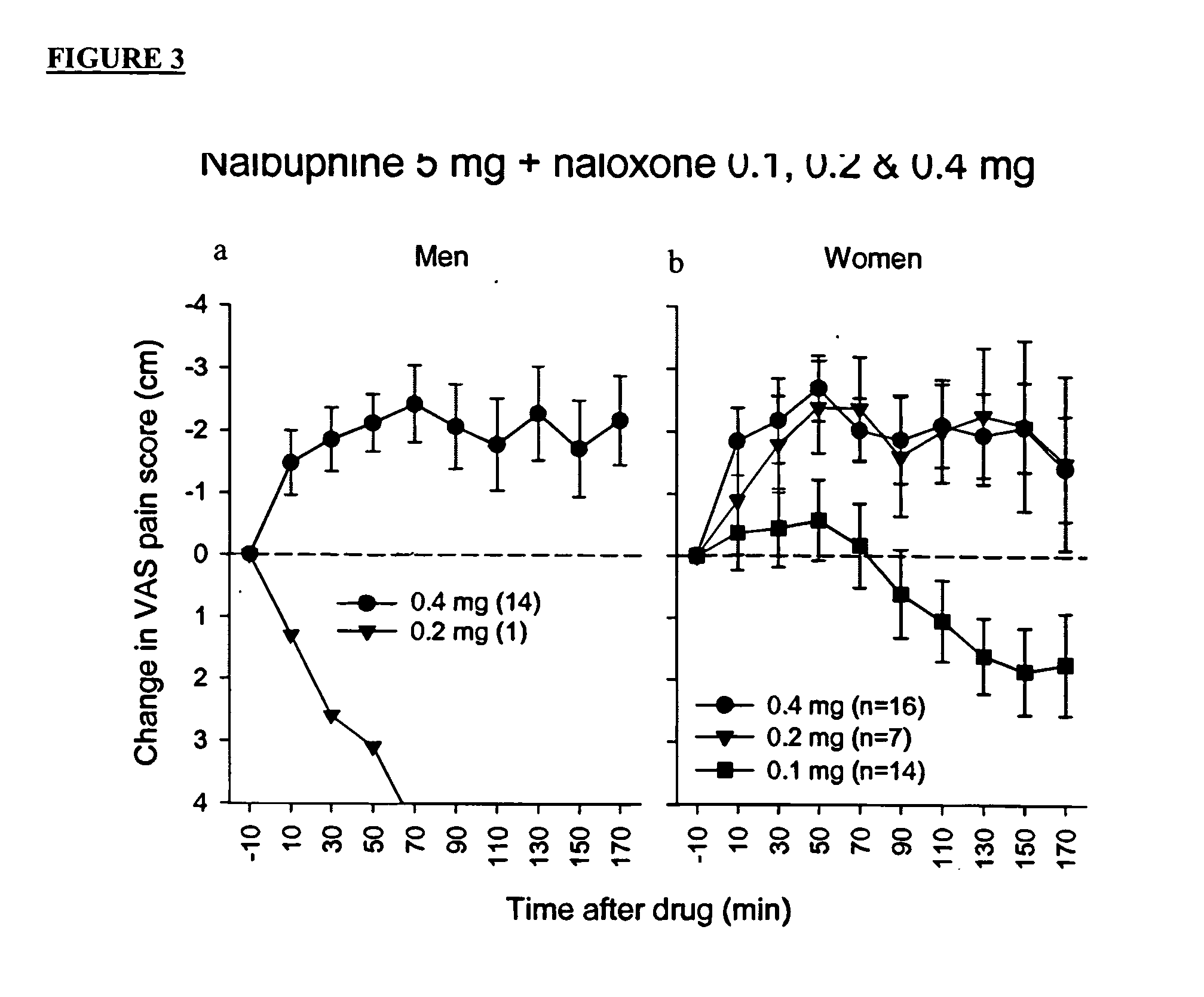
Figure 3
Abstract
Description
CROSS-REFERENCES TO RELATED APPLICATIONS
[0001] This application claims the benefit of the priority of U.S. provisional application 60 / 433,217 filed Dec. 13, 2002, which is incorporated herein in its entirety.
[0003] The present invention provides methods for treating, managing, and ameliorating pain, such as pain, including inflammatory pain, neuropathic pain, acute and chronic pain, and regional and generalized pain syndromes while avoiding adverse side effects such as abuse potential. In particular, the present invention provides methods of treating, managing, and ameliorating pain by administration of a generally low dose of a kappa opioid agonist with an opioid antagonist. The present invention also provides pharmaceutical compositions, pharmaceutical kits, and combination therapies for treating, managing, and ameliorating pain.
[0004] Opioids are a group of compounds that have opium or morphine-like properties. Opioids are primarily used to treat pain, but may have other pharmaco...
Examples
example 1
[0162] In this clinical trial, patients underwent standardized surgery by the same oral surgeon for removal of third molar ("wisdom") teeth, including at least one bony impacted mandibular third molar. Prior to surgery patients received intravenous diazepam, nitrous oxide, and a local anesthetic (mepivacaine without vasoconstrictor to obtain a nerve block of short duration). After surgery, each patient was randomly assigned to receive, in an open injection, double-blinded fashion, through an intravenous line, an injection of either naloxone hydrochloride salt or a mixture of naloxone hydrochloride salt and nalbuphine hydrochloride salt (Abbott Laboratories, Abbott Park, Ill.).
[0163] Criteria for administration of the test drug were an elapse of a period of at least 80 minutes after the onset of the local anesthetic and a pain rating that was greater than one quarter (2.5 cm) of the maximum possible visual analog scale (VAS) rating (10 cm). Baseline pain intensity was defined as the ...
example 2
[0167] In this clinical trial 67 patients underwent standardized surgery by the same oral surgeon for removal of third molar teeth, including at least one bony impacted mandibular third molar. Prior to surgery, patients received intravenous diazepam, nitrous oxide, and a local anesthetic (mepivacaine without vasoconstrictor to obtain a nerve block of short duration). After surgery, each patient was randomly assigned to receive an injection of nalbuphine hydrochloride salt (Abbott Laboratories, Abbott Park, Ill.) 2.5 mg either alone or combined with naloxone hydrochloride salt (0.4 mg) in an open injection, double-blinded fashion, through an intravenous line.
[0168] Criteria for administration of the test drug were an elapse of a period of at least 80 minutes after the onset of the local anesthetic and a pain rating that was greater than one quarter (2.5 cm) of the maximum possible visual analog scale (VAS) rating (10 cm). Baseline pain intensity was defined as the last VAS pain ratin...
example 3
[0171] In this clinical trial, 65 patients underwent standardized surgery by the same oral surgeon for removal of third molar teeth, including at least one bony impacted mandibular third molar. Prior to surgery, patients received intravenous diazepam, nitrous oxide, and a local anesthetic (mepivacaine without vasoconstrictor to obtain a nerve block of short duration). After surgery, each patient was randomly assigned to receive an injection of 2.5 mg of nalbuphine hydrochloride salt (Abbott Laboratories, Abbott Park, Ill.) either alone or combined with 0.2 mg naloxone hydrochloride salt in an open injection, double-blinded fashion, through an intravenous line.
[0172] Criteria for administration of the test drug were an elapse of a period of at least 80 minutes after the onset of the local anesthetic and a pain rating that was greater than 30% (3 cm) of the maximum possible visual analog scale (VAS) rating (10 cm). Baseline pain intensity was defined as the last VAS pain rating before...