
Cytotoxic heteromeric protein combinatorial libraries
a technology of cytotoxic heteromeric proteins and libraries, applied in the field of cytotoxic heteromeric protein combinatorial libraries, can solve the problems of drug resistance mechanisms, minimal tissue specificity of most of these chemotherapeutics, and non-optimal biodistribution profiles
Patent Information
- Authority / Receiving Office
- US · United States
- Patent Type
- Patents(United States)
- Current Assignee / Owner
- Publication Date
- 2010-05-11
- Estimated Expiration
- Not applicable · inactive patent
Smart Images
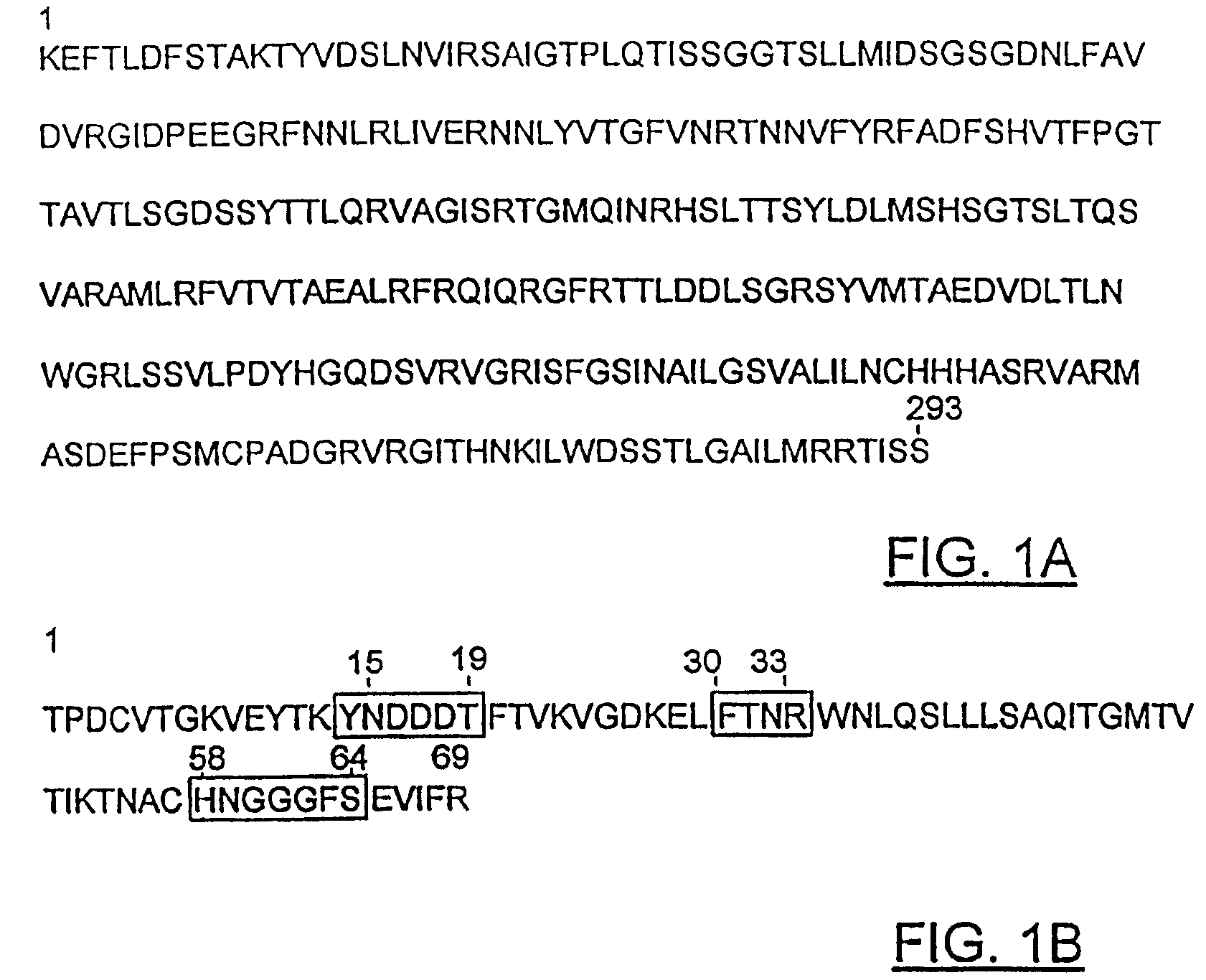
Figure 1 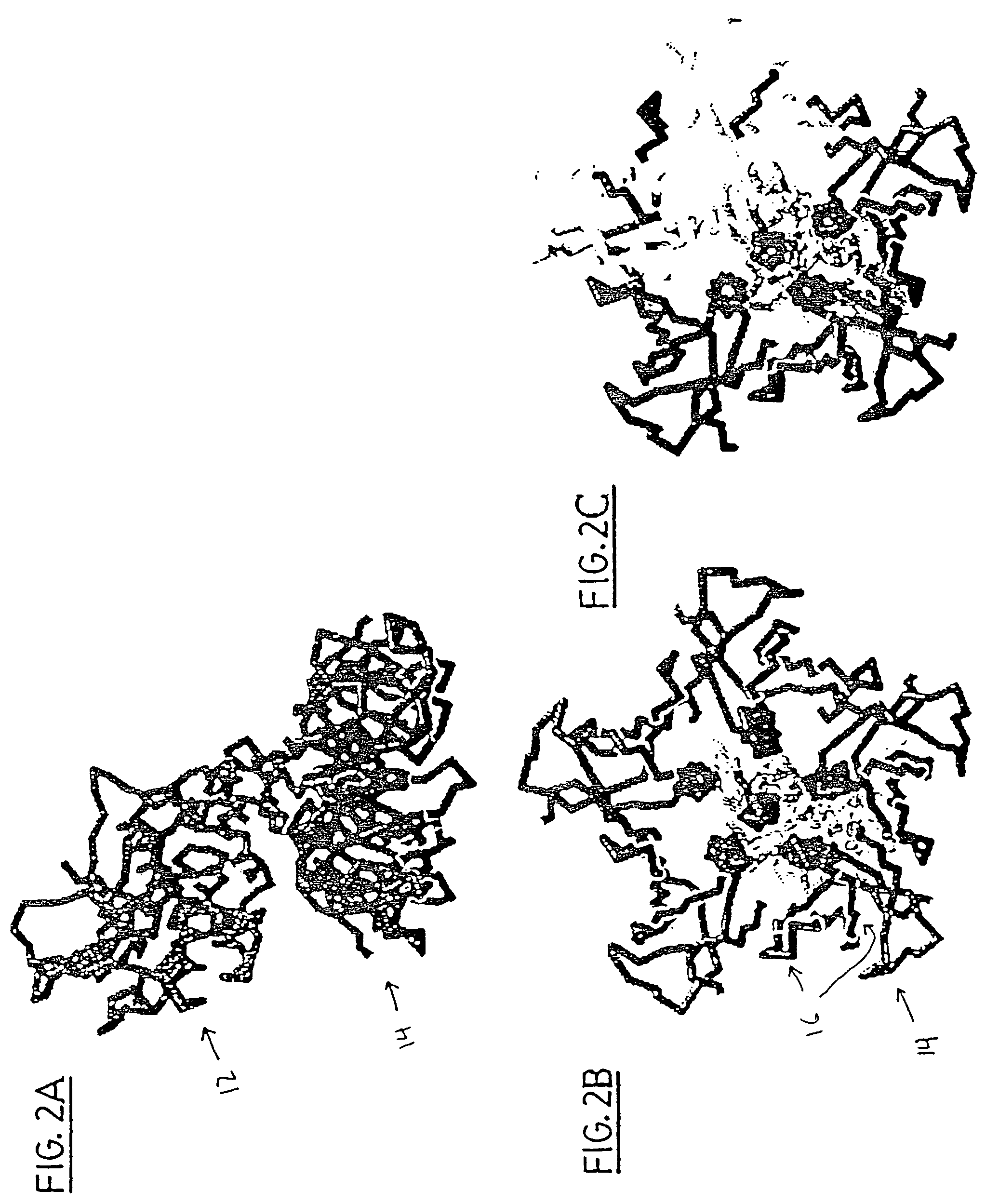
Figure 2 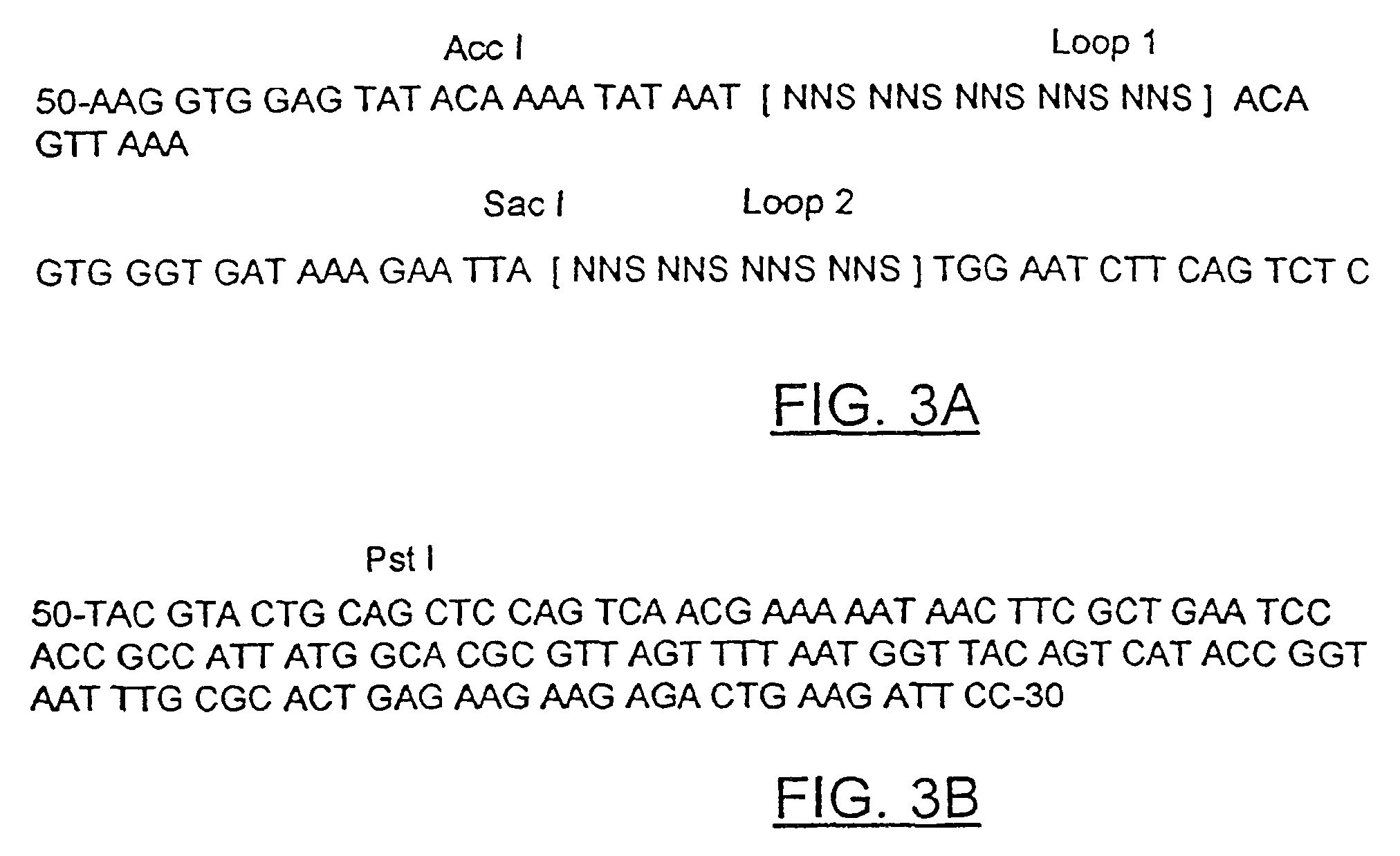
Figure 3
Abstract
Description
CROSS REFERENCE TO RELATED APPLICATION
[0001] This application a 371 of PCT Patent Application CA98 / 01137, which claims priority from Canadian patent application number 2,222,993, filed Feb. 4, 1998, which is pending.FIELD OF THE INVENTION
[0002] The invention relates to methods for identifying new therapeutic or diagnostic proteins capable of binding to a target cell, and uses for those methods.BACKGROUND OF THE INVENTION
[0003] Most present-day chemotherapeutic agents used in controlling eukaryotic cell proliferation (as exemplified by anticancer and antifungal agents) tend to be small molecules that are able to perform a single task relatively well, i.e., killing or arresting the proliferation of rapidly dividing cells. Unfortunately, most of these chemotherapeutics possess minimal tissue specificity and non-optimal biodistribution profiles. In addition, the use of cytotoxic or cytostatic drugs in doses sufficient to halt the growth of malignant cells represents a selection pressure th...
Examples
example 1
Designing Shiga Toxin Libraries to Derive Useful Diagnostic and Therapeutic Agents Targeted at Defined Eukaryotic Cell Populations
[0041]In accordance with the invention, the receptor specificity of the toxin, which is encoded by its B subunit, was altered by random mutagenesis. Mutations in the B subunit were kept to a minimum in order to lessen any negative effects on other functions of the toxin such as the toxicity of its A chain and the proper folding and assembly of the holotoxin (i.e., pentamerization of the B subunit, insertion of the A2 domain into the B pentamer, exposure and orientation of the protease sensitive loop, and packing environment of the translocation domain).
[0042]Shiga and Shiga-like toxin 1 have identical B subunits. The B subunit is a small protein composed of only 69 amino acids that pentamerizes spontaneously in solution. Its crystal structure (as a pentamer of B subunits) has been solved in the presence and absence of the A subunit (4,5) and has been show...
example 2
Mutagenesis and Construction of Heteromeric Cytotoxic Protein Combinatorial Libraries
[0044]Shiga and Shiga-like toxin 1 differ in sequence by only one amino acid in their A subunit and have identical B subunits. Although the random mutagenesis procedures described herein use the SLT-1 gene, the simpler terminology “Shiga toxin library” has been used rather than “Shiga-like toxin 1 library” in defining an ensemble of mutant proteins derived from the Shiga toxin structural template.
[0045]Briefly, the recombinant plasmid pJLB28 (32) was used as a template for mutagenesis. This construct carries a BglII-BalI fragment of bacteriophage H-19B inserted in pUC19, which specifies for the production of active SLT-1 holotoxin. An additional construct was made by cloning a PCR product consisting of the SLT-1 gene carried by pJLB28 into the prokaryotic expression vector pTUG (92). The latter construct, pTGXH, encodes for the production of SLT-1 with a hexa-histidine sequence fused to the N-termin...
example 3
Screening of Heteromeric Cytotoxic Protein Combinatorial Library Against Breast Cancer Cell SK-BR-3
[0051]An initial library was constructed using the USE method with a mutagenic oligonucleotide with a 12.5% doping level. Following transformation of E. coli strain JM101 with vector DNA within which the randomized oligonucleotide had been incorporated, colonies picked from agar plates were grown in 96-well plates with conical well-bottoms and individual clones were picked from isolates. To confirm that the variants were producing toxin with an A chain capable of inactivating ribosomes, extracts produced by 17 clones selected at random were collected and assayed for their ability to inhibit eukaryotic protein synthesis. This assay uses Promega TnT coupled transcription / translation reticulocyte lysate system, and consists of measuring the product of a luciferase gene in the presence and absence of bacterial extracts. The extracts of all the clones tested inhibited translation of the luc...