
Temperature sensor apparatus and method
a technology of temperature sensor and bridge, applied in the direction of heat measurement, optical radiation measurement, instruments, etc., can solve the problems of preventing the detection of faster dynamics, and achieve the effect of eliminating the slowly varying portion, and facilitating the measurement of voltag
Patent Information
- Authority / Receiving Office
- US · United States
- Patent Type
- Applications(United States)
- Current Assignee / Owner
- Publication Date
- 2005-01-20
- Estimated Expiration
- Not applicable · inactive patent
Smart Images
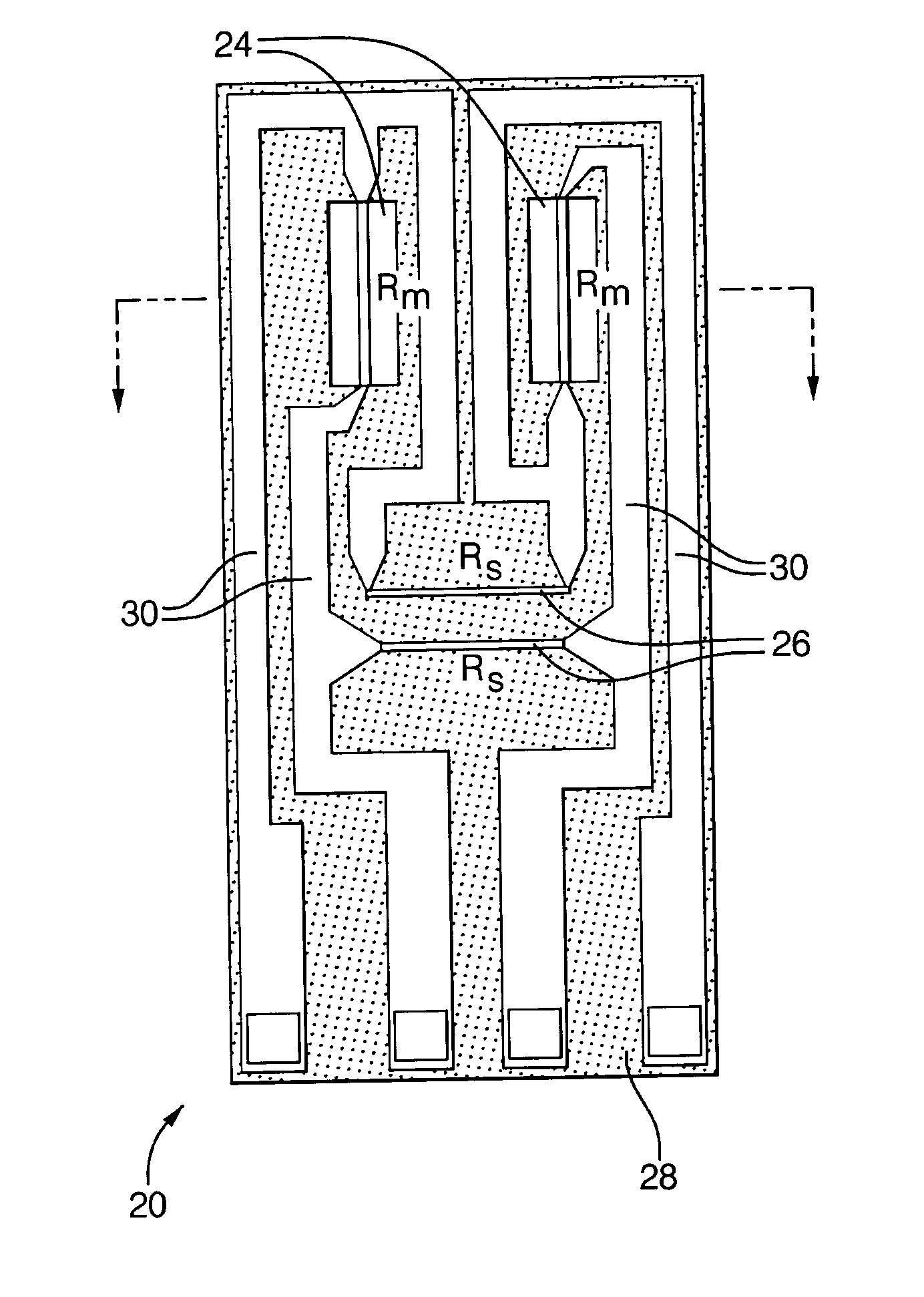
Figure 1 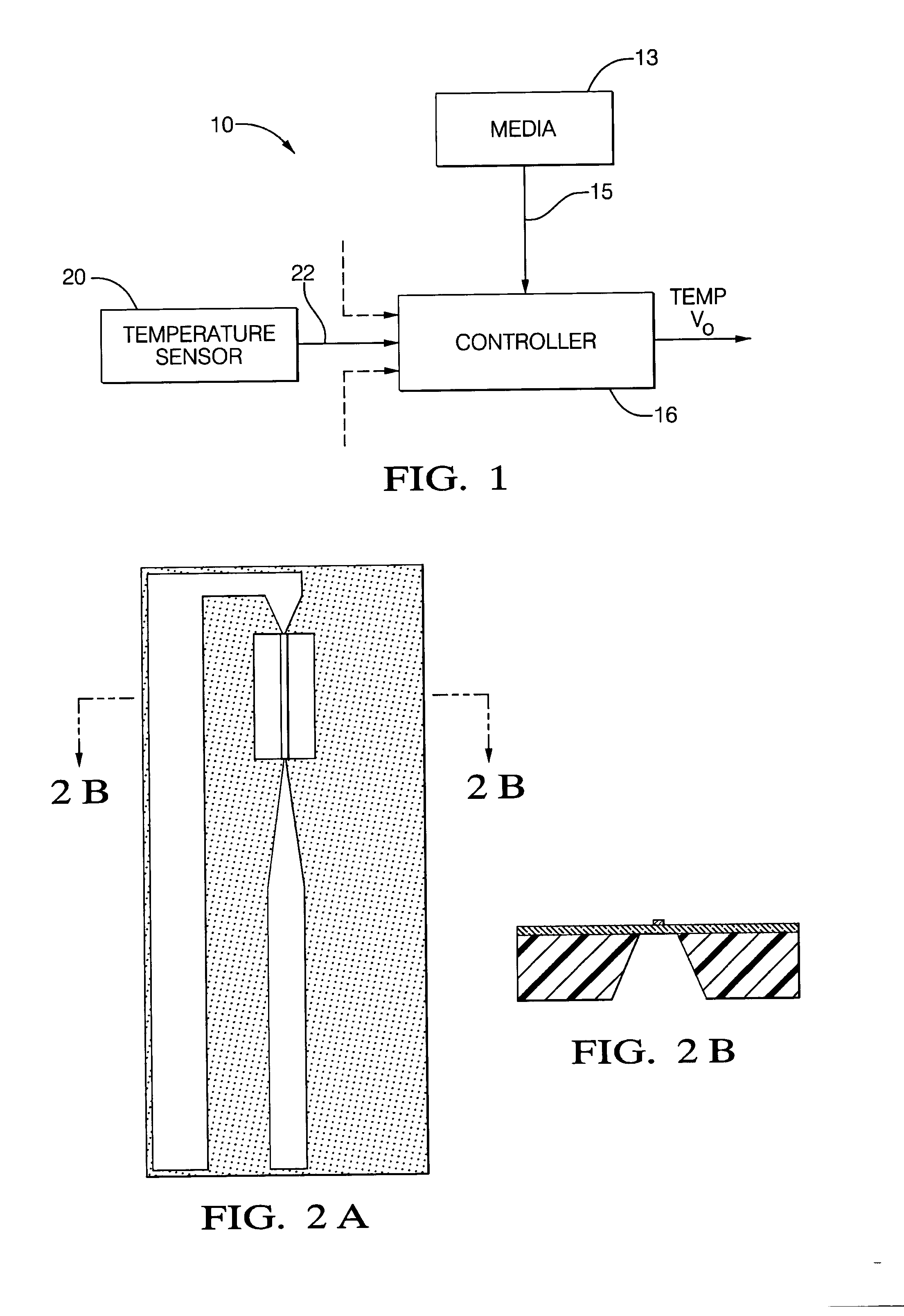
Figure 2 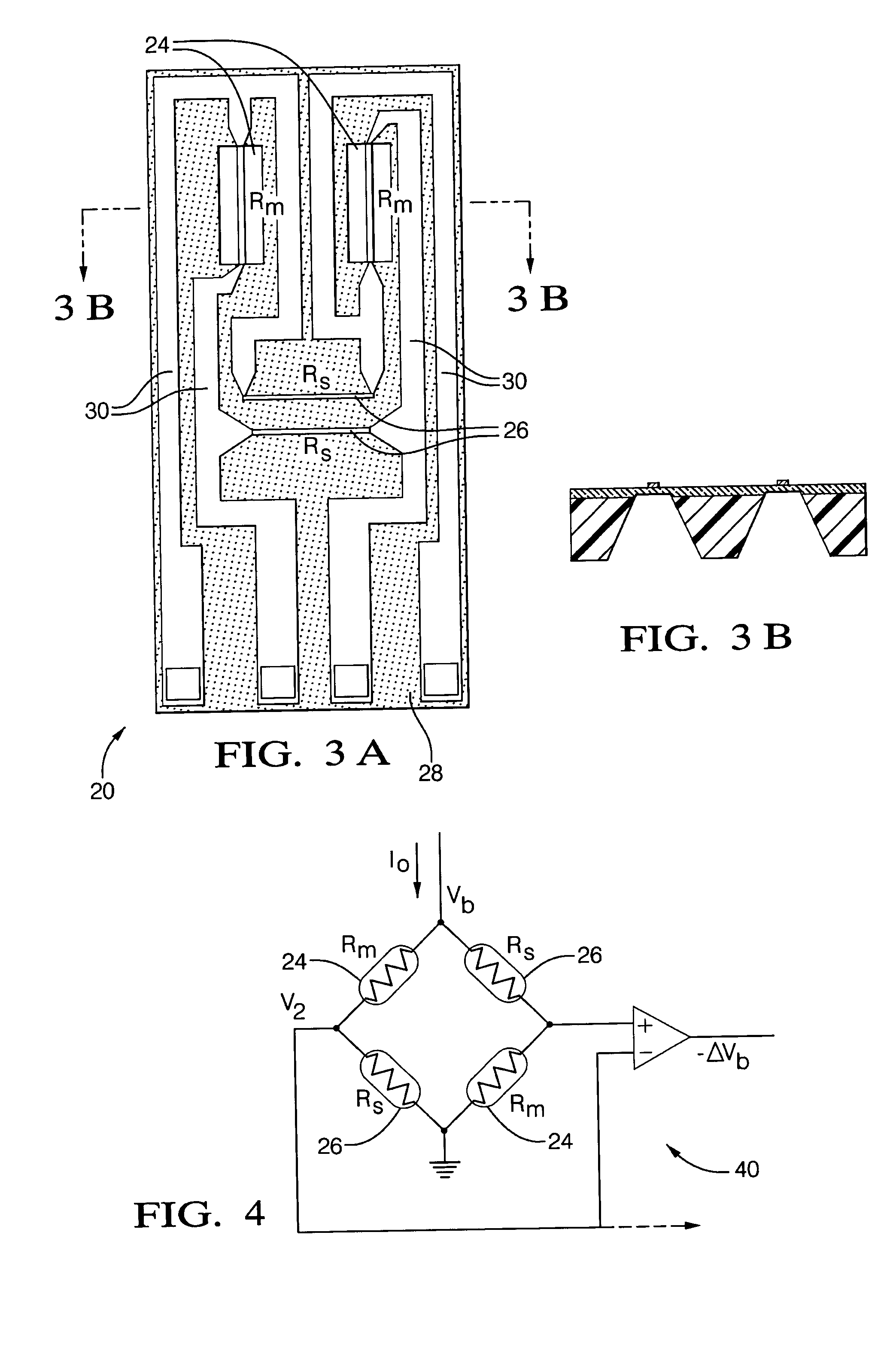
Figure 3
Abstract
Description
BACKGROUND This invention relates to a temperature sensor bridge apparatus and an algorithm for processing signals therefrom. Temperature sensors with fast response-time are desirable for a number of applications. A conventional approach for fast temperature sensing a micromachined MEMS device with a low thermal mass membrane where the temperature detector is located. The detector typically responds very quickly during the initial phase of a thermal event, followed by a much slower phase that is representative of the slower dynamics of the bulk of the silicon device. Unfortunately, the slower response due to the bulk of the silicon impedes detection of the faster dynamics. Therefore, it would be beneficial to provide an approach whereby the fast response component is detected and extracted through a novel use of a temperature detector bridge and associated electronics. BRIEF SUMMARY Disclosed herein is a temperature sensor comprising: a first substrate resistance configured to be...
Examples
Embodiment Construction
Temperature sensors with fast response-time are desirable for a number of applications including, but not limited to automotive engine control and emission control. A conventional approach for fast temperature sensing includes a micro-electro-mechanical systems (MEMS) device. A low thermal mass membrane includes the temperature detector. The detector typically responds very quickly during the initial phase of a thermal event, followed by a much slower phase that is representative of the slower dynamics associated with the bulk of the silicon device. Disclosed herein in an exemplary embodiment is an apparatus and methodology whereby the fast response component is extracted utilizing a temperature detector bridge and associated electronics.
Referring to FIG. 1, reference numeral 10 generally designates a control system suitable for implementation of the disclosed embodiments. It should be noted that although the disclosed embodiments may be described by way of reference to temperatu...