
Method for reducing write barrier overhead
a write barrier and overhead technology, applied in the field of automatic memory management, can solve the problems of reducing the throughput of applications, java does not provide the programmer with an explicit mechanism, etc., and achieve the effect of eliminating write barrier code and eliminating write barrier cod
Patent Information
- Authority / Receiving Office
- US · United States
- Patent Type
- Patents(United States)
- Current Assignee / Owner
- Publication Date
- 2007-04-24
- Estimated Expiration
- Not applicable · inactive patent
Smart Images
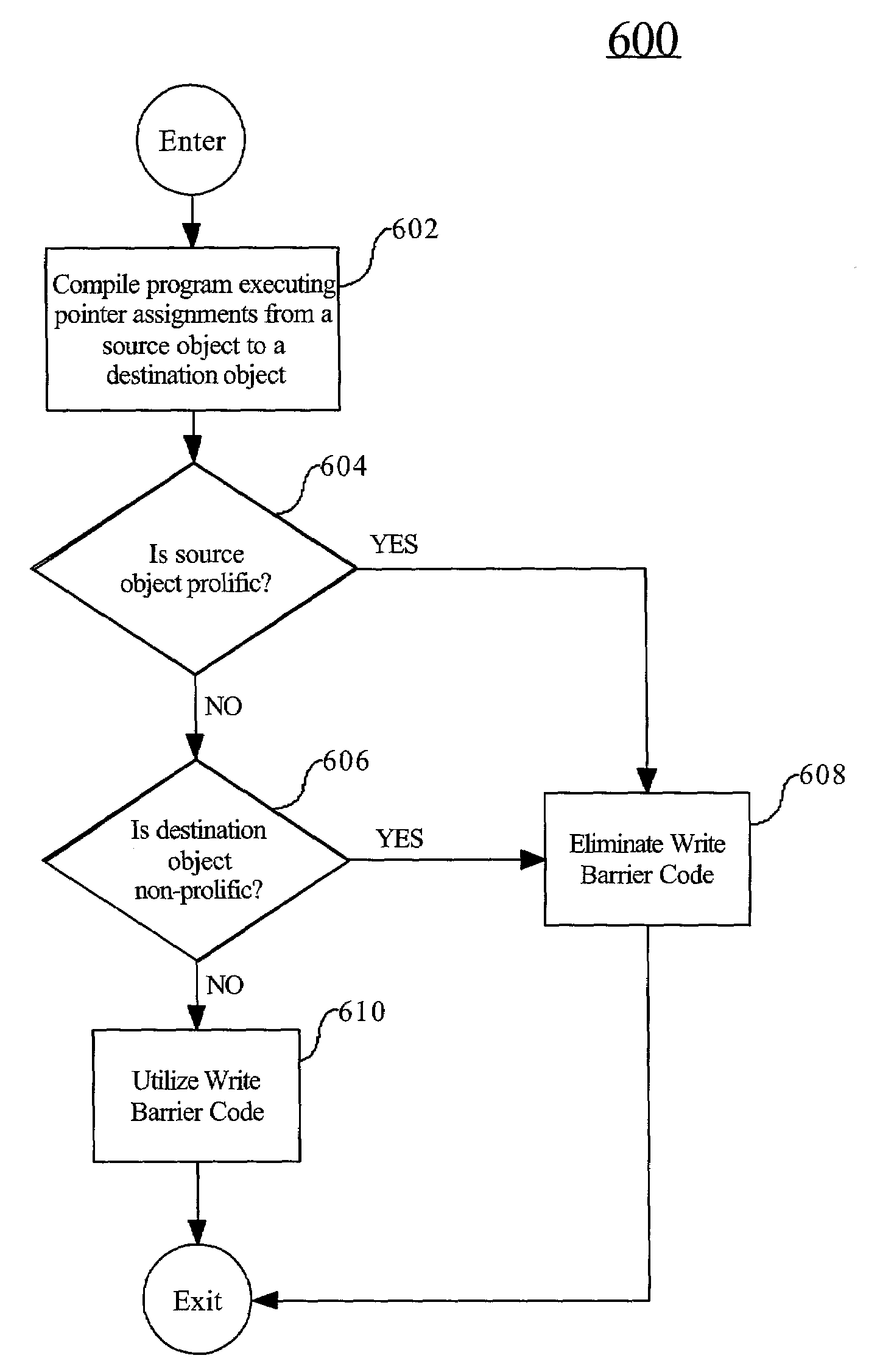
Figure 1 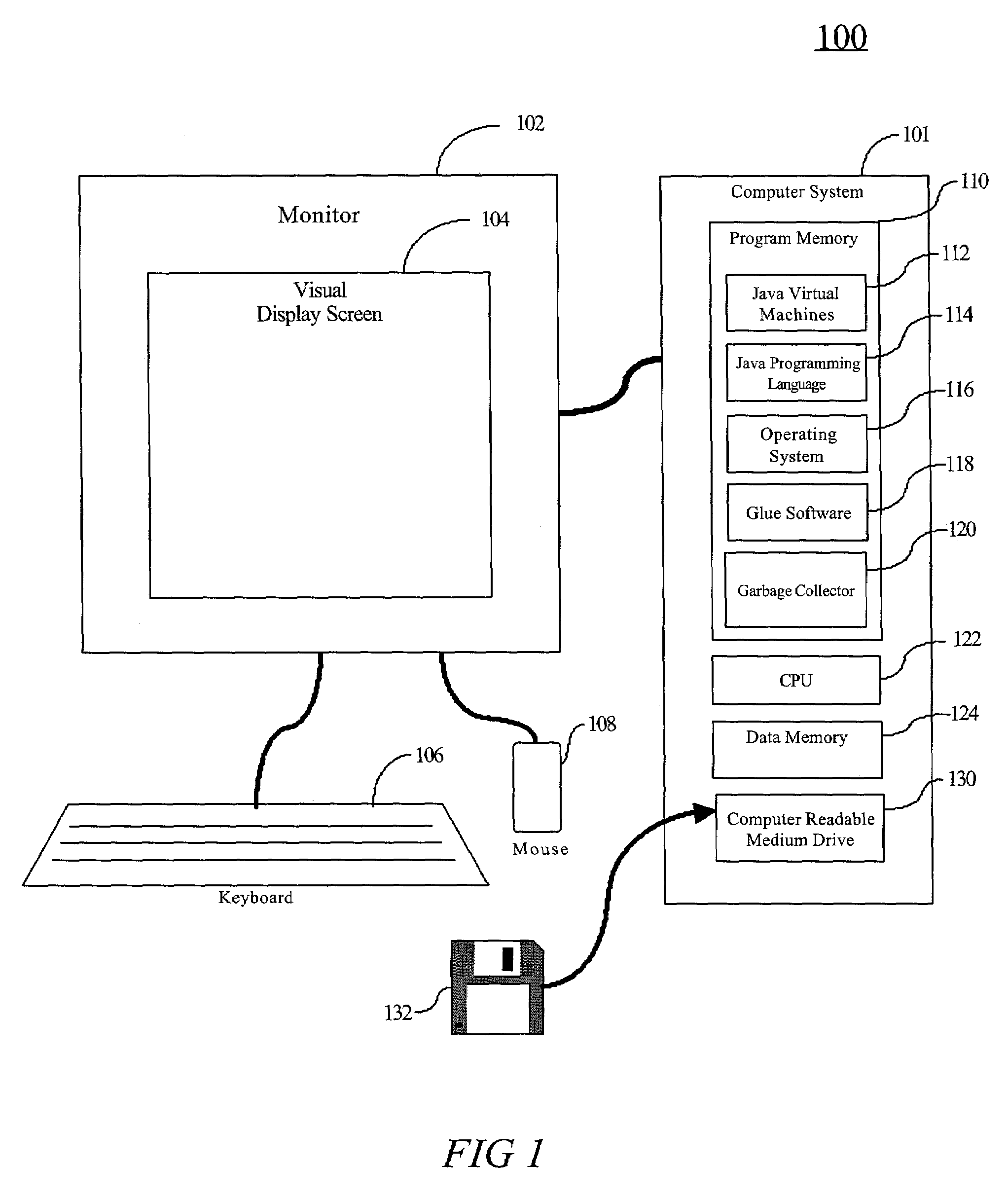
Figure 2 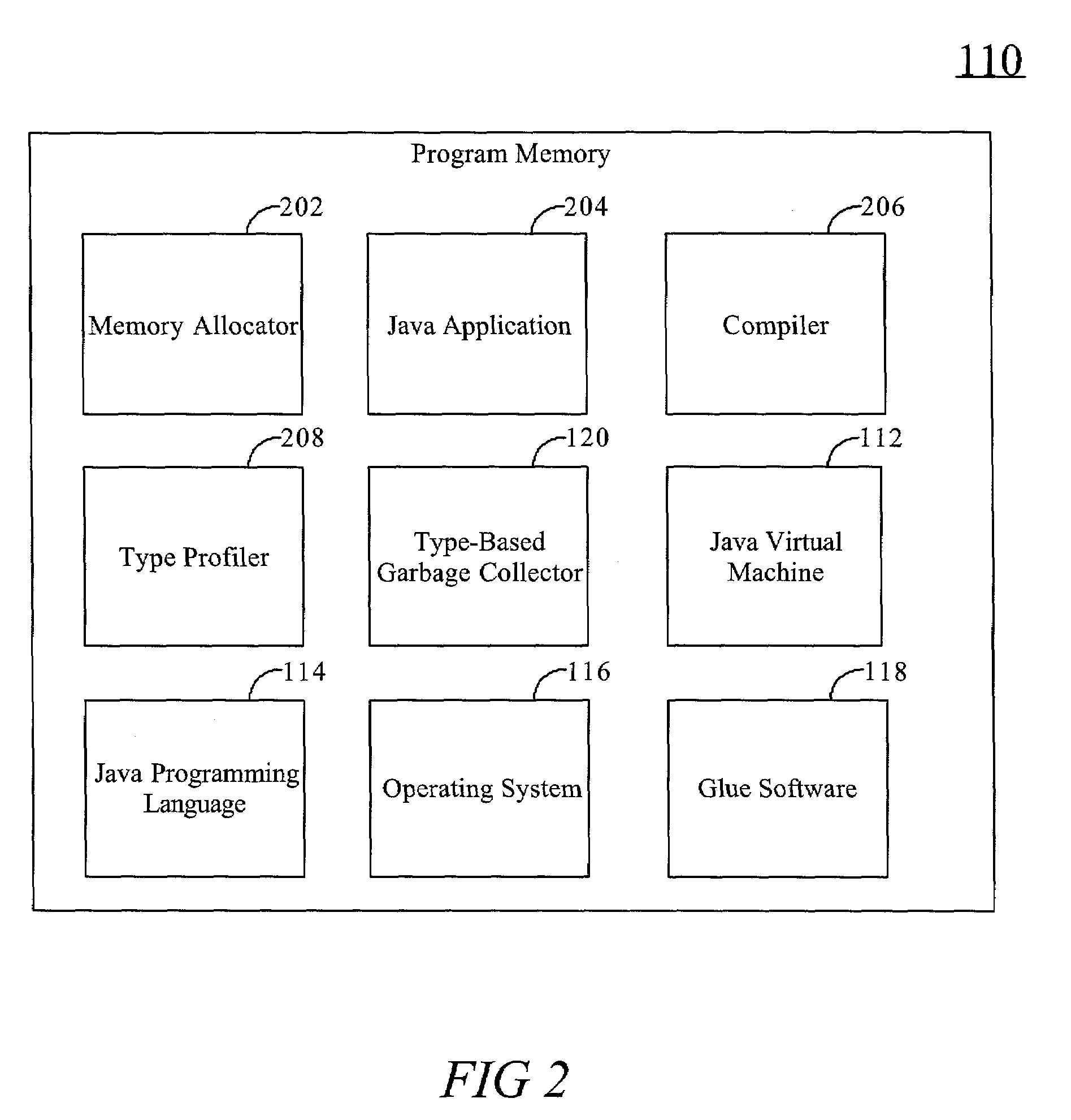
Figure 3
Abstract
Description
CROSS-REFERENCE TO RELATED APPLICATIONS
[0001] This application is based upon and claims priority from prior U.S. Provisional Patent Application No. 60 / 278,060, filed on Mar. 22, 2001, and further is based upon and claims priority from prior U.S. Provisional Patent Application No. 60 / 281,759, filed on Apr. 5, 2001, collectively the entire disclosure of which is herein incorporated by reference.
[0002] The present patent application is related to co-pending and commonly owned U.S. patent application Ser. No. 10 / 093,656, entitled “Method for Efficient Garbage Collection Based on Object Types”, filed on even date with the present patent application, the entire teachings of which being hereby incorporated by reference.BACKGROUND OF THE INVENTION
[0003] 1. Field of the Invention
[0004] This invention generally relates to the field of automatic memory management, and more particularly relates to a system and method for reducing write barrier overhead.
[0005] 2. Description of Related Art
[0006] The p...
Examples
Embodiment Construction
[0029]The present invention, according to a preferred embodiment, overcomes problems with the prior art by implementing a new approach to garbage collection based on the notion of prolific and non-prolific object types. Relatively few object types, referred to as prolific types, usually account for a large percentage of objects (and heap space) cumulatively allocated by the program. The objects of prolific types have short lifetimes, and therefore, account for a large percentage of garbage that is collectible at various points during program execution. The present invention, according to a preferred embodiment, presents a new approach to garbage collection that relies on finding garbage primarily among prolific objects. The present invention improves upon generational garbage collection by distinguishing between groups of objects based on type rather than age.
[0030]In a preferred embodiment of a type-based garbage collector, all objects of a prolific type are assigned at allocation ...