
Bypass controlled regeneration of NOx adsorbers
Patent Information
- Authority / Receiving Office
- US · United States
- Current Assignee / Owner
- Publication Date
- 2005-10-13
- Estimated Expiration
- Not applicable · inactive patent
Smart Images
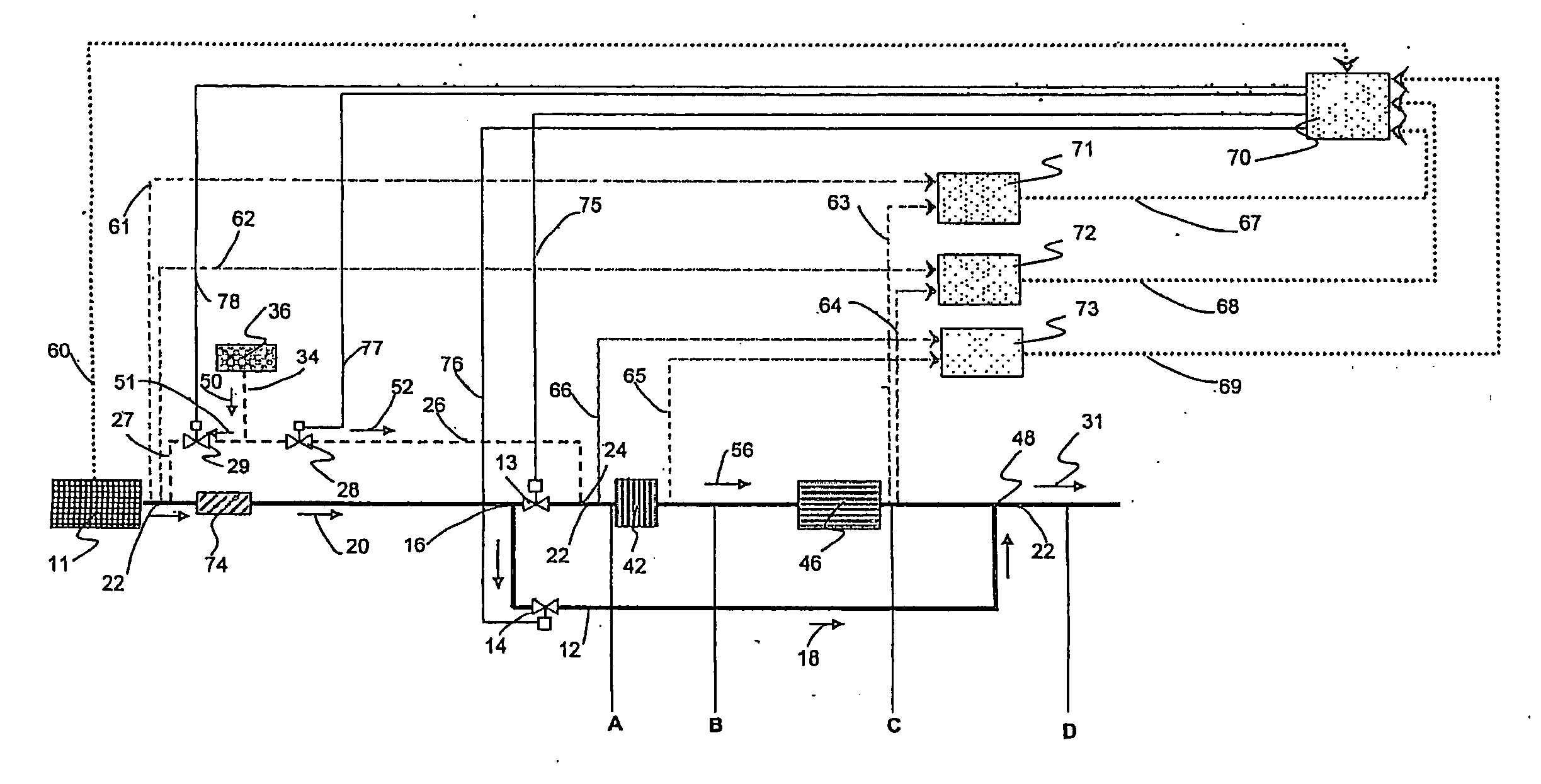
Figure 1 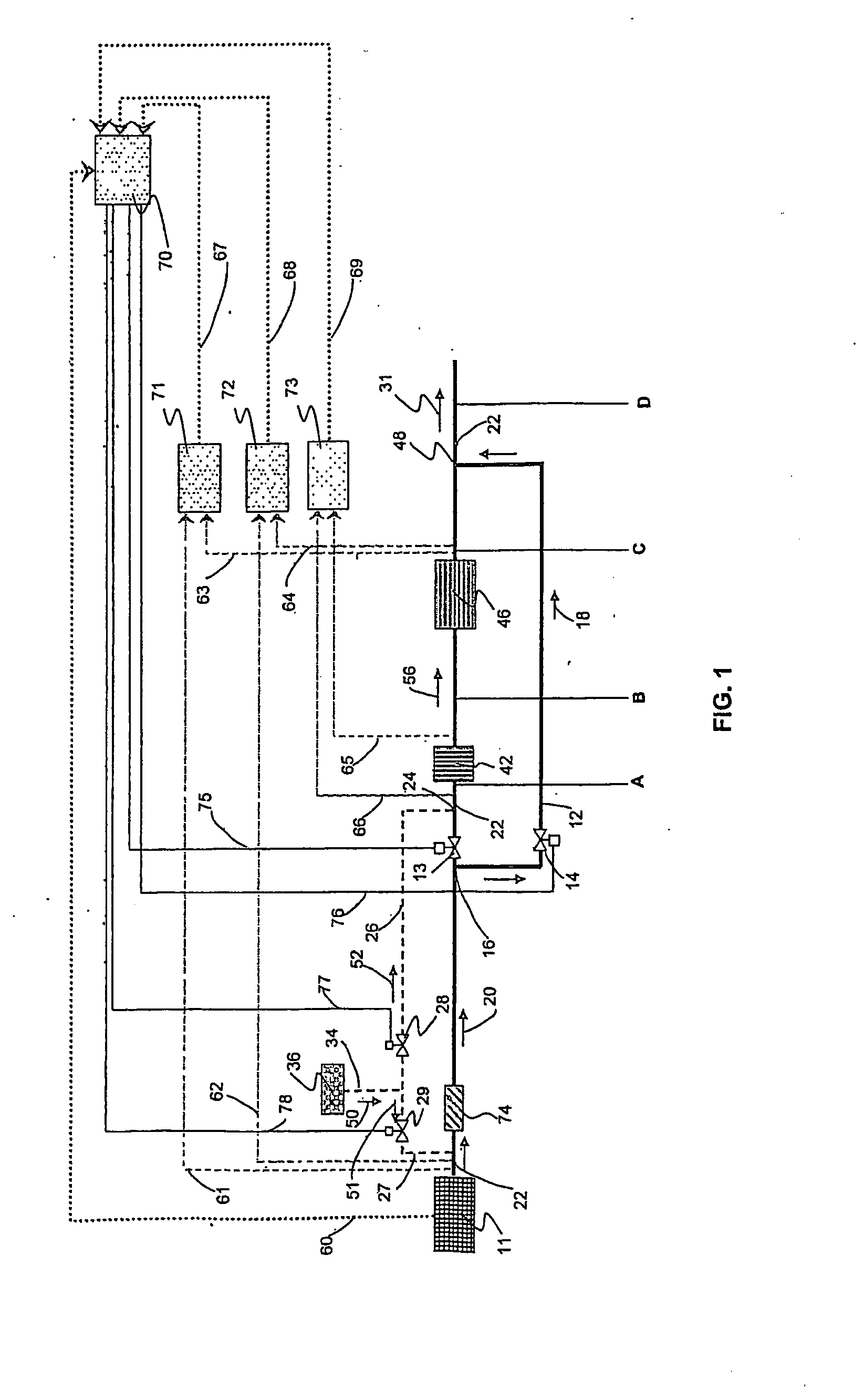
Figure 2 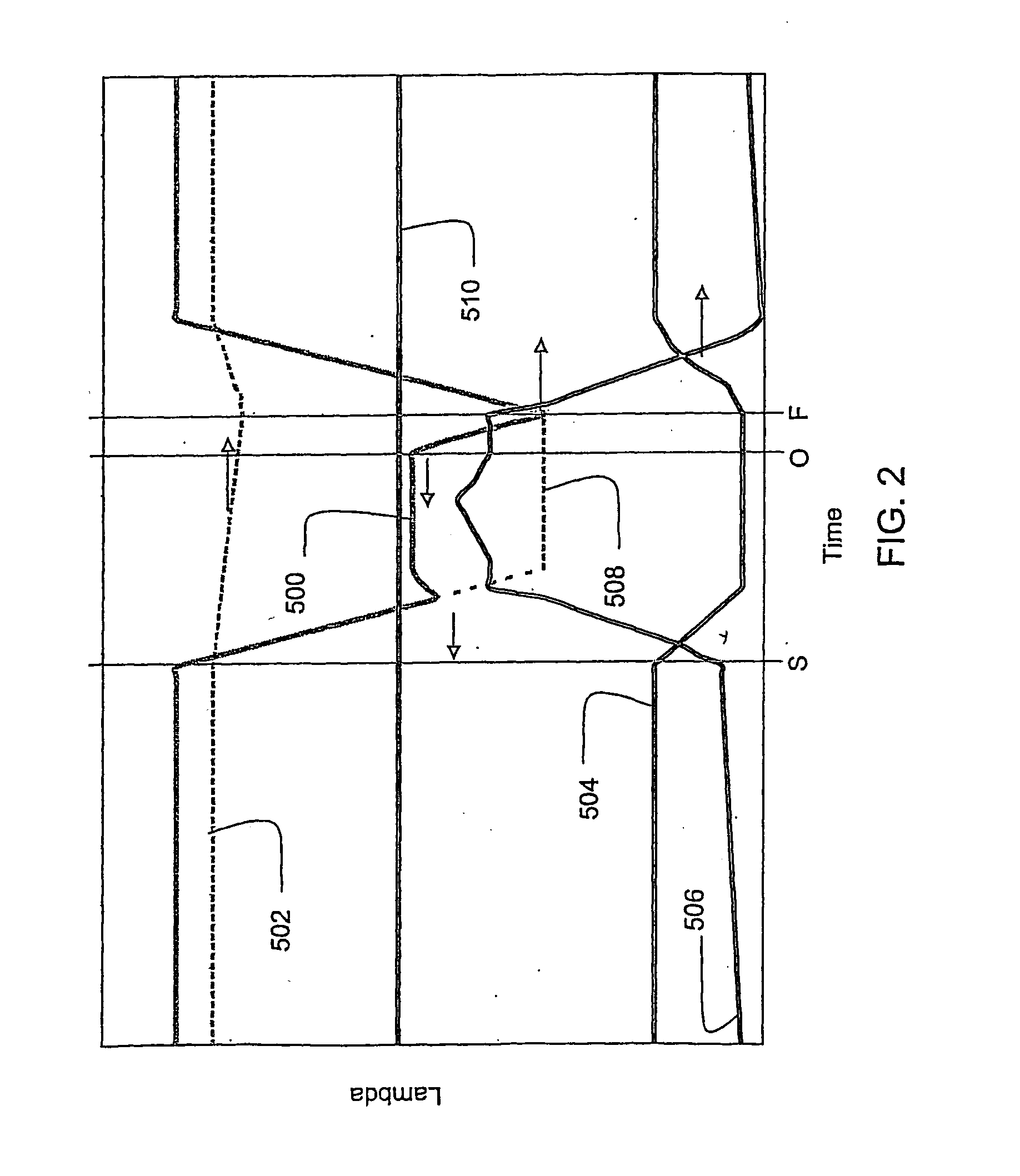
Figure 3
Abstract
Description
CROSS-REFERENCE TO RELATED APPLICATION(S)
[0001] This application is a continuation of International Application No. PCT / CA2003 / 001467, having an international filing date of Oct. 2, 2003, entitled “Bypass Controlled Regeneration Of NOx Adsorbers”. International Application No. PCT / CA2003 / 001467 claimed priority benefits, in turn, from Canadian Patent Application No. 2,406,386 filed Oct. 2, 2002, and Canadian Patent Application No. 2,422,188 filed Mar. 14, 2003. International Application No. PCT / CA2003 / 001467 is also hereby incorporated by reference herein in its entirety.FIELD OF THE INVENTION
[0002] This invention relates to methods and apparatus for regenerating NOx absorbers used in association with internal combustion engines. BACKGROUND OF THE INVENTION
[0003] Emissions controls for internal combustion engines are becoming increasingly important in transportation and energy applications. One class of pollutants of concern is oxides of nitrogen (NOx). NOx form during combustion...
Examples
Embodiment Construction
)
[0090] A method of regenerating a NOx adsorber that is used to treat exhaust gases created during combustion in the combustion chamber is disclosed. A hydrocarbon, preferably methane, is introduced into the exhaust line wherein the hydrocarbon is oxidized and reformed within the exhaust line to generate hydrogen, which is used to regenerate the NOx absorber. CO, as well as hydrogen, is generated during reformation of methane resulting in a regeneration mixture that includes both hydrogen and CO. The aftertreatment system is capable of directing an amount of exhaust gas to by-pass the NOx adsorber during regeneration for the purposes of reducing regeneration flow, hydrocarbon consumption, emissions, and regeneration time. Specific markers, indicative of the properties of the exhaust gas, can be used to identify completion of regeneration.
[0091]FIG. 1 is a schematic showing an aftertreatment system according to a preferred embodiment of the invention. An exhaust line 22 carries exha...