
System for identifying patient response to anesthesia infusion
a technology for identifying patient response and anesthesia, which is applied in the field of systems for monitoring patients during anesthesia infusion, can solve the problem that feeding control alone cannot avoid large fluctuations in bis values
Patent Information
- Authority / Receiving Office
- US · United States
- Patent Type
- Applications(United States)
- Current Assignee / Owner
- Publication Date
- 2007-01-18
- Estimated Expiration
- Not applicable · inactive patent
Smart Images
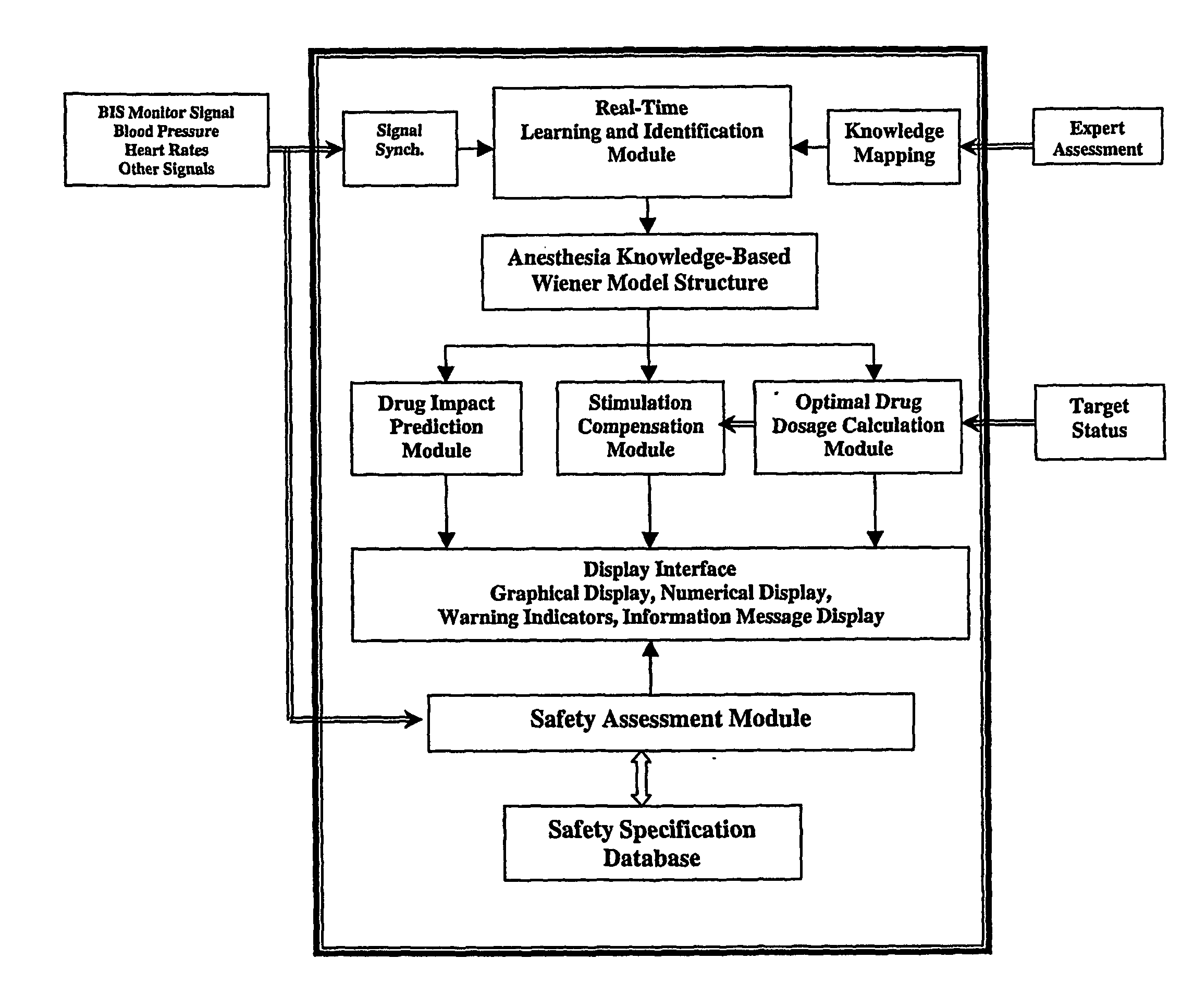
Figure 1 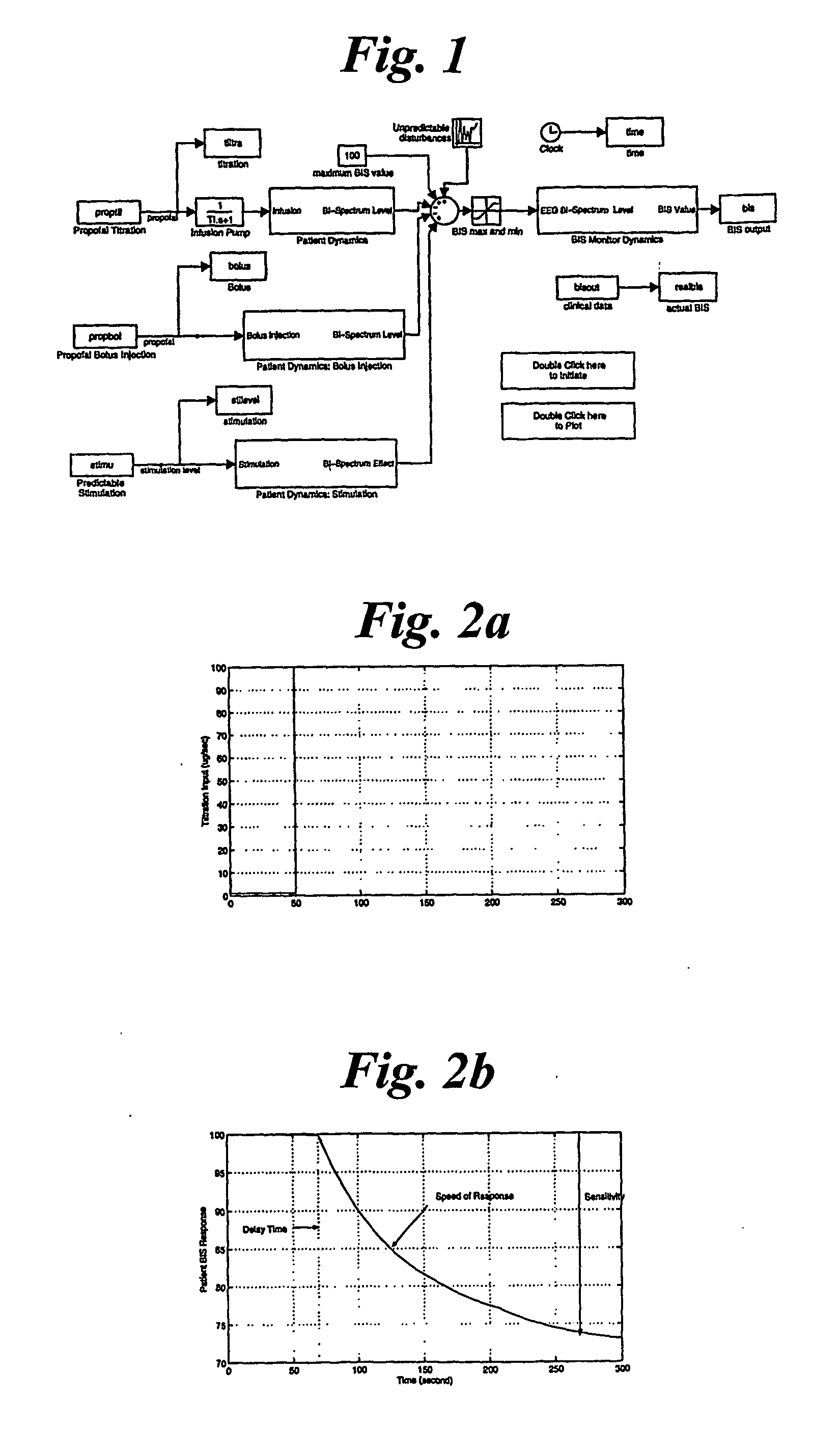
Figure 2 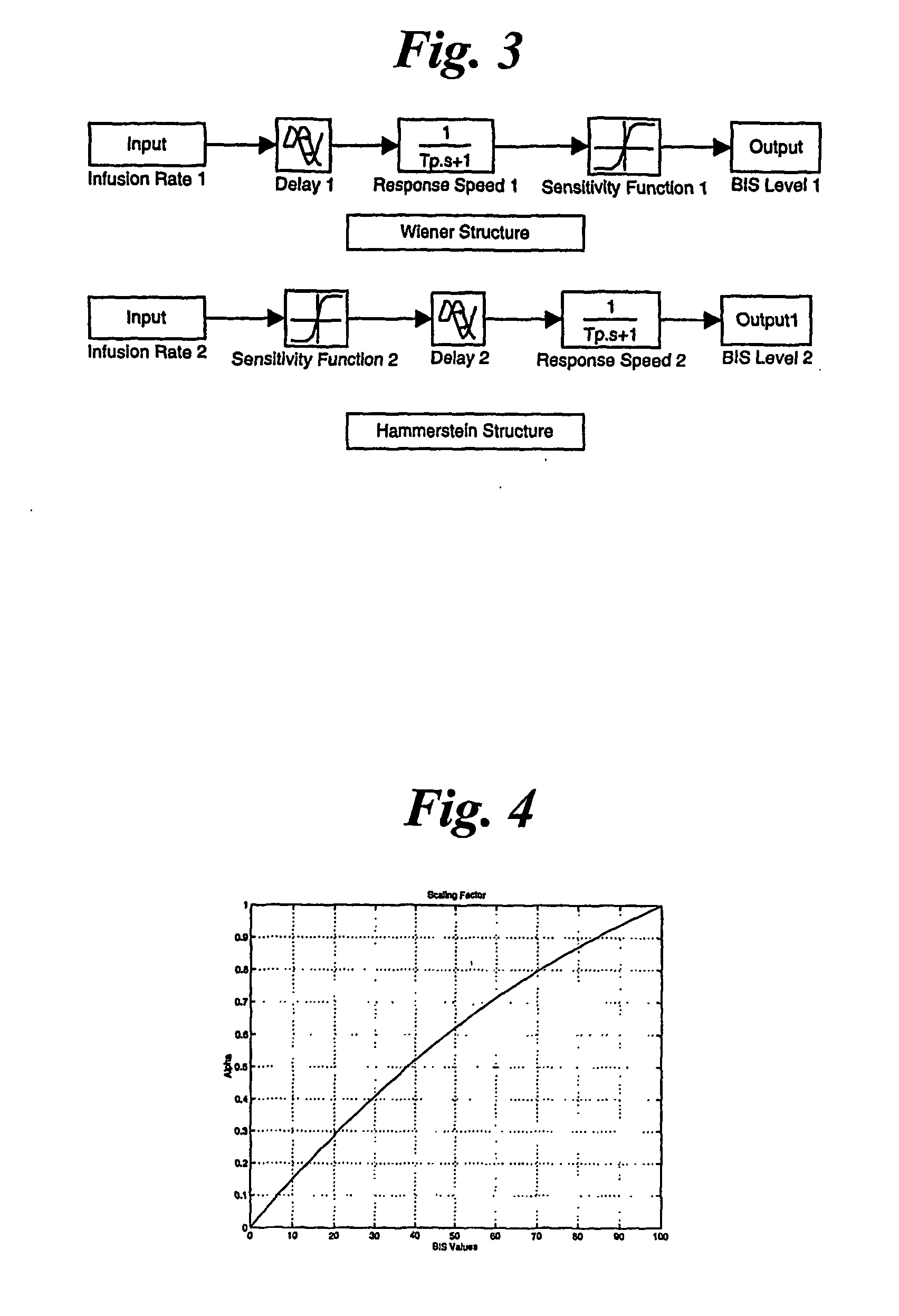
Figure 3
Abstract
Description
BACKGROUND OF THE INVENTION
[0001] 1. Field of the Invention
[0002] This invention relates generally to systems for monitoring patients during infusion of anesthesia, and more particularly, to a model structure that captures basic characteristics in patients' responses to anesthesia and surgical stimulation, such as BIS-based responses.
[0003] 2. Description of the Related Art
[0004] The goals of general anesthesia are to achieve hypnosis, analgesia, and patient immobility simultaneously throughout a surgical operation while maintaining the vital functions of the body. One of the most critical tasks of anesthesia is to attain an adequate anesthetic depth.
[0005] Traditionally, anesthesia depth has been deduced indirectly from physiological signals, including autonomic responses such as heart rate, blood pressure, tearing, and patient's movements in response to surgical stimulations. The BIS monitor, which is based on the bi-spectrum level of an EEG signal, provides a viable direct m...
Examples
Embodiment Construction
[0061]FIG. 1 is a block and line representation of a patient model structure in accordance with the present invention. The model contains three building blocks, each with a similar structure, as shown in FIG. 1. The first two blocks represent the patient response to propofol titration and bolus injection, respectively. The third block characterizes the patient response to predictable stimulation such as incision, closing, etc. For concreteness, it is assumed that propofol is the anesthesia drug although the model structure is generic and valid for other anesthesia drugs.
1. Model Structures of Patient Dynamic Responses to Drug Infusion and Stimulation
[0062] The Titration Model
[0063] Anesthesia drug titration, illustratively propofol titration, is administered in this specific illustrative embodiment of the invention by an infusion pump (Abbott / Shaw LifeCare™ Pump Model 4). The dynamic response between the titration command to the pump and the drug infusion rate at the needle poin...