
Optimal route selection in a content delivery network
a content delivery network and optimal routing technology, applied in the field of optimal routing in content delivery networks, can solve the problems of internet routers not being aware, willing or allowed to use these paths, and packets sent over those paths can get dropped or delayed, so as to improve the speed and reliability of data transfers.
Patent Information
- Authority / Receiving Office
- US · United States
- Patent Type
- Applications(United States)
- Current Assignee / Owner
- Publication Date
- 2008-01-10
- Estimated Expiration
- Not applicable · inactive patent
Smart Images
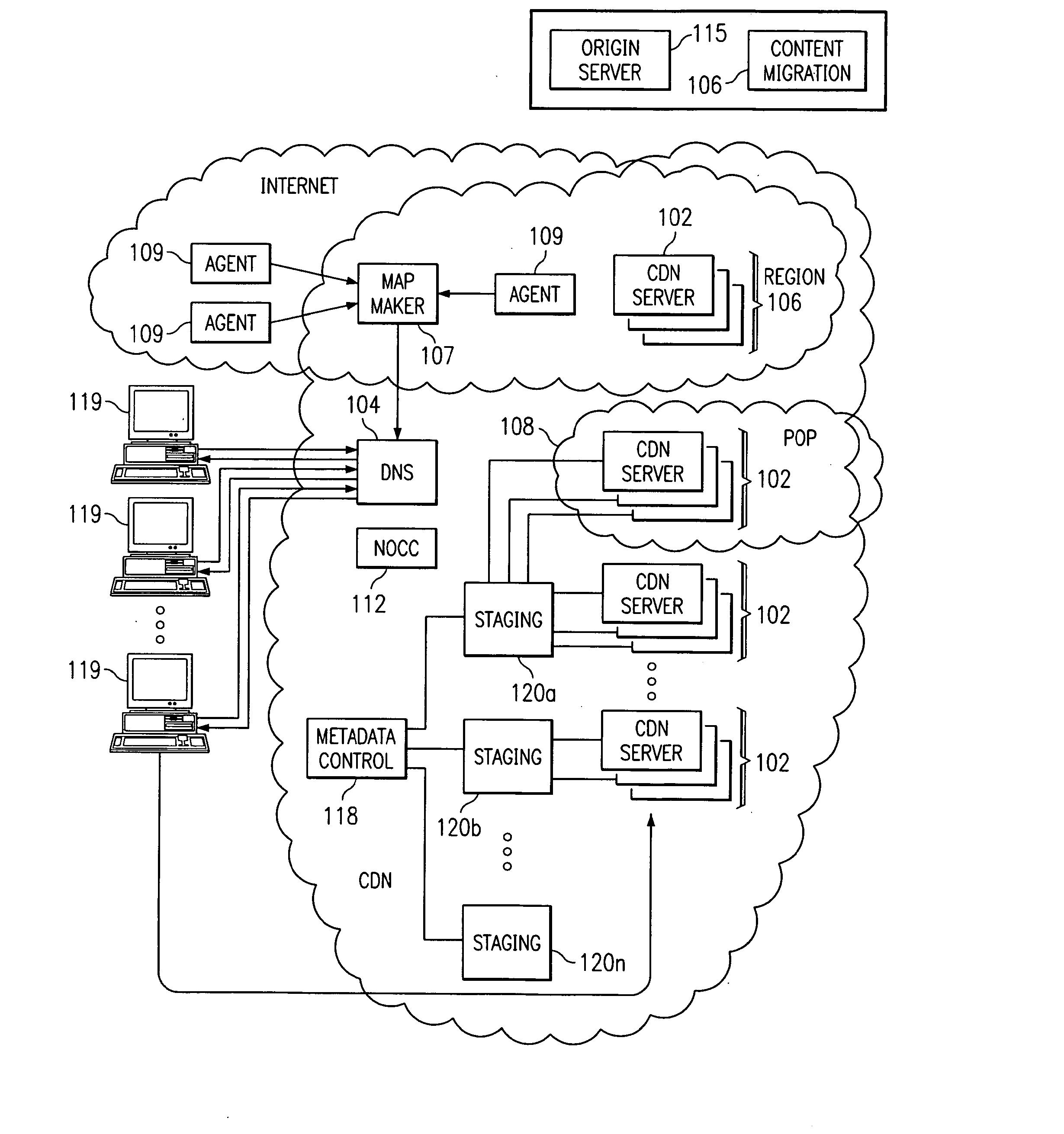
Figure 1 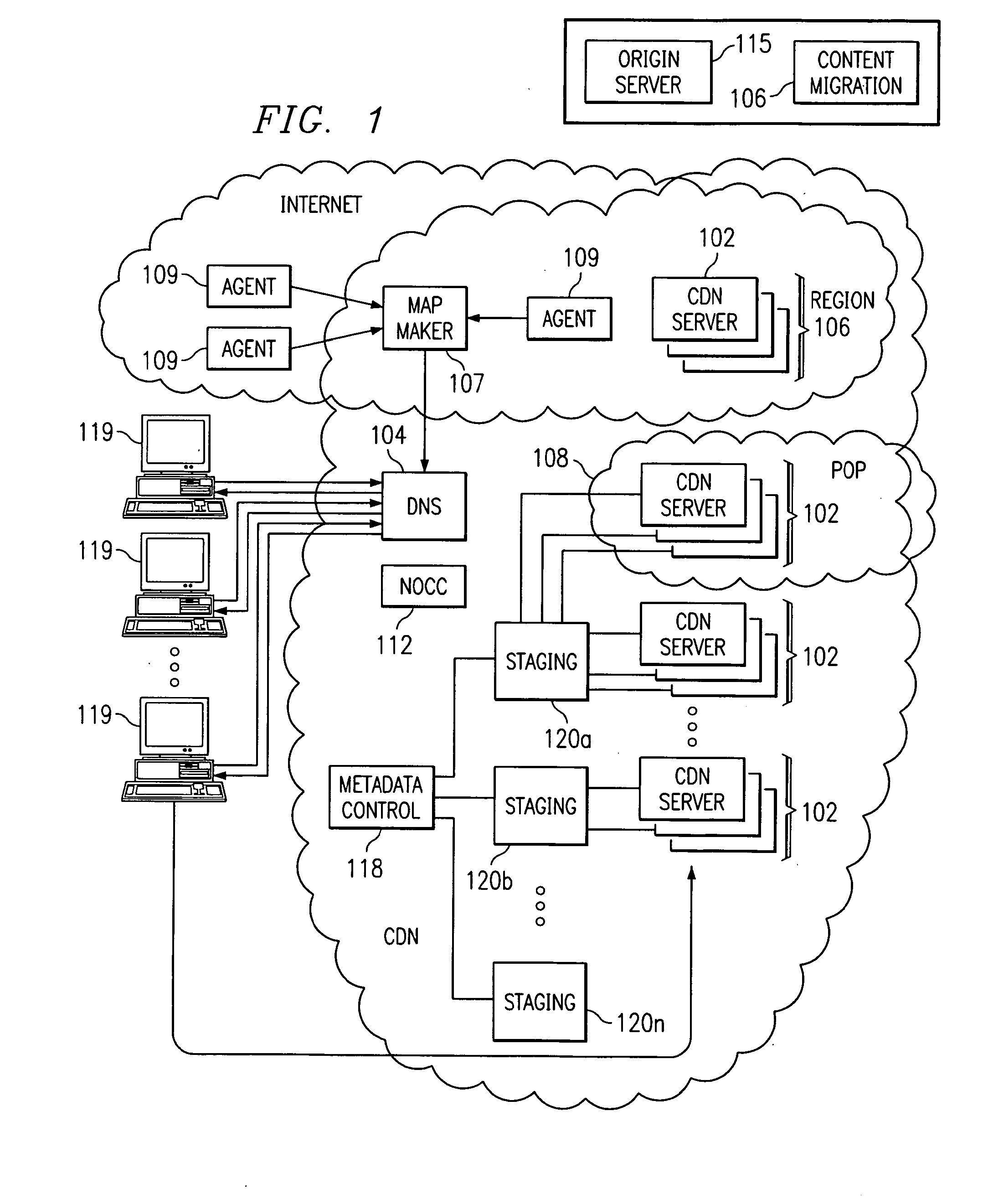
Figure 2 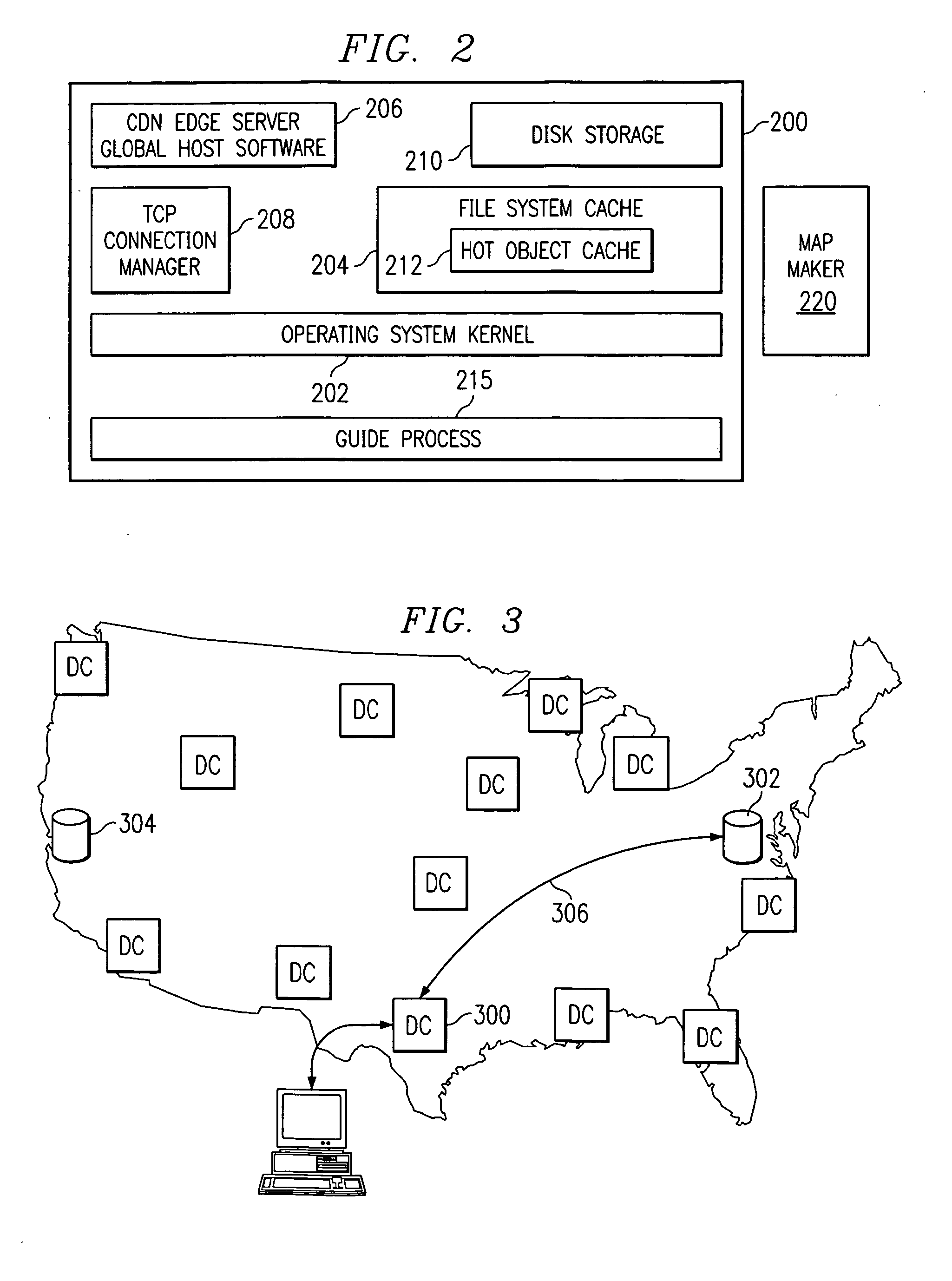
Figure 3
Abstract
Description
[0001] This application is a continuation of Ser. No. 10 / 087,033, filed Mar. 1, 2002, which application was based on and claimed priority from Ser. No. 60 / 273,241, filed Mar. 1, 2001.BACKGROUND OF THE INVENTION
[0002] 1. Technical Field
[0003] The present invention relates generally to finding the best way to route messages between various locations across the Internet while quickly adjusting to changing network conditions.
[0004] 2. Description of the Related Art
[0005] Optimal online performance has become a paramount focus for enterprises seeking to deliver a rich, interactive user experience. As more and more of today's business transactions are conducted via the Internet, companies must make certain that transactions are executed without interruption. Whether it is a purchase form, an online reservation, a customer survey or an information update, the enterprise must have some way to ensure that the transaction is complete.
[0006] One way that enterprises have sought to manage ...
Examples
Embodiment Construction
[0029] As described above, it is known in the art to delivery HTTP, streaming media and applications over an Internet content delivery network (CDN or ICDN). The present invention may leverage Internet CDN architecture and functionality such as now generally described.
[0030] As seen in FIG. 1, an Internet content delivery infrastructure usually comprises a set of “surrogate” origin servers 102 that are located at strategic locations (e.g., Internet network access points, and the like) for delivering copies of content to requesting end users 119. A surrogate origin server is defined, for example, in IETF Internet Draft titled “Requirements for Surrogates in the HTTP” dated Aug. 9, 2000, which is incorporated herein by reference. The request-routing mechanism 104 allocates servers 102 in the content delivery infrastructure to requesting clients in a way that, for web content delivery, minimizes a given client's response time and, for streaming media delivery, provides for the highest...