
High pressure barrier hose and method of manufacture
Patent Information
- Authority / Receiving Office
- US · United States
- Current Assignee / Owner
- Publication Date
- 2008-01-24
- Estimated Expiration
- Not applicable · inactive patent
Smart Images
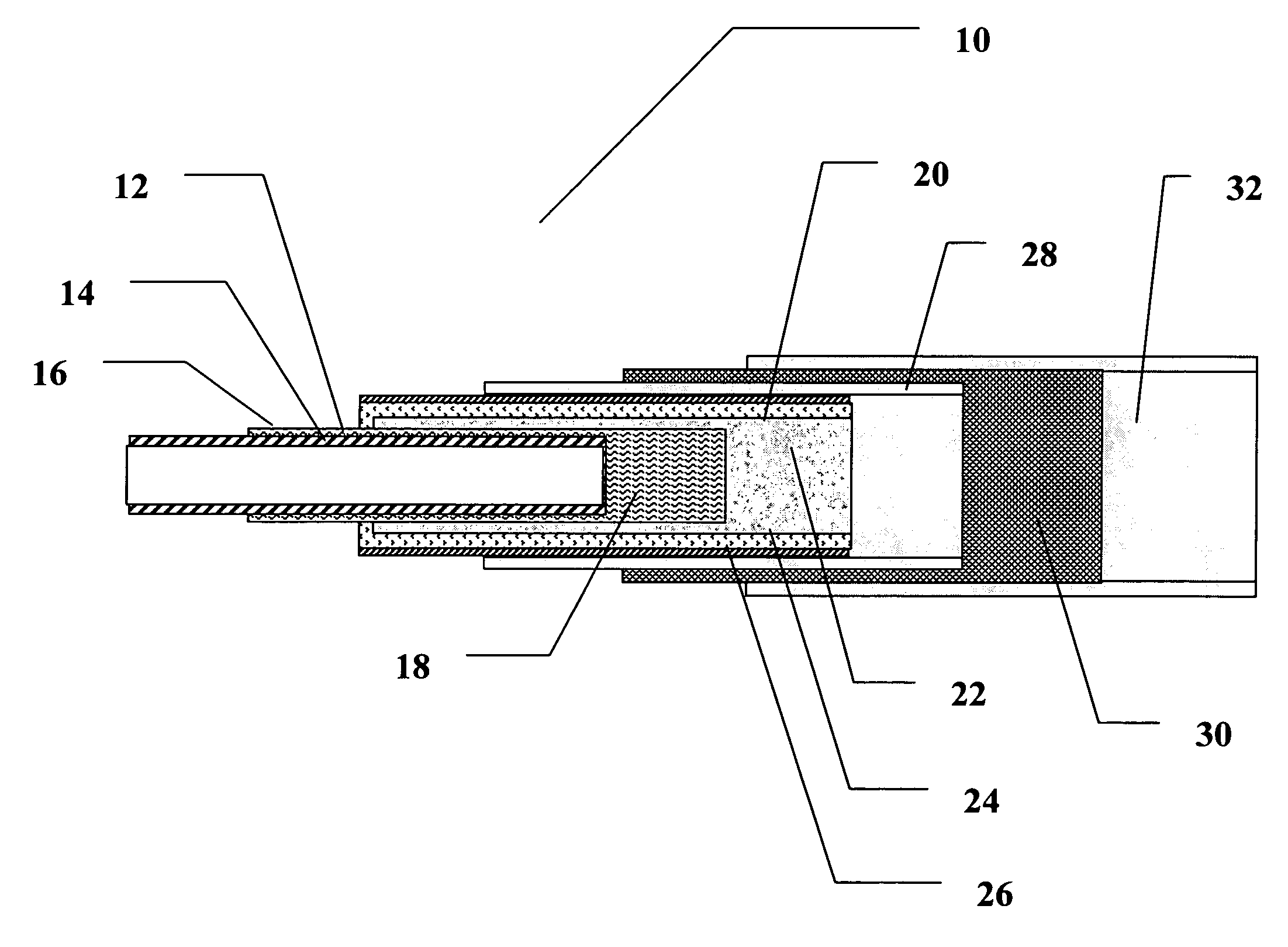
Figure 1 
Figure 2 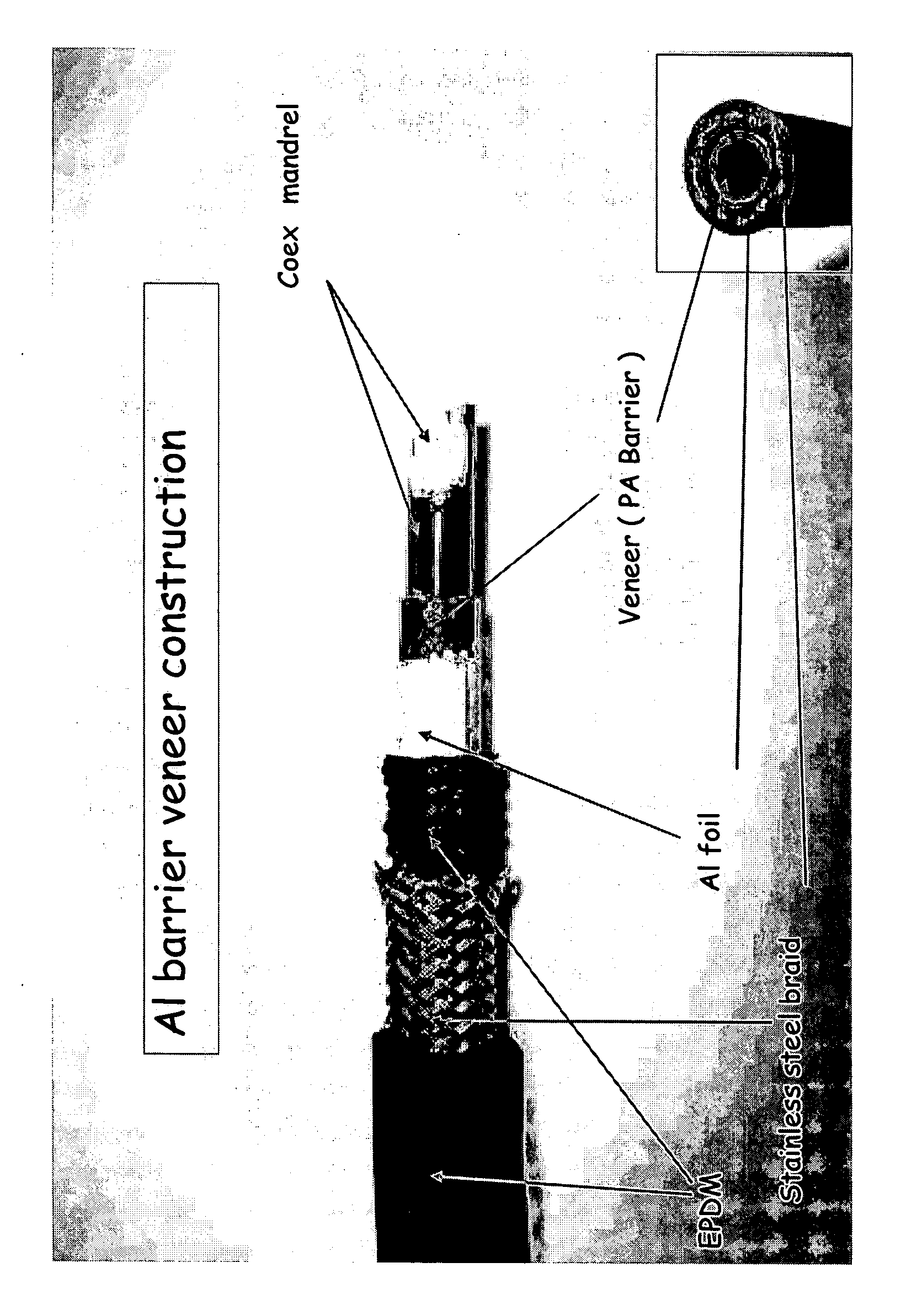
Figure 3
Abstract
Description
CROSS REFERENCE TO RELATED APPLICATIONS
[0001] This application claims the benefit of U.S. Provisional Application No. 60 / 832,855, filed Jul. 24, 2006.FIELD OF THE INVENTION
[0002] The present invention relates to flexible hoses capable of handling high pressure fluids and providing high barrier against permeation loss, and the manufacture thereof. More particularly the present invention relates to such flexible hoses for use in air conditioning, refrigeration, fuel handling, hydraulic and similar systems requiring the transport of high pressure fluids. BACKGROUND OF THE INVENTION
[0003] Many systems require the transport of fluids under high pressure. Examples of these are air conditioning and refrigeration systems where the refrigerant needs to be transported through and / or among various components of the system such as the compressor, condenser and evaporator. Hydraulic systems require transport of the hydraulic fluid from a pump to an actuator.
[0004] Hoses used for these and si...
Examples
example
[0049] A hose was constructed according to this invention in the following manner. A mandrel was first made in the form of a solid rod with a diameter of 6.4 mm. A veneer consisting of an inner layer of 0.65 mm thick Zytel® 42 (a high MWA 66 commercially available from E.I. DuPont de Nemours & Co., Inc.) and 0.1 mm thick outer tie layer of Bynel® 4206 (a maleic anhydride grafted polyethylene commercially available from E.I. DuPont de Nemours & Co., Inc.) was extruded over the mandrel. The assembly was then laminated with a metal-polymer laminate available as BFW 46 and obtained from James Dawson Enterprises Ltd of Lachine, Quebec, Canada. The laminate consisted of an inner layer of low density polyethylene, a tie layer of EEA, an aluminum foil (10 micron thick) and an outer layer of polyethylene terephthalate (PET) with a total thickness of 0.1 mm. Lamination was carried out using a heated die with a passage way of appropriate size to pass the assembly through. The assembly of the p...