
Electric storage device and electric storage system
Patent Information
- Authority / Receiving Office
- US · United States
- Current Assignee / Owner
- Publication Date
- 2009-09-10
- Estimated Expiration
- Not applicable · inactive patent
Smart Images
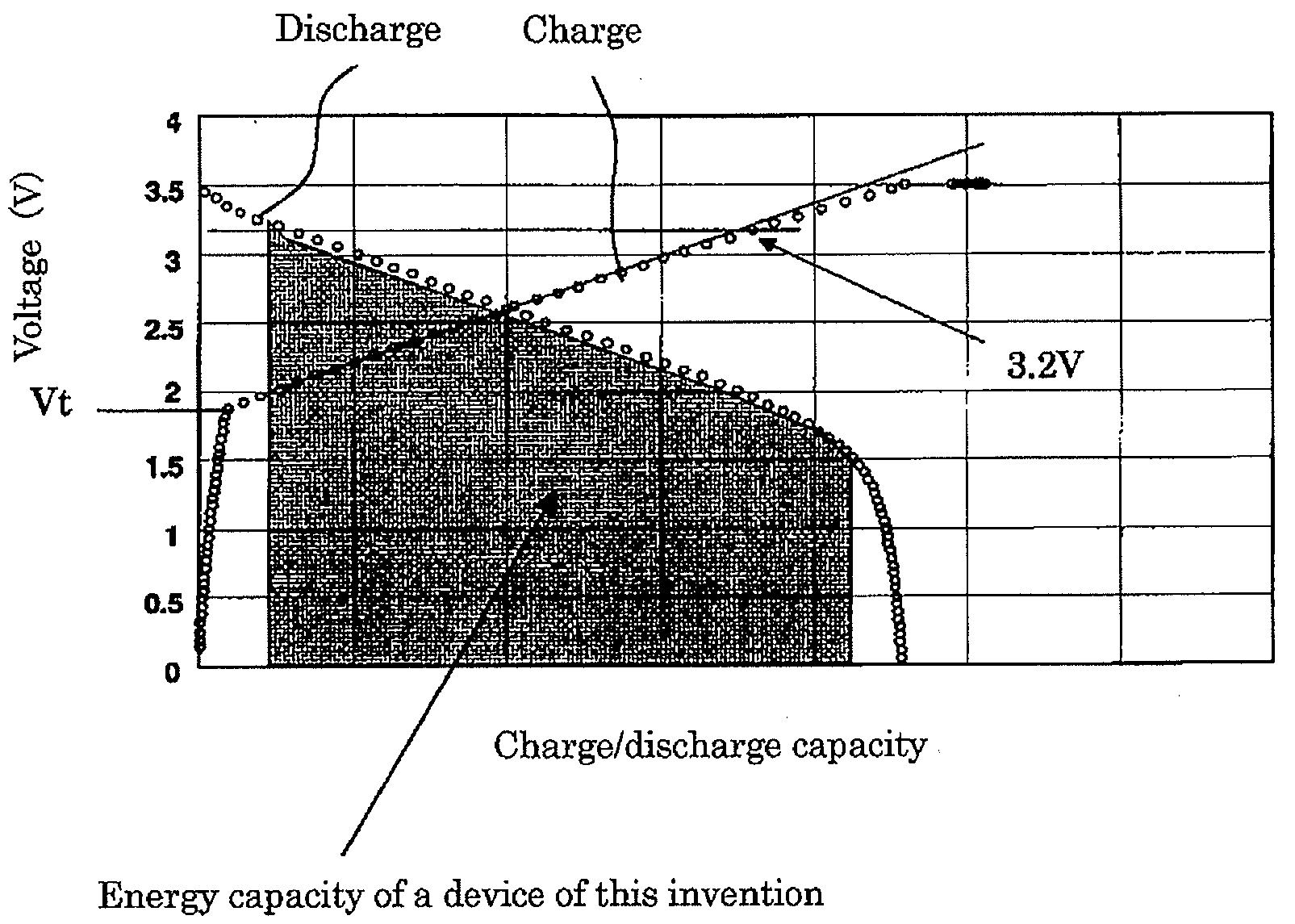
Figure 1 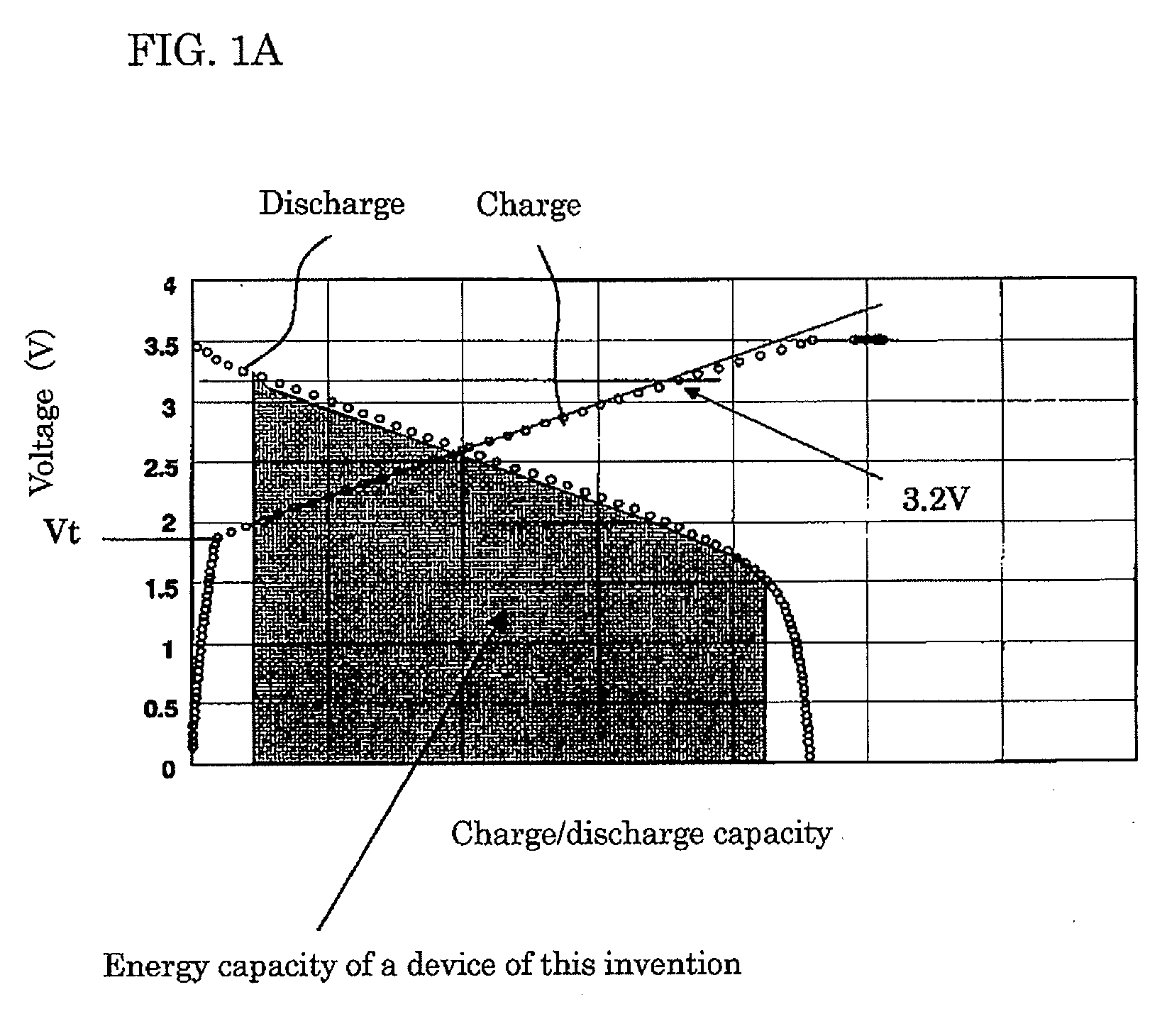
Figure 2 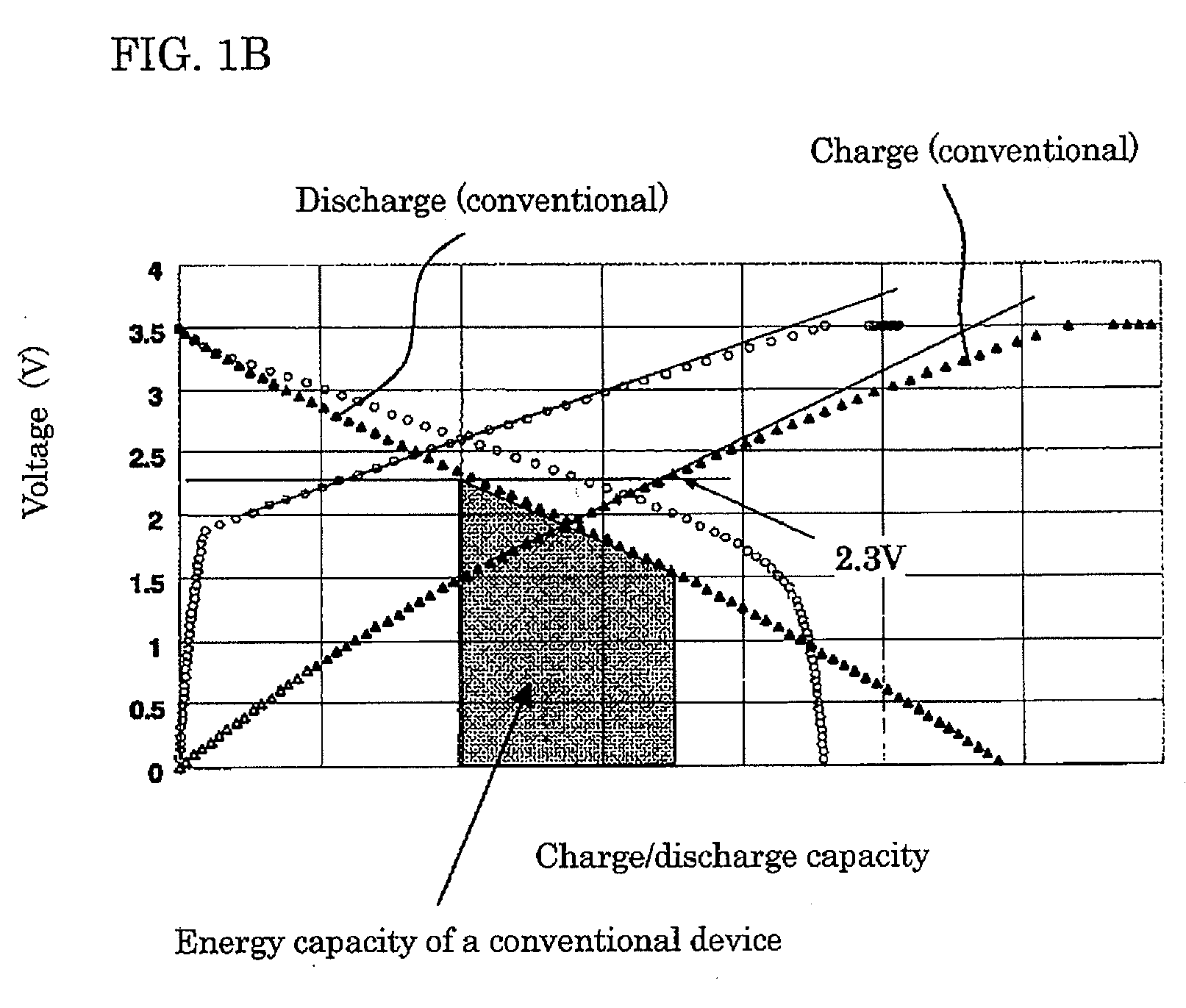
Figure 3
Abstract
Description
TECHNICAL FIELD
[0001] The present invention relates to an electric storage device and an electric storage system with a high voltage operation and a large capacity which is highly reliable in a charge / discharge cycle, as well as an electronic device and a power system therewith.BACKGROUND ART
[0002] Lithium ion secondary batteries, electric double layer capacitors and the like are known as electric storage devices using a non-aqueous electrolyte.
[0003] In a lithium ion secondary battery, a lithium-containing transition metal oxide is used for a positive electrode, a graphite carbon compound into which lithium can be intercalated is used for a negative electrode, and a non-aqueous electrolyte containing a lithium salt is used for an electrolyte.
[0004] A lithium ion secondary battery generally uses a lithium-containing transition metal oxide as a positive electrode, so that the lithium ion secondary battery allows for charge / discharge with a high voltage operation and is thus appreciated a...
Examples
example 1
[0112]Eighty four parts of a graphite, Timrex® SFG44 (from TIMCAL Ltd.; d(002) interlayer distance: 0.3354 nm, average particle size: 24 μm, surface area: 5 m2 / g) free from a rhombohedron structure as a positive electrode active material was powder-blended with 8 parts of acetylene black (from Denki Kagaku Kogyo Kabushiki Kaisha), and to the mixture was added a solution of 8 parts of PVDF (from Kureha Chemical Industry Co., Ltd.) in NMP to prepare a slurry, which was then applied to an aluminum foil to form an electrode with a thickness of 100 μm. Eighty four parts of an active charcoal, RP-20 (from Kuraray Chemical Co., Ltd.; average particle size: 2 μm, surface area: 1800 m2 / g) as a negative electrode active material was powder-blended with 8 parts of acetylene black, and to the mixture was added an NMP solution of 8 parts of PVDF to prepare a slurry, which was then applied to an aluminum foil to form an electrode with a thickness of 100 μm.
[0113]A ratio of weight per unit area of...
example 2
[0117]Eighty four parts of natural graphite (from Nippon Graphite Fiber Corporation; d(002) interlayer distance: 0.3364 nm, average particle size: 20.0 μm, surface area: 3.4 m2 / g) free from a rhombohedron structure as a positive electrode active material was powder-blended with 8 parts of acetylene black (from Denki Kagaku Kogyo Kabushiki Kaisha), and to the mixture was added a solution of 8 parts of PVDF (from Kureha Chemical Industry Co., Ltd.) in NMP to prepare a slurry, which was then applied to an aluminum foil to form an electrode with a thickness of 100 μm. Ninety five parts of an active charcoal, SP-450 (from Nippon Graphite Industries, Ltd.; d(002) interlayer distance: 3.371 nm, average particle size: 1.5 μm, surface area: 403 m2 / g) as a negative electrode active material was powder-blended with 8 parts of acetylene black (from Denki Kagaku Kogyo Kabushiki Kaisha), and to the mixture were added one part of CMC2270 (from Daicel Chemical Industries, Ltd.) and 4 parts of PTFE ...
example 3
[0121]Eighty four parts of a graphite, Timrex® KS6 (from TIMCAL Ltd.; d(002) interlayer distance: 0.3357 nm, average particle size: 3.4 μm, surface area: 20 m2 / g) as a positive electrode active material was powder-blended with 8 parts of acetylene black (from Denki Kagaku Kogyo Kabushiki Kaisha), and to the mixture was added a solution of 8 parts of PVDF (from Kureha Chemical Industry Co., Ltd.) in NMP to prepare a slurry, which was then applied to an aluminum foil to form an electrode with a thickness of 100 μm.
[0122]Using metal lithium as a negative electrode and a graphite electrode as a positive electrode, a glass filter was set as a separator and an a 1.5 mol / L solution of LiBF4 salt (lithium tetrafluoroborate) in PC was injected to assemble a device (half cell). This device was subjected to charge / discharge by CV (cyclic voltammetry) with a voltage of 0 V to 6 V with reference to Li+ / Li.
[0123]FIG. 9 shows the results of charge / discharge until 5.2 V (with reference to an Li+ / Li...