
Process for the preparation of a boron-substituted porphyrin
a technology of porphyrin and boron, which is applied in the field of porphyrin production, can solve the problems and inability to achieve the effect of normal tissue damage and burdensome treatment schedule,
Patent Information
- Authority / Receiving Office
- US · United States
- Patent Type
- Applications(United States)
- Current Assignee / Owner
- Publication Date
- 2010-01-21
- Estimated Expiration
- Not applicable · inactive patent
Smart Images
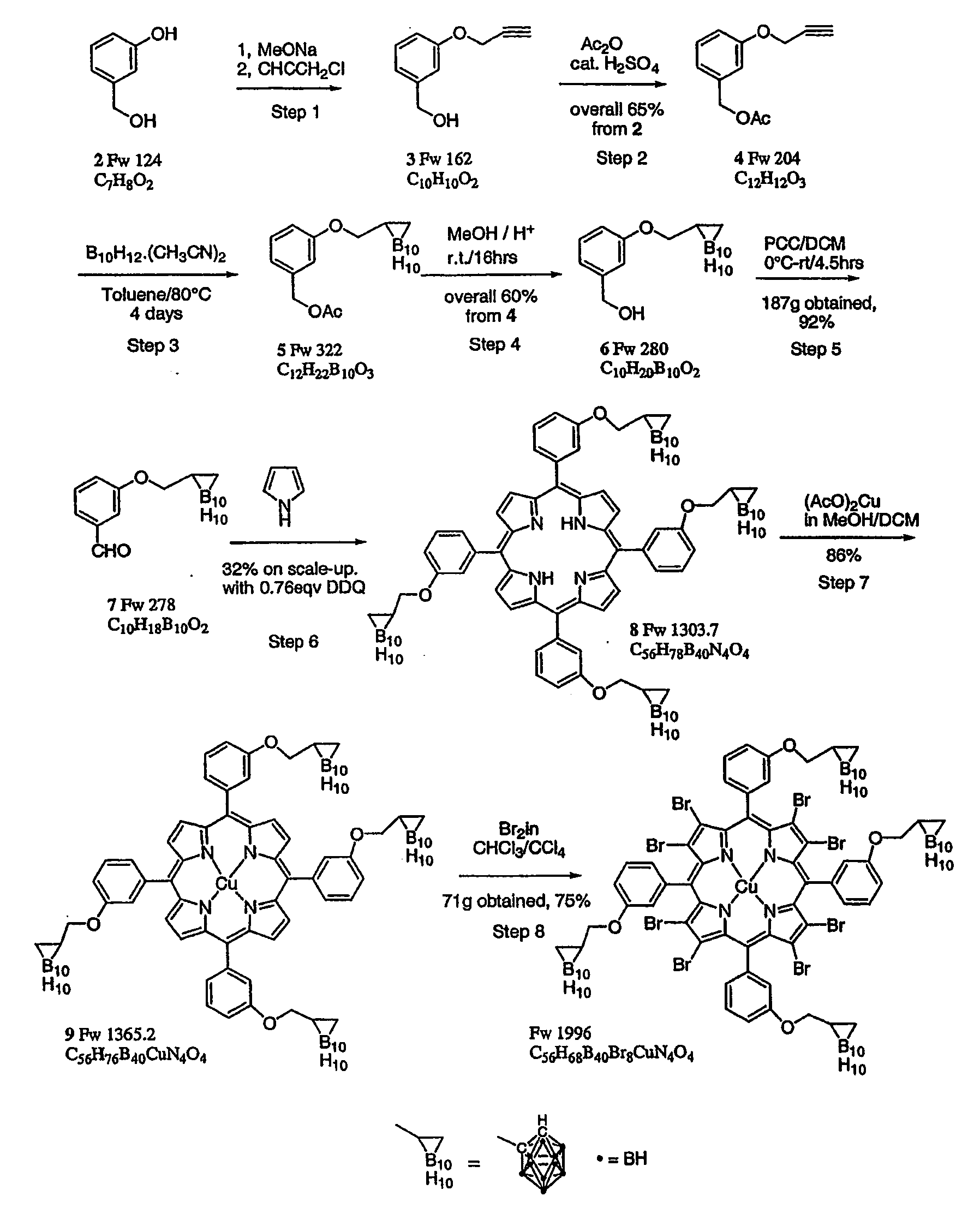
Figure 1 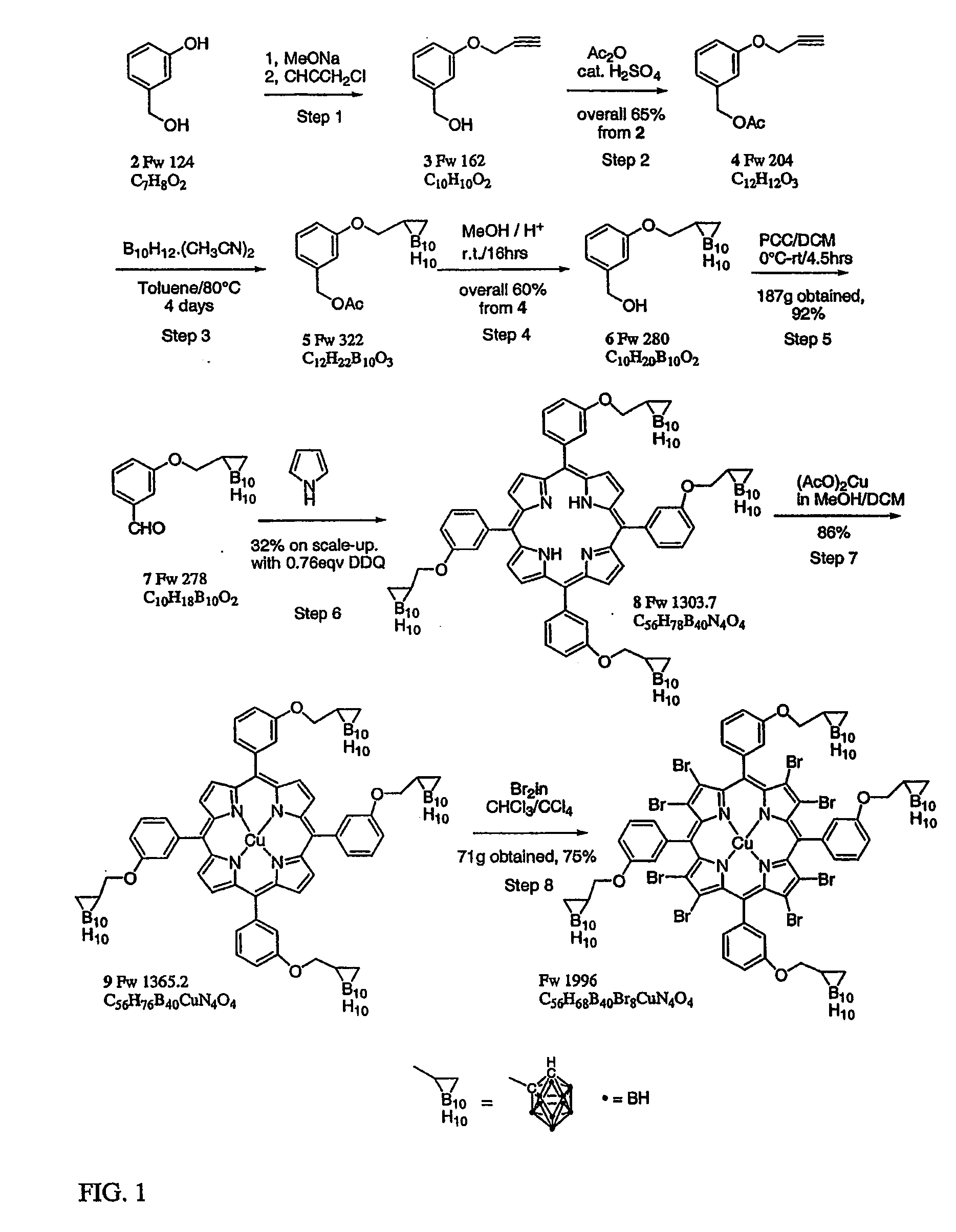
Figure 2 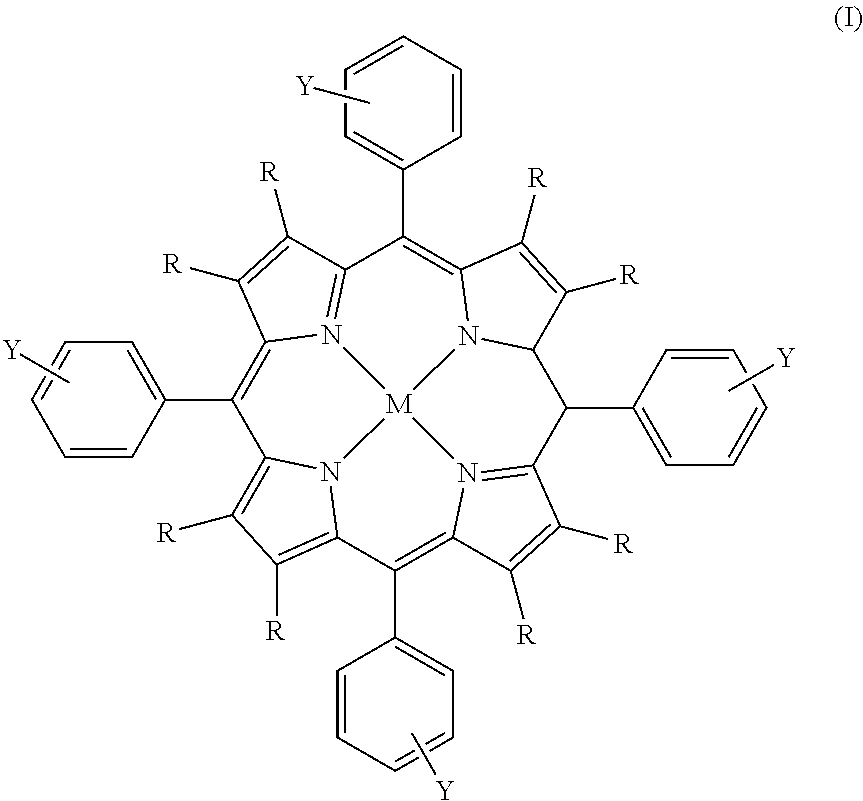
Figure 3
Abstract
Description
[0001] The present invention relates to a process for the production of a porphyrin of formula (I) and further to a process for the production of an intermediate compound such as compounds of formula (II).
[0002] Radiotherapy, although widely used in the management and the treatment of early to advanced stage cancers, has many drawbacks including normal tissue damage and burdensome treatment schedules (up to 6 weeks). Clinical radiotherapy and chemotherapy deliver survival rates that remain inadequate and in some instances totally unacceptable. However, where there is no alternative treatment, which is the case for the vast majority of cancer patients, the use of radiotherapeutic modalities prevails. It is projected that current research efforts will improve the delivery and the outcome of radiotherapy by only 10% over the next 10 years. That is, an increase from 30% to 33% cure rate, with the remaining balance of treatment achieving 70% palliation. A major challenge is to significantl...
Examples
example 1
[0063]All reactions were carried out under a nitrogen atmosphere in high temperature oven-dried glassware, with magnetic stirring or overhead stirrer unless otherwise stated. All intermediates and products were identified by means of proton NMR (where possible), TLC and MALDI TOF mass spectroscopy (in a dithranol matrix).
Preparation of 3-propargyloxybenzyl alcohol 3
[0064]
[0065]A 20.0 L flange flask was charged with 3-hydroxybenzyl alcohol (97%, ex. Aldrich, 903 g, 7.28 mol, 1 eq.) in methanol (MeOH)(9.1 L, dried over 3 A molecular sieves) to give a clear solution, into which sodium methoxide (25% in methanol, ex. Aldrich, 1.746 L, 7.63 mol, 1.05 eq.) was slowly added with vigorous stirring. After stirring for 10 min. the propargyl chloride (70 wt % in toluene, ex. Aldrich, 542.6 g, 805 ml, 7.29 mol, 1 eq) was added slowly with vigorous stirring over a period of 30 minutes. The reaction mixture was heated under reflux for 40 h (isomantle set to 76° C. with an internal temp. of 64° C....