
Propulsion and steering system for an airship
Patent Information
- Authority / Receiving Office
- US · United States
- Current Assignee / Owner
- Publication Date
- 2011-08-18
- Estimated Expiration
- Not applicable · inactive patent
Smart Images
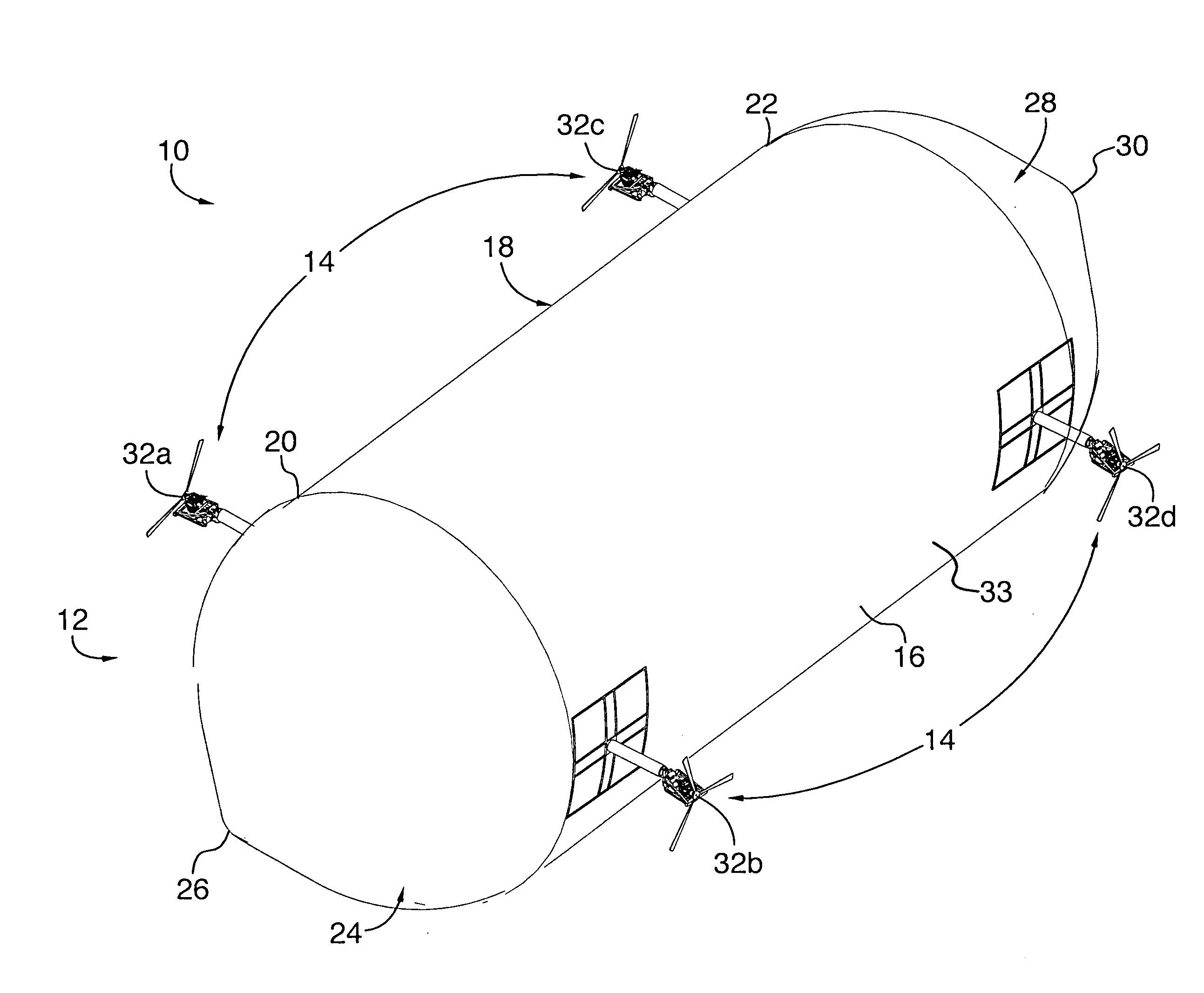
Figure 1 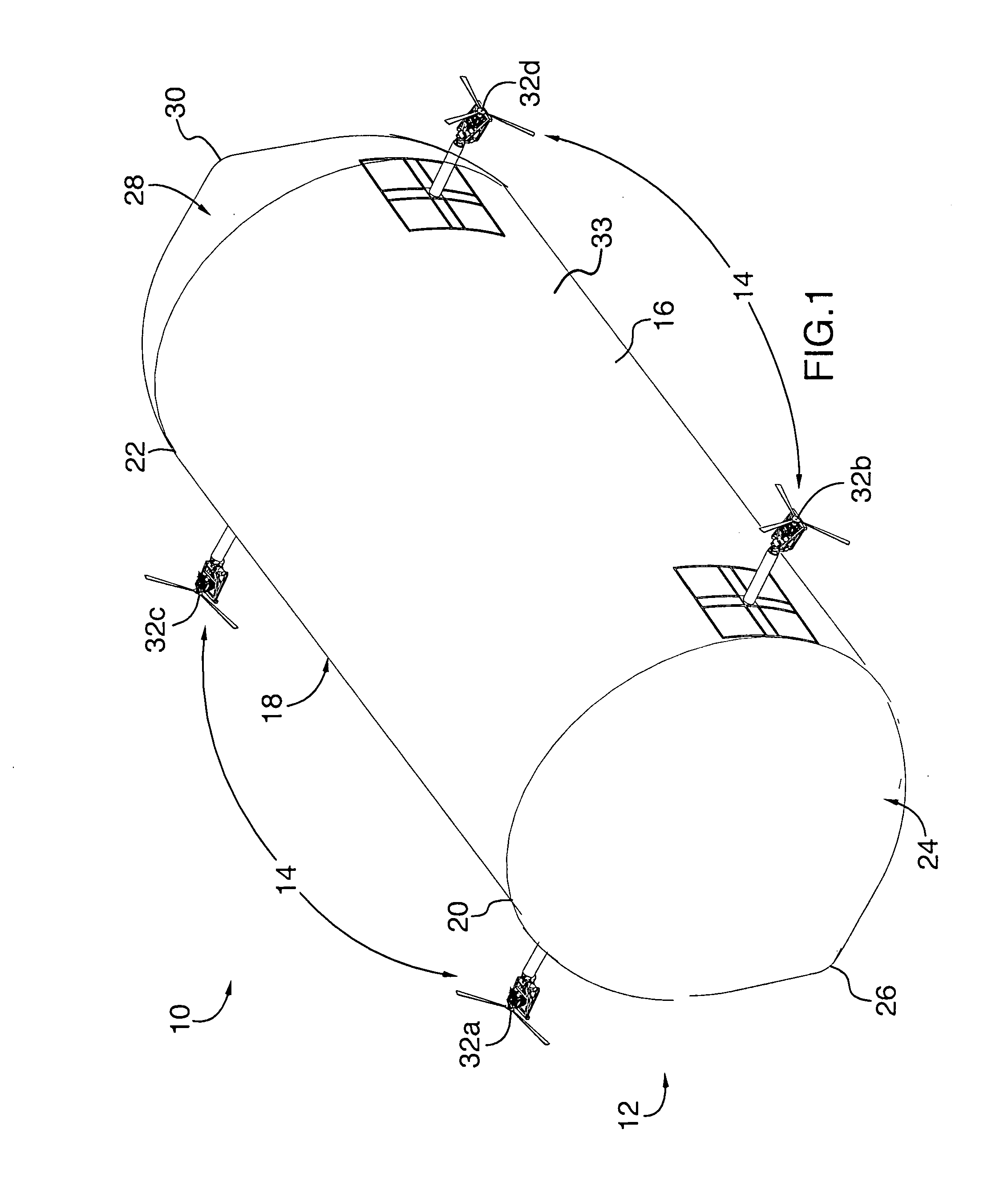
Figure 2 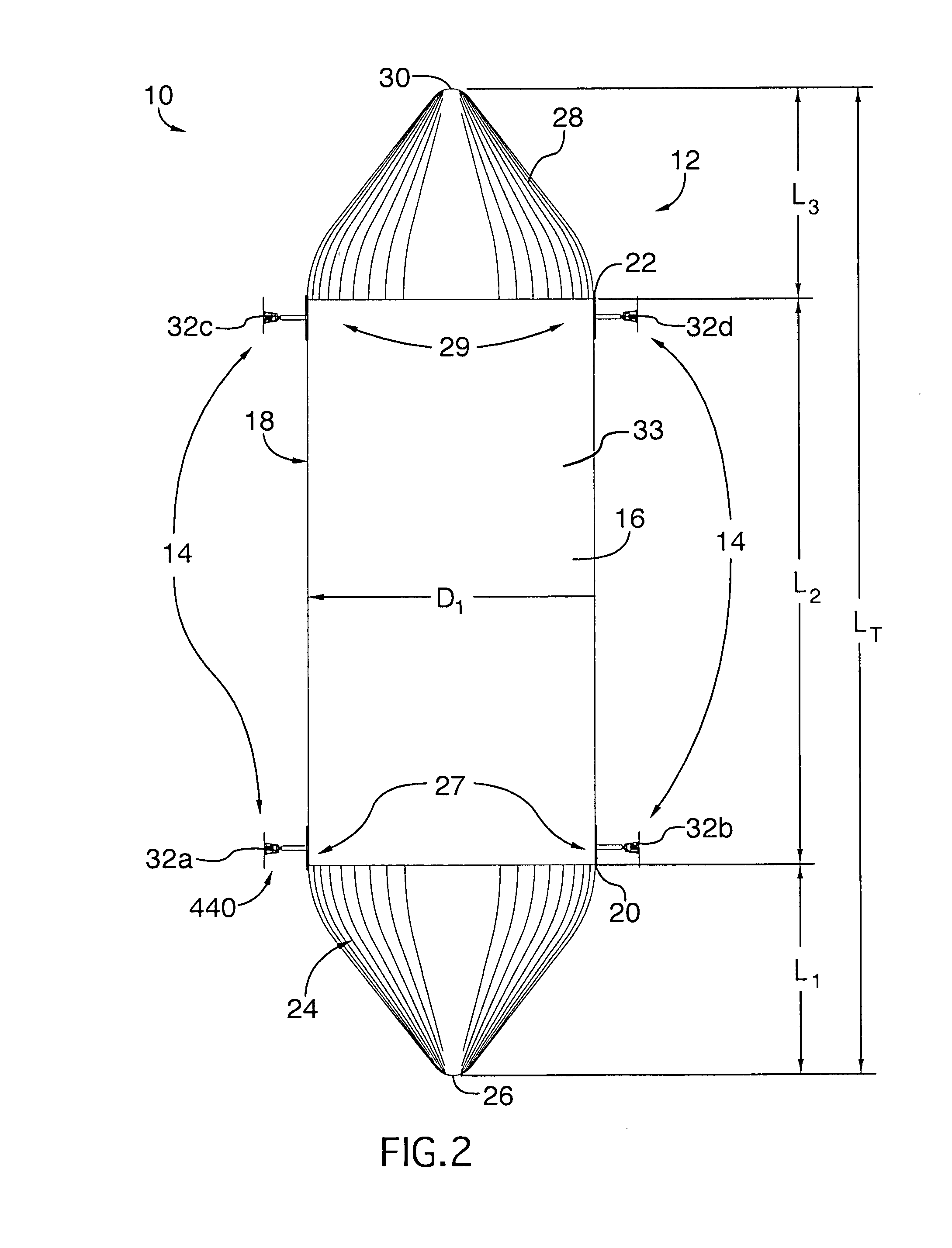
Figure 3
Abstract
Description
FIELD OF THE INVENTION
[0001] The present invention relates generally to airships and more precisely, to a propulsion and steering system for an airship.BACKGROUND OF THE INVENTION
[0002] Airships were, at one time, the preferred mode of aerial transportation. Originally, airships were steered using rudders similar to rudders of planes. A rudder controls the yaw—rotation about a vertical axis—of the airship by creating sideward lift when traveling through air at a relatively high speed. However, rudders are mostly inefficient at low speeds. This tends to pose a number of problems, notably at landing. For an airship to be able to land at a precise landing site, a substantial ground crew is usually required to ease the airship towards the landing site using ropes tethered to the airship. This problem is further exacerbated when the landing is to be performed in a limited space.
[0003] There are additional circumstances where precise positioning control of the airship may be important, for e...
Examples
Embodiment Construction
[0043]The description which follows, and the embodiments described therein are provided by way of illustration of an example, or examples of particular embodiments of principles and aspects of the present invention. These examples are provided for the purposes of explanation and not of limitation, of those principles of the invention. In the description that follows, like parts are marked throughout the specification and the drawings with the same respective reference numerals.
[0044]In the description and drawings herein, and unless noted otherwise, the terms “vertical”, “lateral” and “horizontal”, are references to a Cartesian co-ordinate system in which the vertical direction generally extends in an “up and down” orientation from bottom to top (z-axis) while the lateral direction generally extends in a “left to right” or “side to side” orientation (y-axis). In addition, the horizontal direction extends in a “front to back” orientation and can extend in an orientation that may exte...