
Peptides for binding fibrinogen and fibrin
a technology of fibrinogen and peptides, applied in the field of peptides and fusion proteins, can solve the problems of drug or protein inability to be incorporated prior to the initiation, and achieve the effects of promoting fibrinolysis, hindering fibrin polymerization, and promoting healing
Patent Information
- Authority / Receiving Office
- US · United States
- Patent Type
- Applications(United States)
- Current Assignee / Owner
- Publication Date
- 2012-05-10
Smart Images
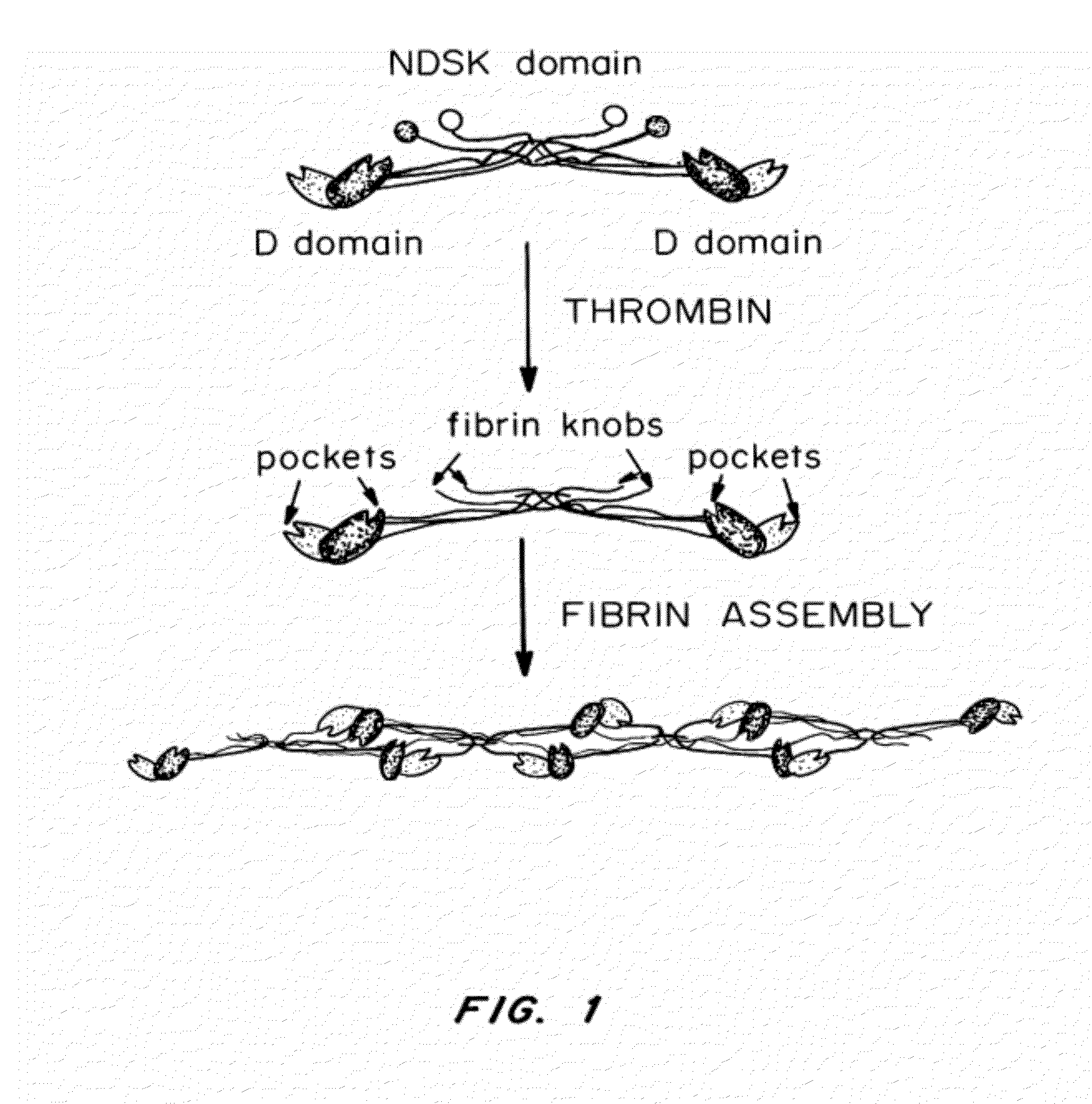
Figure 1 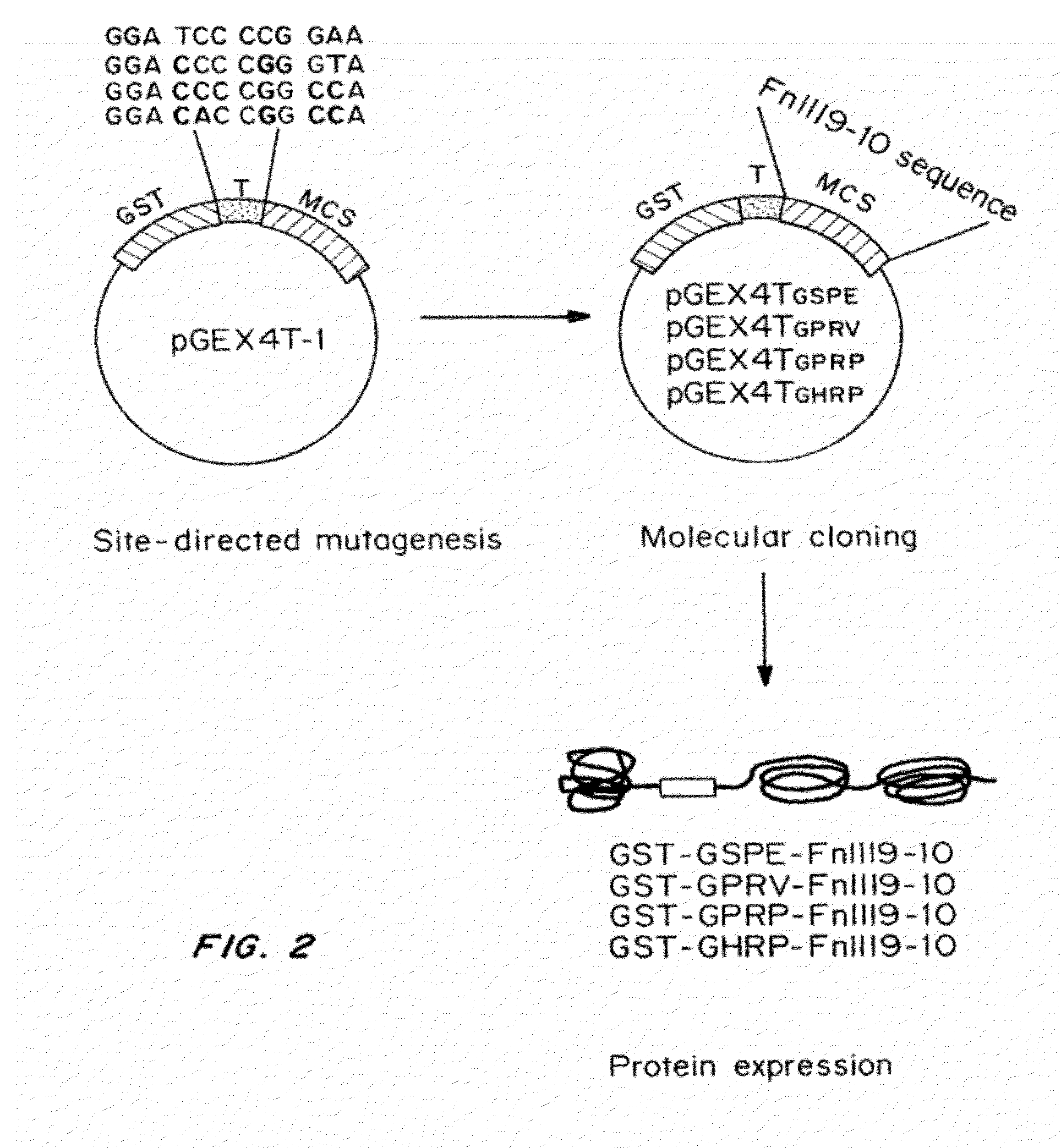
Figure 2 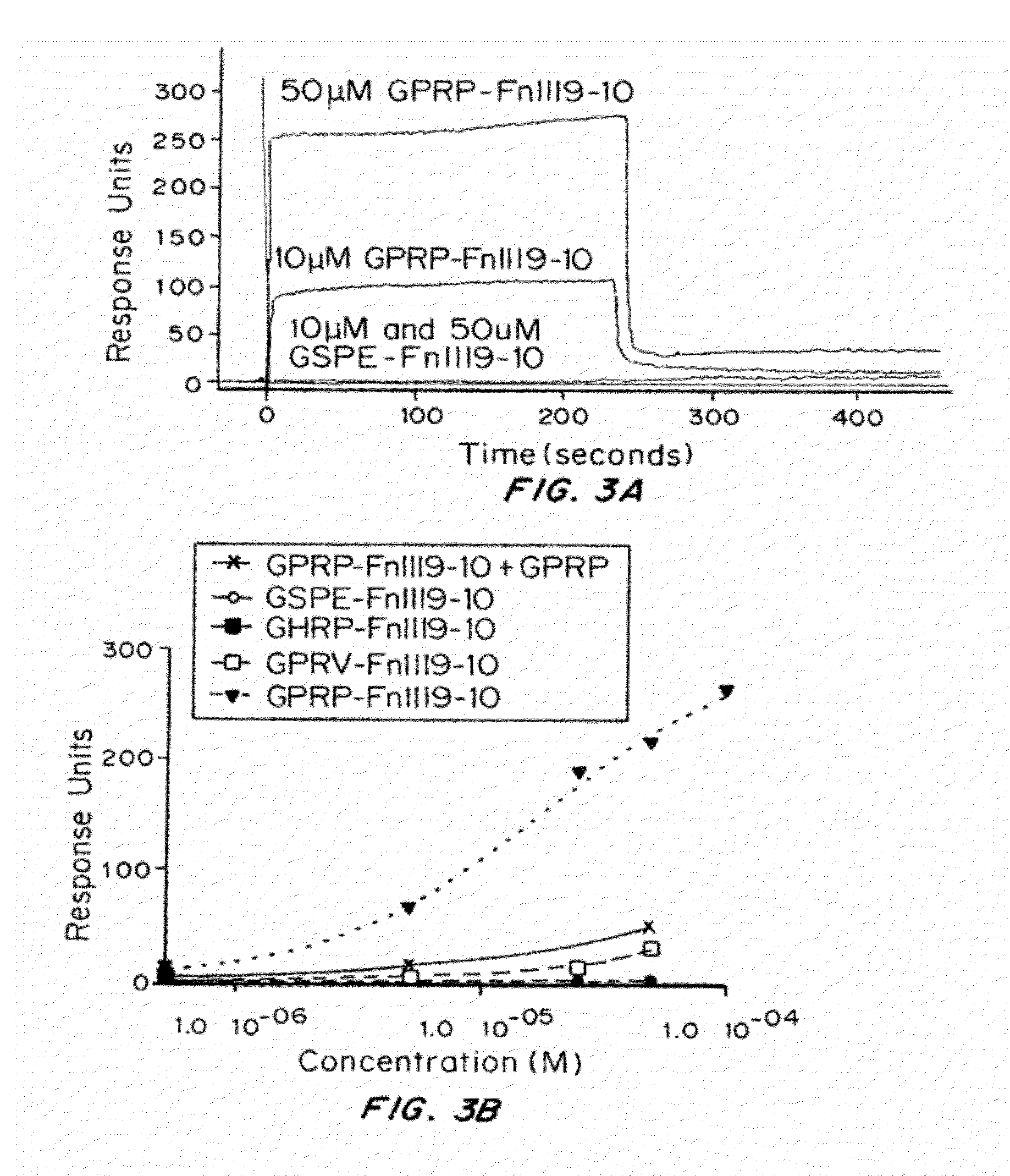
Figure 3
Abstract
Description
CROSS REFERENCE TO RELATED APPLICATIONS
[0001] This application claims benefit of U.S. Provisional Application No. 61 / 224,188, filed Jul. 9, 2009, which is hereby incorporated herein by reference in its entirety.STATEMENT REGARDING FEDERALLY SPONSORED RESEARCH OR DEVELOPMENT
[0002] This invention was made with Government Support under Agreement 1R21EB008463 and K12 GM000680 by the National Institutes of Health. The Government has certain rights in the invention.FIELD OF THE INVENTION
[0003] The invention is generally related to peptides and fusion proteins and their use for incorporating substances into fibrin polymers.BACKGROUND OF THE INVENTION
[0004] Fibrin, formed in response to vascular injury, constitutes the protein polymeric scaffold known as the provisional extracellular matrix. Fibrin serves as the temporary initial scaffolding for the invasion of inflammatory and repair cells into wound environments. Fibrinogen, the inactive precursor to fibrin, is a 340 kDa plasma glycoprotein t...
Examples
example 1
Recombinant Fusion Protein Production
Materials and Methods
Modification of Bacterial Expression Vector
[0192]The original thrombin cleavage site in the pGEX4T-1 vector (GE Healthcare, Piscataway, N.J.) was modified from LVPR↓GSPE (SEQ ID NO:14) to LVPR↓GPRV (SEQ ID NO:15), LVPR↓GPRP (SEQ ID NO:16) and LVPR↓GHRP (SEQ ID NO:17) using the QuikChange® II-E Site-Directed Mutagenesis Kit (Stratagene, La Jolla, Calif.). All plasmids were introduced to and maintained in the electro-competent XL-1 Blue E. coli strain provided and cultured in LB+ ampicillin plates at 37° C. Plasmids were extracted from cultures using the QIAquick Spin Miniprep Kit (QIAGEN, Valencia, Calif.) and verified via sequencing (Johns Hopkins Synthesis & Sequencing Facility, Baltimore, Md.).
Amplification and Insertion of FnIII9-10 into Expression Vectors
[0193]Fibronectin's cell-binding 9th and 10th type III repeats (FnIII9-10) was used as our model protein. The SalI site in the multiple cloning site (MCS) was used to ins...
example 2
Evaluating Fusion Protein Fibrinogen-Binding Affinity Using SPR
Materials and Methods
Preparation of Fibrinogen Fragment D
[0197]Human fibrinogen (# FIB3, Enzyme Research Laboratories, South Bend, Ind.) at 2 mg / mL was digested with 0.1 U / mL human plasmin (Enzyme Research Laboratories) in HEPES+Ca buffer (150 mM NaCl, 5 mM CaCl2, 25 mM HEPES, pH 7.4) overnight at room temperature. Fragment D (or D-domain) was isolated as previously described, with slight modifications, using a polymeric resin with covalently linked GPRPAA (SEQ ID NO:10) peptide (Kostelansky M S, et al. Biochemistry 2002, 41(40):12124-12132). Briefly, the plasmin-digested fibrinogen and GPRPAA-beads were incubated for 30 min, with occasional agitation. The unbound protein fragments were removed with exhaustive washing with HEPES+Ca buffer. Fragment D was eluted using 1 M sodium bromide, 50 mM sodium acetate, pH 5.3 and exchanged back into HEPES+Ca buffer using a centrifugal filter with MWCO 10,000.
Surface Plasmon Resonan...
example 3
Evaluating Fusion Protein Fibrinogen-Binding Affinity Using ELISA
Materials and Methods
ELISA Binding Assays
[0201]A modified ELISA technique was used to establish the affinity of fibrinogen for the various Gxxx-FnIII9-10-C (SEQ ID NO:20) proteins covalently immobilized on maleimide-activated plates via their C-terminal cysteines. Sulfhydryl-containing proteins / peptides were added to pre-blocked maleimide-activated 96-well plates (Pierce, Thermo Scientific, Rockford, Ill.) at 10 μg / mL in conjugation buffer (CB) comprising 150 mM NaCl, 100 mM phosphate, 10 mM EDTA, pH 7.2, with attachment occurring via maleimide-sulfhydryl (thioether) linkages. TCEP (1 mM) was added to maintain sulfhydryl groups in the reduced form. Following, unreacted maleimide groups were quenched with 20 μg / mL cysteine in CB. Human fibrinogen (25 μg / mL) was incubated with the substrates and unbound protein removed by washing. Bound fibrinogen was detected using HRP-conjugated goat anti-fibrinogen antibody (MP Biomed...