
Photosensitive material, holographic recording medium and holographic recording method
a technology of holographic recording and material, which is applied in the direction of holographic processes, photomechanical devices, instruments, etc., can solve the problems of deterioration of the transfer rate in the recording system, the disadvantage of the recording/reproducing system, etc., and achieves high sensitivity, large capacity, and high m#.
Patent Information
- Authority / Receiving Office
- US · United States
- Patent Type
- Applications(United States)
- Current Assignee / Owner
- Publication Date
- 2014-11-27
- Estimated Expiration
- Not applicable · inactive patent
Smart Images
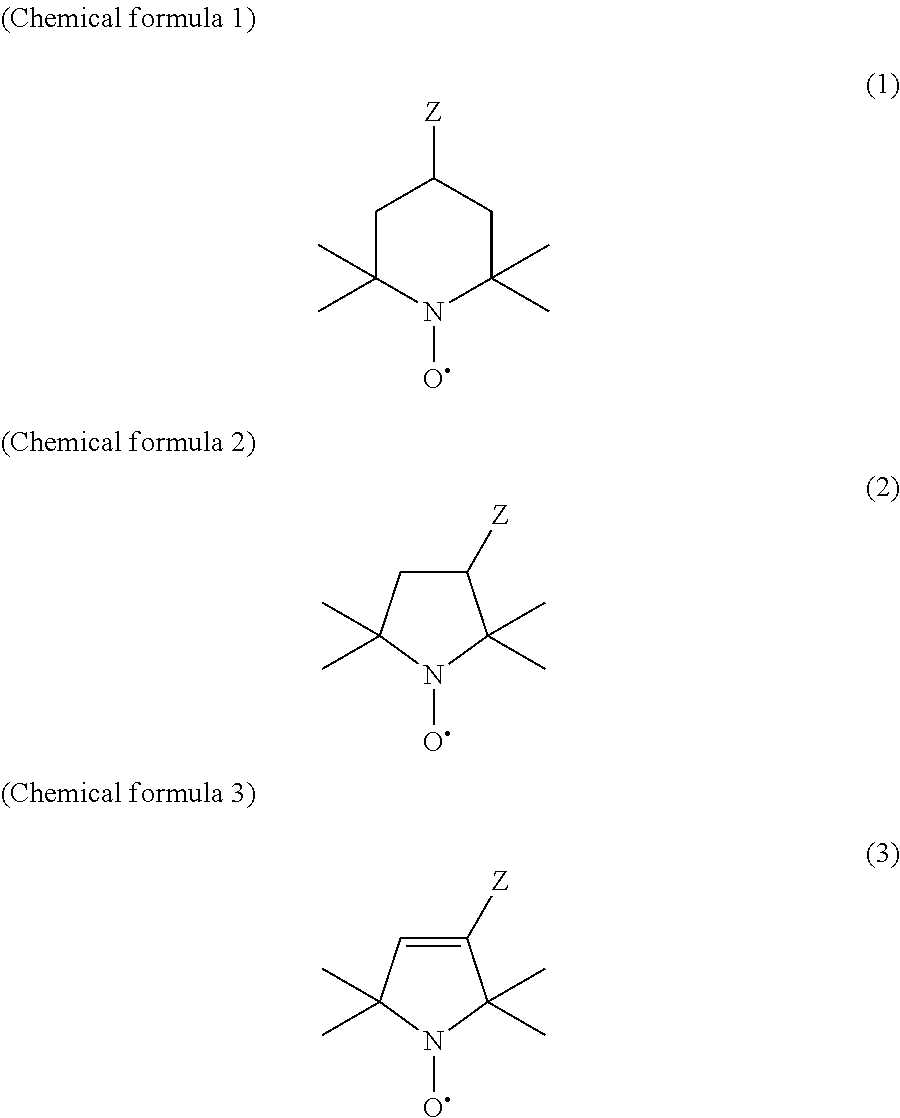
Figure 1 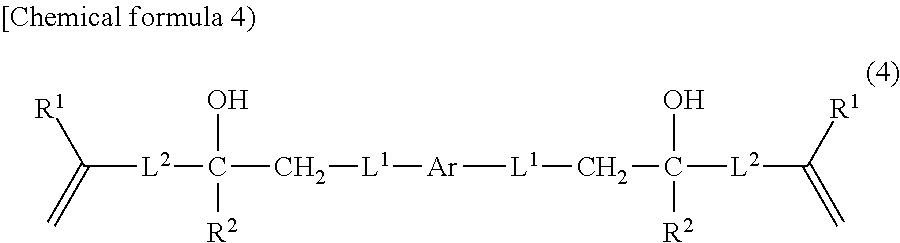
Figure 2 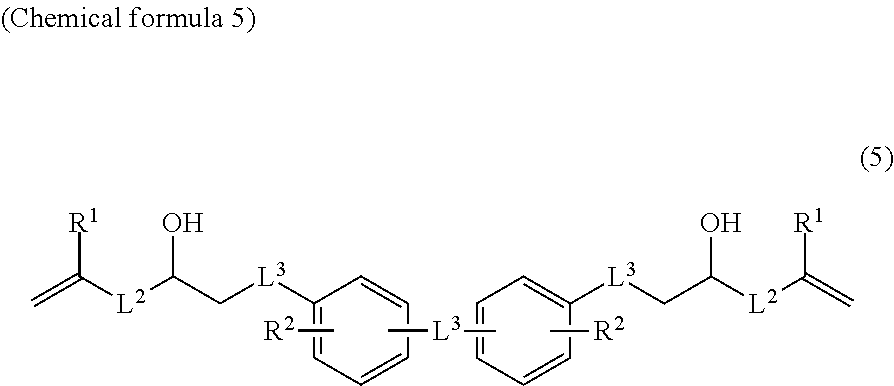
Figure 3
Abstract
Description
TECHNICAL FIELD
[0001] The present invention relates to a photosensitive material which is preferably employed for a holographic recording medium not requiring scheduling technique, a holographic recording medium and a holographic recording method.BACKGROUND OF THE RELATED ART
[0002] Holographic recording is conducted as the interference fringes which are made by the simultaneous irradiation of signal optical beam having signal information and reference optical beam is recorded as a diffraction grating (hereinafter, often called as “grating”) in a recording medium. Holographic reproducing is conducted as reference optical beam is irradiated onto the recording medium in which the image information is recorded to read the image information out as reproducing signal beam.
[0003] As the recording material, photopolymer is often employed in view of the simplification and convenience in the manufacture of the recording medium and the variation of material selection. In the holographic recording...
Examples
example 1
Blend of Photosensitive Material
[0091]First of all, 33.8 parts by mass of hexamethylene diisocyanate (made by TOKYO CHEMICAL INDUSTRY CO., LTD) and 56.3 parts by mass polyethertriol (made by ADEKA CORPORATION, G-400, mean molecular weight: 425, refractive index nD=1.469) as the polymer matrix formation components, and 0.08 part by mass of dibutyltin dilaurate (made by TOKYO CHEMICAL INDUSTRY CO., LTD) as the polymer matrix formation catalyst) were mixed, and then 0.2 part by mass (0.056 molar ratio for the corresponding polymerization monomer) of 4-hydroxy-2,2,6,6-tetramethylpipelidine-1-oxyl (made by Sigma-Aldrich Co., LLC) as the stable nitroxyl radical was mixed. Then, 1.0 part by mass of 3-butenoic acid additive of 9,9-bis(4-(2-hydroxyphenyl)fluorene diglycigyl ether as the compound having radical polymerization reactive group, 4.0 parts by mass of phenyl(4-vinylphenyl)sulfide (made by NIPPON STEEL & SUMIKIN CHEMICAL CO., LTD.) as the radical polymerization monomer, 0.6 part by ...
example 2
[0093]The intended holographic recording medium was obtained in the same manner as Example 1 except that 0.1 part by mass (0.056 molar ratio for the corresponding polymerization monomer) of 4-hydroxy-2,2,6,6-tetramethylpipelidine-1-oxyl, 2.0 parts by mass of phenyl(4-vinylphenyl)sulfide and 6.0 parts by mass of o-acetyl tributyl citrate were mixed.
example 3
[0094]The intended holographic recording medium was obtained in the same manner as Example 2 except that 58.5 parts by mass of pentaerythritol propoxylate (made by Sigma-Aldrich Co., LLC, mean molecular weight: 629, refractive index nD=1.460) instead of the polyethertriol and 31.7 parts by mass of hexamethylene diisocyanate were mixed.