
System And Method For Direct Passive Monitoring Of Packet Delay Variation And Time Error In Network Packet Communications
Patent Information
- Authority / Receiving Office
- US · United States
- Current Assignee / Owner
- Publication Date
- 2015-12-31
Smart Images
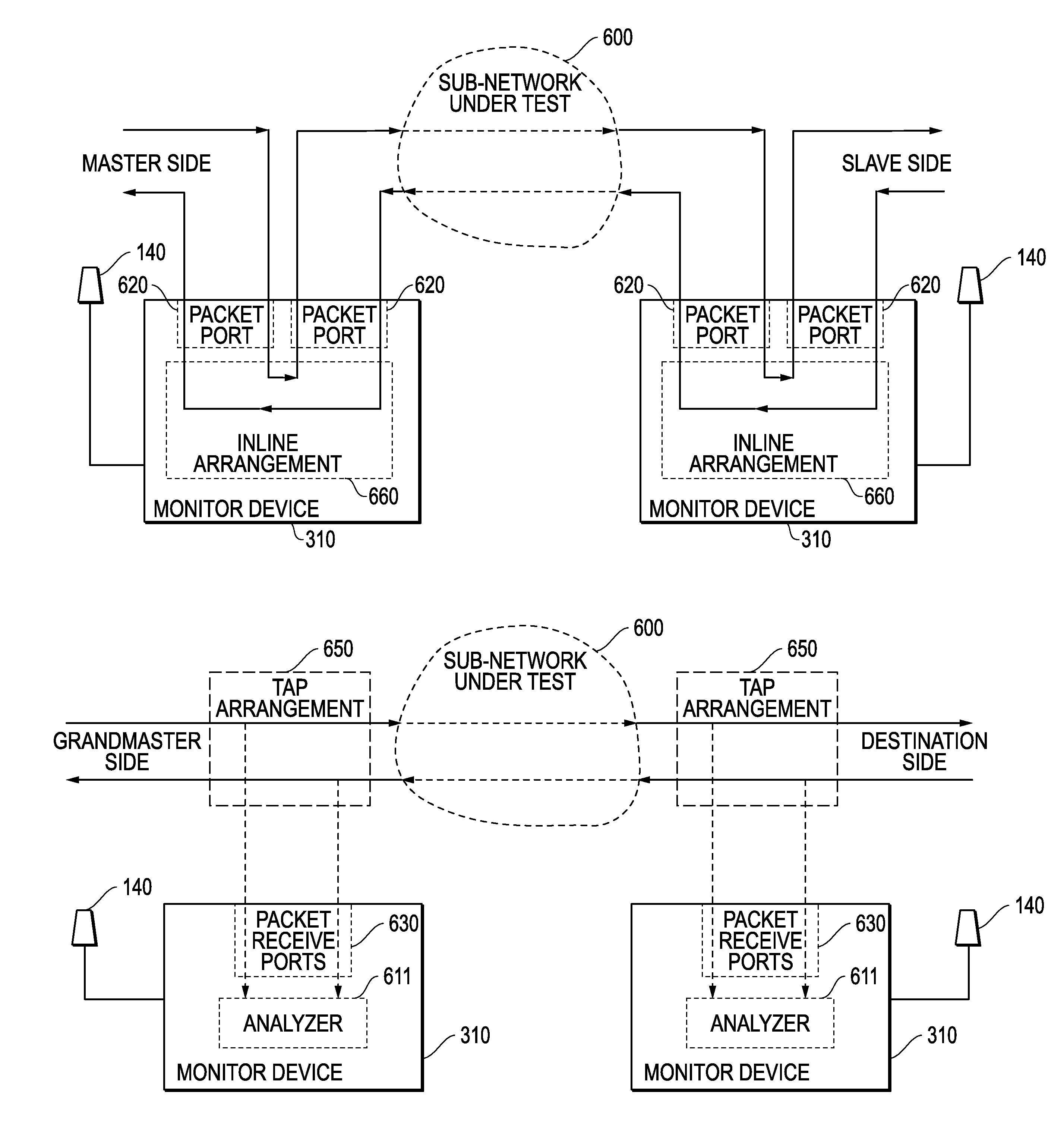
Figure 1 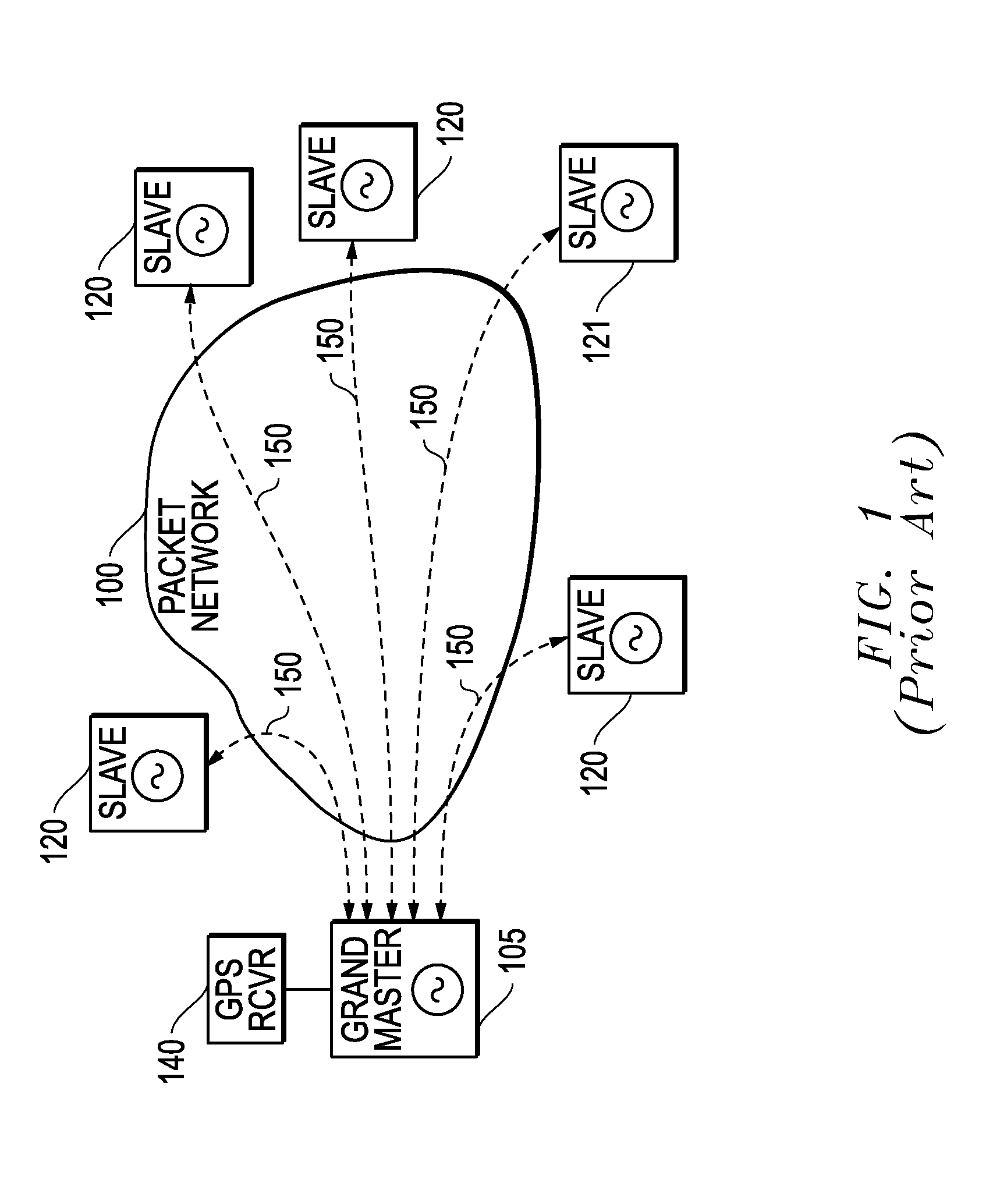
Figure 2 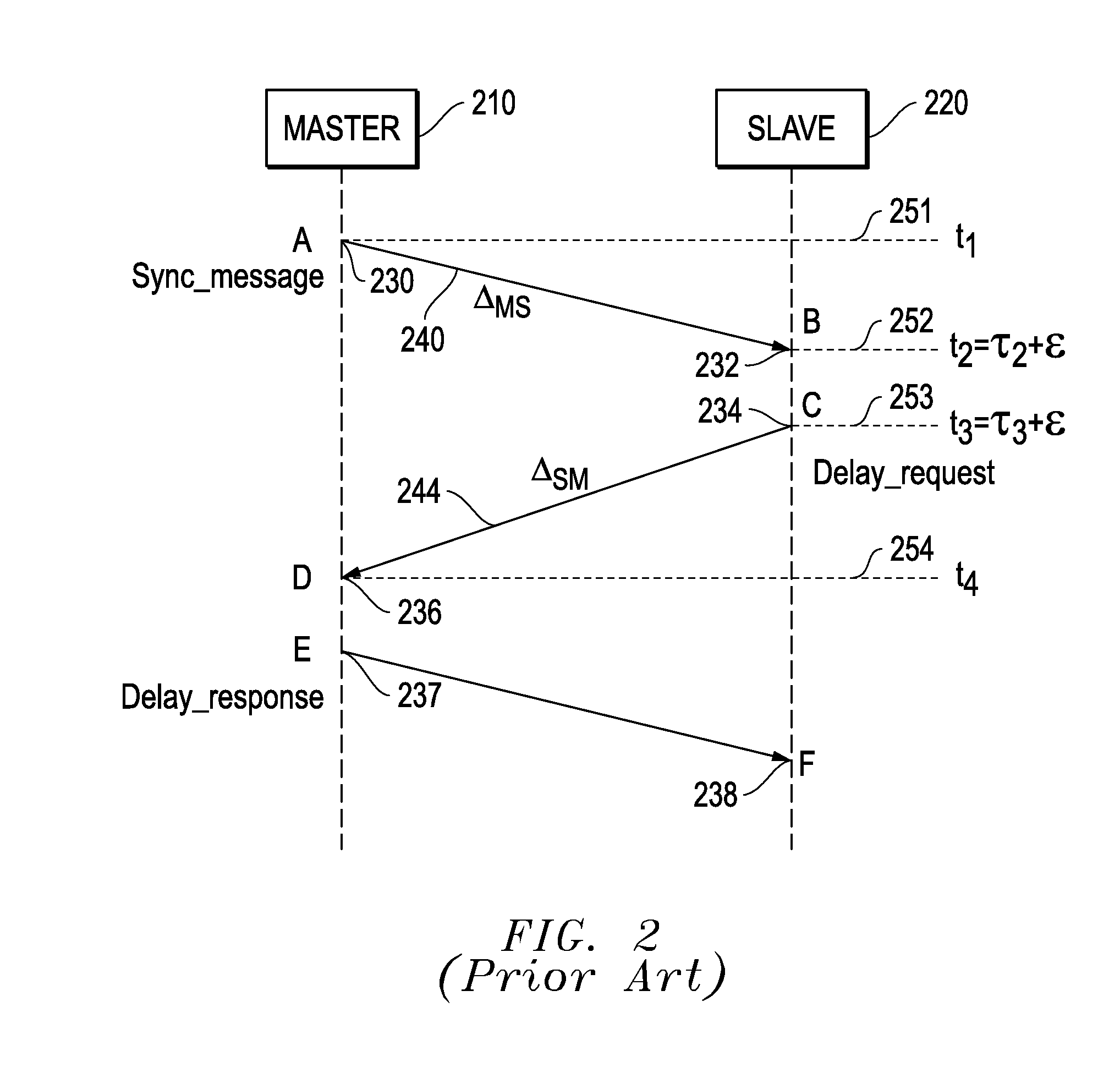
Figure 3
Abstract
Description
RELATED APPLICATIONS
[0001] This application is a continuation application of U.S. patent application Ser. No. 13 / 792,342, filed Mar. 11, 2013, and entitled “SYSTEM AND METHOD FOR DIRECT PASSIVE MONITORING OF PACKET DELAY VARIATION AND TIME ERROR IN NETWORK PACKET COMMUNICATIONS,” which claims priority to U.S. Provisional Patent Application Ser. No. 61 / 650,558, filed May 23, 2012, and entitled “SYSTEM AND METHOD FOR DIRECT PASSIVE MONITORING OF PACKET DELAY VARIATION IN NETWORK PACKET COMMUNICATIONS,” each of which is hereby incorporated by reference in its entirety.TECHNICAL FIELD OF THE INVENTION
[0002] This invention relates to the use of timing protocols in network packet communications and, more particularly, to monitoring packet delays associated with network packet communications.BACKGROUND
[0003] Packet-based timing methods are becoming essential for delivering timing over packet-switched networks, often referred to as the cloud. In particular, Precision Timing Protocol (PTP) (i.e...
Examples
Embodiment Construction
[0039]Systems and methods are disclosed for direct passive monitoring of packet delay variations and time error in network packet communications.
[0040]As described in more detail below, the embodiments disclosed herein monitor the actual packets traversing between slave and master clocks and thereby provide direct results of the actual conditions and do not rely on inference determinations as with prior systems. Certain embodiments described herein provide a bridged configuration or an in-line configuration with fixed, symmetric, delay, providing significant advantages over prior systems. Prior systems often utilize a switch arrangement with a “mirror” port to monitor the packets traversing between the master and slave. The packet delay variation (PDV) introduced by these switch arrangements are additive to, and indistinguishable in nature from, the network PDV between master and slave. Further, testing the behavior of boundary clocks typically requires monitoring traffic on both si...