
Object recognition with reduced neural network weight precision
a neural network and weight precision technology, applied in the field of object recognition with reduced neural network weight precision, can solve the problems of increasing the use of mobile devices, inability to benefit from image recognition technology, and high computational cost, so as to reduce the area requirement, reduce the memory requirement, and save costs
Patent Information
- Authority / Receiving Office
- US · United States
- Patent Type
- Applications(United States)
- Current Assignee / Owner
- Publication Date
- 2016-03-24
Smart Images
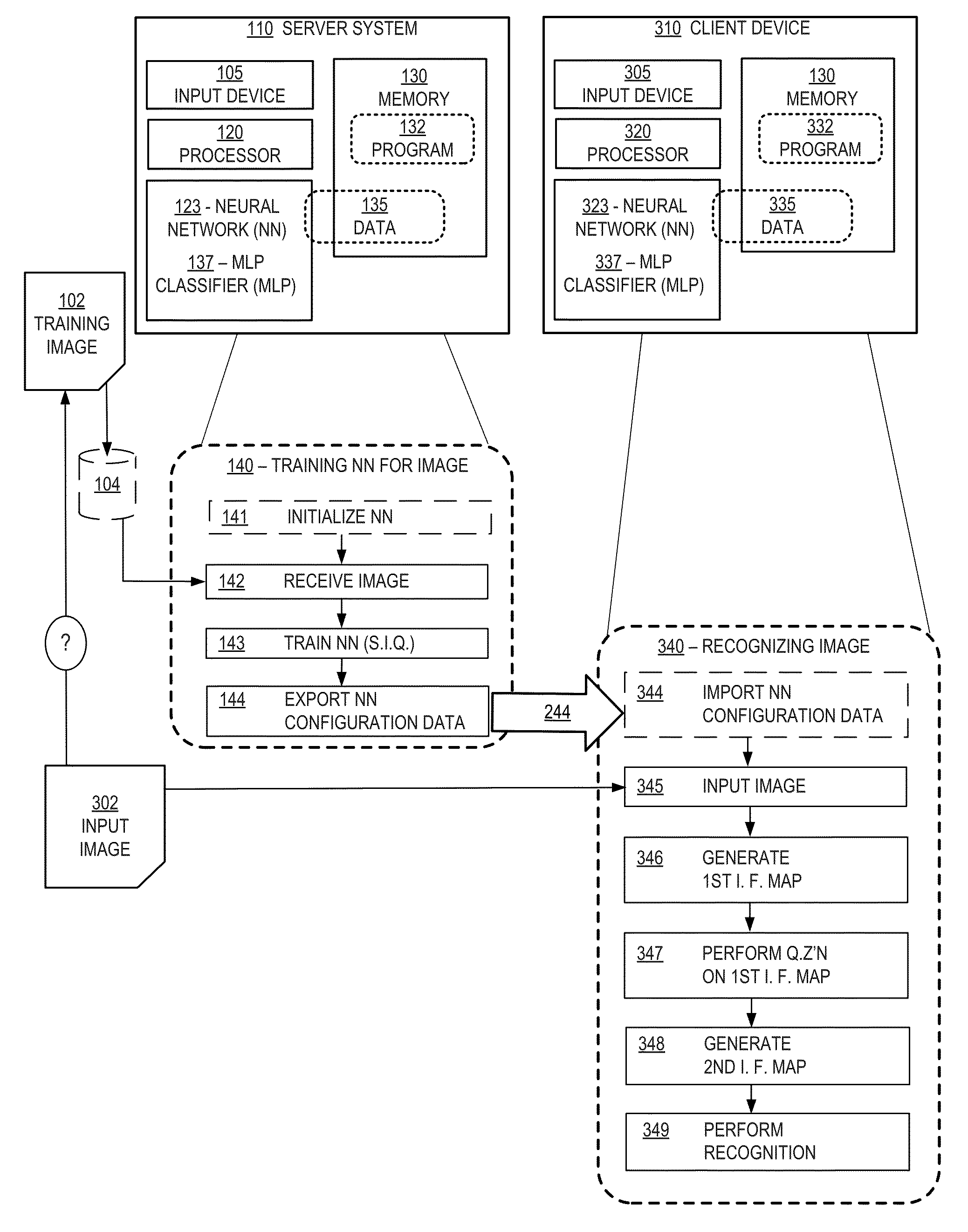
Figure 1 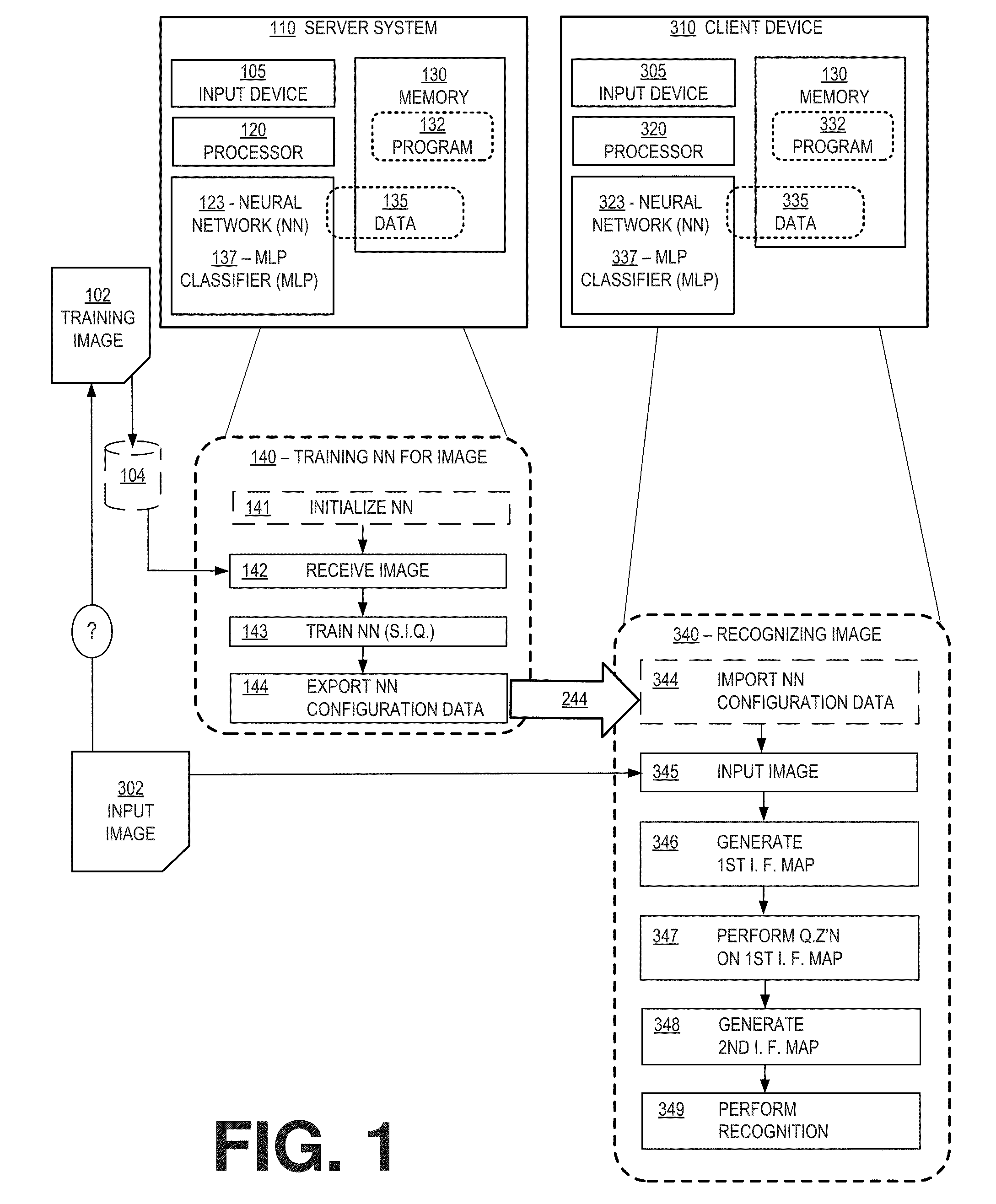
Figure 2 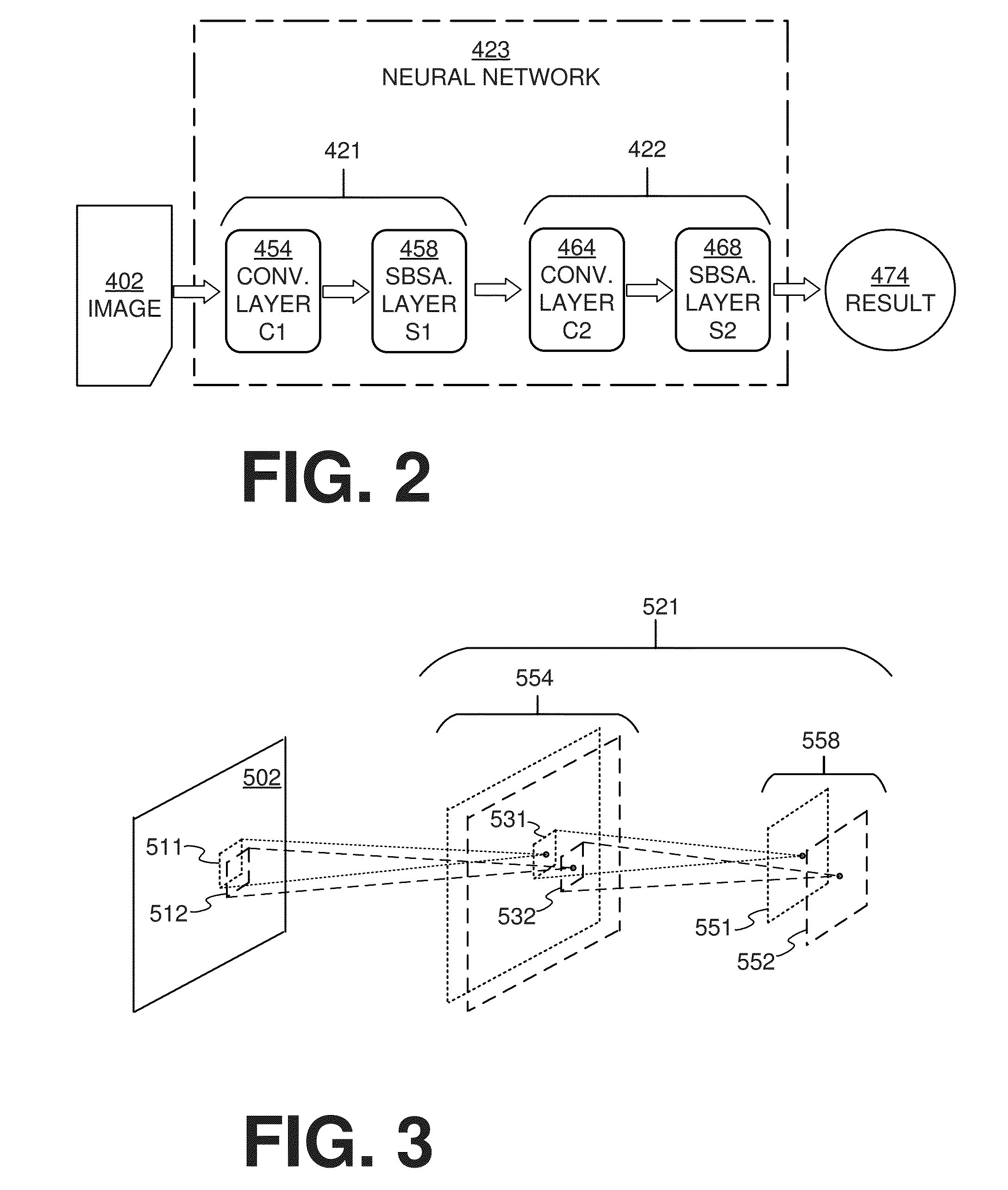
Figure 3
Abstract
Description
CROSS REFERENCE TO RELATED PATENT APPLICATIONS
[0001] This patent application claims priority from U.S. Provisional Patent Application Ser. No. 62 / 053,692, filed on Sep. 22, 2014, the disclosure of which is hereby incorporated by reference.BACKGROUND
[0002] Increasingly, machines (i.e., computers) are used to provide machine vision or object recognition. Object recognition provides users with a variety of beneficial tools.
[0003] In some instances, object recognition relies upon algorithms that include a neural network. That is, a device may recognize that an object is within an input image by using a neural network. Generally, the neural network has been trained to recognize objects through prior use of training images. This object recognition process can become more discerning if more training images are used for the object.
[0004] Generally, neural networks include systems of interconnected “neurons.” The neural networks compute values from inputs and are capable of machine learning as w...
Examples
Embodiment Construction
[0037]Disclosed herein are methods and apparatus that provide for efficient operation of a neural network on a client that has limited resources. Generally, the methods and apparatus provide for building a convolutional neural network (CNN) on a device that has substantial computing resources (such as a server) using a computationally intensive learning process. Once built, the neural network may be ported to a client device that has comparatively limited computing resources (such as a smartphone).
[0038]Neural networks are useful for a variety of computationally complicated tasks. For example, a neural network may be useful for object recognition. Object recognition may provide for facial recognition, environmental surveillance, to control production and manufacturing, to assist with medical diagnostics, and a variety of other similar processes.
[0039]Types of neural networks include those with only one or two layers of single direction logic, to complicated multi-input many directio...