
Distributed programmable connection method to establish peer-to-peer multimedia interactions
a multimedia interaction and programmable connection technology, applied in the field of multimedia peertopeer communication, can solve the problems of not being able to communicate anonymously, skype or facetime can only establish connections between users, and users cannot communicate with people not registered with a particular service provider, so as to improve the flexibility of establishment and routing of communication links, accurate routing
Patent Information
- Authority / Receiving Office
- US · United States
- Patent Type
- Applications(United States)
- Current Assignee / Owner
- Publication Date
- 2016-05-26
Smart Images
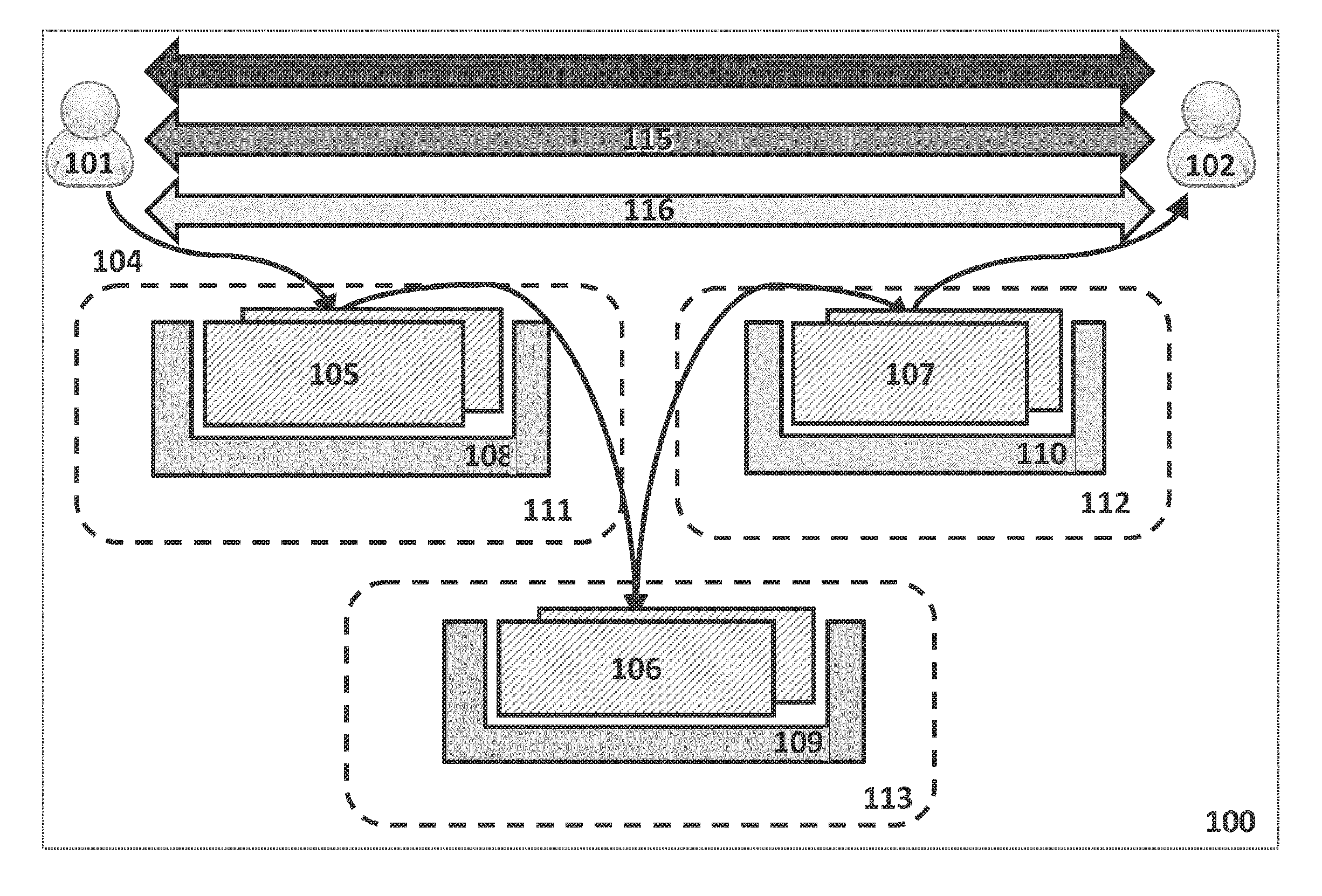
Figure 1 
Figure 2 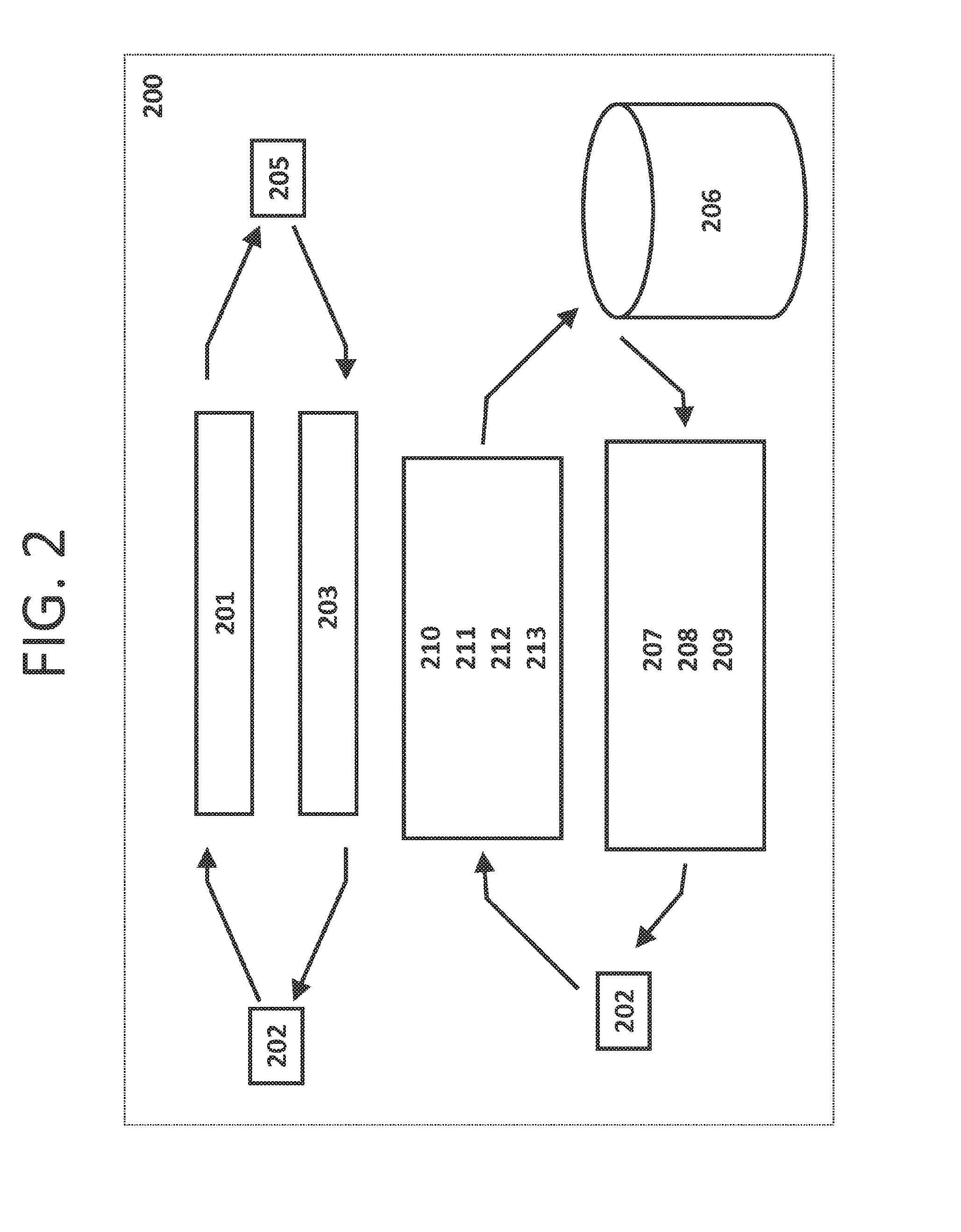
Figure 3
Abstract
Description
CROSS-REFERENCE TO RELATED APPLICATION
[0001] This application is a National Stage application under 35 U.S.C. §371 of PCT Application No. PCT / EP2014 / 64844, filed, Jul. 10, 2014, which is incorporated by reference herein.TECHNICAL FIELD
[0002] The present invention generally relates to the field of multimedia peer-to-peer communication. More specifically, the invention relates to a technique of identifying users and routing calls between users.BACKGROUND
[0003] Voice over internet protocol (VoIP) communication systems allow the user of a device, such as a personal computer (e.g. desktop, laptop or tablet PC) or a smartphone, to make calls across a computer network such as the Internet. These systems are beneficial to the user as they are often of much lower cost than fixed line or mobile networks and, in addition to audio streams, can also provide video and data streams.
[0004] However, known VoIP systems such as Skype or FaceTime can only establish connections between “subscribers” registe...
Examples
Embodiment Construction
[0040]The following terminology is used to describe the individual key elements of the present invention. The skilled person will recognize that all these elements may be implemented in software, or in combination with hardware. In any of these implementations, there are many other architectures and topologies that are not illustrated and it will be understood that all the individual elements described may also be implemented in many different constellations which still fall within the scope of the claims.
[0041]The term “Agent” is to be understood in the context of a “software agent” i.e. a computer program that provides basic functional entities and acts on behalf of a user or other program. In particular, the “Agents” in the context of the present invention are all, when in operation, intended to have the authority to decide which action is appropriate. Agents with such a level of autonomy may also be commonly known as, for example, “intelligent agents”, “autonomous agents” and “m...