
Tnfa-il-17 bispecific antibodies
Patent Information
- Authority / Receiving Office
- US · United States
- Current Assignee / Owner
- Publication Date
- 2016-11-10
Smart Images
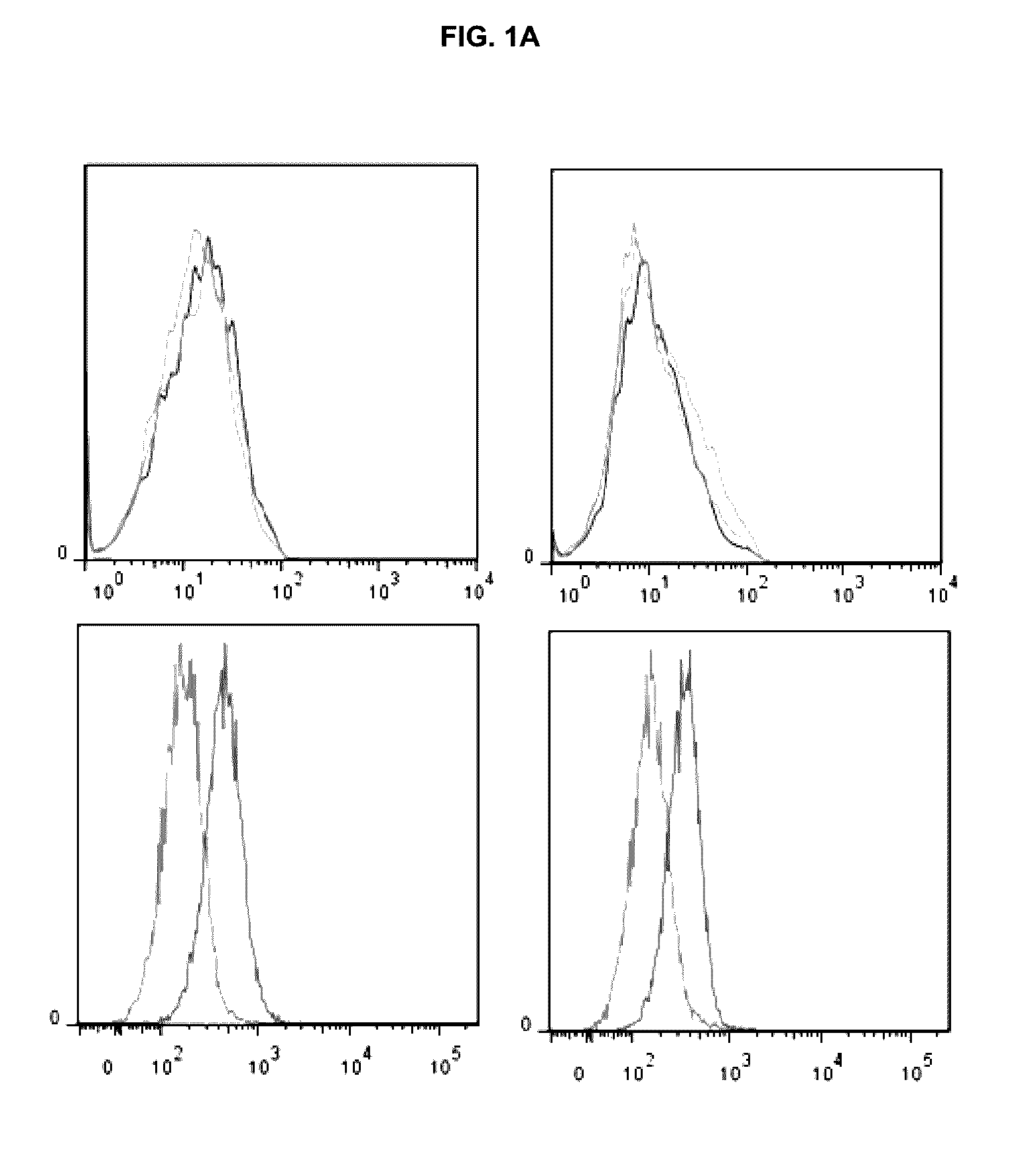
Figure 1 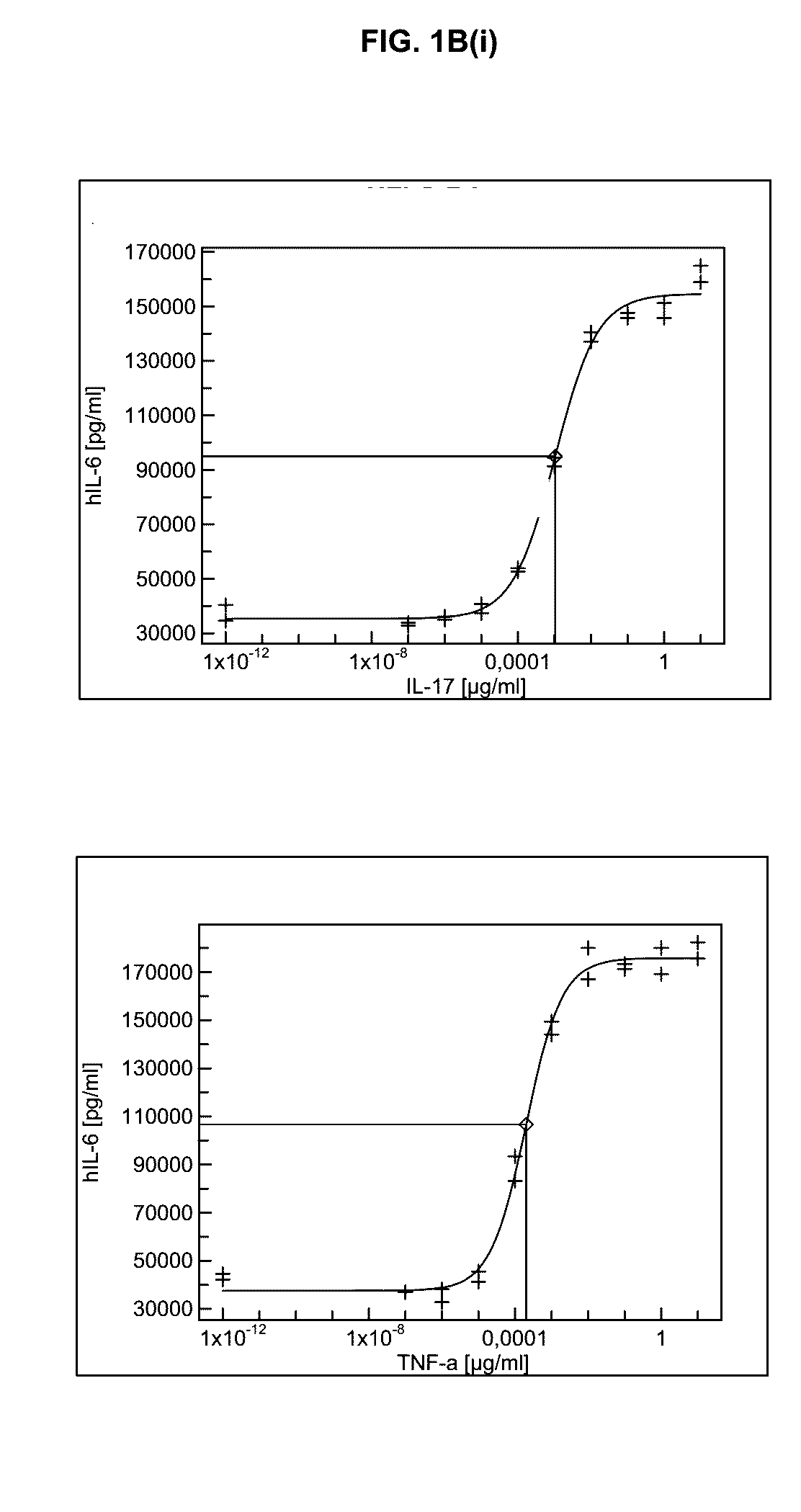
Figure 2 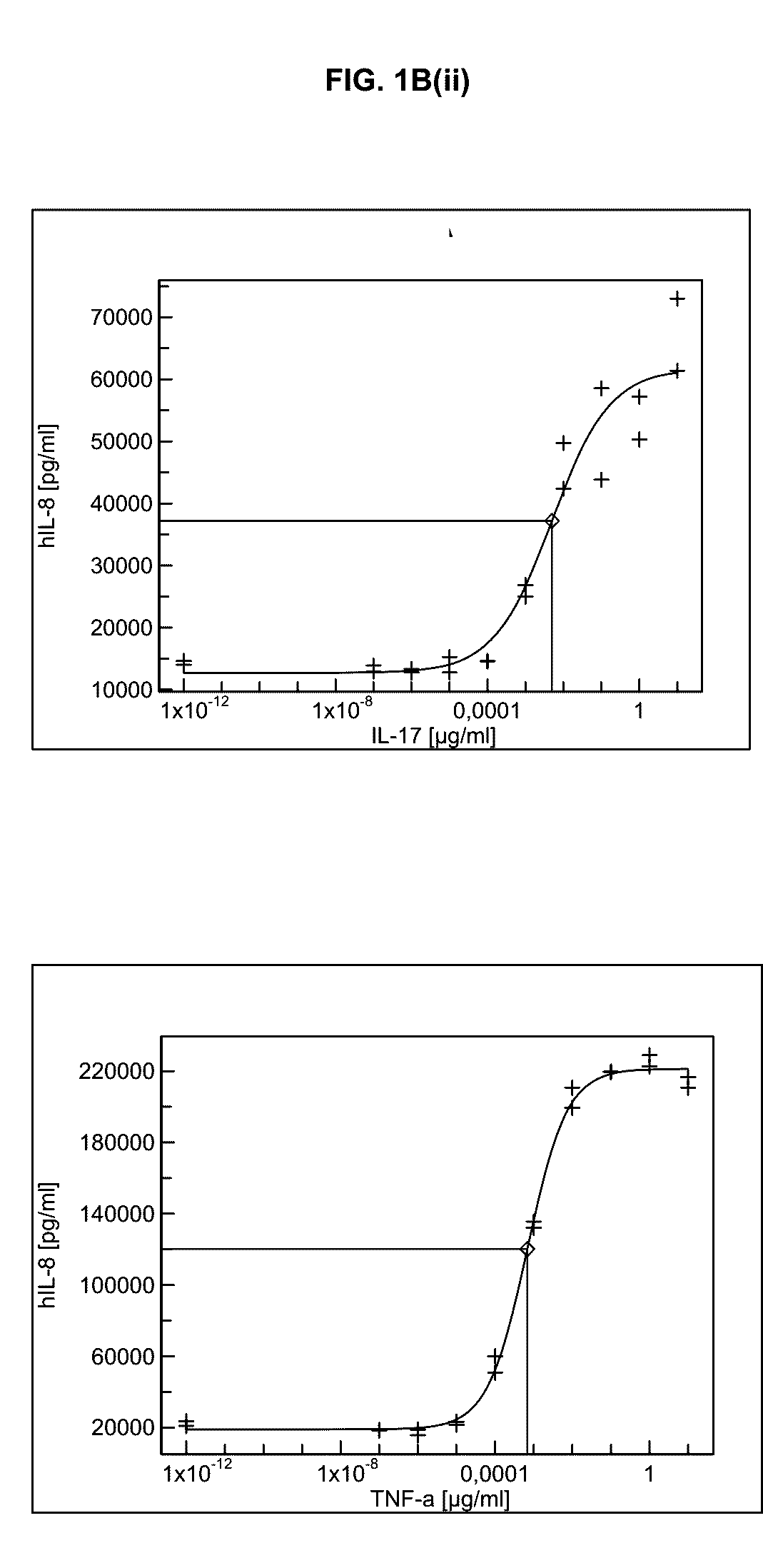
Figure 3
Abstract
Description
CROSS REFERENCE TO RELATED APPLICATIONS
[0001] This application is a continuation of International Application No. PCT / EP2014 / 066581 having an international filing date of Aug. 1, 2014, the entire contents of which are incorporated herein by reference, and which claims benefit under 35 U.S.C. §119 to European Patent Application No. 13178969.5 filed Aug. 1, 2013.SEQUENCE LISTING
[0002] The instant application contains a Sequence Listing submitted via EFS-Web and hereby incorporated by reference in its entirety. Said ASCII copy, created on Jan. 26, 2016, is named P31597USSeqList.txt, and is 209,310 bytes in size.FIELD OF THE INVENTION
[0003] The present invention relates to bispecific antibodies against human IL-17 and TNFa, and therapeutic uses thereof.BACKGROUND TO THE INVENTION
[0004] Rheumatoid arthritis (RA), a disease of unknown etiology, is characterized by auto-immunity and autoantibodies, synovial inflammation and hyperplasia, cartilage and bone destruction, as well as systemic disor...
Examples
example 1
Response of Synovial Fibroblasts to TNFa Stimulation and to IL-17 Stimulation
[0429]Prior to functional in vitro studies the expression of the TNFa as well as IL-17 receptors (CD217) was assessed by FACS analysis. Human fibroblast-like synoviocytes (FLS), both from RA patients and healthy donors clearly expressed TNFRI and IL-17A receptor (FIG. 1A) without any major differences. Next, FLS were investigated for cytokine responses upon treatment with the respective ligands.
[0430]As is shown in FIG. 1B(i), FIG. 1B(ii), FIG. 1B(iii), and FIG. 1B(iv), stimulation of RA-FLS with titrated amounts of TNFa and also with IL-17 resulted in significant and high production of pro-inflammatory cytokines and chemokines such as Interleukin-6 and -8 or G-CSF. Interestingly, RANTES (CCL5) was mainly produced upon TNFa incubation but not in response to IL-17. Nevertheless, significantly lower amounts of TNFa than IL-17 were required to induce comparable cytokine responses. Similar results were obtained...
example 2
Response of Synovial Fibroblasts and Chondrocytes to Costimulation with IL-17 and TNFa
[0432]The data from the experiments in Example 1 underline that IL-17 alone and TNFa alone play an important role in the activation of FLS. Recently, several studies demonstrated a synergistic interplay between certain cytokines, such as TNFa and IL-18 etc. (Qi J et al.; Zhang Y et al.). Importantly, both IL-17 and TNFa are found at elevated levels in the synovium of RA patients (Ziolkowska M et al., J I 2000; Kotake S et al., J Clin Invest 1999; Saxne T et al., Arthritis Rheum 1988; Brennan F M et al., Lancet 1989; Husby G et al., J Autoimmun 1988) and they were shown to interact in vivo (Koenders M I et al., Arthritis Rheum 2011). We investigated whether co-treatment of IL-17 and TNFa led to an increased cytokine response in human RA-relevant cells such as FLS or chondrocytes.
[0433]RA-FLS from different donors were incubated with IL-17, TNFa, or IL-17 and TNFa in combination, and the production o...
example 3
In Vitro Response to TNFa / L-17 in Combination is Reduced by Knockdown of TNFa and IL-17 Receptors
[0436]The results of Example 2 were further supported by additional siRNA data. For this experiment, FLS were transfected with TNFRI or IL-17RA. The abundance of this expression was almost completely abolished by application of siRNA sequences targeting the mRNA of those receptors (FIG. 3A(i) and FIG. 3A(ii)).
[0437]On the functional level, FLS challenged with a combination of TNFa and IL-17 showed a production of e.g. IL-6 and MMP-3 (FIG. 3B(i) and FIG. 3B(ii)). siRNA treatment led to a substantial diminution of the chemokine responses, consistent with those effects being completely dependent on the presence and functionality of the appropriate receptors. Simultaneous disruption of IL-17R and TNFRI signalling even increased this effect.