
Compositions, formulations and methods of treating preeclampsia-type disorders of pregnancy
a technology of preeclampsia and formulation, applied in the direction of drug compositions, peptide/protein ingredients, peptide sources, etc., can solve the problems of poor spiral artery remodeling and placental ischemia, shallow placentation, maternal and infant illness and death,
Patent Information
- Authority / Receiving Office
- US · United States
- Patent Type
- Applications(United States)
- Current Assignee / Owner
- Publication Date
- 2012-04-26
- Estimated Expiration
- Not applicable · inactive patent
Smart Images
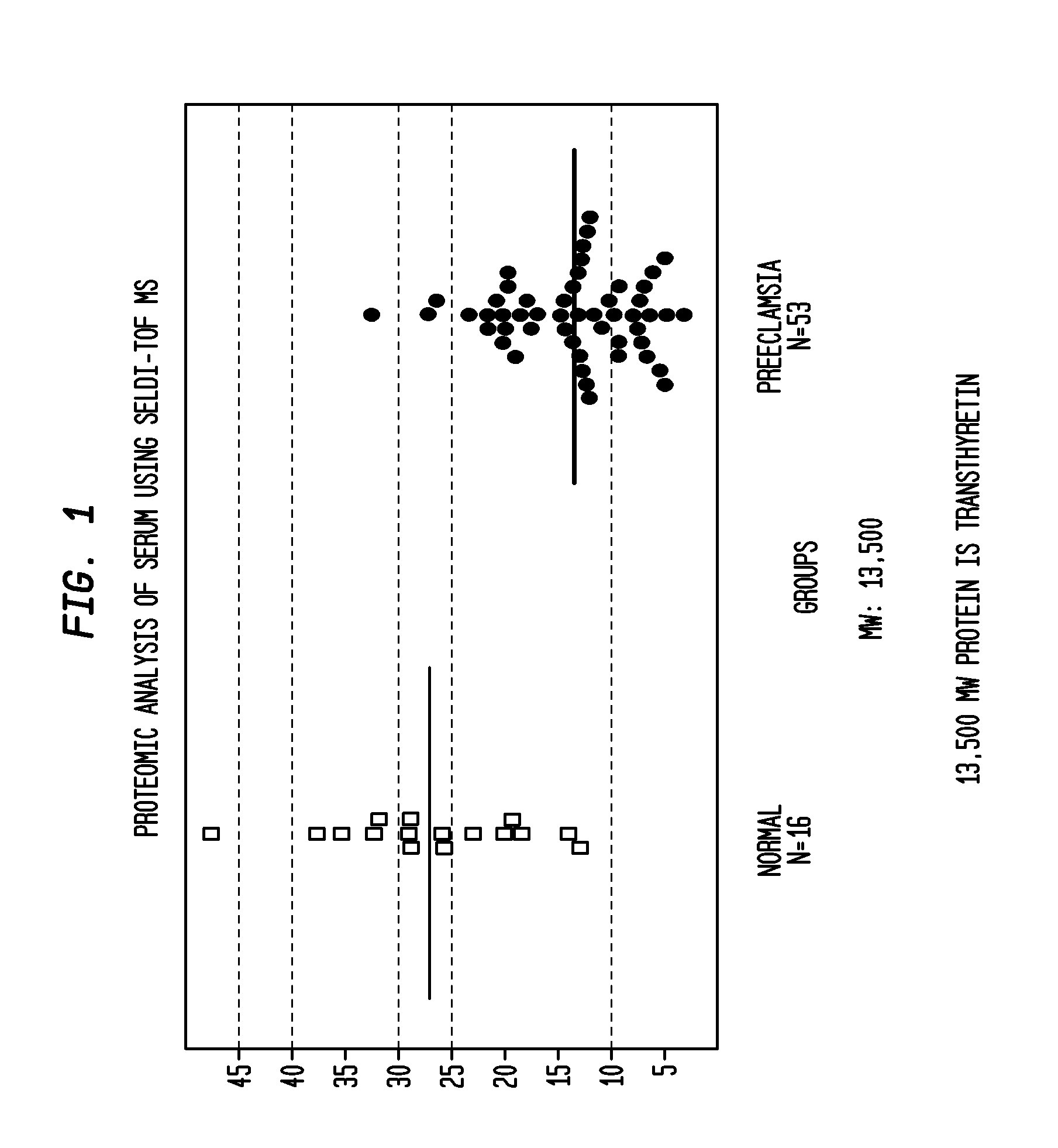
Figure 1 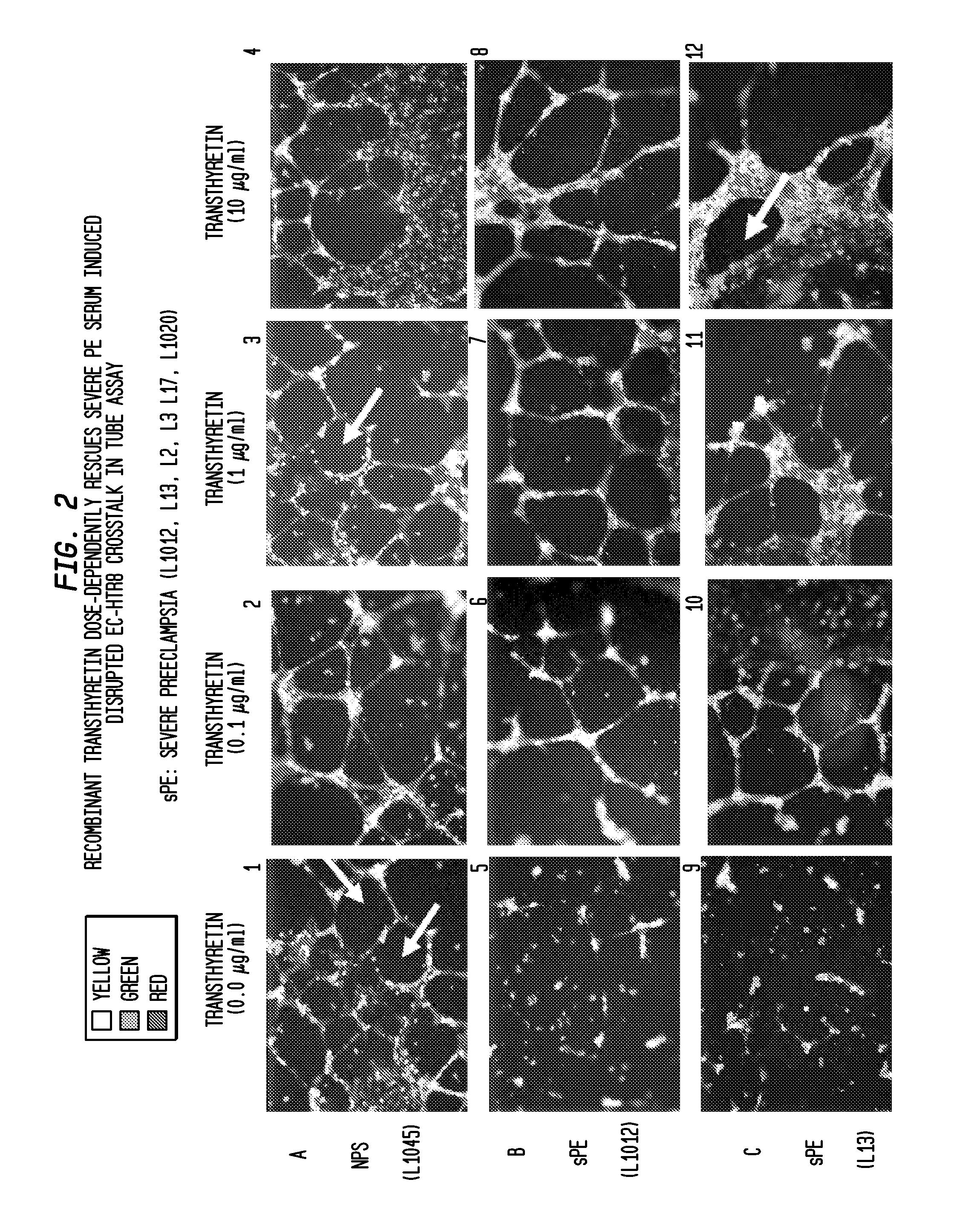
Figure 2 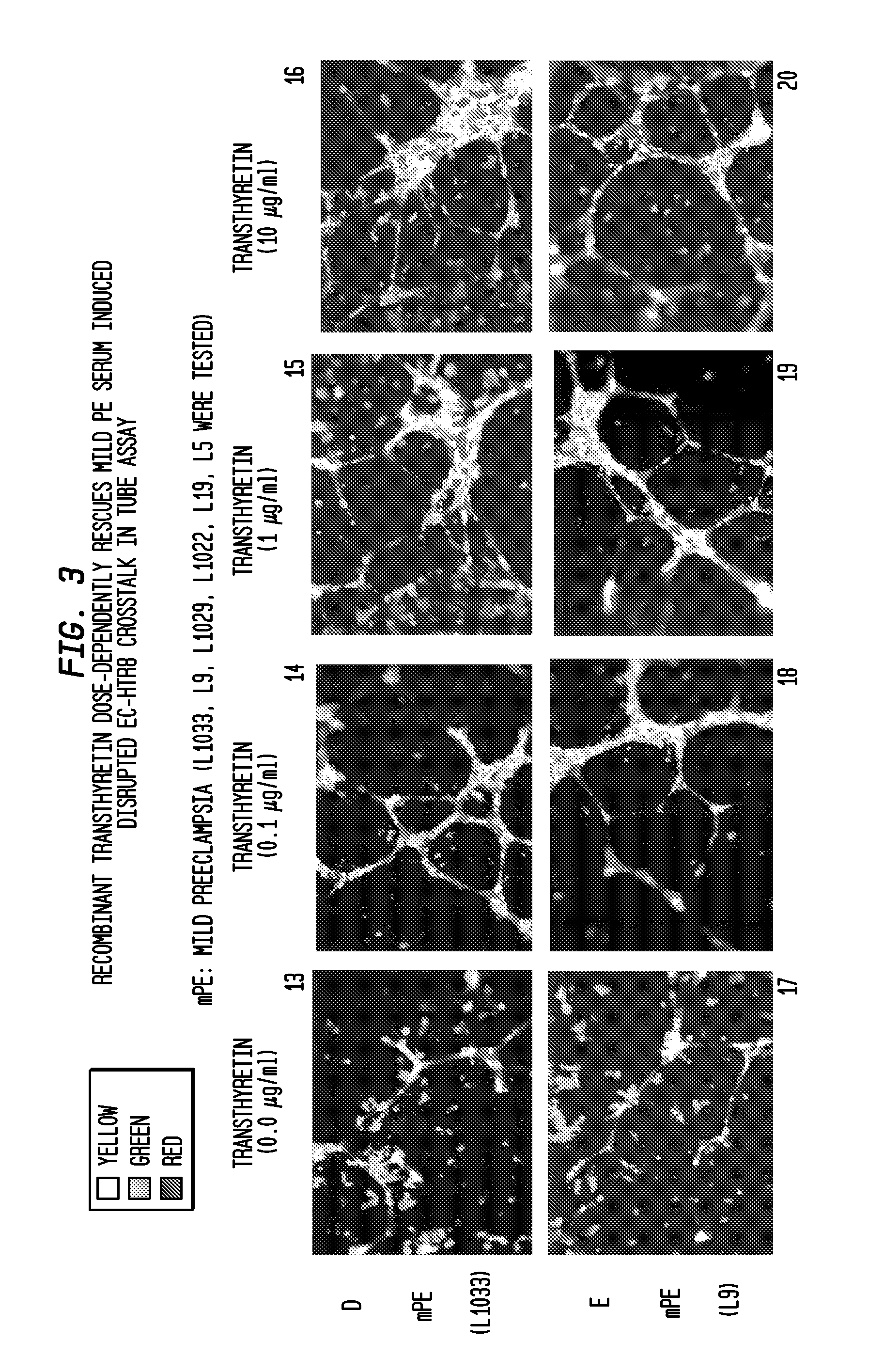
Figure 3
Abstract
Description
BACKGROUND
[0001] Globally, preeclampsia (PE) and other hypertensive disorders of pregnancy are a leading cause of maternal and infant illness and death. By conservative estimates, these disorders are responsible for 76,000 maternal and 500,000 infant deaths each year, from 7-8% of all pregnancies (www.preeclampsia.org). Typically, preeclampsia is diagnosed in the late 2nd or 3rd trimesters, after 20 weeks gestation, though its pathogenisis may occur earlier. Preeclampsia, HELLP Syndrome and eclampsia are manifestations of the same syndrome. Id. PE presents with maternal symptoms of global endothelial disease, including glomeruloendotheliosis, liver and cerebral vascularitis. It occurs only during pregnancy and the postpartum period and affects both the mother and the unborn baby. It is a rapidly progressive condition characterized by high blood pressure (>140) and the presence of proteinuria (>0.3 μm / ml) and general edema. Swelling, sudden weight gain, headaches and changes in ...
Examples
example 1
CLINICAL EXAMPLE 1
Severe Preeclampsia
[0053]A pregnant woman at week 24 of gestation presents herself for routine checkup. Blood pressure measurements show systolic blood pressure is >150 mmHg (hypertension) and urine analysis show excess excretion of protein and creatinine (proteinuria, >1.5). The patient is diagnosed as severe preeclampsia. The subject is treated with a composition of recombinant or isolated human transthyretin protein at a dose of 100 mg / kg body weight over a 24 hour period and the levels of serum transthyretin are monitored by suitable detection method by ELISA or by SELDI-TOF. It is noted that in particular embodiments a dosage of 50-100 mg / kg of recombinant or isolated human transthyretin protein are therapeutic.
example 2
CLINICAL EXAMPLE 2
Mild Preeclampsia
[0054]A pregnant woman at week 28 of gestation presents herself for routine checkup. Blood pressure measurements show systolic blood pressure is >140 mmHg (hypertension) and urine analysis by ELISA show high protein to creatinine ratio (proteinuria) is >0.3, the patient is diagnosed as mild preeclampsia. The subject is treated with a composition of transthyretin protein at a dose of 40 mg / kg body weight over a 24 hour period and the levels of serum transthyretin are monitored by suitable detection method by ELISA or by SELDI-TOF. The clinical outcome of hypertension and proteinuria are monitored during the following week. Depending on the clinical diagnosis, a second dose of 40 mg / kg is given over a 24 hr period. It is noted that in particular embodiments a dosage of 25-50 mg / kg of recombinant or isolated human transthyretin protein are therapeutic.
example 3
CLINICAL EXAMPLE 3
Severe Preeclampsia
[0055]A pregnant woman at week 22 of gestation presents herself for routine checkup. Blood pressure measurements show systolic blood pressure is >155 mmHg (hypertension) and urine analysis show excess excretion of protein and creatinine (proteinuria, >1.5), the patient is diagnosed as severe preeclampsia. The subject is treated with a composition of transthyretin protein in combination with diclofenac 10:1 (mole / mole) at a dose of 10 mg / kg per day administered over a 24 hour period and the levels of serum transthyretin is monitored by suitable detection method by ELISA or by SELDI-TOF. The clinical outcome of hypertension and proteinuria are monitored in the following week. Depending on the outcomes, a second dose of 5-10 mg / kg of transthyretin-diclofenac is administered over a 24 hr period.
[0056]It is noted that in particular embodiments the mole ratio of transthyretin protein to diclofenac is from about 1:1 to about 10:1. It is further noted th...