
Ambulatory monitor with conductive adhesive and related methods
a technology of conductive adhesive and monitor, which is applied in the field of ambulatory monitor with conductive adhesive, can solve the problems of inability to collect physiological data over extended timespans, inability to detect intermittently observed heart conditions, and inability to detect latent heart conditions
Patent Information
- Authority / Receiving Office
- US · United States
- Patent Type
- Applications(United States)
- Current Assignee / Owner
- Publication Date
- 2018-05-10
- Estimated Expiration
- Not applicable · inactive patent
Smart Images
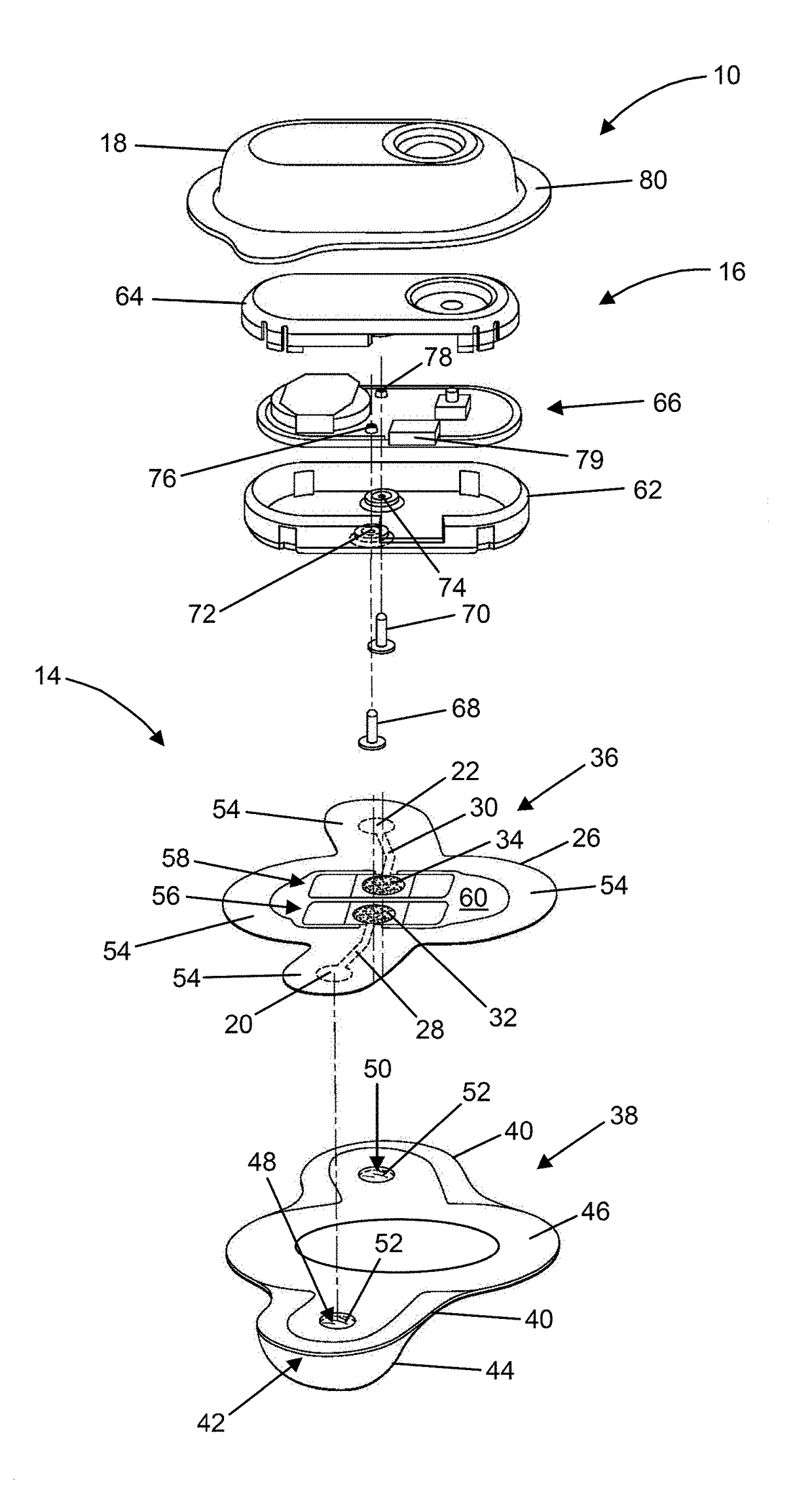
Figure 1 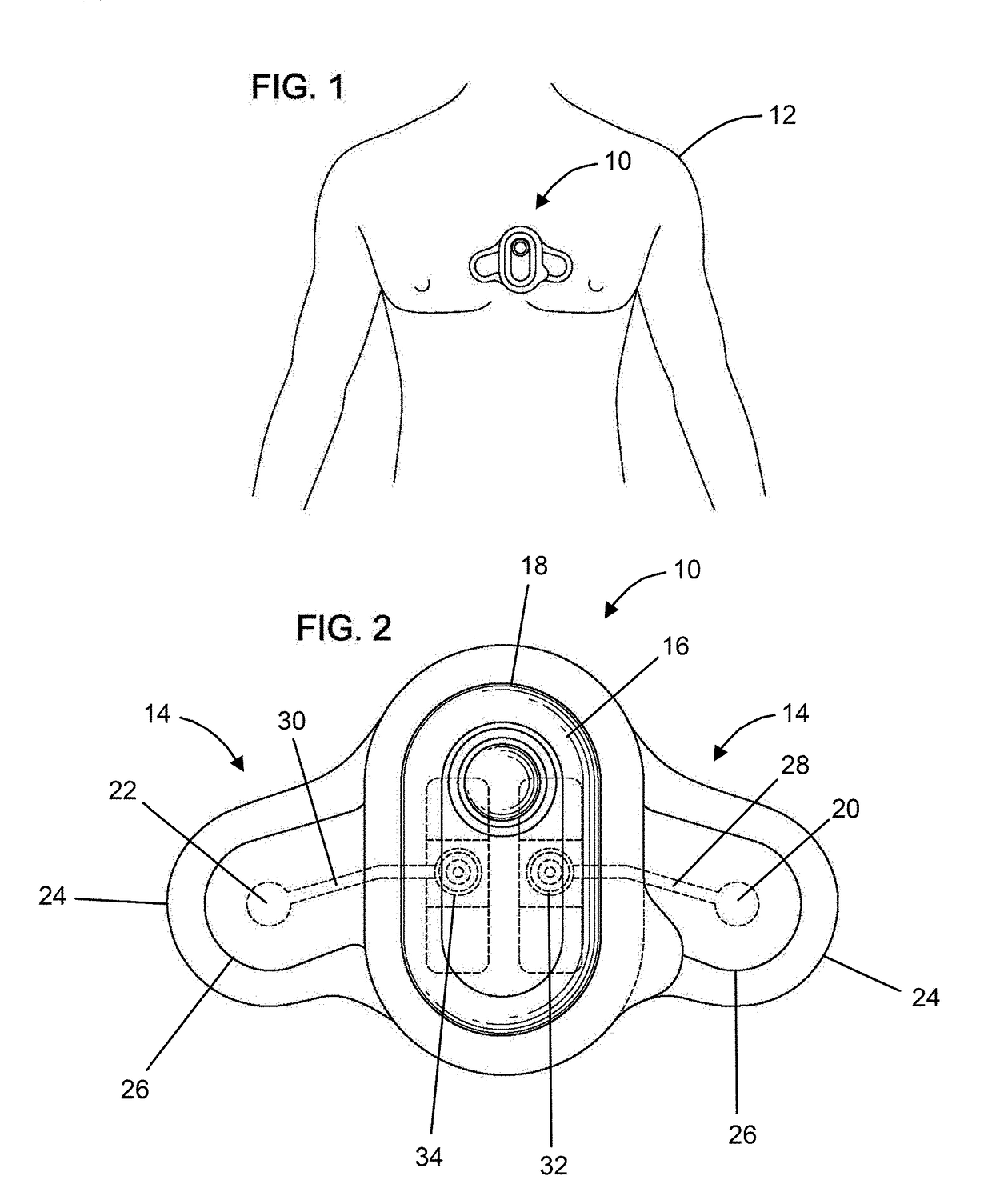
Figure 2 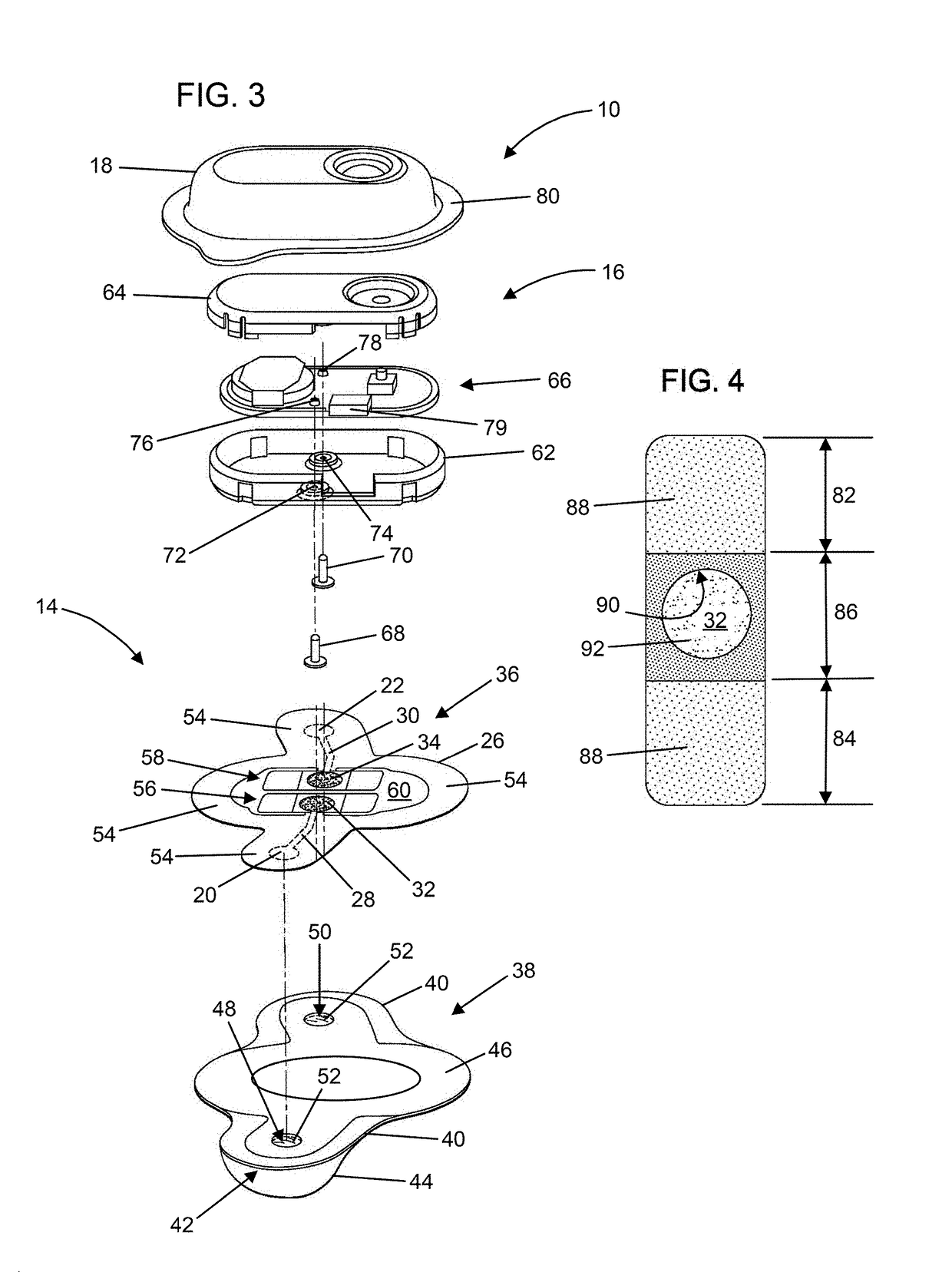
Figure 3
Abstract
Description
CROSS-REFERENCES TO RELATED APPLICATIONS
[0001] This application claims the benefit of U.S. Provisional Application No. 62 / 419,211, filed Nov. 8, 2016, the entire contents of which are hereby incorporated in its entirety for all purposes.BACKGROUND
[0002] Electrocardiography (ECG or EKG) is often used to assess the electrical and muscular functions of the heart using electrodes placed on the skin. The electrodes detect electrical variations that arise from heart muscle depolarization and repolarization during each heartbeat. EGG is a commonly employed method to assess the health of a person's heart.
[0003] In many instances, ECG is performed in a clinical setting, such as in a hospital or in a doctor's office. Performing ECG in a clinical setting, however, tends to discourage widespread application of ECG as a precautionary method for the detection of latent, undetected heart conditions, such as congenital heart defects. Moreover, time constraints in the clinical setting tend to limit the...
Examples
Embodiment Construction
[0047]In the following description, various embodiments of the present invention will be described. For purposes of explanation, specific configurations and details are set forth in order to provide a thorough understanding of the embodiments. However, it will also be apparent to one skilled in the art that the present invention may be practiced without the specific details. Furthermore, well-known features may be omitted or simplified in order not to obscure the embodiment being described.
[0048]Referring now to the drawings, in which like reference numerals represent like parts throughout the several views, FIG. 1 shows an ambulatory monitor 10 adhered to the chest of a user 12. In embodiments described herein, the ambulatory monitory 10 is configured to record ECG data for the user 12 that is generated via two electrodes coupled with the user's skin. The ambulatory monitor 10 can, however, be adapted to record any suitable physiological data of the user 12. For example, the ambula...