
Chemically amplified photoresist composition and photoresist film using the same
Patent Information
- Authority / Receiving Office
- US · United States
- Current Assignee / Owner
- Publication Date
- 2019-12-19
Smart Images
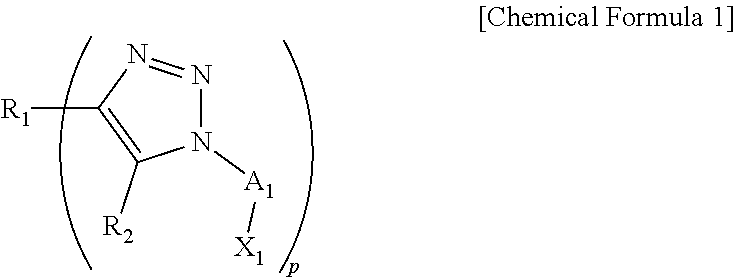
Figure 1 
Figure 2 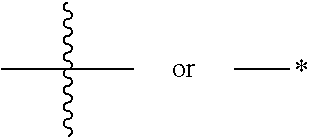
Figure 3
Abstract
Description
TECHNICAL FIELDCross-Reference to Related Application
[0001] This application claims the benefits of Korean Patent Application No. 10-2017-0144766 filed on Nov. 1, 2017 with the Korean Intellectual Property Office, the disclosure of which is incorporated herein by reference in its entirety.
[0002] The present disclosure relates to a chemically amplified photoresist composition and a photoresist film using the same. More specifically, the present disclosure relates to a chemically amplified photoresist composition capable of minimizing cracking of a photoresist obtained from the composition and improving adhesion to a substrate and sensitivity, and a photoresist film using the same.BACKGROUND OF ART
[0003] Photofabrication is the mainstay of microfabrication technology, and packaging technology is constantly changing to a process for manufacturing high-density packages.
[0004] In particular, as the number of input / output terminals of semiconductors increases, the use of flip-chip technology ...
Examples
synthesis example 1
[0092]
[0093]Compound A-1 was obtained by a click reaction between Compound a1 and Compound b1.
[0094]Specifically, 1.0 equiv. of Compound a1 and 1.0 equiv. of Compound b1 were dissolved in chloroform, and then a preliminarily prepared catalyst solution (CuBr / PMDETA=1 / 1 mol / mol, wherein PMDETA is N,N,N′,N″,N-pentamethyldiethylenetriamine) was added thereto in an amount of 0.05 equiv. based on CuBr at room temperature, followed by stirring for 12 hours. The reaction mixture was washed with water and HCl (1 N), and then an organic layer was concentrated and purified by column chromatography to obtain 21 g of Compound A-1 (60% yield).
synthesis example 2
[0095]
[0096]Compound A-2 was obtained by a click reaction between Compound a2 and Compound b1.
[0097]Specifically, 1.0 equiv. of Compound a2 and 1.0 equiv. of Compound b1 were dissolved in chloroform, and then a preliminarily prepared catalyst solution (CuBr / PMDETA=1 / 1 mol / mol, wherein PMDETA is N,N,N′,N″,N-pentamethyldiethylenetriamine) was added thereto in an amount of 0.05 equiv. based on CuBr at room temperature, followed by stirring for 12 hours. The reaction mixture was washed with water and HCl (1 N), and then an organic layer was concentrated and purified by column chromatography to obtain 21 g of Compound A-2 (60% yield).
synthesis example 3
[0098]
[0099]Compound A-3 was obtained by a click reaction between Compound a3 and Compound b1.
[0100]Specifically, 1.0 equiv. of Compound a3 and 1.0 equiv. of Compound b1 were dissolved in chloroform, and then a preliminarily prepared catalyst solution (CuBr / PMDETA=1 / 1 mol / mol, wherein PMDETA is N,N,N′,N″,N-pentamethyldiethylenetriamine) was added thereto in an amount of 0.05 equiv. based on CuBr at room temperature, followed by stirring for 12 hours. The reaction mixture was washed with water and HCl (1 N), and then an organic layer was concentrated and purified by column chromatography to obtain 21 g of Compound A-3 (60% yield).