
An optically detectable marker including luminescent dopants and system and method for reading such markers
Patent Information
- Authority / Receiving Office
- US · United States
- Current Assignee / Owner
- Publication Date
- 2020-02-13
Smart Images
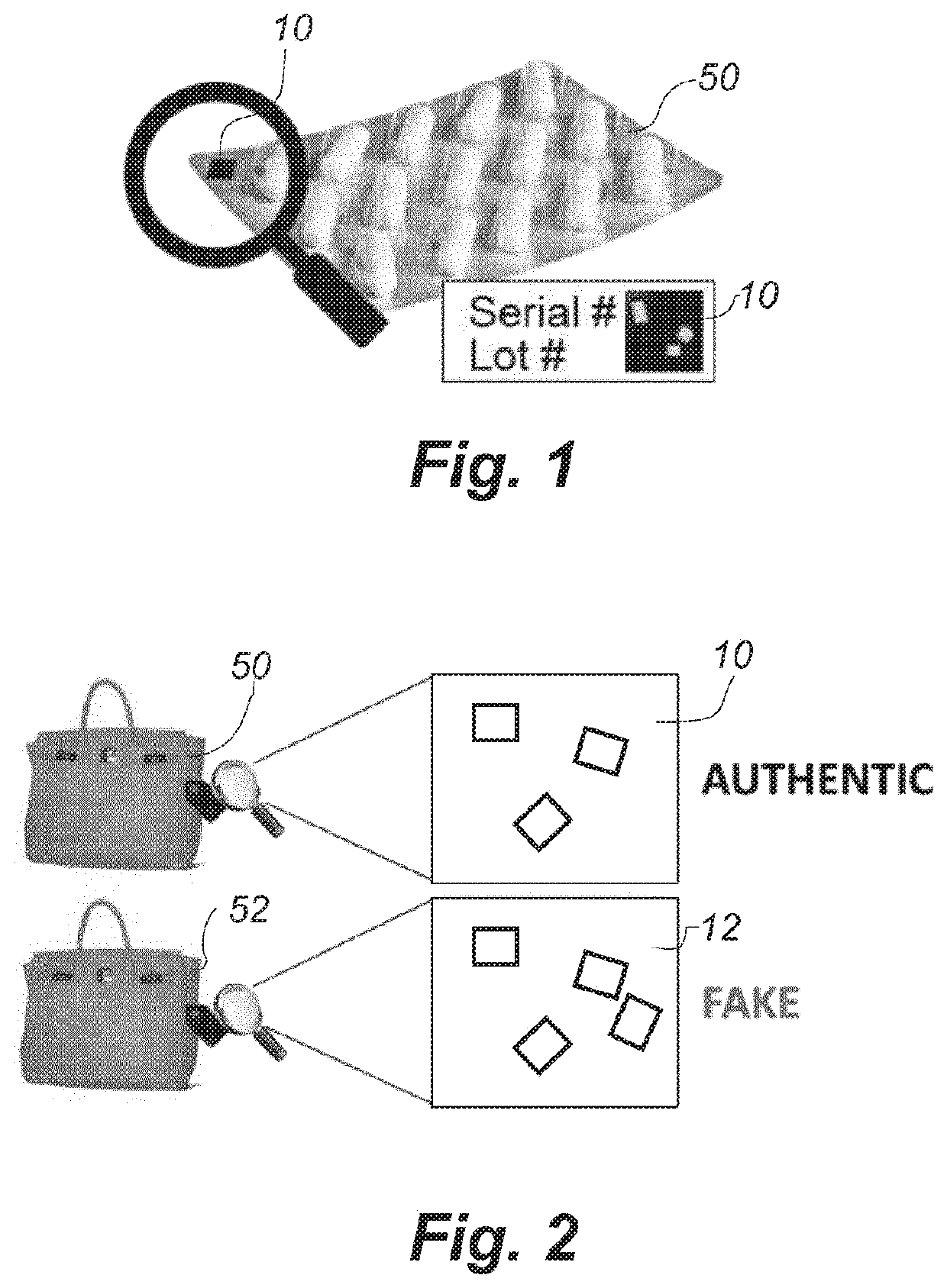
Figure 1 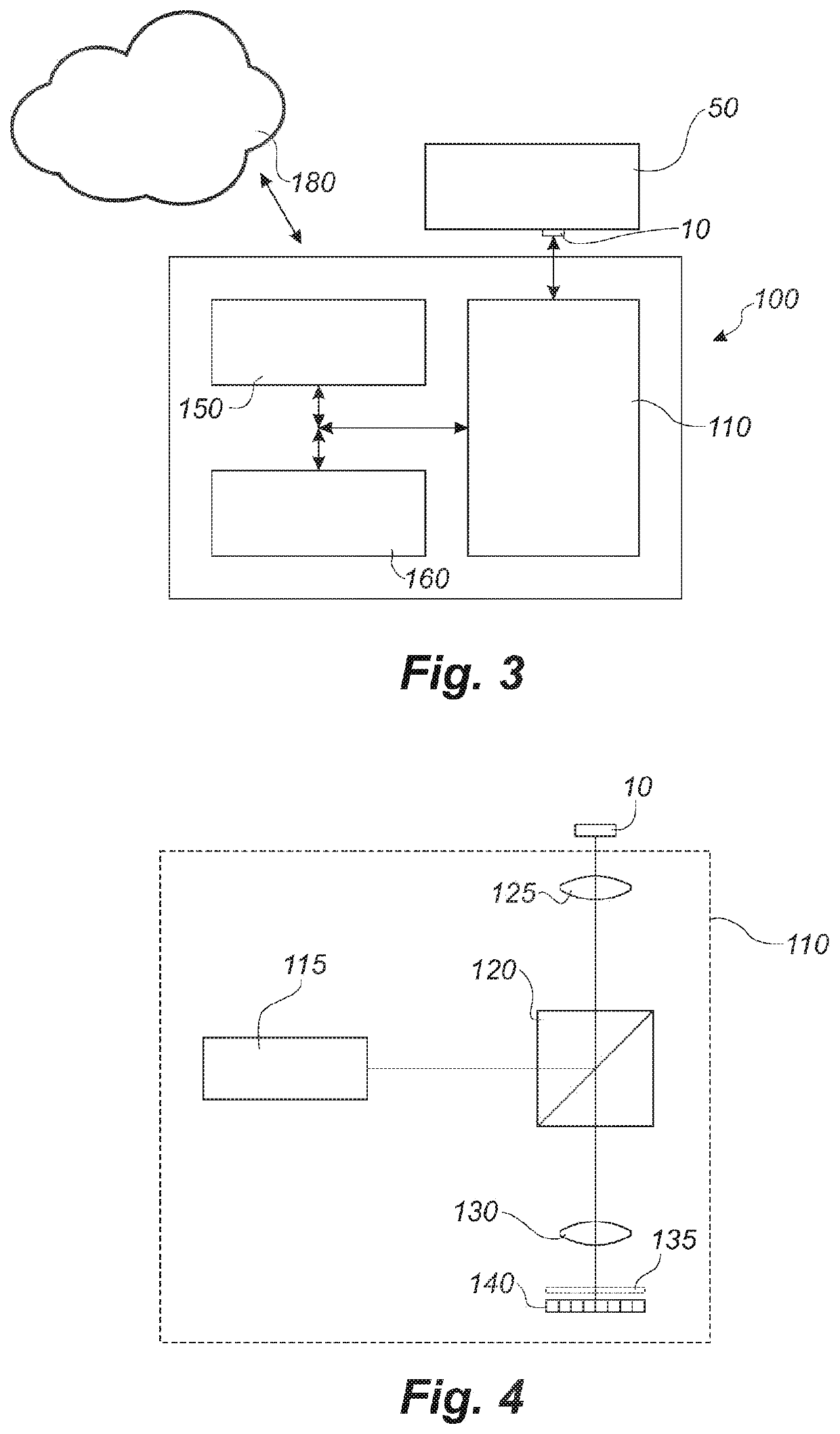
Figure 2 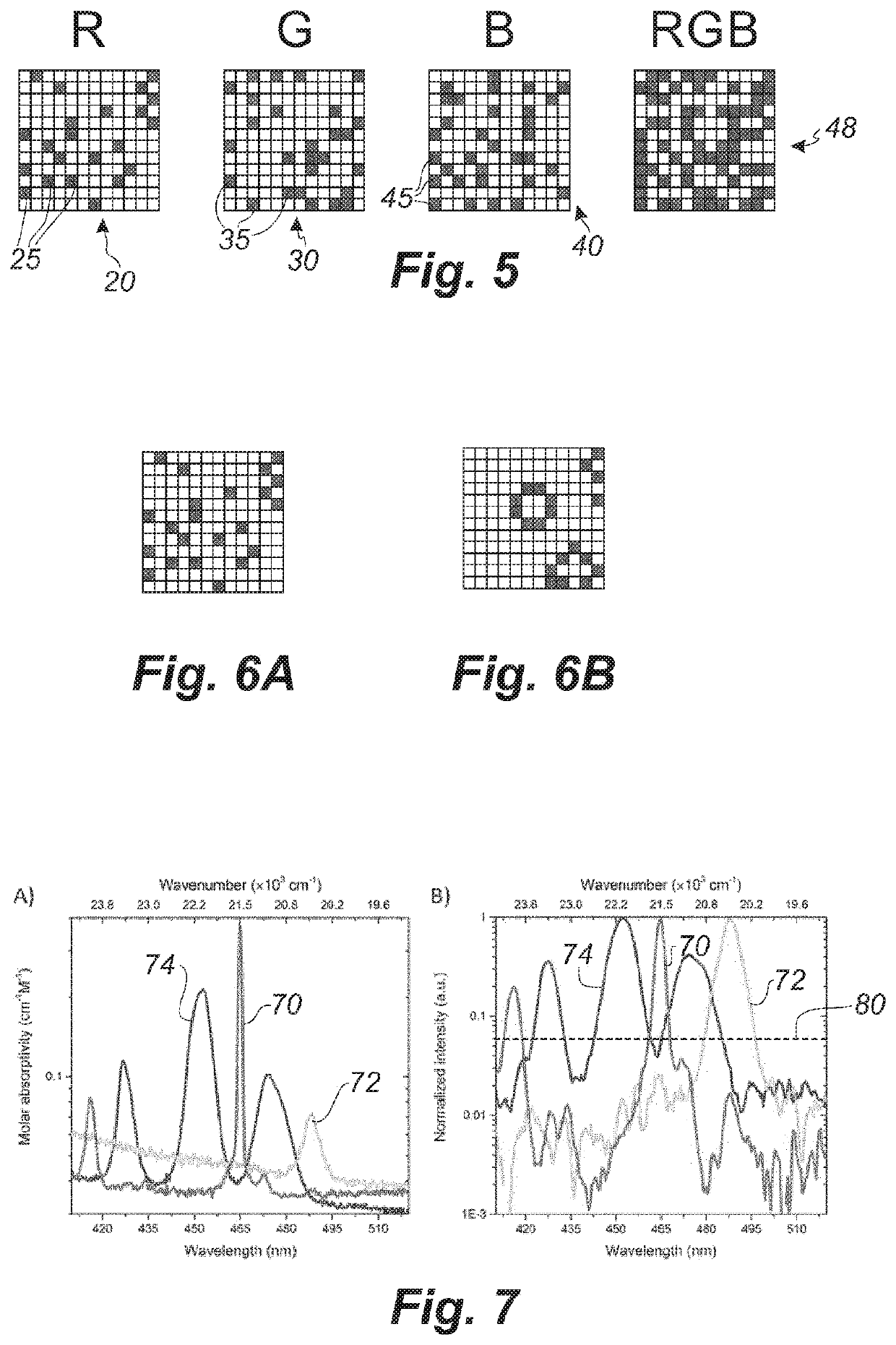
Figure 3
Abstract
Description
FIELD OF THE INVENTION
[0001] The present invention relates to an optically detectable marker, a product provided with such an optically detectable marker as well as a system and method for reading out such optically detectable markers.BACKGROUND OF THE INVENTION
[0002] Anti-counterfeit tagging using reliable optical methods may provide the solution for addressing the billion-dollar economic losses imposed by counterfeiting and may save lives if used to guarantee the authenticity of medicine.
[0003] Most optical methods for anti-counterfeit tagging rely on the analysis of the emitted light of for instance organic dyes with broad spectral features or quantum dots. These methods require either a spectrometer of specific filter sets and are vulnerable to intensity variations, crosstalk and are relatively easy to replicate. The origin of the emitted light cannot be unambiguously determined, and a broad range of excitation wavelengths can result in emission.
[0004] US 2004 / 0112962 discloses secu...
Examples
example
[0110]The invention for the excitation-selected imaging of optically detectable marker has been demonstrated by the inventors based on lanthanide-doped zeolites. The uniquely narrow absorption peaks of lanthanides enable to use three, energetically closely spaced excitation wavelengths for the selective excitation of Eu3+, Tb3+, and Dy3+. FIGS. 7A and 7B show absorption and normalized excitation spectra for the three lanthanides, respectively.
[0111]Tb3+ has a unique absorption band 72 with an absorption peak at 488 nm. Eu3+ has a unique absorption band 70 with a very narrow absorption peak at 465 nm and another at 416 nm. Dy3+ has three absorption peaks at 425 nm, 450 nm, and 475 nm, from which the unique absorption 74 with the best absorptivity is at 450 nm. The combination of the three unique absorption bands gives minimal crosstalk between the three lanthanides. The preferred setup is to use the absorption peaks at 450 nm, 465 nm, and 488 nm. Dy3+ absorption peaks are the broades...