
Device and Method for Accelerating Orthodontic Treatment Using Mechanical Vibrations
a mechanical vibration and orthodontic technology, applied in the field of orthodontics, can solve the problems of cutting off blood circulation, affecting the treatment effect, so as to increase the effect of treatment, shorten the treatment time, and reduce the effect of time and resources
Patent Information
- Authority / Receiving Office
- US · United States
- Current Assignee / Owner
- Publication Date
- 2020-03-19
Smart Images
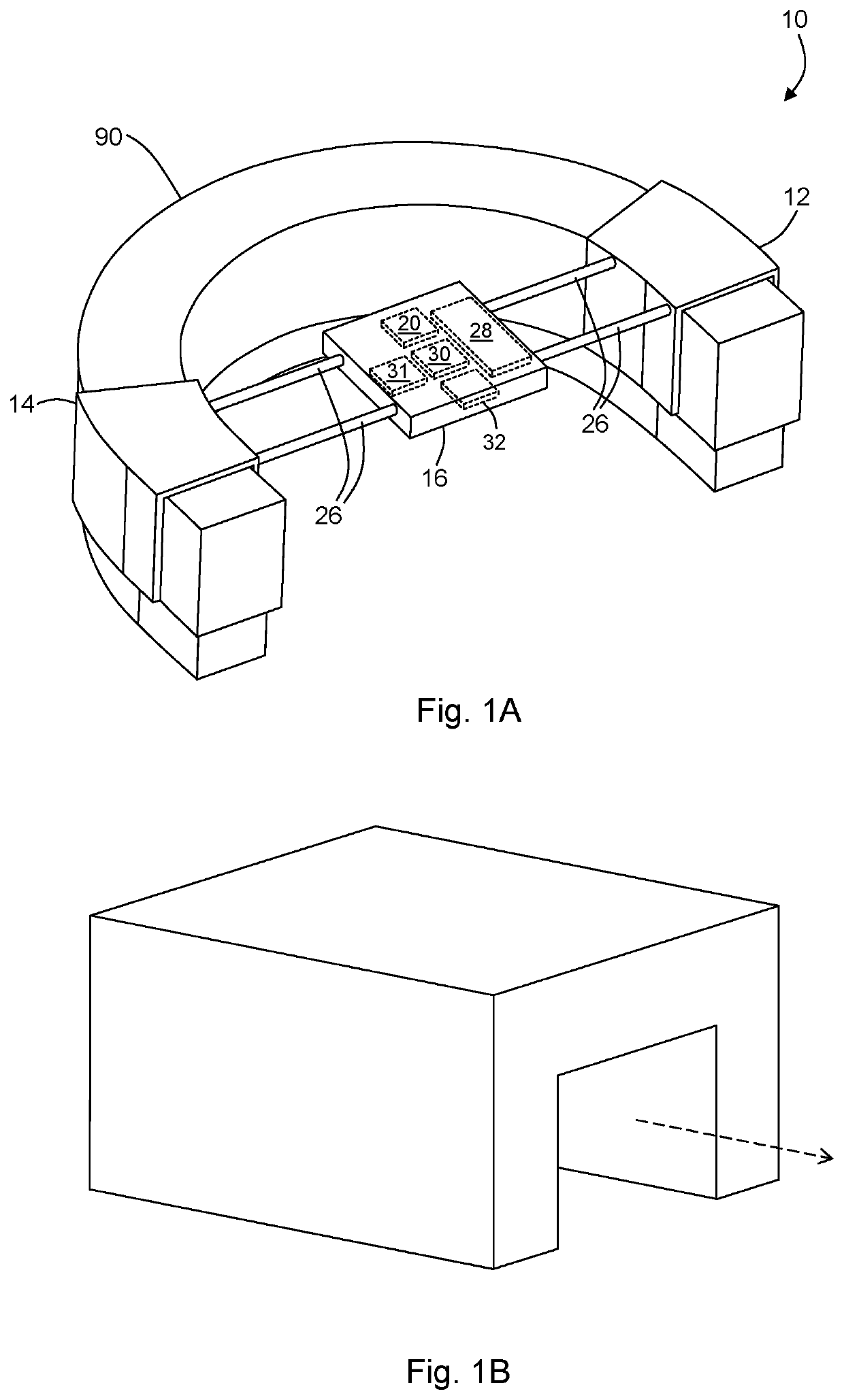
Figure 1 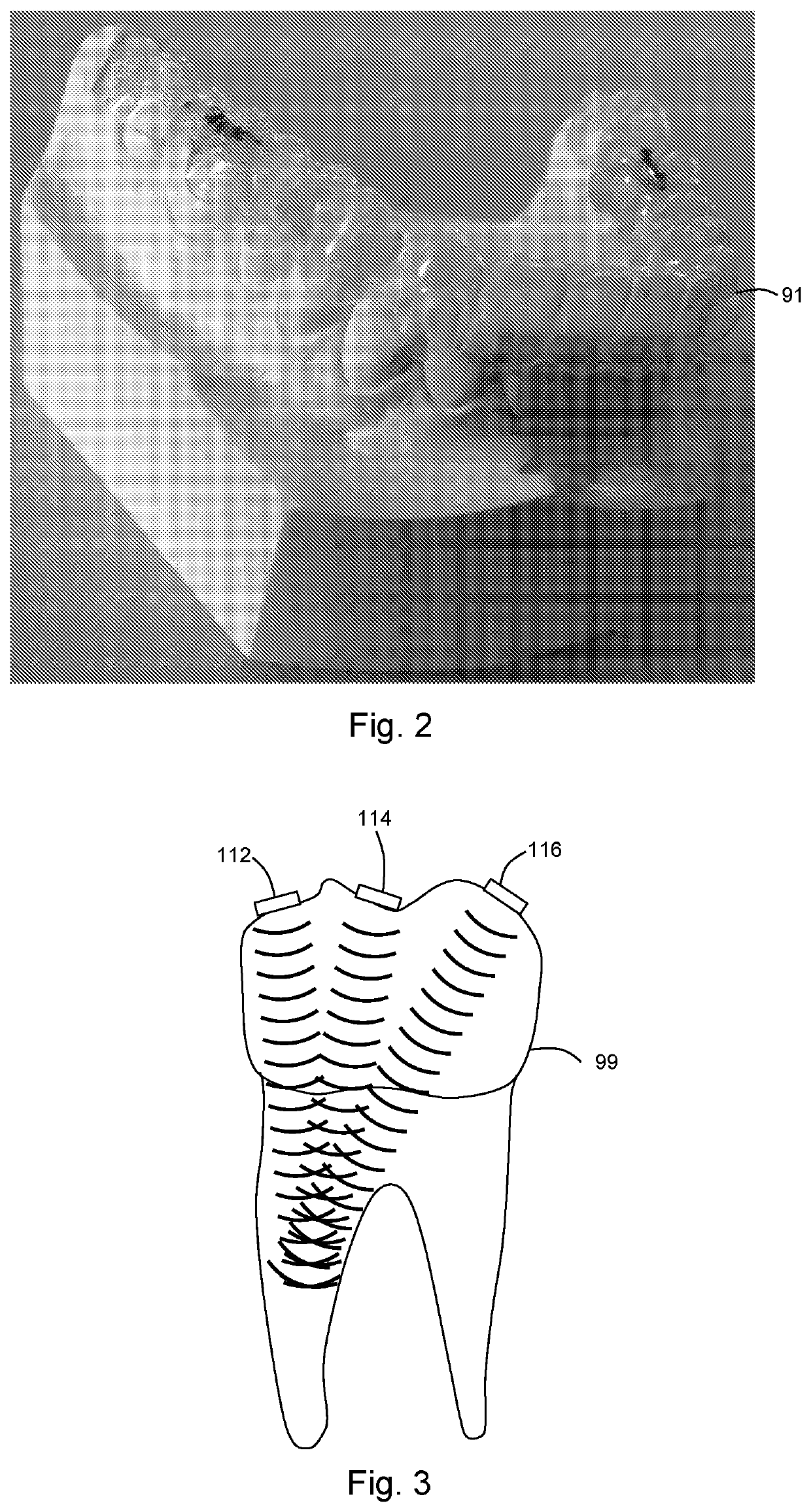
Figure 2 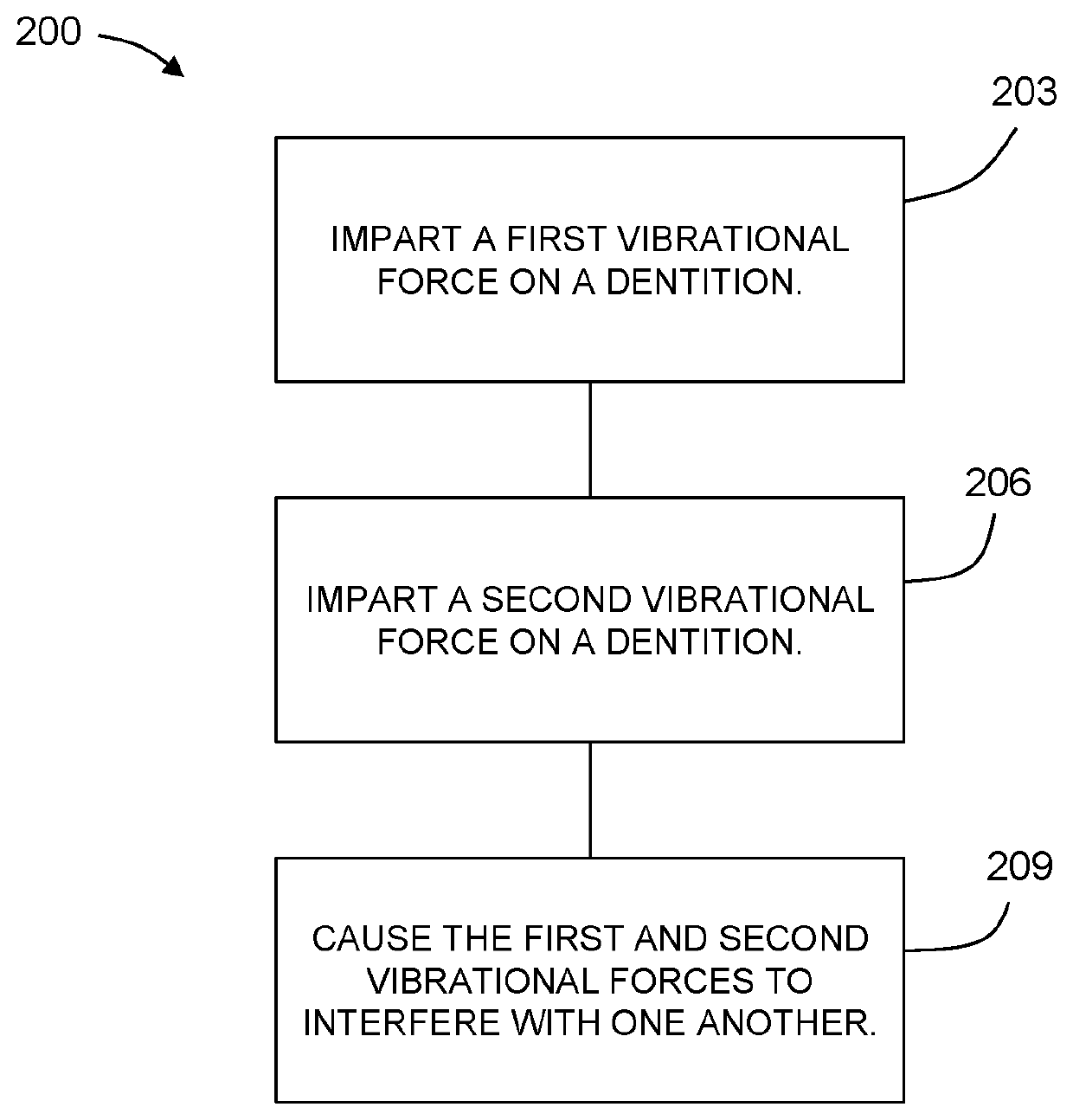
Figure 3
Abstract
Description
CROSS-REFERENCE TO RELATED APPLICATIONS
[0001] This application claims priority to U.S. Provisional Application No. 62 / 475,018, filed on Mar. 22, 2017, now pending, the disclosure of which is incorporated herein by reference.FIELD OF THE DISCLOSURE
[0002] This disclosure relates to the field of orthodontics.BACKGROUND OF THE DISCLOSURE
[0003] Orthodontics is the dental field that treats malocclusion through the movement of teeth. This specialty deals primarily with the diagnosis, prevention and correction of malposition of the teeth and the jaws. Malocclusion implies that the upper and lower teeth don't align correctly in biting or chewing. Malocclusion includes irregular bite, cross bite, or overbite. Malocclusion may be seen as crooked, crowded, or protruding teeth. It may affect a person's appearance, speech, and / or ability to eat.
[0004] Malocclusion is usually corrected by using a continuous mechanical force to induce bone remodeling, thereby allowing the teeth to move to an optimal po...
Examples
Embodiment Construction
[0037]With reference to FIG. 1A, the present disclosure may be embodied as a vibrational device 10 for attachment to an orthodontic appliance 90. For example, the device 10 may be attached to a tooth positioner or aligner. The device 10 includes a first actuator 12 configured to be attached to the orthodontic appliance 90 at a location proximate to a dentition (e.g., a tooth or teeth being aligned). In this way, the first actuator 12 can impart vibratory forces into the dentition (e.g., a target tooth). While the disclosure may refer to a target tooth (a tooth being aligned), such reference is for convenience and it should be noted that in each case more than one tooth may be targeted. Similarly, reference to target teeth is intended to include multiple teeth or a single, targeted tooth. The first actuator 12 may be a piezoelectric actuator. For example, the first actuator 12 may comprise a bio-compatible piezoelectric material such as, for example, polyvinylidene fluoride (PVDF). W...