
Slidable rubber material having an amino-modified interfacial modification layer, and method for producing said slidable rubber material
a technology of interfacial modification and sliding rubber, which is applied in the direction of infusion syringes, synthetic resin layered products, other medical devices, etc., can solve the problems of reduced efficacy or loss and induction of thrombosis, affecting the syringe elasticity, and not easy to avoid the contamination of silicone oil in blood samples, etc., to achieve sufficient slidability and durability, good sealing, and excellent elasticity
Patent Information
- Authority / Receiving Office
- US · United States
- Patent Type
- Applications(United States)
- Current Assignee / Owner
- Publication Date
- 2022-08-25
Smart Images
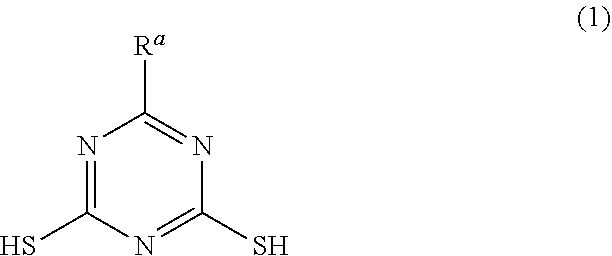
Figure 1 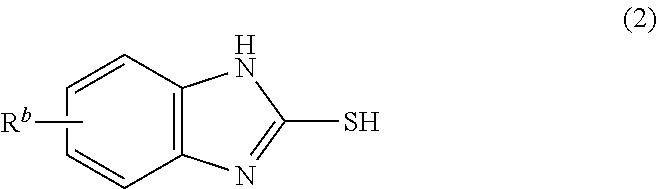
Figure 2
Abstract
Description
TECHNICAL FIELD
[0001] The present invention relates to a slidable rubber material having an amino-modified interfacial modification layer which expresses excellent slidable properties without silicone oil on its exposed surface, and a method for producing the slidable rubber material.BACKGROUND ART
[0002] Syringes which inject a liquid medicine into patients after inhaling it and then pushing it out, pre-filled syringes which inject a pre-sealed liquid medicine into patients or into an infusion solution by pushing it out when used, and syringes for blood drawing are all equipped with an inserted gasket which is installed at the tip of a plunger inside of their syringe cylinders or injectors. These gaskets are required to possess the following features: no leaking between the cylinder of the syringe or injector and the gaskets when the liquid medicine or the blood is inhaled and drained, maintaining liquid sealing without creating gaps and with stable slidability.
[0003] To reduce frictio...
Examples
embodiments
[0118]The following is a detailed explanation of examples of the implementation of the present invention for medical gaskets made of slidable rubber materials. At first, adhesion strength was evaluated using their sheet shapes.
example 1
[0119]The composition for rubber parts was prepared to evaluate the adhesion strength.
[0120]After stirring and mixing 100.00 parts by mass of chlorinated butyl rubber (JSR CHLOROBUTYL 1066: trade name, available from JSR Corporation) as a polymer component, 0.30 parts by mass of stearic acid (purified stearic acid 550V: trade name, available from KAO co., Ltd.), 0.30 parts by mass of zinc stearate (Zn-St (plant): trade name, available from NITTO Chemical Industry Co., Ltd.), and 5.00 parts by mass of paraffinic oil (DYANA PROCESS OIL PW-380: trade name, available from IDEMITSU KOSAN Co., Ltd.) as processing aid agents, 2.00 parts by mass of magnesium oxide (Kyowa Magu #30: trade name, available from Kyowa Chemical Industry Co., Ltd.) as an acid-acceptor, 0.30 parts by mass of carbon black (Asahi #35: trade name, available from Asahi Carbon Co., Ltd.) and 3.00 parts by mass of sulfuric acid method rutile-type titanium oxide (TIPAQUE R-630: trade name, available from Ishihara Sangyo K...
example 2
[0127]In the same manner as Example 1, the chemically cleaning rubber sheet was prepared. To this sheet, after forming the interfacial modification layer, was applied a primer-blended agent, which was prepared by mixing a primer treatment agent A: primer C (trade name, available from Shin-Etsu Chemical Co., Ltd.), aluminum chelate D (trade name, available from Kawaken Fine Chemicals Co., Ltd.) and xylol (xylene WAKO special grade: trade name, available from FUJIFILM Wako Pure Chemical Corporation) in a weight ratio of 30:0.3:70 with a spray gun and dried at room temperature for 30 min to prepare the rubber sheet with a primer layer on the interfacial modification layer.
[0128]In the same manner as Example 1, the rubber sheet for adhesion strength evaluation was prepared from the rubber sheet with a primer layer on the interfacial modification layer, and the evaluation was performed similarly. The results are shown in Table 1.