
Method for the modification of polyolefins
a polyolefin and polymer technology, applied in the direction of adhesives, adhesive types, graft polymer adhesives, etc., can solve the problems of reducing the overall desired mechanical properties, affecting the adhesion of polyolefins to paints, glues and inks, and achieving the level of polar molecules in the surface layer of the final article to achieve an acceptable paintability
Patent Information
- Authority / Receiving Office
- US · United States
- Current Assignee / Owner
- Publication Date
- 2004-04-06
- Estimated Expiration
- Not applicable · inactive patent
Smart Images
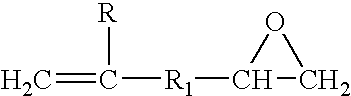
Figure 1 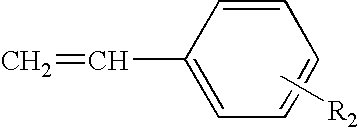
Figure 2
Abstract
Description
The present invention relates to a process for the modification of polyolefins to give them improved adhesion performances.RELATED ARTPolyolefins are known to present poor adhesion to paints, glues and inks. To improve their adhesion properties they need to be chemically modified with polar groups. This could be achieved by blending or alloying the polyolefin resin with engineering polymers, by the functionalization of the polyolefin with specific monomers, or by applying post-treatment methods, such as the use of oxygen plasma and flaming. Polyolefins being modified by graft reactions performed in melt processing equipment, such as single or multiple screw extruders, include well known technologies widely reported in the technical literature.U.S. Pat. No. 5,001,197 discloses a process for functionalization and preferably maleation of a polypropylene by the use of a selected class of peroxides that will not significantly decreased the molecular weight of the polypropylene.EP 0 634 4...
Examples
example 1
A high-flow polypropylene resin taken directly from the reactor as a powder was used. A quantity of 86 parts of this polypropylene resin was mixed with 2.5 parts of maleic anhydride and 1.5 parts of peroxide, and blended for 1 hour. The obtained mixture and 10 parts of R-TPO polymer were fed together to the extruder specified above. The temperature of the extruder was set at 200.degree. C., and the screw speed was adjusted to 150 rpm, which resulted in an output of 3 kg / h. This blend was extruded as strands which were cooled by water and chopped into granules in a conventional manner.
example 2
The procedure of Example 1 was followed, except that 84 parts of the polypropylene resin, 4.0 parts of maleic anhydride, 2 parts of the peroxide and 10 parts of the R-TPO polymer were used.
example 3
The procedure of Example 1 was followed, except that 64 parts of the polypropylene resin, 4 parts of maleic anhydride, 2 parts of the peroxide and 30 parts of R-TPO were used.