
High-selectivity electromagnetic bandgap device and antenna system
a high-selectivity electromagnetic and bandgap technology, applied in the direction of antennas, antenna feed intermediates, electrical devices, etc., can solve the problems of limiting the bandwidth of an antenna, tunable antennas that do not provide system selectivity, and designing such a structure can become quite difficult for low frequency applications, so as to improve the overall frequency agility of the antenna system, the effect of adding tunability to the ebg
Patent Information
- Authority / Receiving Office
- US · United States
- Patent Type
- Patents(United States)
- Current Assignee / Owner
- Publication Date
- 2006-05-09
Smart Images
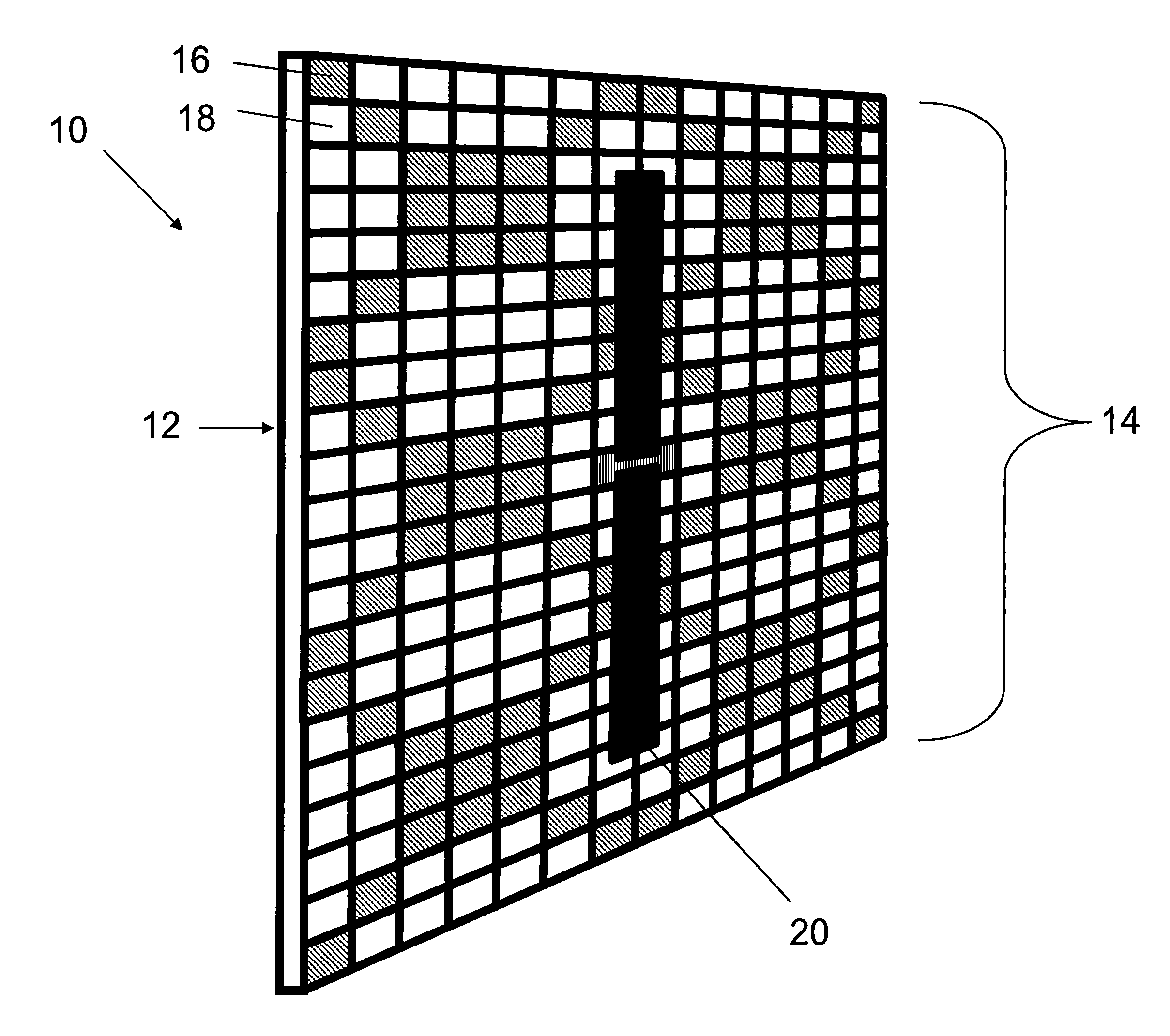
Figure 1 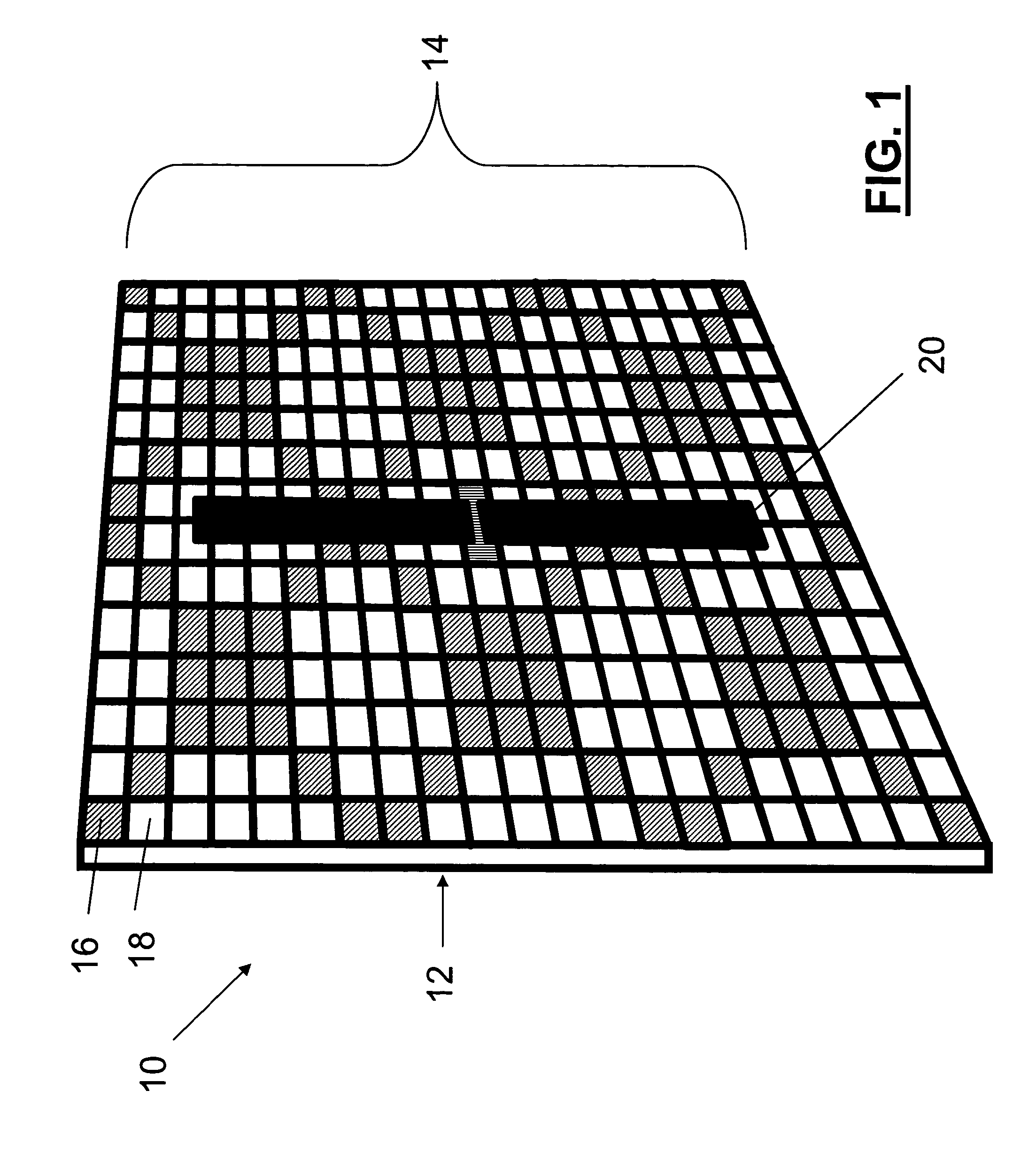
Figure 2 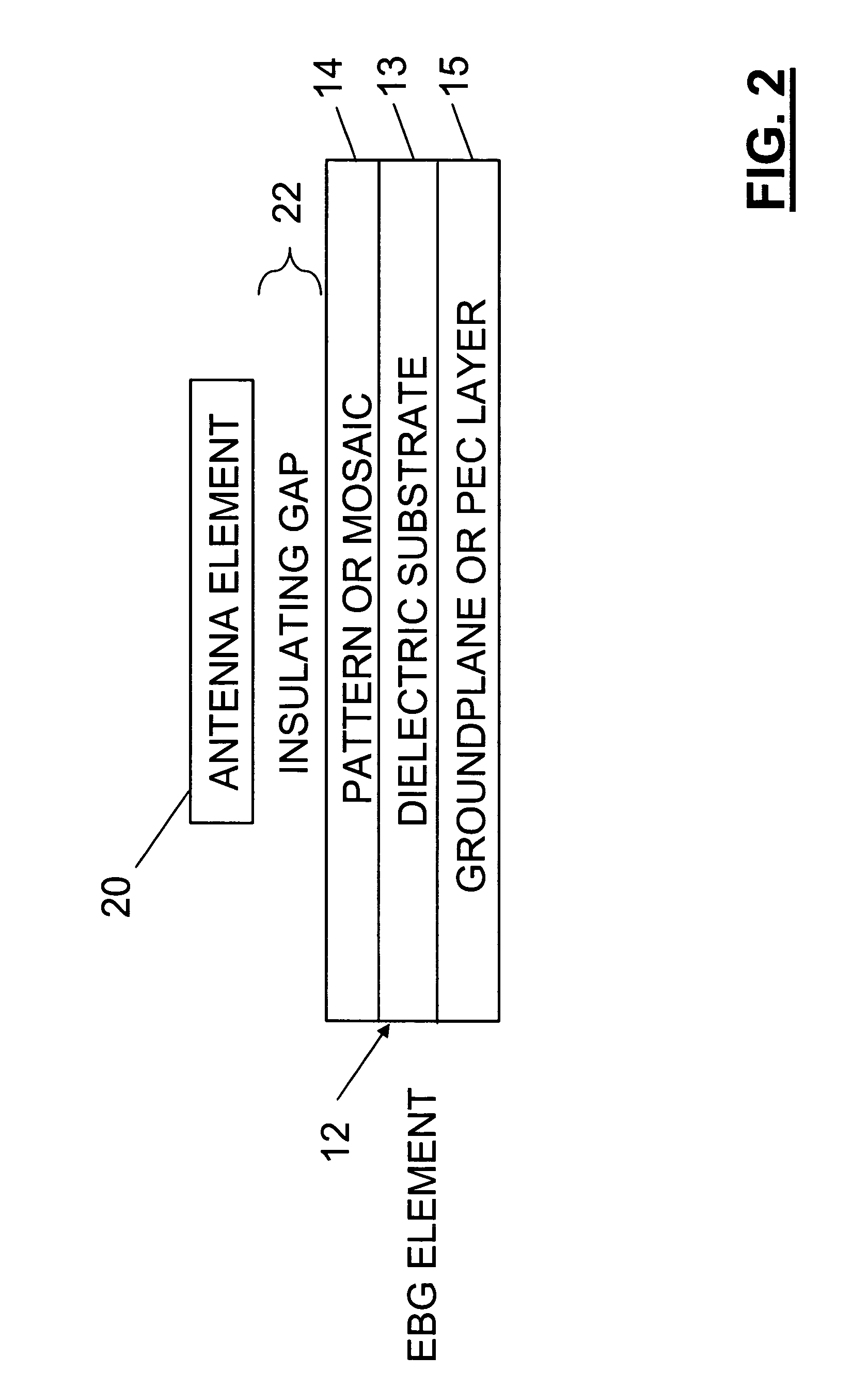
Figure 3
Abstract
Description
PRIORITY STATEMENT
[0001] This application is a conversion of and claims priority to U.S. Provisional Patent Application No. 60 / 491,922, filed on Aug. 1, 2003, herein incorporated by reference in its entirety.GRANT REFERENCE
[0002] Work for this invention was funded by grants from the Department of Defense Advanced Research Projects Agency Contract No. NBCHC010061. The United States government may have certain rights in this invention.BACKGROUND OF THE INVENTION
[0003] The present invention addresses problems in several areas which are seemingly unrelated without having the benefit of the disclosure concerning the present invention. A first area of the disclosure is the general area of frequency tunable antennas. Frequency tunable antennas are known to exist but such antennas do not provide a narrow bandwidth of operation. Moreover such frequency tunable antennas do not provide for system selectivity.
[0004] In typical communication systems, many communications channels are present. Each ch...
Examples
Embodiment Construction
[0027]EBG materials display a reflection phase versus frequency such as that illustrated in FIG. 4. The center frequency of operation is defined as that frequency where the reflection phase is zero. This point on the frequency response curve is very unique. A consequence of zero-phase reflection is that the electric field is not flipped in polarity as is the case for all other electrical conductors (which may be considered perfect electrical conductors (PECs)), but is in fact reflected without a phase shift. This is a unique property that is provided by the operation of these resonant surfaces. In practice, the bandwidth of operation is defined as the frequency range where the reflection phase is between −90 degrees and 90 degrees.
[0028]With this unique property, antennas can be placed proximate (on or near) these surfaces without experiencing the short-circuiting effects associated with PEC ground planes. As the operating frequency with which the antenna is being driven leaves the ...