
Management of gastro-intestinal disorders
a gastro-intestinal disorder and gastrointestinal disease technology, applied in the field of gastrointestinal disorders, can solve problems such as problems such as problems such as problems such as problems such as problems such as ongoing testing, treatment according to symptoms only, and achieve the effect of making tests faster and easy to tolerate by patients
Patent Information
- Authority / Receiving Office
- US · United States
- Patent Type
- Patents(United States)
- Current Assignee / Owner
- Publication Date
- 2011-01-11
Smart Images
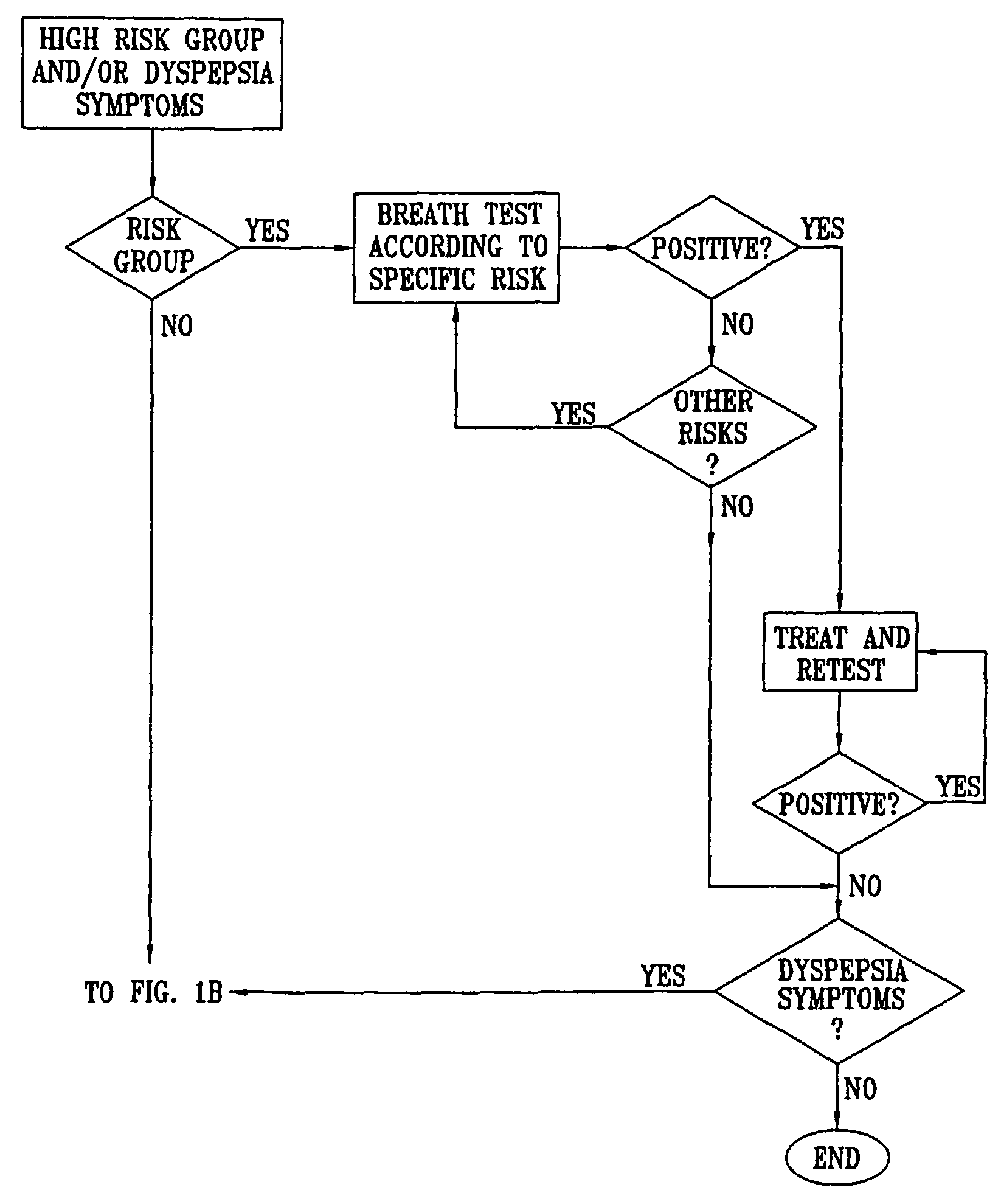
Figure 1 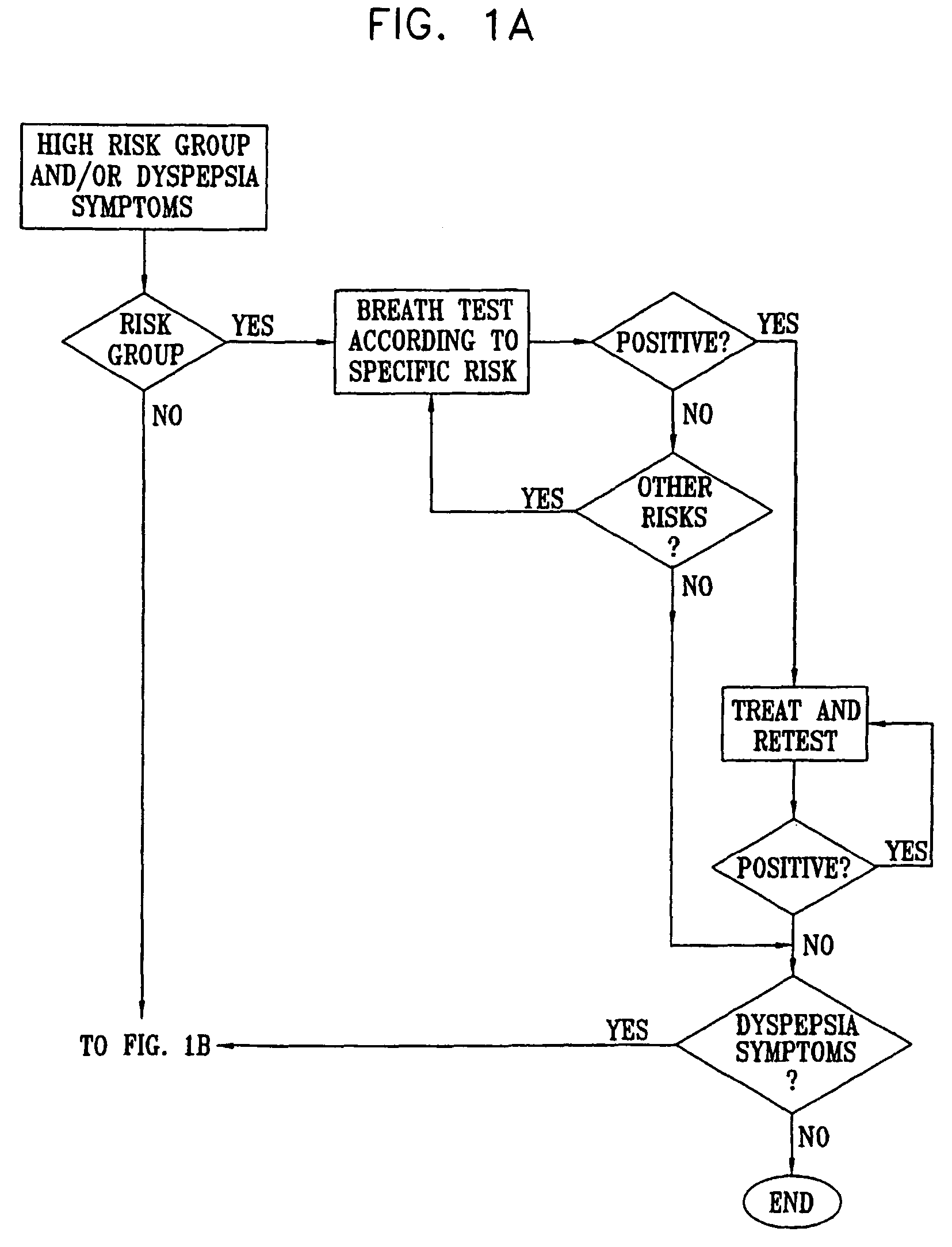
Figure 2 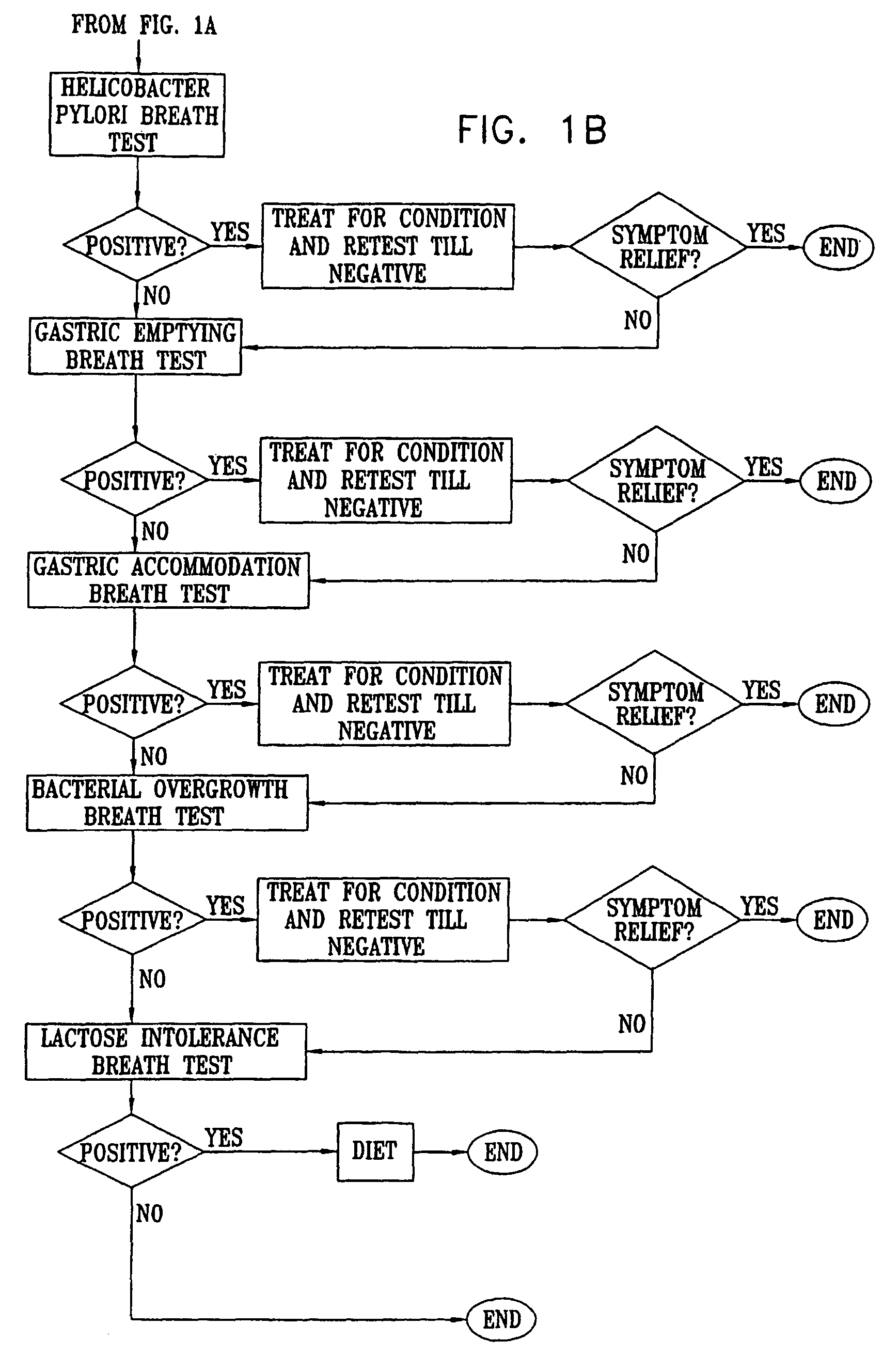
Figure 3
Abstract
Description
FIELD OF THE INVENTION
[0001] The present invention relates to the field of methods for the determination of various conditions of gastric and gastro-intestinal malfunction, especially those performed by means of breath tests.BACKGROUND OF THE INVENTION
[0002] It is estimated that more than 25% of the general population in developed countries suffer from different degrees of functional dyspepsia and / or Irritable Bowel Syndrome, IBS. Such conditions are called for the purposes of this application, functional GI disorders. These disorders are clinical syndromes characterized by GI symptoms without identifiable cause. When a physiological cause is identified, these disorders are more correctly called organic dyspepsia or bowel disorders. The complex of dyspeptic symptoms is usually related to pain or discomfort generally felt in the center of the abdomen around or above the navel. Some examples of discomfort include fullness, early satiety, which is a feeling of fullness soon after startin...
Examples
Embodiment Construction
[0076]Reference is now made to FIGS. 1A and 1B, which illustrates schematically a flow chart describing possible courses of detection and treatment for patients with symptoms of dyspepsia or IBS, or asymptomatic patients belonging to a GI high risk group, as defined hereinabove. The flow chart is not intended to illustrate a definitive algorithm for a comprehensive diagnosis and treatment routine, but rather to illustrate some of the possible courses open to the treating physician, which can be taken using the methods and apparatus of the preferred embodiments of the present inventions. Though the tests in the preferred methods illustrated in FIGS. 1A and 1B are described as breath tests, it is to be understood that they can be equally well performed by other methods, as described hereinbelow.
[0077]Reference is also made to FIG. 1C, which is an alternative schematic diagram for illustrating a method of detection and treatment for patients suspected of having any of the above-mention...