
Polymerizable anion-containing sulfonium salt and polymer, resist composition, and patterning process
a technology of polymerizable anion and sulfonium salt, applied in the field of polymerizable anioncontaining sulfonium salt and polymer, resist composition, patterning process, can solve the problems of insufficient acid strength, failure of resolution, and several lags in the development of the sulfonium salt, and achieve high acidity, facilitate efficient scission of acid labile groups, and high resolution
Patent Information
- Authority / Receiving Office
- US · United States
- Patent Type
- Patents(United States)
- Current Assignee / Owner
- Publication Date
- 2012-01-31
Smart Images
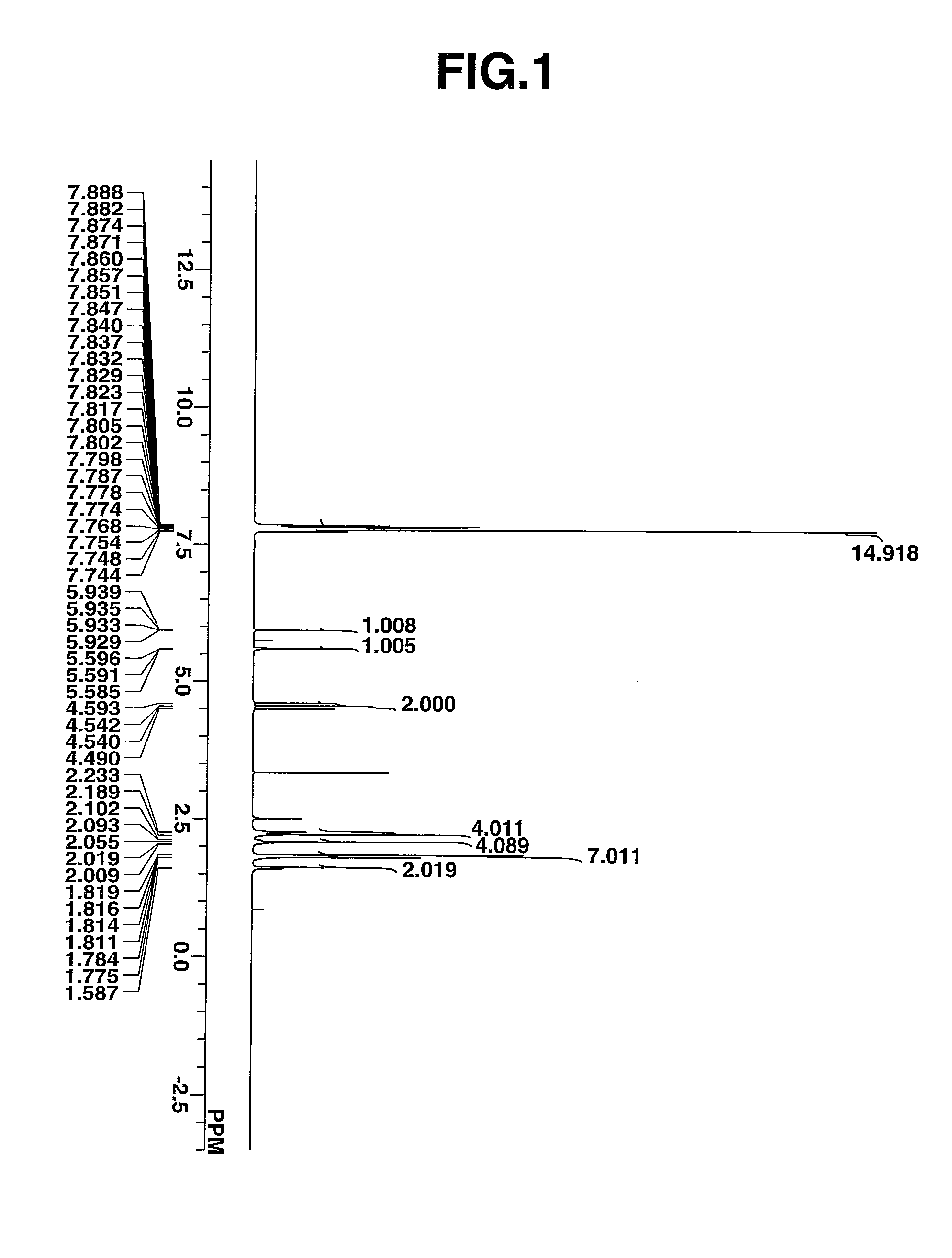
Figure 1 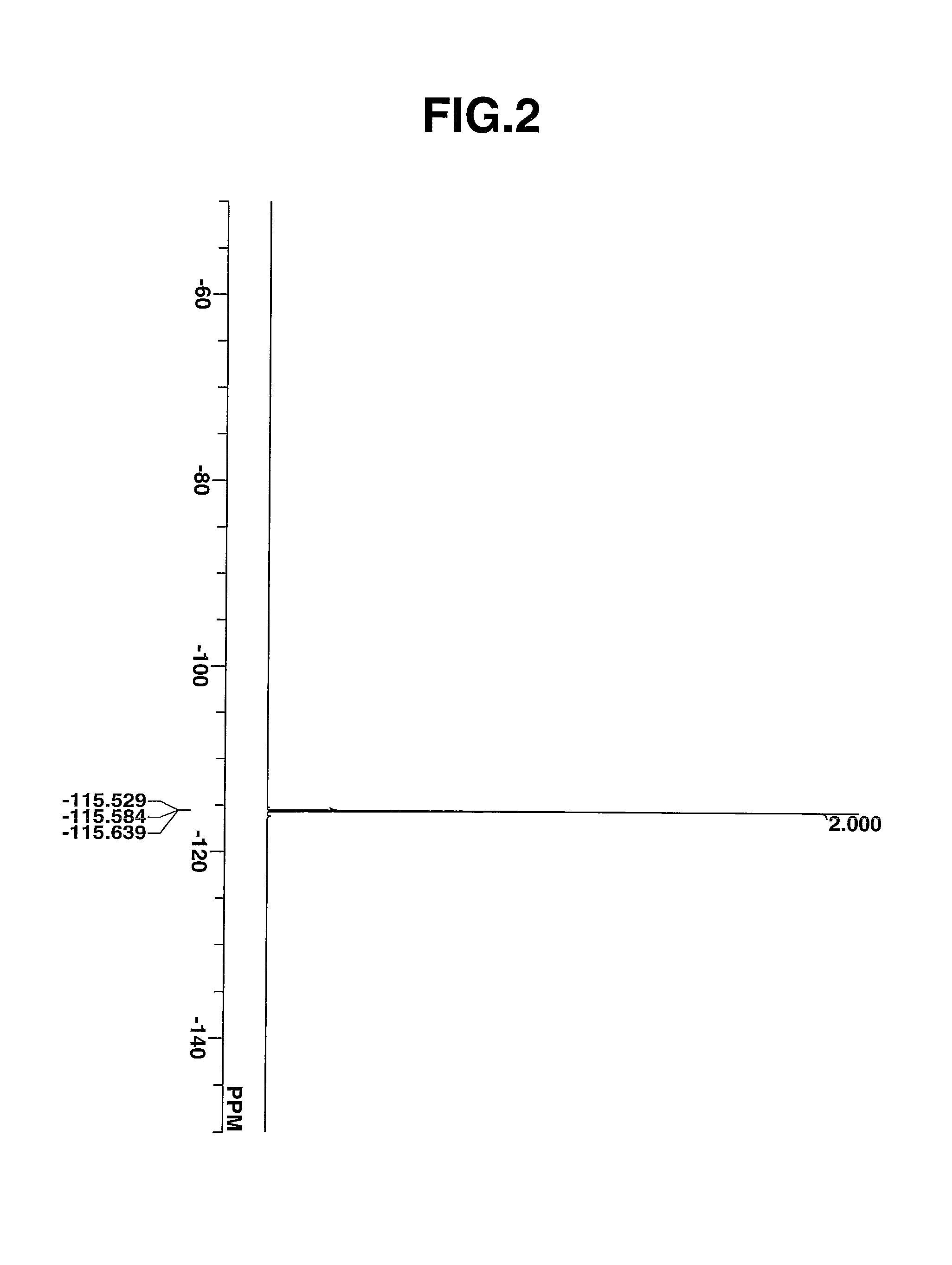
Figure 2 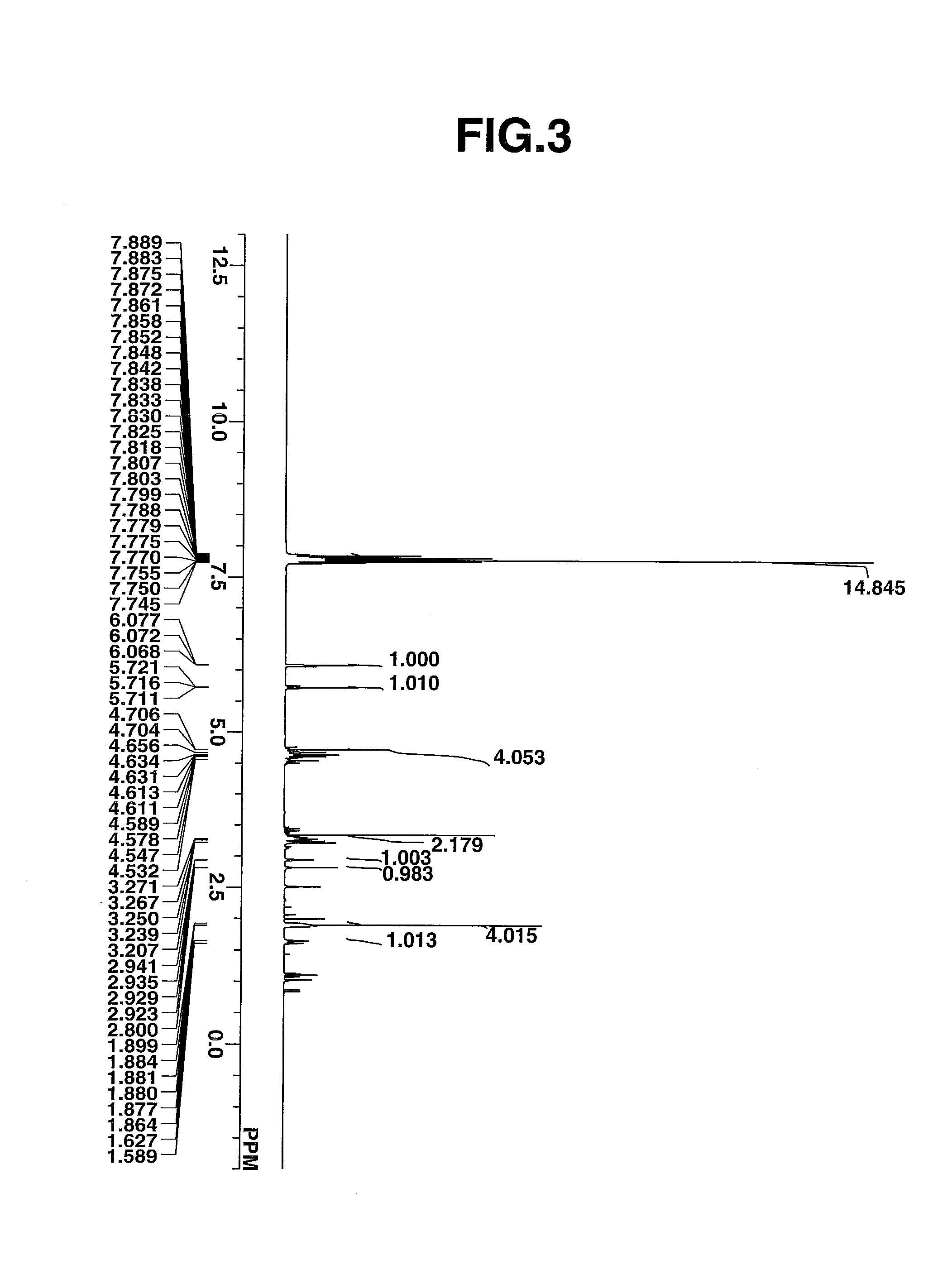
Figure 3
Abstract
Description
CROSS-REFERENCE TO RELATED APPLICATION
[0001] This non-provisional application claims priority under 35 U.S.C. §119(a) on Patent Application No. 2008-268147 filed in Japan on Oct. 17, 2008, the entire contents of which are hereby incorporated by reference.TECHNICAL FIELD
[0002] This invention relates to (1) a polymerizable anion-containing sulfonium salt useful as a photoacid generator or a monomer to sulfonic acid polymer, (2) a polymer derived from the sulfonium salt monomer and capable of generating a sulfonic acid in response to high-energy radiation or heat, (3) a resist composition comprising the polymer, and (4) a patterning process using the resist composition.BACKGROUND ART
[0003] While a number of recent efforts are being made to achieve a finer pattern rule in the drive for higher integration and operating speeds in LSI devices, DUV and VUV lithography is thought to hold particular promise as the next generation in microfabrication technology. In particular, photolithography us...
Examples
synthesis example 1-1
Synthesis of Triphenylsulfonium Chloride
[0231]Diphenyl sulfoxide, 40 g (0.2 mole), was dissolved in 400 g of dichloromethane, which was stirred under ice cooling. At a temperature below 20° C., 65 g (0.6 mole) of trimethylsilyl chloride was added dropwise to the solution, which was allowed to mature for 30 minutes at the temperature. Then, a Grignard reagent which had been prepared from 14.6 g (0.6 mole) of metallic magnesium, 67.5 g (0.6 mole) of chlorobenzene and 168 g of tetrahydrofuran (THF) was added dropwise at a temperature below 20° C. The reaction solution was allowed to mature for one hour, after which 50 g of water at a temperature below 20° C. was added to quench the reaction. To this solution, 150 g of water, 10 g of 12N hydrochloric acid, and 200 g of diethyl ether were further added. The water layer was separated and washed with 100 g of diethyl ether, yielding an aqueous solution of triphenylsulfonium chloride. The compound in aqueous solution form was used in the su...
synthesis example 1-2
Synthesis of 4-tert-butylphenyldiphenylsulfonium bromide
[0232]The target compound was obtained by following the procedure of Synthesis Example 1-1 aside from using 4-tert-butylbromobenzene instead of the chlorobenzene in Synthesis Example 1 and increasing the amount of water for extraction.
synthesis example 1-3
Synthesis of 4-tert-butoxyphenyldiphenylsulfonium chloride
[0233]The target compound was obtained by following the procedure of Synthesis Example 1-1 aside from using 4-tert-butoxychlorobenzene instead of the chlorobenzene in Synthesis Example 1-1, using dichloromethane containing 5 wt % of triethylamine as the solvent, and increasing the amount of water for extraction.