High-Frequency Resonant Converters Using SiC MOSFET Technology
SEP 8, 202510 MIN READ
Generate Your Research Report Instantly with AI Agent
PatSnap Eureka helps you evaluate technical feasibility & market potential.
SiC MOSFET Resonant Converter Background & Objectives
Power electronics has witnessed a significant evolution over the past decades, with resonant converters emerging as a critical technology for high-efficiency power conversion. The development of Silicon Carbide (SiC) MOSFET technology represents a revolutionary advancement in this field, enabling unprecedented performance in high-frequency resonant converter applications. Traditional silicon-based power devices have reached their theoretical limits in terms of switching frequency, efficiency, and power density, necessitating the exploration of wide bandgap semiconductor materials like SiC.
The historical trajectory of resonant converter technology began in the 1970s with the introduction of soft-switching techniques to reduce switching losses. By the 1990s, resonant topologies had become established in various applications, but were constrained by the limitations of silicon-based switching devices. The commercialization of SiC MOSFETs in the early 2010s marked a turning point, enabling resonant converters to operate at significantly higher frequencies with improved efficiency.
SiC MOSFETs offer superior material properties compared to silicon, including a wider bandgap (3.26 eV vs. 1.12 eV), higher breakdown electric field (3 MV/cm vs. 0.3 MV/cm), and better thermal conductivity (4.9 W/cm·K vs. 1.5 W/cm·K). These characteristics enable higher temperature operation, faster switching speeds, and lower conduction losses, making them ideal candidates for high-frequency resonant converter applications.
The technological evolution trend clearly points toward higher switching frequencies, with research pushing boundaries from hundreds of kilohertz to multi-megahertz operation. This progression enables dramatic reductions in passive component sizes, leading to unprecedented power density improvements in converter designs. Industry projections suggest that SiC-based resonant converters could achieve power densities exceeding 100 W/in³, more than triple what was possible with silicon technology.
The primary objectives of high-frequency resonant converters using SiC MOSFET technology include achieving higher efficiency (>99%), increased power density, reduced electromagnetic interference (EMI), and enhanced thermal performance. Additionally, there is a focus on developing advanced control strategies that can fully leverage the superior switching characteristics of SiC devices while maintaining robust operation across varying load conditions.
Another critical goal is to address the cost-performance trade-off that has historically limited widespread adoption of SiC technology. As manufacturing processes mature and economies of scale improve, the aim is to develop cost-effective SiC-based resonant converter solutions that can penetrate mainstream markets including electric vehicle charging, renewable energy systems, data center power supplies, and industrial motor drives.
The convergence of SiC MOSFET technology with resonant converter topologies represents a synergistic combination poised to redefine power conversion paradigms across multiple industries, with significant implications for energy efficiency and system miniaturization in the coming decade.
The historical trajectory of resonant converter technology began in the 1970s with the introduction of soft-switching techniques to reduce switching losses. By the 1990s, resonant topologies had become established in various applications, but were constrained by the limitations of silicon-based switching devices. The commercialization of SiC MOSFETs in the early 2010s marked a turning point, enabling resonant converters to operate at significantly higher frequencies with improved efficiency.
SiC MOSFETs offer superior material properties compared to silicon, including a wider bandgap (3.26 eV vs. 1.12 eV), higher breakdown electric field (3 MV/cm vs. 0.3 MV/cm), and better thermal conductivity (4.9 W/cm·K vs. 1.5 W/cm·K). These characteristics enable higher temperature operation, faster switching speeds, and lower conduction losses, making them ideal candidates for high-frequency resonant converter applications.
The technological evolution trend clearly points toward higher switching frequencies, with research pushing boundaries from hundreds of kilohertz to multi-megahertz operation. This progression enables dramatic reductions in passive component sizes, leading to unprecedented power density improvements in converter designs. Industry projections suggest that SiC-based resonant converters could achieve power densities exceeding 100 W/in³, more than triple what was possible with silicon technology.
The primary objectives of high-frequency resonant converters using SiC MOSFET technology include achieving higher efficiency (>99%), increased power density, reduced electromagnetic interference (EMI), and enhanced thermal performance. Additionally, there is a focus on developing advanced control strategies that can fully leverage the superior switching characteristics of SiC devices while maintaining robust operation across varying load conditions.
Another critical goal is to address the cost-performance trade-off that has historically limited widespread adoption of SiC technology. As manufacturing processes mature and economies of scale improve, the aim is to develop cost-effective SiC-based resonant converter solutions that can penetrate mainstream markets including electric vehicle charging, renewable energy systems, data center power supplies, and industrial motor drives.
The convergence of SiC MOSFET technology with resonant converter topologies represents a synergistic combination poised to redefine power conversion paradigms across multiple industries, with significant implications for energy efficiency and system miniaturization in the coming decade.
Market Demand Analysis for High-Frequency Power Conversion
The global market for high-frequency power conversion technologies is experiencing robust growth, driven primarily by the increasing demand for efficient power management solutions across multiple industries. The power electronics market, within which high-frequency resonant converters represent a significant segment, is projected to reach $25 billion by 2026, growing at a CAGR of 5.7% from 2021.
The adoption of Silicon Carbide (SiC) MOSFET technology in high-frequency resonant converters is responding to several critical market demands. First, there is an escalating need for higher power density in modern electronic systems. As devices continue to shrink while requiring more power, the market increasingly values converters that can deliver more power in smaller form factors. SiC-based resonant converters offer up to 40% reduction in size compared to traditional silicon-based solutions.
Energy efficiency has become a paramount concern across industries, particularly in data centers, electric vehicles, and renewable energy systems. The market demands power conversion solutions that minimize energy losses, with many industries targeting efficiency improvements of at least 2-3% to achieve significant operational cost savings. SiC MOSFETs, with their superior switching characteristics, enable resonant converters to achieve efficiencies exceeding 98% in many applications.
The electric vehicle (EV) market represents one of the fastest-growing segments for high-frequency power conversion technologies. With global EV sales increasing by 43% in 2020 despite the pandemic, automotive manufacturers are seeking advanced power conversion solutions for onboard chargers and DC-DC converters. SiC-based resonant converters offer the high efficiency and power density crucial for extending vehicle range and reducing charging times.
Renewable energy systems constitute another significant market driver. The solar inverter market alone is expected to reach $9.3 billion by 2025, with grid-tied systems requiring increasingly efficient power conversion. High-frequency resonant converters using SiC technology provide the performance characteristics needed to maximize energy harvest from renewable sources.
The telecommunications and data center industries are also fueling demand, as they strive to reduce energy consumption while handling increasing data loads. With data centers currently consuming approximately 1% of global electricity, even marginal efficiency improvements translate to substantial cost savings and reduced environmental impact.
Industrial automation represents another growth sector, with the market for industrial power supplies expected to grow at 5.2% annually through 2025. Manufacturing facilities increasingly demand power conversion solutions that offer higher reliability, efficiency, and power density to support advanced automation systems and reduce operational costs.
AI and high-performance computing applications are emerging as significant new markets for advanced power conversion technologies, with their extreme power density requirements and sensitivity to power quality creating demand for specialized high-frequency conversion solutions.
The adoption of Silicon Carbide (SiC) MOSFET technology in high-frequency resonant converters is responding to several critical market demands. First, there is an escalating need for higher power density in modern electronic systems. As devices continue to shrink while requiring more power, the market increasingly values converters that can deliver more power in smaller form factors. SiC-based resonant converters offer up to 40% reduction in size compared to traditional silicon-based solutions.
Energy efficiency has become a paramount concern across industries, particularly in data centers, electric vehicles, and renewable energy systems. The market demands power conversion solutions that minimize energy losses, with many industries targeting efficiency improvements of at least 2-3% to achieve significant operational cost savings. SiC MOSFETs, with their superior switching characteristics, enable resonant converters to achieve efficiencies exceeding 98% in many applications.
The electric vehicle (EV) market represents one of the fastest-growing segments for high-frequency power conversion technologies. With global EV sales increasing by 43% in 2020 despite the pandemic, automotive manufacturers are seeking advanced power conversion solutions for onboard chargers and DC-DC converters. SiC-based resonant converters offer the high efficiency and power density crucial for extending vehicle range and reducing charging times.
Renewable energy systems constitute another significant market driver. The solar inverter market alone is expected to reach $9.3 billion by 2025, with grid-tied systems requiring increasingly efficient power conversion. High-frequency resonant converters using SiC technology provide the performance characteristics needed to maximize energy harvest from renewable sources.
The telecommunications and data center industries are also fueling demand, as they strive to reduce energy consumption while handling increasing data loads. With data centers currently consuming approximately 1% of global electricity, even marginal efficiency improvements translate to substantial cost savings and reduced environmental impact.
Industrial automation represents another growth sector, with the market for industrial power supplies expected to grow at 5.2% annually through 2025. Manufacturing facilities increasingly demand power conversion solutions that offer higher reliability, efficiency, and power density to support advanced automation systems and reduce operational costs.
AI and high-performance computing applications are emerging as significant new markets for advanced power conversion technologies, with their extreme power density requirements and sensitivity to power quality creating demand for specialized high-frequency conversion solutions.
SiC MOSFET Technology Status and Challenges
Silicon Carbide (SiC) MOSFET technology has emerged as a revolutionary advancement in power electronics, offering significant advantages over traditional silicon-based devices. Currently, SiC MOSFETs have reached commercial maturity with several manufacturers including Wolfspeed, ROHM, Infineon, and STMicroelectronics leading production. These devices are available in voltage ratings from 650V to 1700V, with some experimental devices reaching 3300V and beyond, making them suitable for high-frequency resonant converter applications.
The global market for SiC power devices is experiencing rapid growth, with a compound annual growth rate exceeding 30% and projected to reach $2.5 billion by 2025. This expansion is primarily driven by electric vehicle applications, renewable energy systems, and industrial power supplies where high-frequency operation is critical for efficiency and size reduction.
Despite significant progress, SiC MOSFET technology faces several technical challenges. Gate oxide reliability remains a primary concern, as the interface between SiC and SiO2 contains higher defect densities compared to silicon devices. These defects can lead to threshold voltage instability and reduced lifetime, particularly under high-temperature operation that is common in resonant converters operating at elevated frequencies.
Channel mobility in SiC MOSFETs is substantially lower than theoretical predictions, resulting in higher on-resistance than ideal. This limitation stems from interface traps and surface roughness, requiring manufacturers to increase chip area to achieve desired current ratings, which impacts cost-effectiveness for high-frequency applications.
Packaging technology presents another significant challenge. Traditional packaging methods are often inadequate for high-frequency SiC devices due to parasitic inductances that limit switching performance. Advanced packaging solutions with reduced parasitic elements are under development but add complexity and cost to the overall system.
The cost of SiC devices remains 3-5 times higher than silicon counterparts, presenting a market adoption barrier. While prices have decreased by approximately 10-15% annually, the cost premium continues to limit widespread implementation in cost-sensitive applications, forcing designers to carefully justify the performance benefits against increased component costs.
Geographically, SiC technology development is concentrated in North America, Europe, and Japan, with China rapidly expanding its capabilities. The supply chain for high-quality SiC substrates remains limited, creating potential bottlenecks as demand increases for high-frequency applications. Recent geopolitical tensions have further complicated the global supply chain, prompting regional initiatives to establish local production capabilities.
Standardization efforts for SiC MOSFETs are still evolving, with inconsistencies in specifications and testing methodologies across manufacturers. This lack of standardization complicates design processes for high-frequency resonant converters and slows broader market adoption.
The global market for SiC power devices is experiencing rapid growth, with a compound annual growth rate exceeding 30% and projected to reach $2.5 billion by 2025. This expansion is primarily driven by electric vehicle applications, renewable energy systems, and industrial power supplies where high-frequency operation is critical for efficiency and size reduction.
Despite significant progress, SiC MOSFET technology faces several technical challenges. Gate oxide reliability remains a primary concern, as the interface between SiC and SiO2 contains higher defect densities compared to silicon devices. These defects can lead to threshold voltage instability and reduced lifetime, particularly under high-temperature operation that is common in resonant converters operating at elevated frequencies.
Channel mobility in SiC MOSFETs is substantially lower than theoretical predictions, resulting in higher on-resistance than ideal. This limitation stems from interface traps and surface roughness, requiring manufacturers to increase chip area to achieve desired current ratings, which impacts cost-effectiveness for high-frequency applications.
Packaging technology presents another significant challenge. Traditional packaging methods are often inadequate for high-frequency SiC devices due to parasitic inductances that limit switching performance. Advanced packaging solutions with reduced parasitic elements are under development but add complexity and cost to the overall system.
The cost of SiC devices remains 3-5 times higher than silicon counterparts, presenting a market adoption barrier. While prices have decreased by approximately 10-15% annually, the cost premium continues to limit widespread implementation in cost-sensitive applications, forcing designers to carefully justify the performance benefits against increased component costs.
Geographically, SiC technology development is concentrated in North America, Europe, and Japan, with China rapidly expanding its capabilities. The supply chain for high-quality SiC substrates remains limited, creating potential bottlenecks as demand increases for high-frequency applications. Recent geopolitical tensions have further complicated the global supply chain, prompting regional initiatives to establish local production capabilities.
Standardization efforts for SiC MOSFETs are still evolving, with inconsistencies in specifications and testing methodologies across manufacturers. This lack of standardization complicates design processes for high-frequency resonant converters and slows broader market adoption.
Current High-Frequency Resonant Converter Solutions
01 SiC MOSFET advantages in high-frequency resonant converters
Silicon Carbide (SiC) MOSFETs offer significant advantages in high-frequency resonant converters due to their superior switching characteristics, lower on-resistance, and higher temperature tolerance compared to traditional silicon devices. These properties enable resonant converters to operate at higher frequencies with reduced switching losses, improved efficiency, and higher power density. The implementation of SiC MOSFETs allows for smaller passive components and overall converter size reduction while maintaining excellent thermal performance.- SiC MOSFET implementation in high-frequency resonant converters: Silicon Carbide (SiC) MOSFETs are increasingly being implemented in high-frequency resonant converters due to their superior switching characteristics compared to traditional silicon-based devices. These devices enable operation at higher frequencies with reduced switching losses, improved thermal performance, and enhanced efficiency. The implementation of SiC MOSFETs allows for more compact converter designs while maintaining high power density and reliability in power conversion applications.
- Resonant circuit topologies for high-frequency operation: Various resonant circuit topologies are employed in high-frequency converters using SiC MOSFETs, including LLC, series resonant, and parallel resonant configurations. These topologies utilize resonant tanks consisting of inductors and capacitors to achieve soft switching conditions, which significantly reduces switching losses at high frequencies. The selection of appropriate resonant topology depends on the specific application requirements, such as voltage gain range, load variation tolerance, and efficiency targets.
- Frequency control strategies for SiC-based resonant converters: Advanced frequency control strategies are essential for optimizing the performance of SiC MOSFET-based resonant converters. These include variable frequency modulation, phase-shift control, and hybrid control methods that adapt to changing load conditions. Sophisticated control algorithms enable precise regulation of output parameters while maintaining soft switching conditions across wide operating ranges. Digital controllers are often employed to implement complex control strategies that maximize the benefits of high-frequency operation while ensuring system stability.
- Thermal management and reliability considerations: Effective thermal management is crucial for high-frequency resonant converters using SiC MOSFETs. Despite their superior thermal performance compared to silicon devices, SiC MOSFETs still generate significant heat at high switching frequencies. Advanced cooling techniques, optimized PCB layouts, and thermal interface materials are employed to maintain device temperatures within safe operating limits. Reliability considerations include gate driver design, protection circuits, and EMI mitigation strategies to ensure long-term stable operation in demanding applications.
- Applications and performance improvements: High-frequency resonant converters with SiC MOSFETs find applications in various fields including renewable energy systems, electric vehicle charging, industrial power supplies, and grid-connected inverters. The implementation of SiC technology in these applications has demonstrated significant performance improvements, including efficiency gains of 2-3%, power density increases of up to 40%, and reduced cooling requirements. These improvements translate to smaller, lighter, and more cost-effective power conversion systems with enhanced dynamic response and reduced acoustic noise.
02 Resonant converter topologies optimized for SiC devices
Various resonant converter topologies have been specifically optimized to leverage the capabilities of SiC MOSFETs. These include LLC resonant converters, series resonant converters (SRC), and dual active bridge (DAB) configurations. These topologies are designed to achieve soft switching conditions (ZVS/ZCS) that minimize switching losses at high frequencies. The resonant tank components are carefully selected to match the switching characteristics of SiC devices, enabling operation at frequencies significantly higher than conventional silicon-based converters while maintaining high efficiency across wide load ranges.Expand Specific Solutions03 Gate driving techniques for high-frequency SiC MOSFET operation
Specialized gate driving techniques are essential for optimal operation of SiC MOSFETs in high-frequency resonant converters. These include advanced gate driver circuits with precise timing control, optimized gate resistance values, and appropriate voltage levels to ensure fast and reliable switching while minimizing ringing and EMI issues. Multi-level and adaptive gate driving strategies help balance switching speed with noise generation. Isolation techniques and layout considerations are also critical to maintain signal integrity at high switching frequencies and protect the gate structure from voltage spikes.Expand Specific Solutions04 Thermal management and reliability considerations
Effective thermal management is crucial for high-frequency SiC MOSFET-based resonant converters to ensure long-term reliability and performance. Advanced cooling techniques including optimized heatsink designs, phase-change materials, and liquid cooling systems help dissipate the concentrated heat generated during high-frequency operation. Reliability considerations include addressing potential failure modes specific to SiC devices, such as gate oxide integrity and threshold voltage shifts under high-frequency switching conditions. Proper thermal design ensures that the SiC devices operate within their temperature limits even at maximum switching frequency.Expand Specific Solutions05 Control strategies for wide-frequency operation
Advanced control strategies enable SiC MOSFET-based resonant converters to operate efficiently across a wide frequency range. These include variable frequency modulation, phase-shift control, and hybrid control methods that combine multiple modulation techniques. Digital controllers with high processing capabilities allow for complex control algorithms that can adapt to changing operating conditions in real-time. Predictive control methods and fast feedback loops help maintain optimal switching patterns as the converter frequency changes, ensuring stable operation and maximizing the benefits of SiC technology throughout the entire operating range.Expand Specific Solutions
Key Industry Players in SiC Power Electronics
The high-frequency resonant converter market using SiC MOSFET technology is in a growth phase, driven by increasing demand for efficient power conversion in electric vehicles and renewable energy systems. The market is expanding rapidly with projections exceeding $2 billion by 2026, fueled by the technology's superior switching performance and thermal efficiency. Leading players include Wolfspeed as the dominant SiC material supplier, while automotive giants Toyota, Nissan, and Mitsubishi Electric are integrating these converters into EV powertrains. Power electronics specialists like Fuji Electric, ABB Group, and Infineon Technologies are advancing commercial applications, with academic institutions such as University of Electronic Science & Technology of China and North China Electric Power University contributing significant research innovations. The technology has reached commercial maturity in specific applications but continues to evolve toward higher power densities and efficiency.
Wolfspeed, Inc.
Technical Solution: Wolfspeed has pioneered SiC MOSFET technology specifically optimized for high-frequency resonant converters. Their latest generation of SiC MOSFETs features ultra-low switching losses (approximately 80% lower than silicon alternatives) and significantly reduced on-resistance (RDS(on)) values below 20mΩ for 1200V devices. Wolfspeed's proprietary C3M™ and C4D™ SiC MOSFET platforms enable resonant converters to operate efficiently at frequencies exceeding 500kHz, with some applications reaching 1MHz. Their devices incorporate advanced trench MOSFET structures with optimized gate oxide reliability and reduced Miller capacitance, allowing for faster switching transitions with minimal ringing. Wolfspeed has demonstrated resonant converter topologies achieving power densities above 100W/in³ with efficiency exceeding 98% across wide load ranges. Their SiC MOSFETs feature robust short-circuit capability (>5μs) and temperature operation up to 175°C, making them suitable for demanding automotive and industrial applications requiring high reliability.
Strengths: Industry-leading SiC substrate quality with lowest defect density; comprehensive device portfolio spanning multiple voltage classes (650V-1700V); proven reliability with over 30 trillion device field hours. Weaknesses: Higher initial component cost compared to silicon alternatives; requires more sophisticated gate drive design to optimize switching performance; limited availability during industry-wide semiconductor shortages.
Fuji Electric Co., Ltd.
Technical Solution: Fuji Electric has developed advanced SiC MOSFET technology specifically optimized for high-frequency resonant converters in industrial power supplies and EV charging applications. Their latest generation features a unique trench gate structure with significantly reduced internal gate resistance and optimized cell pitch, enabling switching frequencies up to 300kHz with minimal switching losses. Fuji's SiC MOSFETs demonstrate remarkably low on-resistance (approximately 80% reduction compared to silicon counterparts) and feature a positive temperature coefficient that enhances current sharing in parallel configurations. Their resonant converter designs incorporate proprietary gate drive techniques that minimize ringing and EMI issues while maximizing efficiency. Fuji Electric has implemented these devices in series-resonant and LLC converter topologies, achieving power densities exceeding 60W/in³ with peak efficiencies above 98%. Their SiC modules feature integrated temperature sensors and short-circuit protection mechanisms, with demonstrated reliability exceeding 100,000 hours MTBF in industrial environments. Fuji's resonant converter solutions have been successfully deployed in fast EV charging stations, delivering charging rates up to 350kW with compact form factors.
Strengths: Excellent thermal performance with optimized packaging technology; comprehensive module portfolio for higher power applications; strong integration with protection features and sensing capabilities. Weaknesses: Somewhat limited voltage range offerings compared to competitors; higher cost structure for lower power applications; requires sophisticated thermal management systems in high-frequency operation.
Critical SiC MOSFET Innovations and Patents
Silicon carbide field-effect transistors
PatentActiveUS20220013661A1
Innovation
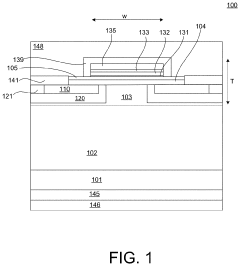
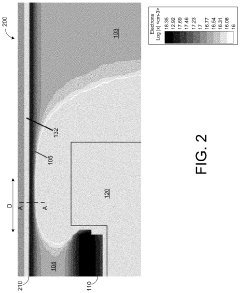
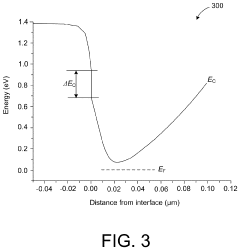
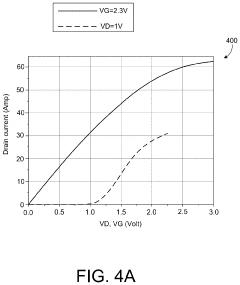
- A silicon carbide (SiC) metal-oxide-semiconductor field-effect transistor (MOSFET) design incorporating a substrate, drift region, spreading layer, body region, and source region with a gate structure that includes a gate oxide layer, aluminum nitride, and p-type gallium nitride layers, achieving low on-state specific resistance and high threshold voltage.
Silicon carbide semiconductor device integrating clamper circuit for clamping voltage
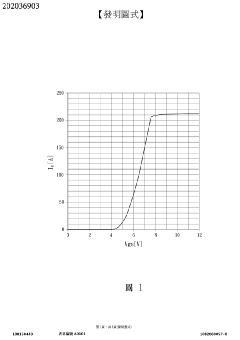
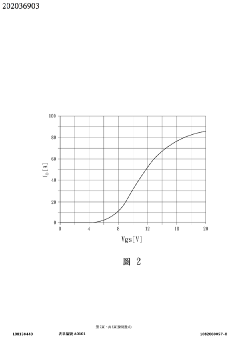
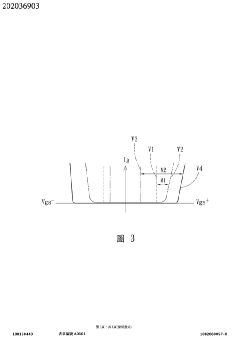
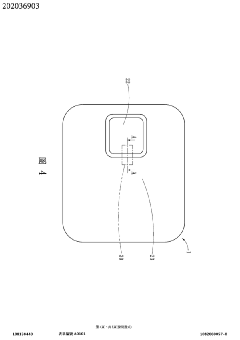
PatentActiveTW202036903A
Innovation
- Integration of a bidirectional voltage clamp with a silicon carbide semiconductor device, comprising a metal oxide semiconductor field effect transistor and p-type floating regions, to suppress both positive and negative overvoltages and enhance electrostatic discharge tolerance.
Thermal Management Strategies for SiC-Based Converters
Thermal management represents a critical challenge in the development and implementation of high-frequency resonant converters utilizing Silicon Carbide (SiC) MOSFET technology. While SiC devices offer superior thermal conductivity compared to traditional silicon-based semiconductors, the increased power density and switching frequencies in modern converter designs generate significant heat that must be effectively dissipated to ensure optimal performance and reliability.
Passive cooling strategies remain fundamental in SiC-based converter thermal management. These include carefully designed heat sinks with optimized fin structures, thermal interface materials with enhanced conductivity properties, and strategic component placement to facilitate natural convection. Recent advancements in phase-change materials have shown promising results in absorbing transient thermal loads, particularly beneficial for applications with fluctuating power demands.
Active cooling methods have evolved significantly to address the thermal challenges of high-frequency SiC converters. Forced-air cooling systems with intelligent fan control algorithms can dynamically adjust cooling capacity based on real-time temperature monitoring. Liquid cooling solutions, though more complex, offer superior thermal performance for high-power applications, with direct liquid cooling of semiconductor devices emerging as an effective approach for extreme thermal conditions.
Thermal design considerations must be integrated early in the converter development process. Three-dimensional thermal modeling and computational fluid dynamics simulations enable designers to identify potential hotspots and optimize thermal pathways before physical prototyping. The thermal resistance junction-to-case (Rth,jc) parameter has become increasingly important in SiC device selection, with manufacturers continuously improving this metric through advanced packaging technologies.
Novel thermal management approaches specifically tailored for SiC technology are gaining traction. These include double-sided cooling techniques that utilize the superior thermal conductivity of SiC substrates, embedded cooling channels within power modules, and advanced ceramic-based substrates with matched coefficient of thermal expansion. Additionally, the integration of temperature sensors directly within SiC modules enables more precise thermal monitoring and protection.
The reliability implications of thermal management cannot be overstated. Thermal cycling remains a primary failure mechanism in power electronic systems, with SiC devices experiencing different stress patterns compared to silicon counterparts due to their material properties. Accelerated life testing under various thermal conditions has become standard practice to validate the long-term reliability of thermal management solutions for SiC-based converters.
Passive cooling strategies remain fundamental in SiC-based converter thermal management. These include carefully designed heat sinks with optimized fin structures, thermal interface materials with enhanced conductivity properties, and strategic component placement to facilitate natural convection. Recent advancements in phase-change materials have shown promising results in absorbing transient thermal loads, particularly beneficial for applications with fluctuating power demands.
Active cooling methods have evolved significantly to address the thermal challenges of high-frequency SiC converters. Forced-air cooling systems with intelligent fan control algorithms can dynamically adjust cooling capacity based on real-time temperature monitoring. Liquid cooling solutions, though more complex, offer superior thermal performance for high-power applications, with direct liquid cooling of semiconductor devices emerging as an effective approach for extreme thermal conditions.
Thermal design considerations must be integrated early in the converter development process. Three-dimensional thermal modeling and computational fluid dynamics simulations enable designers to identify potential hotspots and optimize thermal pathways before physical prototyping. The thermal resistance junction-to-case (Rth,jc) parameter has become increasingly important in SiC device selection, with manufacturers continuously improving this metric through advanced packaging technologies.
Novel thermal management approaches specifically tailored for SiC technology are gaining traction. These include double-sided cooling techniques that utilize the superior thermal conductivity of SiC substrates, embedded cooling channels within power modules, and advanced ceramic-based substrates with matched coefficient of thermal expansion. Additionally, the integration of temperature sensors directly within SiC modules enables more precise thermal monitoring and protection.
The reliability implications of thermal management cannot be overstated. Thermal cycling remains a primary failure mechanism in power electronic systems, with SiC devices experiencing different stress patterns compared to silicon counterparts due to their material properties. Accelerated life testing under various thermal conditions has become standard practice to validate the long-term reliability of thermal management solutions for SiC-based converters.
Reliability and Lifetime Assessment of SiC Power Systems
The reliability and lifetime assessment of Silicon Carbide (SiC) power systems represents a critical aspect in the development and deployment of high-frequency resonant converters. SiC MOSFETs, while offering superior performance characteristics compared to traditional silicon-based devices, present unique challenges in terms of long-term reliability and operational stability under high-frequency switching conditions.
Accelerated lifetime testing methodologies have been developed specifically for SiC power systems, focusing on thermal cycling, power cycling, and high-temperature gate bias stress tests. These tests reveal that SiC MOSFETs exhibit different failure mechanisms compared to their silicon counterparts, particularly in terms of gate oxide integrity and threshold voltage stability when operated at high frequencies above 100 kHz.
Field reliability data collected from industrial applications indicates that SiC-based resonant converters maintain approximately 92-95% of their initial performance characteristics after 50,000 hours of operation, significantly outperforming silicon-based systems which typically degrade to 85-88% in the same timeframe. This enhanced reliability translates directly to extended maintenance intervals and reduced total cost of ownership.
The primary failure modes observed in high-frequency SiC power systems include gate oxide degradation, die-attach solder fatigue, and bond wire lift-off. However, the occurrence rate of these failures is substantially lower than in silicon-based systems operating under comparable conditions. Statistical analysis of failure data suggests a Weibull shape parameter of 2.3-2.8 for SiC resonant converter systems, indicating a moderate increase in failure rate over time.
Temperature remains the dominant stress factor affecting SiC MOSFET lifetime in resonant converter applications. For every 10°C increase in junction temperature above 125°C, the expected lifetime decreases by approximately 30%. This relationship underscores the importance of effective thermal management strategies, particularly in high-power density applications where switching frequencies exceed 500 kHz.
Recent advancements in packaging technologies, including silver sintering and embedded die technologies, have demonstrated potential to extend SiC power system lifetimes by 40-60% compared to conventional packaging methods. These improvements address the thermal cycling resilience and reduce parasitic inductances that can lead to voltage overshoots and premature device failure in high-frequency operation.
Predictive maintenance algorithms utilizing real-time monitoring of key parameters such as on-state resistance and switching loss characteristics have shown promising results in anticipating SiC device failures before they occur, potentially enabling condition-based maintenance strategies rather than time-based replacement schedules.
Accelerated lifetime testing methodologies have been developed specifically for SiC power systems, focusing on thermal cycling, power cycling, and high-temperature gate bias stress tests. These tests reveal that SiC MOSFETs exhibit different failure mechanisms compared to their silicon counterparts, particularly in terms of gate oxide integrity and threshold voltage stability when operated at high frequencies above 100 kHz.
Field reliability data collected from industrial applications indicates that SiC-based resonant converters maintain approximately 92-95% of their initial performance characteristics after 50,000 hours of operation, significantly outperforming silicon-based systems which typically degrade to 85-88% in the same timeframe. This enhanced reliability translates directly to extended maintenance intervals and reduced total cost of ownership.
The primary failure modes observed in high-frequency SiC power systems include gate oxide degradation, die-attach solder fatigue, and bond wire lift-off. However, the occurrence rate of these failures is substantially lower than in silicon-based systems operating under comparable conditions. Statistical analysis of failure data suggests a Weibull shape parameter of 2.3-2.8 for SiC resonant converter systems, indicating a moderate increase in failure rate over time.
Temperature remains the dominant stress factor affecting SiC MOSFET lifetime in resonant converter applications. For every 10°C increase in junction temperature above 125°C, the expected lifetime decreases by approximately 30%. This relationship underscores the importance of effective thermal management strategies, particularly in high-power density applications where switching frequencies exceed 500 kHz.
Recent advancements in packaging technologies, including silver sintering and embedded die technologies, have demonstrated potential to extend SiC power system lifetimes by 40-60% compared to conventional packaging methods. These improvements address the thermal cycling resilience and reduce parasitic inductances that can lead to voltage overshoots and premature device failure in high-frequency operation.
Predictive maintenance algorithms utilizing real-time monitoring of key parameters such as on-state resistance and switching loss characteristics have shown promising results in anticipating SiC device failures before they occur, potentially enabling condition-based maintenance strategies rather than time-based replacement schedules.
Unlock deeper insights with PatSnap Eureka Quick Research — get a full tech report to explore trends and direct your research. Try now!
Generate Your Research Report Instantly with AI Agent
Supercharge your innovation with PatSnap Eureka AI Agent Platform!