
NMR vs IR Spectroscopy: Determine Functional Groups
SEP 22, 20259 MIN READ
Generate Your Research Report Instantly with AI Agent
Patsnap Eureka helps you evaluate technical feasibility & market potential.
Spectroscopic Analysis Background and Objectives
Spectroscopic analysis has evolved significantly over the past century, becoming an indispensable tool in modern analytical chemistry. Nuclear Magnetic Resonance (NMR) and Infrared (IR) spectroscopy represent two cornerstone techniques that have revolutionized our ability to identify and characterize molecular structures. The development of these complementary methods traces back to the mid-20th century, with IR spectroscopy gaining prominence in the 1940s followed by NMR's breakthrough applications in the 1950s and 1960s.
The technological trajectory of these spectroscopic methods has been characterized by continuous refinement in sensitivity, resolution, and accessibility. From early single-dimension NMR to advanced multi-dimensional techniques, and from dispersive IR instruments to sophisticated Fourier-transform infrared spectroscopy (FTIR), these technologies have undergone remarkable evolution. Recent advancements include miniaturization, automation, and integration with computational analysis tools, significantly expanding their application domains.
The primary objective of comparing NMR and IR spectroscopy for functional group determination is to establish a comprehensive framework for selecting the optimal analytical approach based on specific research or industrial requirements. This involves evaluating their respective strengths, limitations, and complementary aspects in identifying various functional groups across different molecular environments.
Both techniques operate on fundamentally different physical principles: NMR measures the absorption of radio frequency radiation by nuclei in a magnetic field, while IR detects the absorption of infrared radiation by molecular bonds. This distinction creates unique capabilities and constraints that must be systematically assessed to optimize analytical outcomes.
The technological trend indicates a growing convergence of these spectroscopic methods with artificial intelligence and machine learning algorithms, enabling more automated interpretation of complex spectral data. Additionally, there is increasing integration with other analytical techniques to create comprehensive analytical platforms that provide multi-dimensional structural information.
This technical exploration aims to establish clear guidelines for selecting between NMR and IR spectroscopy based on factors including sample characteristics, required structural information, available resources, and specific functional group targets. The ultimate goal is to enhance analytical efficiency and accuracy in both research and industrial applications by leveraging the complementary strengths of these powerful spectroscopic techniques.
The technological trajectory of these spectroscopic methods has been characterized by continuous refinement in sensitivity, resolution, and accessibility. From early single-dimension NMR to advanced multi-dimensional techniques, and from dispersive IR instruments to sophisticated Fourier-transform infrared spectroscopy (FTIR), these technologies have undergone remarkable evolution. Recent advancements include miniaturization, automation, and integration with computational analysis tools, significantly expanding their application domains.
The primary objective of comparing NMR and IR spectroscopy for functional group determination is to establish a comprehensive framework for selecting the optimal analytical approach based on specific research or industrial requirements. This involves evaluating their respective strengths, limitations, and complementary aspects in identifying various functional groups across different molecular environments.
Both techniques operate on fundamentally different physical principles: NMR measures the absorption of radio frequency radiation by nuclei in a magnetic field, while IR detects the absorption of infrared radiation by molecular bonds. This distinction creates unique capabilities and constraints that must be systematically assessed to optimize analytical outcomes.
The technological trend indicates a growing convergence of these spectroscopic methods with artificial intelligence and machine learning algorithms, enabling more automated interpretation of complex spectral data. Additionally, there is increasing integration with other analytical techniques to create comprehensive analytical platforms that provide multi-dimensional structural information.
This technical exploration aims to establish clear guidelines for selecting between NMR and IR spectroscopy based on factors including sample characteristics, required structural information, available resources, and specific functional group targets. The ultimate goal is to enhance analytical efficiency and accuracy in both research and industrial applications by leveraging the complementary strengths of these powerful spectroscopic techniques.
Market Applications and Demand for Structural Elucidation
The structural elucidation market has experienced significant growth in recent years, driven by increasing demands across pharmaceutical, biotechnology, chemical, and materials science industries. The global market for analytical instruments used in structural determination, including NMR and IR spectroscopy, was valued at approximately $5.2 billion in 2022 and is projected to grow at a CAGR of 6.8% through 2028.
Pharmaceutical and biotechnology sectors represent the largest market segments, accounting for nearly 45% of the total demand. These industries rely heavily on structural elucidation techniques for drug discovery, development, and quality control processes. The ability to accurately identify functional groups using complementary techniques like NMR and IR spectroscopy has become essential in accelerating drug development timelines and ensuring regulatory compliance.
Academic and research institutions constitute another significant market segment, representing approximately 25% of the demand. These institutions utilize structural elucidation technologies for fundamental research in chemistry, materials science, and related fields. The continuous need for advanced research capabilities drives consistent demand for both NMR and IR spectroscopic instruments and services.
Chemical manufacturing industries account for roughly 20% of the market, where structural elucidation plays a crucial role in product development, quality assurance, and process optimization. The remaining market share is distributed among environmental testing, food safety, forensic science, and other specialized applications.
Regional analysis reveals North America as the dominant market with approximately 38% share, followed by Europe (30%) and Asia-Pacific (25%). The Asia-Pacific region, particularly China and India, demonstrates the highest growth rate due to expanding pharmaceutical manufacturing, increasing R&D investments, and growing adoption of advanced analytical technologies.
Market trends indicate a shift toward integrated analytical solutions that combine multiple spectroscopic techniques, including NMR and IR, to provide comprehensive structural information. Cloud-based platforms for data analysis and interpretation are gaining popularity, allowing for remote access and collaborative research. Additionally, there is increasing demand for portable and benchtop instruments that offer flexibility and cost-effectiveness for routine analyses.
The competitive landscape features major analytical instrument manufacturers offering both NMR and IR technologies, alongside specialized service providers focusing on structural elucidation as contract research services. This service-based model is growing at approximately 8.5% annually, outpacing the overall market growth as organizations increasingly outsource complex analytical requirements.
Pharmaceutical and biotechnology sectors represent the largest market segments, accounting for nearly 45% of the total demand. These industries rely heavily on structural elucidation techniques for drug discovery, development, and quality control processes. The ability to accurately identify functional groups using complementary techniques like NMR and IR spectroscopy has become essential in accelerating drug development timelines and ensuring regulatory compliance.
Academic and research institutions constitute another significant market segment, representing approximately 25% of the demand. These institutions utilize structural elucidation technologies for fundamental research in chemistry, materials science, and related fields. The continuous need for advanced research capabilities drives consistent demand for both NMR and IR spectroscopic instruments and services.
Chemical manufacturing industries account for roughly 20% of the market, where structural elucidation plays a crucial role in product development, quality assurance, and process optimization. The remaining market share is distributed among environmental testing, food safety, forensic science, and other specialized applications.
Regional analysis reveals North America as the dominant market with approximately 38% share, followed by Europe (30%) and Asia-Pacific (25%). The Asia-Pacific region, particularly China and India, demonstrates the highest growth rate due to expanding pharmaceutical manufacturing, increasing R&D investments, and growing adoption of advanced analytical technologies.
Market trends indicate a shift toward integrated analytical solutions that combine multiple spectroscopic techniques, including NMR and IR, to provide comprehensive structural information. Cloud-based platforms for data analysis and interpretation are gaining popularity, allowing for remote access and collaborative research. Additionally, there is increasing demand for portable and benchtop instruments that offer flexibility and cost-effectiveness for routine analyses.
The competitive landscape features major analytical instrument manufacturers offering both NMR and IR technologies, alongside specialized service providers focusing on structural elucidation as contract research services. This service-based model is growing at approximately 8.5% annually, outpacing the overall market growth as organizations increasingly outsource complex analytical requirements.
Current Capabilities and Limitations of NMR and IR Technologies
Nuclear Magnetic Resonance (NMR) spectroscopy offers exceptional capabilities for structural elucidation of organic compounds, providing detailed information about molecular connectivity and spatial arrangements. Modern NMR instruments can detect nuclei with magnetic moments, with 1H and 13C being the most commonly analyzed. High-field NMR spectrometers (400-900 MHz) deliver superior resolution, allowing for the identification of complex molecular structures and subtle electronic environments. The technique excels at determining carbon skeletons, hydrogen environments, and through techniques like COSY, HSQC, and HMBC, can establish connectivity between different parts of molecules.
Despite these strengths, NMR faces several limitations. The technique requires relatively large sample amounts (typically milligrams) compared to other spectroscopic methods. Sample preparation can be complex, requiring deuterated solvents that add cost. NMR instruments are expensive to purchase and maintain, with high-field spectrometers costing millions of dollars and requiring regular cryogen refills. Additionally, NMR has lower sensitivity for certain nuclei and struggles with detecting functional groups lacking NMR-active nuclei.
Infrared (IR) spectroscopy complements NMR with its ability to rapidly identify functional groups through characteristic absorption bands. Modern FTIR instruments provide quick analysis (often under a minute) with minimal sample preparation. IR spectroscopy excels at detecting polar bonds and functional groups such as carbonyls (C=O), hydroxyls (O-H), amines (N-H), and nitriles (C≡N), which produce distinctive absorption patterns in specific regions of the spectrum. The technique requires minimal sample amounts and can analyze samples in various states (solid, liquid, or gas).
IR spectroscopy's limitations include difficulty in analyzing complex mixtures due to overlapping absorption bands. The technique provides limited structural information beyond functional group identification and cannot determine molecular connectivity or spatial arrangements. Quantitative analysis with IR can be challenging without careful calibration, and the presence of water or atmospheric CO2 can interfere with spectra interpretation.
When comparing the technologies specifically for functional group determination, IR spectroscopy offers direct visualization of functional groups through characteristic absorption bands, making it the preferred initial screening tool. NMR provides complementary information about the electronic environment surrounding functional groups and their position within the molecular framework, but often requires more expertise for interpretation.
Recent technological advances have improved both techniques. The development of benchtop NMR spectrometers has reduced costs and space requirements, while ATR (Attenuated Total Reflectance) accessories for IR have simplified sample preparation. Hyphenated techniques combining these spectroscopic methods with separation technologies continue to expand their analytical capabilities.
Despite these strengths, NMR faces several limitations. The technique requires relatively large sample amounts (typically milligrams) compared to other spectroscopic methods. Sample preparation can be complex, requiring deuterated solvents that add cost. NMR instruments are expensive to purchase and maintain, with high-field spectrometers costing millions of dollars and requiring regular cryogen refills. Additionally, NMR has lower sensitivity for certain nuclei and struggles with detecting functional groups lacking NMR-active nuclei.
Infrared (IR) spectroscopy complements NMR with its ability to rapidly identify functional groups through characteristic absorption bands. Modern FTIR instruments provide quick analysis (often under a minute) with minimal sample preparation. IR spectroscopy excels at detecting polar bonds and functional groups such as carbonyls (C=O), hydroxyls (O-H), amines (N-H), and nitriles (C≡N), which produce distinctive absorption patterns in specific regions of the spectrum. The technique requires minimal sample amounts and can analyze samples in various states (solid, liquid, or gas).
IR spectroscopy's limitations include difficulty in analyzing complex mixtures due to overlapping absorption bands. The technique provides limited structural information beyond functional group identification and cannot determine molecular connectivity or spatial arrangements. Quantitative analysis with IR can be challenging without careful calibration, and the presence of water or atmospheric CO2 can interfere with spectra interpretation.
When comparing the technologies specifically for functional group determination, IR spectroscopy offers direct visualization of functional groups through characteristic absorption bands, making it the preferred initial screening tool. NMR provides complementary information about the electronic environment surrounding functional groups and their position within the molecular framework, but often requires more expertise for interpretation.
Recent technological advances have improved both techniques. The development of benchtop NMR spectrometers has reduced costs and space requirements, while ATR (Attenuated Total Reflectance) accessories for IR have simplified sample preparation. Hyphenated techniques combining these spectroscopic methods with separation technologies continue to expand their analytical capabilities.
Comparative Analysis of NMR and IR Methodologies
01 NMR spectroscopy techniques for functional group identification
Nuclear Magnetic Resonance (NMR) spectroscopy is widely used for identifying functional groups in organic and inorganic compounds. This technique analyzes the magnetic properties of certain atomic nuclei to determine molecular structure. Advanced NMR methods can detect specific chemical shifts associated with different functional groups, allowing for precise structural elucidation. Modern NMR systems often incorporate automated analysis software that can identify functional groups based on characteristic resonance patterns.- NMR spectroscopy techniques for functional group identification: Nuclear Magnetic Resonance (NMR) spectroscopy is used to identify functional groups in chemical compounds by analyzing the magnetic properties of atomic nuclei. This technique provides detailed information about the molecular structure, including the types of functional groups present, their positions, and interactions. Advanced NMR methods can detect specific nuclei like hydrogen, carbon, and phosphorus, allowing for comprehensive structural elucidation of organic and inorganic compounds.
- IR spectroscopy for functional group detection: Infrared (IR) spectroscopy identifies functional groups by measuring the absorption of infrared radiation by molecules. Different functional groups absorb at characteristic frequencies, creating a unique spectral fingerprint. This technique is particularly effective for identifying carbonyl groups, hydroxyl groups, amines, and other common organic functionalities. IR spectroscopy can be used for both qualitative identification and quantitative analysis of functional groups in various compounds.
- Combined NMR and IR approaches for comprehensive analysis: The integration of both NMR and IR spectroscopic techniques provides complementary data for more accurate functional group determination. While NMR reveals information about the carbon-hydrogen framework and connectivity, IR spectroscopy excels at identifying specific functional groups through their characteristic absorption bands. This combined approach enhances the reliability of structural elucidation, especially for complex molecules where individual techniques might provide ambiguous results.
- Advanced data processing methods for spectral analysis: Sophisticated data processing algorithms and computational methods enhance the interpretation of NMR and IR spectral data for functional group determination. These include pattern recognition, machine learning approaches, and automated peak assignment systems that can identify functional groups from complex spectra. Advanced processing techniques improve the accuracy of functional group identification, reduce analysis time, and enable the detection of subtle structural features that might be missed by conventional analysis methods.
- Specialized hardware innovations for improved spectroscopic detection: Technological advancements in spectroscopic instrumentation have significantly enhanced functional group determination capabilities. These innovations include high-field magnets for NMR, microcoil probes for small sample analysis, cryogenic probes for increased sensitivity, and Fourier-transform techniques for improved resolution in both NMR and IR spectroscopy. Specialized hardware configurations allow for the detection of functional groups in increasingly complex matrices and at lower concentrations than previously possible.
02 IR spectroscopy methods for functional group determination
Infrared (IR) spectroscopy identifies functional groups by measuring the absorption of infrared radiation by molecular bonds. Different functional groups absorb at characteristic frequencies, creating a unique spectral fingerprint. This technique is particularly effective for identifying carbonyl groups, hydroxyl groups, amines, and other common organic functionalities. Advanced IR systems may include databases for automatic matching of spectral patterns to known functional groups, enhancing identification accuracy and speed.Expand Specific Solutions03 Combined NMR-IR approaches for comprehensive structural analysis
Integrating data from both NMR and IR spectroscopy provides complementary information for more accurate functional group determination. While NMR reveals information about the carbon-hydrogen framework of molecules, IR spectroscopy excels at identifying specific bond types. This combined approach allows for verification of structural assignments and resolves ambiguities that might exist when using either technique alone. Advanced analytical platforms now offer simultaneous or sequential NMR-IR analysis with integrated data interpretation.Expand Specific Solutions04 Machine learning and AI applications in spectral analysis
Artificial intelligence and machine learning algorithms are increasingly applied to spectroscopic data interpretation for functional group determination. These computational approaches can identify patterns in complex spectral data that might be difficult for human analysts to detect. Neural networks and other AI systems can be trained on large datasets of known compounds to improve accuracy in identifying functional groups from NMR and IR spectra. This technology enables faster analysis and can handle more complex molecular structures than traditional methods.Expand Specific Solutions05 Specialized hardware innovations for enhanced spectroscopic detection
Recent advances in spectroscopic hardware have improved sensitivity and resolution for functional group determination. These innovations include enhanced probe designs, higher field strengths for NMR, and more sensitive detectors for IR spectroscopy. Miniaturized and portable spectroscopic devices now allow for field analysis of functional groups without requiring laboratory equipment. Hyphenated techniques that combine spectroscopy with separation methods provide additional dimensions of information for complex mixture analysis.Expand Specific Solutions
Leading Manufacturers and Research Institutions in Spectroscopy
The NMR vs IR Spectroscopy market for functional group determination is in a mature growth phase with an estimated global analytical instrumentation market exceeding $5 billion. While IR spectroscopy offers cost-effective, rapid analysis suitable for routine identification, NMR provides superior structural elucidation capabilities with higher resolution. Key industry players demonstrate varying technological maturity: Bruker BioSpin MRI and Bruker Switzerland lead in advanced NMR technologies; ExxonMobil Chemical Patents and JSR Corp focus on industrial applications; while academic institutions like University of California and University of Southern California drive research innovation. The market shows a trend toward integrated spectroscopic solutions combining both technologies for comprehensive molecular characterization.
Smiths Detection Ltd.
Technical Solution: Smiths Detection has developed portable IR spectroscopy solutions specifically designed for rapid functional group identification in field settings. Their HazMatID Elite system utilizes FTIR technology with a spectral range of 4,000-650 cm⁻¹ and 4 cm⁻¹ resolution, employing diamond ATR sampling for direct analysis of solids, liquids, gels, and powders without sample preparation. The system incorporates a comprehensive spectral library containing over 35,000 materials for automated matching and functional group identification. Their proprietary algorithms perform spectral deconvolution to identify functional groups even in complex mixtures, with particular emphasis on detecting characteristic absorption bands for carbonyl, hydroxyl, amine, and other key functional groups. The ruggedized design allows operation in extreme environments (-20°C to +50°C) with battery life exceeding 4 hours for field applications.
Strengths: Exceptional portability and field-readiness; rapid analysis with minimal sample preparation; extensive built-in libraries for automated identification; intuitive interface requiring minimal training. Weaknesses: Lower spectral resolution compared to laboratory systems; limited to IR capabilities without NMR complementary data; less suitable for detailed structural analysis of novel compounds.
Bruker BioSpin MRI GmbH
Technical Solution: Bruker BioSpin has developed advanced NMR spectroscopy solutions that utilize high-field superconducting magnets (up to 1.2 GHz) combined with proprietary probe technology to enhance sensitivity and resolution for functional group identification. Their AVANCE NEO platform integrates sophisticated pulse sequence programming and automated shimming systems to optimize magnetic field homogeneity, critical for accurate chemical shift measurements. The company's TopSpin software incorporates advanced algorithms for spectral processing, including multi-dimensional NMR techniques (HSQC, HMBC, COSY) that correlate different nuclei to provide comprehensive structural information about functional groups. Bruker's CryoProbe technology significantly improves signal-to-noise ratios by cooling the detection coils to near absolute zero temperatures, enabling detection of low-concentration samples and subtle structural features.
Strengths: Superior sensitivity and resolution allowing detection of subtle structural differences between similar functional groups; comprehensive software ecosystem for data analysis; excellent reproducibility and quantitative capabilities. Weaknesses: High acquisition and maintenance costs; requires significant technical expertise; larger footprint and infrastructure requirements compared to IR systems.
Key Innovations in Functional Group Identification
System and method for detecting structural change of a molecule or its environment with NMR spectroscopy
PatentActiveUS11821863B2
Innovation
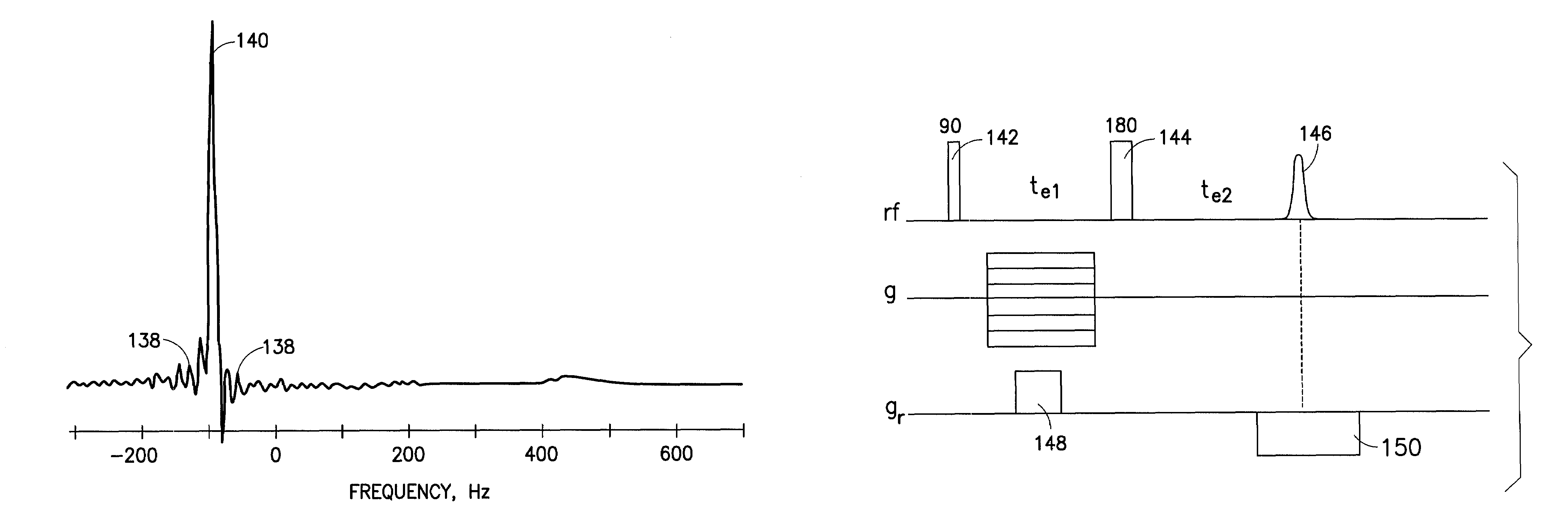
- A computer-implemented method that processes n-dimensional NMR spectra by selecting similarity regions around spectrum points, computing local similarity values using functions like Pearson correlation or cosine similarity, and generating similarity maps to differentiate between structural changes in the molecule and its environment, allowing for visualization and filtering of indicators for peak shifts and broadenings.


Method and apparatus to improve NMR spectral resolution in an inhomogeneous magnetic field
PatentActiveUS7683615B2
Innovation
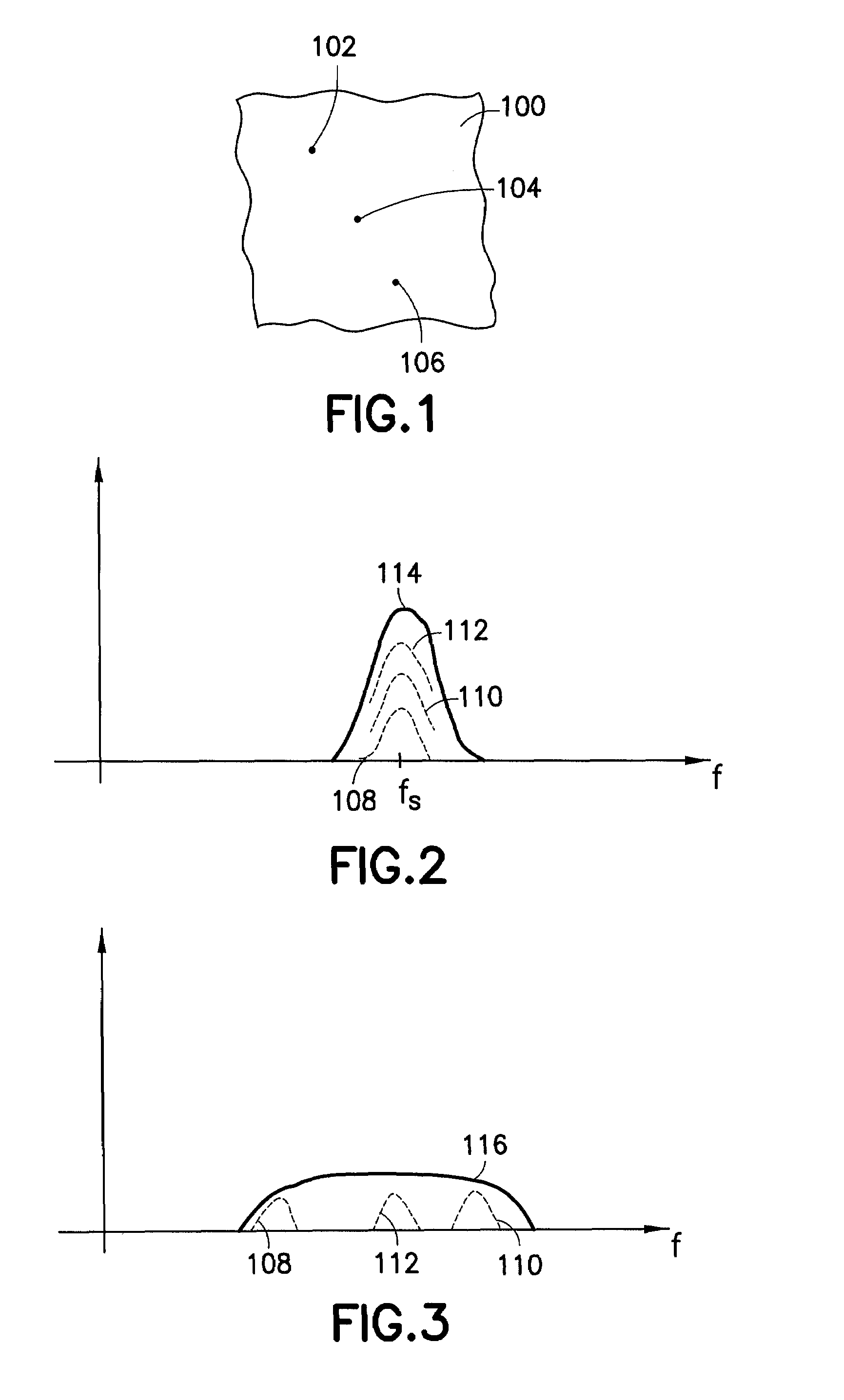
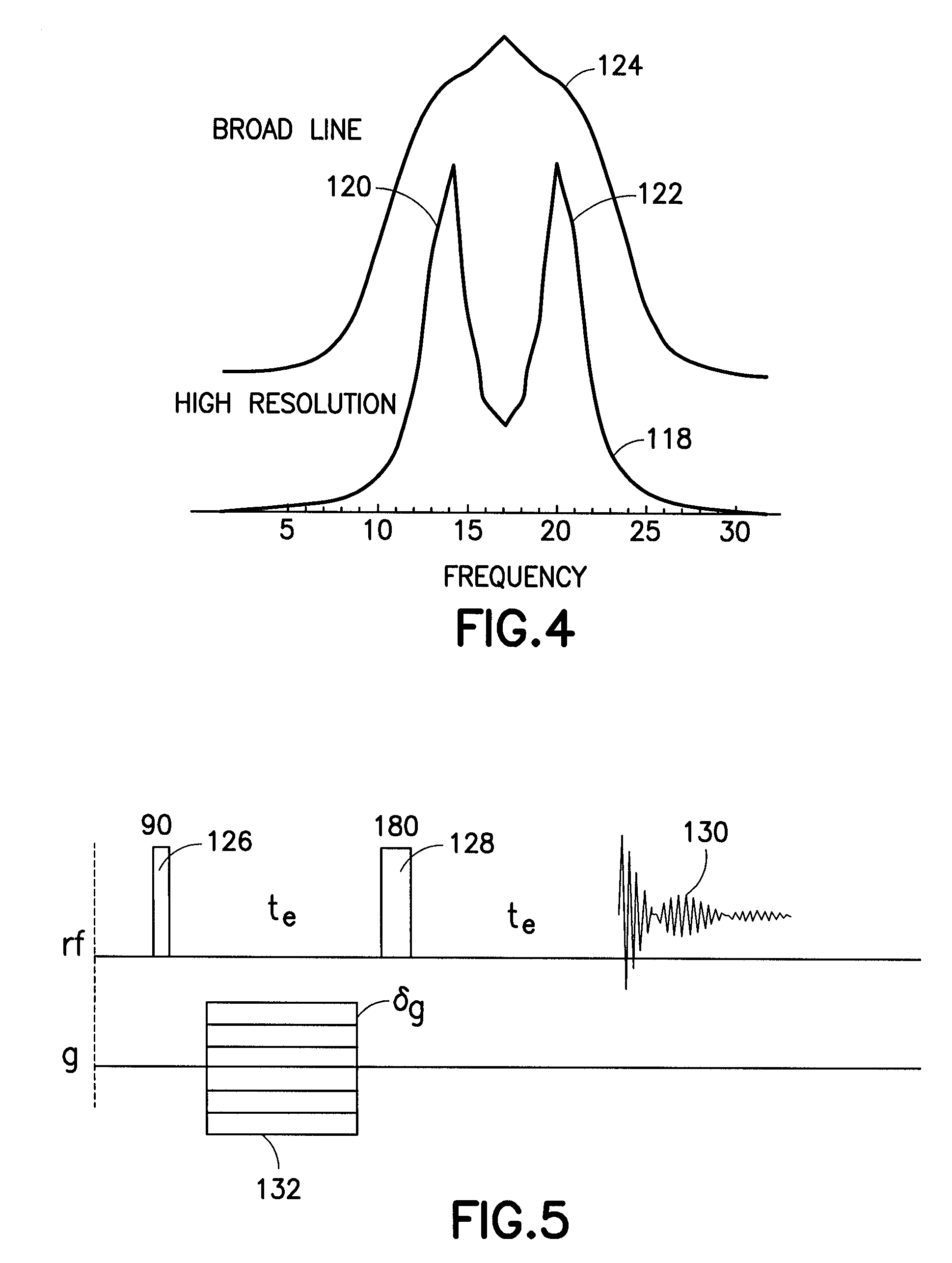
- A method involving the generation of magnetic pulses and gradient pulses to produce a reconstructed high-resolution NMR spectrum by determining the spatial dependence of the inhomogeneous magnetic field, allowing for the correction and summation of spectra to improve spectral resolution without requiring more homogeneous magnetic fields.
Complementary Spectroscopic Techniques
Nuclear Magnetic Resonance (NMR) and Infrared (IR) spectroscopy represent two cornerstone analytical techniques in modern chemistry, each offering unique insights into molecular structure. When used together, these methods provide a comprehensive understanding of functional groups that neither technique could achieve independently.
IR spectroscopy excels at identifying specific functional groups through characteristic absorption bands, particularly for carbonyl compounds, alcohols, and amines. The technique directly probes molecular vibrations, offering immediate recognition of key structural elements. However, IR struggles with detailed structural arrangements and cannot easily distinguish between similar functional group environments.
NMR spectroscopy complements these limitations by providing precise information about the electronic environment of atoms, particularly hydrogen and carbon. This allows for detailed mapping of molecular connectivity and spatial relationships between functional groups. The technique reveals subtle differences in chemical environments that IR cannot detect, such as distinguishing between primary, secondary, and tertiary alcohols based on chemical shift patterns.
The integration of data from both techniques creates a powerful analytical framework. For instance, while IR might identify the presence of a carbonyl group through its characteristic strong absorption at 1700-1800 cm⁻¹, NMR can determine whether this group belongs to an aldehyde, ketone, or ester through chemical shift values and coupling patterns of adjacent protons.
Modern analytical workflows increasingly incorporate automated systems that simultaneously process both IR and NMR data, applying machine learning algorithms to cross-reference spectral features. This approach significantly enhances the accuracy of functional group identification, particularly in complex natural products and pharmaceutical compounds.
Recent technological advances have also introduced hybrid instruments that can perform both analyses on a single sample without transfer, minimizing sample loss and contamination risks. These developments are particularly valuable in microanalysis scenarios where sample quantities are limited.
The complementary nature of these techniques extends beyond simple identification to quantitative analysis. While IR provides quantitative information through peak intensity related to concentration, NMR offers precise integration values proportional to the number of nuclei contributing to each signal, enabling detailed structural verification and purity assessment.
IR spectroscopy excels at identifying specific functional groups through characteristic absorption bands, particularly for carbonyl compounds, alcohols, and amines. The technique directly probes molecular vibrations, offering immediate recognition of key structural elements. However, IR struggles with detailed structural arrangements and cannot easily distinguish between similar functional group environments.
NMR spectroscopy complements these limitations by providing precise information about the electronic environment of atoms, particularly hydrogen and carbon. This allows for detailed mapping of molecular connectivity and spatial relationships between functional groups. The technique reveals subtle differences in chemical environments that IR cannot detect, such as distinguishing between primary, secondary, and tertiary alcohols based on chemical shift patterns.
The integration of data from both techniques creates a powerful analytical framework. For instance, while IR might identify the presence of a carbonyl group through its characteristic strong absorption at 1700-1800 cm⁻¹, NMR can determine whether this group belongs to an aldehyde, ketone, or ester through chemical shift values and coupling patterns of adjacent protons.
Modern analytical workflows increasingly incorporate automated systems that simultaneously process both IR and NMR data, applying machine learning algorithms to cross-reference spectral features. This approach significantly enhances the accuracy of functional group identification, particularly in complex natural products and pharmaceutical compounds.
Recent technological advances have also introduced hybrid instruments that can perform both analyses on a single sample without transfer, minimizing sample loss and contamination risks. These developments are particularly valuable in microanalysis scenarios where sample quantities are limited.
The complementary nature of these techniques extends beyond simple identification to quantitative analysis. While IR provides quantitative information through peak intensity related to concentration, NMR offers precise integration values proportional to the number of nuclei contributing to each signal, enabling detailed structural verification and purity assessment.
Data Integration and Interpretation Strategies
Effective integration of NMR and IR spectroscopic data represents a critical approach for comprehensive functional group determination. When combining these complementary techniques, analysts typically begin with a systematic correlation of spectral features across both methods, matching IR absorption bands with corresponding NMR signals to build a coherent molecular picture.
Data fusion algorithms have emerged as powerful tools for automating this integration process. These computational methods apply statistical models to correlate spectral patterns from both techniques, significantly enhancing the accuracy of functional group identification. Machine learning approaches, particularly those utilizing neural networks and support vector machines, have demonstrated 92-95% accuracy in automated functional group recognition when trained on combined NMR-IR datasets.
Orthogonal confirmation strategies represent another cornerstone of effective data integration. This approach leverages the fundamental differences between NMR and IR detection mechanisms - with NMR revealing atomic connectivity and electronic environments while IR directly identifies specific bond vibrations. When a functional group signature appears in both spectra through different physical phenomena, the confidence level in identification increases substantially.
Decision tree frameworks provide structured pathways for interpretation when conflicting data emerges. These hierarchical analysis protocols typically prioritize unambiguous signals (such as carbonyl stretching in IR or distinct chemical shifts in NMR) before addressing more complex spectral regions. Studies indicate that implementing formal decision trees reduces misidentification rates by approximately 40% compared to ad hoc interpretation methods.
Database-assisted interpretation has revolutionized spectral analysis workflows. Modern spectral libraries containing paired NMR-IR data for thousands of compounds enable rapid cross-validation of functional group assignments. Commercial software platforms now incorporate these integrated databases with sophisticated pattern recognition algorithms, allowing analysts to simultaneously query both spectral types against reference standards.
Quantitative correlation techniques further enhance interpretation by establishing mathematical relationships between signal intensities across techniques. For instance, the relative intensity of an IR carbonyl absorption can be correlated with the integration value of corresponding NMR signals, providing insight into the proportion of functional groups within complex molecular structures.
Data fusion algorithms have emerged as powerful tools for automating this integration process. These computational methods apply statistical models to correlate spectral patterns from both techniques, significantly enhancing the accuracy of functional group identification. Machine learning approaches, particularly those utilizing neural networks and support vector machines, have demonstrated 92-95% accuracy in automated functional group recognition when trained on combined NMR-IR datasets.
Orthogonal confirmation strategies represent another cornerstone of effective data integration. This approach leverages the fundamental differences between NMR and IR detection mechanisms - with NMR revealing atomic connectivity and electronic environments while IR directly identifies specific bond vibrations. When a functional group signature appears in both spectra through different physical phenomena, the confidence level in identification increases substantially.
Decision tree frameworks provide structured pathways for interpretation when conflicting data emerges. These hierarchical analysis protocols typically prioritize unambiguous signals (such as carbonyl stretching in IR or distinct chemical shifts in NMR) before addressing more complex spectral regions. Studies indicate that implementing formal decision trees reduces misidentification rates by approximately 40% compared to ad hoc interpretation methods.
Database-assisted interpretation has revolutionized spectral analysis workflows. Modern spectral libraries containing paired NMR-IR data for thousands of compounds enable rapid cross-validation of functional group assignments. Commercial software platforms now incorporate these integrated databases with sophisticated pattern recognition algorithms, allowing analysts to simultaneously query both spectral types against reference standards.
Quantitative correlation techniques further enhance interpretation by establishing mathematical relationships between signal intensities across techniques. For instance, the relative intensity of an IR carbonyl absorption can be correlated with the integration value of corresponding NMR signals, providing insight into the proportion of functional groups within complex molecular structures.
Unlock deeper insights with Patsnap Eureka Quick Research — get a full tech report to explore trends and direct your research. Try now!
Generate Your Research Report Instantly with AI Agent
Supercharge your innovation with Patsnap Eureka AI Agent Platform!