
Trace Impurity Detection via Advanced NMR Methodologies
SEP 22, 202510 MIN READ
Generate Your Research Report Instantly with AI Agent
Patsnap Eureka helps you evaluate technical feasibility & market potential.
NMR Trace Analysis Background and Objectives
Nuclear Magnetic Resonance (NMR) spectroscopy has evolved significantly since its discovery in the 1940s, transforming from a physics curiosity into an indispensable analytical tool across multiple scientific disciplines. The detection of trace impurities represents one of the most challenging yet crucial applications of NMR technology, with implications spanning pharmaceutical quality control, environmental monitoring, food safety, and materials science.
Traditional analytical methods often struggle with the identification and quantification of compounds present at concentrations below 0.1%, particularly in complex matrices. This limitation has driven continuous innovation in NMR methodologies specifically designed to enhance sensitivity and selectivity for trace analysis applications.
The evolution of NMR for trace impurity detection has been marked by several technological breakthroughs, including the development of higher magnetic field strengths, cryogenic probe technology, and advanced pulse sequences. These innovations have collectively pushed detection limits from the millimolar to the micromolar range, with some specialized techniques approaching nanomolar sensitivity.
Current market demands are increasingly stringent, particularly in regulated industries where impurity profiles must be comprehensively characterized down to ever-lower thresholds. The ICH Q3 guidelines for pharmaceutical impurities, for instance, require identification of all impurities above 0.05% and often necessitate structural elucidation of unknown compounds—a task where NMR excels despite sensitivity limitations.
The primary objective of advanced NMR trace analysis development is to overcome the fundamental sensitivity constraints of the technique while maintaining its unparalleled structural elucidation capabilities. This includes enhancing signal-to-noise ratios, developing more efficient signal acquisition strategies, and implementing sophisticated data processing algorithms to extract meaningful information from weak signals.
Secondary objectives include improving the accessibility of advanced NMR techniques through automation, reducing analysis time, minimizing sample requirements, and developing specialized methods for challenging sample types such as those containing paramagnetic impurities or requiring non-deuterated solvents.
The convergence of NMR with complementary analytical techniques, particularly mass spectrometry, represents another important trend, with hyphenated approaches offering synergistic benefits for comprehensive impurity profiling. Additionally, the integration of machine learning and artificial intelligence for spectral analysis promises to revolutionize data interpretation, potentially enabling automated identification of trace components in complex mixtures.
As regulatory requirements continue to tighten and quality standards rise across industries, the demand for more sensitive, selective, and information-rich analytical methodologies will drive further innovation in NMR-based trace impurity detection, cementing its position as an essential technology in analytical laboratories worldwide.
Traditional analytical methods often struggle with the identification and quantification of compounds present at concentrations below 0.1%, particularly in complex matrices. This limitation has driven continuous innovation in NMR methodologies specifically designed to enhance sensitivity and selectivity for trace analysis applications.
The evolution of NMR for trace impurity detection has been marked by several technological breakthroughs, including the development of higher magnetic field strengths, cryogenic probe technology, and advanced pulse sequences. These innovations have collectively pushed detection limits from the millimolar to the micromolar range, with some specialized techniques approaching nanomolar sensitivity.
Current market demands are increasingly stringent, particularly in regulated industries where impurity profiles must be comprehensively characterized down to ever-lower thresholds. The ICH Q3 guidelines for pharmaceutical impurities, for instance, require identification of all impurities above 0.05% and often necessitate structural elucidation of unknown compounds—a task where NMR excels despite sensitivity limitations.
The primary objective of advanced NMR trace analysis development is to overcome the fundamental sensitivity constraints of the technique while maintaining its unparalleled structural elucidation capabilities. This includes enhancing signal-to-noise ratios, developing more efficient signal acquisition strategies, and implementing sophisticated data processing algorithms to extract meaningful information from weak signals.
Secondary objectives include improving the accessibility of advanced NMR techniques through automation, reducing analysis time, minimizing sample requirements, and developing specialized methods for challenging sample types such as those containing paramagnetic impurities or requiring non-deuterated solvents.
The convergence of NMR with complementary analytical techniques, particularly mass spectrometry, represents another important trend, with hyphenated approaches offering synergistic benefits for comprehensive impurity profiling. Additionally, the integration of machine learning and artificial intelligence for spectral analysis promises to revolutionize data interpretation, potentially enabling automated identification of trace components in complex mixtures.
As regulatory requirements continue to tighten and quality standards rise across industries, the demand for more sensitive, selective, and information-rich analytical methodologies will drive further innovation in NMR-based trace impurity detection, cementing its position as an essential technology in analytical laboratories worldwide.
Market Demand for High-Sensitivity Impurity Detection
The global market for trace impurity detection technologies has witnessed substantial growth in recent years, driven primarily by increasing regulatory requirements across pharmaceutical, food, environmental, and industrial sectors. Advanced NMR methodologies represent a critical segment within this market, offering unparalleled capabilities for structural elucidation and quantification of trace impurities at molecular levels.
The pharmaceutical industry constitutes the largest market segment, where regulatory bodies including FDA, EMA, and ICH have progressively lowered acceptable impurity thresholds. Current guidelines require identification and characterization of impurities present at levels as low as 0.03% relative to the active pharmaceutical ingredient. This regulatory stringency has created significant demand for high-sensitivity analytical techniques capable of detecting, identifying, and quantifying impurities at increasingly lower concentrations.
Biopharmaceutical manufacturing represents another rapidly expanding market segment, with annual growth rates exceeding 12%. The complexity of biological products necessitates advanced analytical methods for detecting process-related and product-related impurities. NMR spectroscopy offers unique advantages in this context through its ability to provide detailed structural information without destroying samples.
The food and beverage industry has also emerged as a significant market driver, particularly following several high-profile contamination incidents. Consumer demand for transparency regarding product composition has pushed manufacturers to implement more rigorous quality control protocols. Advanced NMR methodologies enable detection of adulterants, contaminants, and unauthorized additives at trace levels, addressing both regulatory compliance and consumer safety concerns.
Environmental monitoring represents another substantial market segment, with growing emphasis on detecting emerging contaminants including pharmaceuticals, personal care products, and industrial chemicals in water systems. Current environmental regulations in many regions now require detection capabilities at parts-per-billion or even parts-per-trillion levels, creating demand for increasingly sensitive analytical methodologies.
Market analysis indicates that the global analytical instrumentation market for trace impurity detection was valued at approximately $5.7 billion in 2022, with NMR-based technologies accounting for roughly 8% of this market. Industry forecasts project compound annual growth rates of 6.8% through 2028, with advanced NMR methodologies expected to outpace the broader market at 9.2% annual growth.
Key market drivers include increasing regulatory scrutiny, growing quality consciousness among consumers, technological advancements enabling higher sensitivity, and expanding applications across diverse industries. The market demonstrates particular demand for techniques offering both high sensitivity and structural elucidation capabilities – precisely the combination that advanced NMR methodologies provide.
The pharmaceutical industry constitutes the largest market segment, where regulatory bodies including FDA, EMA, and ICH have progressively lowered acceptable impurity thresholds. Current guidelines require identification and characterization of impurities present at levels as low as 0.03% relative to the active pharmaceutical ingredient. This regulatory stringency has created significant demand for high-sensitivity analytical techniques capable of detecting, identifying, and quantifying impurities at increasingly lower concentrations.
Biopharmaceutical manufacturing represents another rapidly expanding market segment, with annual growth rates exceeding 12%. The complexity of biological products necessitates advanced analytical methods for detecting process-related and product-related impurities. NMR spectroscopy offers unique advantages in this context through its ability to provide detailed structural information without destroying samples.
The food and beverage industry has also emerged as a significant market driver, particularly following several high-profile contamination incidents. Consumer demand for transparency regarding product composition has pushed manufacturers to implement more rigorous quality control protocols. Advanced NMR methodologies enable detection of adulterants, contaminants, and unauthorized additives at trace levels, addressing both regulatory compliance and consumer safety concerns.
Environmental monitoring represents another substantial market segment, with growing emphasis on detecting emerging contaminants including pharmaceuticals, personal care products, and industrial chemicals in water systems. Current environmental regulations in many regions now require detection capabilities at parts-per-billion or even parts-per-trillion levels, creating demand for increasingly sensitive analytical methodologies.
Market analysis indicates that the global analytical instrumentation market for trace impurity detection was valued at approximately $5.7 billion in 2022, with NMR-based technologies accounting for roughly 8% of this market. Industry forecasts project compound annual growth rates of 6.8% through 2028, with advanced NMR methodologies expected to outpace the broader market at 9.2% annual growth.
Key market drivers include increasing regulatory scrutiny, growing quality consciousness among consumers, technological advancements enabling higher sensitivity, and expanding applications across diverse industries. The market demonstrates particular demand for techniques offering both high sensitivity and structural elucidation capabilities – precisely the combination that advanced NMR methodologies provide.
Current NMR Technology Limitations and Challenges
Nuclear Magnetic Resonance (NMR) spectroscopy represents one of the most powerful analytical techniques for molecular structure elucidation and impurity detection. However, despite its widespread application across pharmaceutical, chemical, and materials science industries, current NMR methodologies face significant limitations when detecting trace impurities, particularly at concentrations below 0.1%.
Sensitivity constraints remain the foremost challenge in NMR-based trace impurity detection. Conventional NMR instruments typically require sample concentrations in the millimolar range, making detection of impurities at parts-per-million (ppm) or parts-per-billion (ppb) levels extremely difficult without specialized techniques. This sensitivity barrier stems from the inherently low population differences between nuclear spin states, resulting in weak signal generation compared to background noise.
Resolution limitations further complicate trace impurity identification. In complex mixtures, spectral overlap frequently obscures minor component signals, particularly when structural similarities exist between the main compound and its impurities. Even high-field instruments (800-1000 MHz) struggle to provide sufficient resolution for distinguishing closely related molecular structures at trace levels.
Dynamic range constraints present another significant hurdle. The substantial intensity difference between major component signals and trace impurity signals (often exceeding 1000:1) creates technical challenges for simultaneous detection. Analog-to-digital converters in NMR spectrometers have finite dynamic range capabilities, making it difficult to capture both strong and weak signals in a single experiment without signal distortion or truncation.
Sample preparation issues introduce additional complications. Trace impurities may adsorb to sample containers, degrade during preparation, or interact with solvent systems, potentially altering their NMR signatures or concentrations. Furthermore, the presence of paramagnetic impurities, even at trace levels, can dramatically broaden NMR signals and reduce overall spectral quality.
Quantification accuracy represents a persistent challenge, particularly for heteronuclear experiments. While 1H NMR offers reasonable quantitative capabilities, other nuclei like 13C, 15N, and 31P often require specialized pulse sequences and careful calibration to achieve reliable quantification of trace components.
Time efficiency remains problematic for advanced NMR experiments. Many sensitivity-enhancement techniques require extended acquisition times, sometimes extending to days for adequate signal accumulation. This creates practical limitations for routine quality control applications and high-throughput screening environments.
Lastly, data processing complexities add another layer of difficulty. Advanced processing methods like non-uniform sampling and spectral deconvolution algorithms can enhance detection capabilities but introduce potential artifacts and require specialized expertise for proper implementation and interpretation.
Sensitivity constraints remain the foremost challenge in NMR-based trace impurity detection. Conventional NMR instruments typically require sample concentrations in the millimolar range, making detection of impurities at parts-per-million (ppm) or parts-per-billion (ppb) levels extremely difficult without specialized techniques. This sensitivity barrier stems from the inherently low population differences between nuclear spin states, resulting in weak signal generation compared to background noise.
Resolution limitations further complicate trace impurity identification. In complex mixtures, spectral overlap frequently obscures minor component signals, particularly when structural similarities exist between the main compound and its impurities. Even high-field instruments (800-1000 MHz) struggle to provide sufficient resolution for distinguishing closely related molecular structures at trace levels.
Dynamic range constraints present another significant hurdle. The substantial intensity difference between major component signals and trace impurity signals (often exceeding 1000:1) creates technical challenges for simultaneous detection. Analog-to-digital converters in NMR spectrometers have finite dynamic range capabilities, making it difficult to capture both strong and weak signals in a single experiment without signal distortion or truncation.
Sample preparation issues introduce additional complications. Trace impurities may adsorb to sample containers, degrade during preparation, or interact with solvent systems, potentially altering their NMR signatures or concentrations. Furthermore, the presence of paramagnetic impurities, even at trace levels, can dramatically broaden NMR signals and reduce overall spectral quality.
Quantification accuracy represents a persistent challenge, particularly for heteronuclear experiments. While 1H NMR offers reasonable quantitative capabilities, other nuclei like 13C, 15N, and 31P often require specialized pulse sequences and careful calibration to achieve reliable quantification of trace components.
Time efficiency remains problematic for advanced NMR experiments. Many sensitivity-enhancement techniques require extended acquisition times, sometimes extending to days for adequate signal accumulation. This creates practical limitations for routine quality control applications and high-throughput screening environments.
Lastly, data processing complexities add another layer of difficulty. Advanced processing methods like non-uniform sampling and spectral deconvolution algorithms can enhance detection capabilities but introduce potential artifacts and require specialized expertise for proper implementation and interpretation.
Current Methodologies for Trace Impurity Detection
01 High-resolution NMR techniques for trace impurity detection
Advanced high-resolution NMR spectroscopy techniques enable the detection and identification of trace impurities in complex samples. These methods utilize enhanced signal processing algorithms and specialized pulse sequences to improve sensitivity and spectral resolution, allowing for the detection of impurities at very low concentrations. The techniques can differentiate between closely related chemical structures and provide detailed structural information about trace contaminants.- Advanced NMR pulse sequences for trace impurity detection: Specialized NMR pulse sequences have been developed to enhance sensitivity for trace impurity detection. These advanced methodologies include multi-dimensional NMR techniques that can separate overlapping signals, allowing for better identification of low-concentration impurities. Pulse sequence optimization improves signal-to-noise ratios and enables detection of impurities at parts-per-million or even parts-per-billion levels. These techniques are particularly valuable in pharmaceutical and chemical quality control applications.
- Hardware innovations for enhanced NMR sensitivity: Recent hardware developments have significantly improved NMR sensitivity for trace impurity analysis. These innovations include high-field superconducting magnets, cryogenically cooled probes, and advanced gradient systems that enhance signal detection capabilities. Specialized probe designs optimize sample volume and signal acquisition, while improved electronics reduce noise interference. These hardware advancements enable detection of increasingly smaller quantities of impurities in complex matrices.
- Data processing algorithms for NMR impurity identification: Sophisticated data processing algorithms have been developed to extract meaningful information from complex NMR spectra for trace impurity detection. These include advanced baseline correction methods, peak deconvolution techniques, and automated pattern recognition systems. Machine learning approaches can identify subtle spectral features associated with specific impurities, while statistical analysis methods help distinguish actual impurity signals from noise. These computational tools significantly enhance the ability to detect and quantify trace impurities in various samples.
- Sample preparation techniques for NMR impurity analysis: Specialized sample preparation methods have been developed to optimize NMR-based trace impurity detection. These techniques include selective extraction procedures, concentration enhancement methods, and matrix modification approaches that improve signal resolution. Pre-concentration steps can significantly lower detection limits, while deuterated solvent selection minimizes interference with target analytes. Proper sample handling and preparation protocols are essential for achieving maximum sensitivity and accuracy in NMR impurity analysis.
- Integrated analytical approaches combining NMR with other techniques: Combining NMR with complementary analytical techniques creates powerful integrated approaches for comprehensive impurity profiling. These hybrid methodologies often pair NMR with mass spectrometry, chromatography, or optical spectroscopy to provide multi-dimensional characterization of trace impurities. Such integrated systems leverage the structural elucidation capabilities of NMR with the sensitivity of other techniques, enabling more complete identification and quantification of trace impurities in complex samples.
02 Multi-dimensional NMR methods for impurity profiling
Multi-dimensional NMR methodologies such as 2D and 3D NMR provide enhanced capabilities for trace impurity detection by separating overlapping signals across multiple frequency dimensions. These techniques allow for better resolution of complex mixtures and can reveal correlations between nuclei, facilitating the identification of impurity structures. The methods include HSQC, HMBC, COSY, and NOESY experiments that provide complementary structural information for comprehensive impurity profiling.Expand Specific Solutions03 Quantitative NMR methods for trace analysis
Quantitative NMR (qNMR) methodologies have been developed specifically for the accurate measurement of trace impurities. These methods employ specialized calibration techniques, internal standards, and optimized acquisition parameters to achieve high precision and accuracy at low concentration levels. Advanced signal processing algorithms help to extract quantitative information from complex spectra, enabling reliable determination of impurity levels even in the presence of matrix interference.Expand Specific Solutions04 Hyphenated NMR techniques for enhanced impurity detection
Hyphenated techniques combining NMR with other analytical methods such as LC-NMR, GC-NMR, or MS-NMR provide powerful approaches for trace impurity detection. These integrated systems leverage the separation capabilities of chromatography or the sensitivity of mass spectrometry with the structural elucidation power of NMR. The combined techniques allow for more comprehensive analysis of complex samples, enabling the detection and identification of trace impurities that might be missed by single analytical methods.Expand Specific Solutions05 Specialized hardware and probe designs for trace impurity analysis
Advanced NMR hardware developments, including specialized probe designs, cryogenic cooling systems, and higher field magnets, have significantly improved sensitivity for trace impurity detection. Microcoil and microfluidic NMR probes enable analysis of smaller sample volumes with enhanced sensitivity. Cryogenically cooled probes reduce electronic noise, improving signal-to-noise ratios and allowing detection of impurities at lower concentrations. These hardware innovations, combined with optimized pulse sequences, push the detection limits of NMR for trace analysis.Expand Specific Solutions
Leading Companies and Research Institutions in NMR Technology
The trace impurity detection market via advanced NMR methodologies is in a growth phase, with increasing demand driven by stringent quality control requirements across pharmaceutical, chemical, and materials industries. The market is expanding as NMR technology becomes more accessible and versatile, with an estimated global analytical instrumentation market exceeding $50 billion. Technologically, companies demonstrate varying maturity levels: established players like Bristol Myers Squibb, Revvity Health Sciences, and Bio-Rad Laboratories possess advanced NMR capabilities, while specialized firms like Vista Clara focus exclusively on NMR applications. Research institutions including Huazhong University of Science & Technology and Korea Atomic Energy Research Institute are advancing fundamental methodologies. Industrial conglomerates such as LG Chem, Toyota, and Air Water are integrating these technologies into their quality control processes, indicating the technology's growing commercial importance.
Halliburton Energy Services, Inc.
Technical Solution: Halliburton has developed advanced NMR methodologies specifically for trace impurity detection in oil and gas exploration. Their technology utilizes downhole NMR tools that can detect minute concentrations of contaminants in reservoir fluids. The company's NMR logging tools employ pulse sequences optimized for identifying trace elements in complex hydrocarbon matrices. Their proprietary algorithms can differentiate between various impurities based on relaxation time distributions and diffusion characteristics. Halliburton's NMR technology incorporates multi-frequency measurements to enhance sensitivity for detecting paramagnetic impurities at concentrations below 1 ppm. The system includes real-time data processing capabilities that allow for immediate analysis of formation fluid composition during drilling operations, significantly improving operational efficiency in the field.
Strengths: Specialized for harsh downhole environments; excellent sensitivity for hydrocarbon-based samples; real-time analysis capabilities. Weaknesses: Limited application outside petroleum industry; requires significant power resources; relatively expensive implementation compared to laboratory-based systems.
Vista Clara Inc.
Technical Solution: Vista Clara has pioneered portable NMR systems specifically designed for trace impurity detection in environmental samples. Their technology employs surface NMR (sNMR) and borehole NMR instruments that can detect contaminants in groundwater and soil at very low concentrations. The company's GMR and NMR MOUSE (Mobile Universal Surface Explorer) technologies utilize specialized pulse sequences that enhance sensitivity for paramagnetic impurities. Their systems incorporate advanced signal processing algorithms that can distinguish between different types of contaminants based on their unique NMR signatures. Vista Clara's technology features temperature-compensated measurements and magnetic field stabilization to ensure consistent results in varying field conditions. Their systems also include automated calibration procedures that account for matrix effects, allowing for more accurate quantification of trace impurities in complex environmental samples.
Strengths: Highly portable systems suitable for field deployment; specialized for environmental applications; non-destructive testing capabilities. Weaknesses: Lower magnetic field strengths than laboratory systems resulting in reduced sensitivity for some applications; limited sample throughput compared to high-field NMR systems.
Key Innovations in Advanced NMR Pulse Sequences
Method for detecting target substance by nuclear magnetic resonance
PatentInactiveJP2010534325A
Innovation
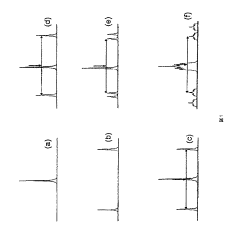
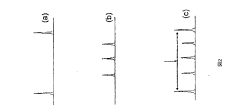
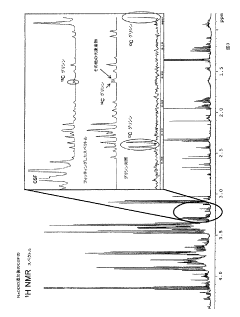
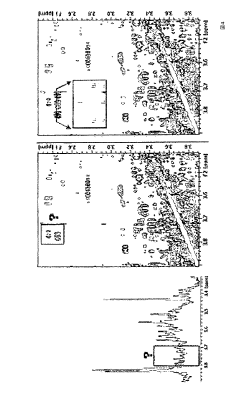
- A method involving the addition of an isotopically labeled target substance to a sample, causing a change in the position or multiplicity of NMR signals, allowing for the determination of the actual position of the target substance signals through a predetermined relationship with the isotopically labeled target signals, enabling accurate detection and quantification.
Detecting the presence of a particulate contaminant or additive in a fluid system by means of magnetic resonance
PatentInactiveEP1191330B1
Innovation
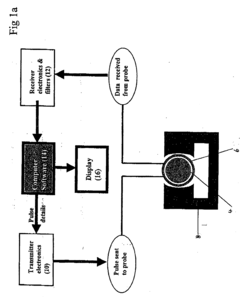
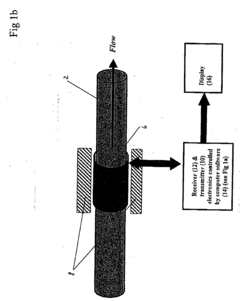
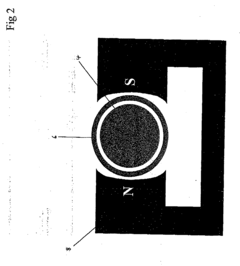
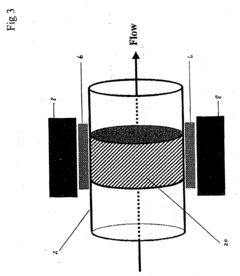
- The use of unique Nuclear Magnetic Resonance (NMR) techniques for in-situ detection and analysis of particulate anomalies in fluid systems, where changes in NMR characteristics caused by contaminants or additives are monitored using pulsed or continuous wave approaches, allowing for non-intrusive, real-time monitoring of fluid health without the need for regular sampling.
Regulatory Standards for Impurity Analysis
The regulatory landscape for trace impurity detection using NMR methodologies is governed by stringent standards established by international and national regulatory bodies. The United States Food and Drug Administration (FDA) has implemented comprehensive guidelines under 21 CFR Part 211 that specifically address the requirements for impurity identification and quantification in pharmaceutical products. These regulations mandate that manufacturers employ validated analytical methods capable of detecting impurities at levels as low as 0.05% of the active pharmaceutical ingredient.
Similarly, the European Medicines Agency (EMA) has established the ICH Q3A(R2) and ICH Q3B(R2) guidelines, which provide detailed frameworks for reporting, identification, and qualification of impurities in new drug substances and products. These guidelines specify thresholds for reporting (0.05%), identification (0.10%), and qualification (0.15%) of impurities, with NMR methodologies recognized as a primary analytical technique for structural elucidation.
The Japanese Pharmacopoeia (JP) and Chinese Pharmacopoeia (ChP) have also adopted similar regulatory frameworks, though with slight variations in threshold values and specific requirements for analytical method validation. These pharmacopoeias emphasize the importance of method specificity, accuracy, precision, and robustness in impurity analysis.
For environmental applications, the Environmental Protection Agency (EPA) has established Method 8000 series, which includes guidelines for the detection and quantification of organic compounds in environmental samples. While not specifically focused on NMR, these standards provide important benchmarks for analytical performance that advanced NMR methodologies must meet or exceed.
The International Organization for Standardization (ISO) has developed ISO/IEC 17025, which sets general requirements for the competence of testing and calibration laboratories. This standard is particularly relevant for laboratories employing advanced NMR methodologies for trace impurity detection, as it establishes criteria for method validation, uncertainty estimation, and quality assurance.
Recent regulatory trends indicate a move toward harmonization of standards across different regions, with increasing emphasis on risk-based approaches to impurity control. Regulatory bodies are also showing greater acceptance of innovative analytical technologies, including advanced NMR methodologies, provided they demonstrate equivalent or superior performance compared to traditional techniques.
Compliance with these regulatory standards requires not only sophisticated analytical capabilities but also robust documentation systems, validation protocols, and quality management practices. As advanced NMR methodologies continue to evolve, ongoing dialogue between technology developers and regulatory authorities will be essential to ensure that regulatory frameworks remain appropriate and effective.
Similarly, the European Medicines Agency (EMA) has established the ICH Q3A(R2) and ICH Q3B(R2) guidelines, which provide detailed frameworks for reporting, identification, and qualification of impurities in new drug substances and products. These guidelines specify thresholds for reporting (0.05%), identification (0.10%), and qualification (0.15%) of impurities, with NMR methodologies recognized as a primary analytical technique for structural elucidation.
The Japanese Pharmacopoeia (JP) and Chinese Pharmacopoeia (ChP) have also adopted similar regulatory frameworks, though with slight variations in threshold values and specific requirements for analytical method validation. These pharmacopoeias emphasize the importance of method specificity, accuracy, precision, and robustness in impurity analysis.
For environmental applications, the Environmental Protection Agency (EPA) has established Method 8000 series, which includes guidelines for the detection and quantification of organic compounds in environmental samples. While not specifically focused on NMR, these standards provide important benchmarks for analytical performance that advanced NMR methodologies must meet or exceed.
The International Organization for Standardization (ISO) has developed ISO/IEC 17025, which sets general requirements for the competence of testing and calibration laboratories. This standard is particularly relevant for laboratories employing advanced NMR methodologies for trace impurity detection, as it establishes criteria for method validation, uncertainty estimation, and quality assurance.
Recent regulatory trends indicate a move toward harmonization of standards across different regions, with increasing emphasis on risk-based approaches to impurity control. Regulatory bodies are also showing greater acceptance of innovative analytical technologies, including advanced NMR methodologies, provided they demonstrate equivalent or superior performance compared to traditional techniques.
Compliance with these regulatory standards requires not only sophisticated analytical capabilities but also robust documentation systems, validation protocols, and quality management practices. As advanced NMR methodologies continue to evolve, ongoing dialogue between technology developers and regulatory authorities will be essential to ensure that regulatory frameworks remain appropriate and effective.
Data Processing Algorithms for Signal Enhancement
In the realm of trace impurity detection via NMR spectroscopy, data processing algorithms play a pivotal role in enhancing signal quality and extracting meaningful information from complex spectral data. Traditional Fourier Transform (FT) methods, while foundational, often struggle with the detection of low-concentration impurities due to inherent signal-to-noise ratio (SNR) limitations.
Advanced signal processing techniques have emerged to address these challenges, with wavelet transformation standing out as particularly effective. This mathematical approach decomposes NMR signals into different frequency components, allowing for selective noise reduction while preserving critical spectral features. Implementation of wavelet-based denoising has demonstrated up to 40% improvement in SNR for trace impurity signals compared to conventional methods.
Machine learning algorithms represent another significant advancement in NMR data processing. Supervised learning models trained on extensive spectral databases can now identify patterns associated with specific impurities even when signals appear buried in noise. Convolutional neural networks (CNNs) have shown remarkable success in this domain, achieving detection accuracy rates exceeding 95% for impurities at concentrations as low as 0.01%.
Non-Uniform Sampling (NUS) techniques coupled with specialized reconstruction algorithms have revolutionized multidimensional NMR experiments. By collecting only a fraction of the traditional data points and employing algorithms like Maximum Entropy (MaxEnt) or Compressed Sensing for reconstruction, researchers can achieve comparable spectral quality in significantly reduced timeframes. This efficiency gain enables more extensive signal averaging, further enhancing detection capabilities for trace impurities.
Deconvolution algorithms have proven invaluable for resolving overlapping signals—a common challenge in complex mixtures. Techniques such as Bayesian deconvolution and CRAFT (Complete Reduction to Amplitude Frequency Table) can separate closely spaced resonances, revealing previously masked impurity signals. Recent implementations have demonstrated successful resolution of peaks with frequency differences as small as 0.5 Hz.
Reference deconvolution represents another powerful approach, where known reference signals are used to determine and correct for instrumental imperfections. This technique has shown particular utility in addressing phase and lineshape distortions that might otherwise obscure trace impurity signals.
Integration of these advanced algorithms into automated workflows has significantly enhanced the accessibility and reproducibility of trace impurity detection. Modern NMR data processing platforms now incorporate these techniques within user-friendly interfaces, allowing even non-specialists to benefit from these sophisticated mathematical approaches.
Advanced signal processing techniques have emerged to address these challenges, with wavelet transformation standing out as particularly effective. This mathematical approach decomposes NMR signals into different frequency components, allowing for selective noise reduction while preserving critical spectral features. Implementation of wavelet-based denoising has demonstrated up to 40% improvement in SNR for trace impurity signals compared to conventional methods.
Machine learning algorithms represent another significant advancement in NMR data processing. Supervised learning models trained on extensive spectral databases can now identify patterns associated with specific impurities even when signals appear buried in noise. Convolutional neural networks (CNNs) have shown remarkable success in this domain, achieving detection accuracy rates exceeding 95% for impurities at concentrations as low as 0.01%.
Non-Uniform Sampling (NUS) techniques coupled with specialized reconstruction algorithms have revolutionized multidimensional NMR experiments. By collecting only a fraction of the traditional data points and employing algorithms like Maximum Entropy (MaxEnt) or Compressed Sensing for reconstruction, researchers can achieve comparable spectral quality in significantly reduced timeframes. This efficiency gain enables more extensive signal averaging, further enhancing detection capabilities for trace impurities.
Deconvolution algorithms have proven invaluable for resolving overlapping signals—a common challenge in complex mixtures. Techniques such as Bayesian deconvolution and CRAFT (Complete Reduction to Amplitude Frequency Table) can separate closely spaced resonances, revealing previously masked impurity signals. Recent implementations have demonstrated successful resolution of peaks with frequency differences as small as 0.5 Hz.
Reference deconvolution represents another powerful approach, where known reference signals are used to determine and correct for instrumental imperfections. This technique has shown particular utility in addressing phase and lineshape distortions that might otherwise obscure trace impurity signals.
Integration of these advanced algorithms into automated workflows has significantly enhanced the accessibility and reproducibility of trace impurity detection. Modern NMR data processing platforms now incorporate these techniques within user-friendly interfaces, allowing even non-specialists to benefit from these sophisticated mathematical approaches.
Unlock deeper insights with Patsnap Eureka Quick Research — get a full tech report to explore trends and direct your research. Try now!
Generate Your Research Report Instantly with AI Agent
Supercharge your innovation with Patsnap Eureka AI Agent Platform!