
Downlink interference elimination method based on carrier waves in hybrid network
A technology of interference elimination and hybrid network, applied in the direction of electrical components, wireless communication, etc., can solve problems such as business congestion, interference elimination is not necessarily realized, incomplete, etc., to achieve the effect of reducing downlink interference and avoiding business congestion
- Summary
- Abstract
- Description
- Claims
- Application Information
AI Technical Summary
Problems solved by technology
Method used
Image

Examples
Embodiment 1
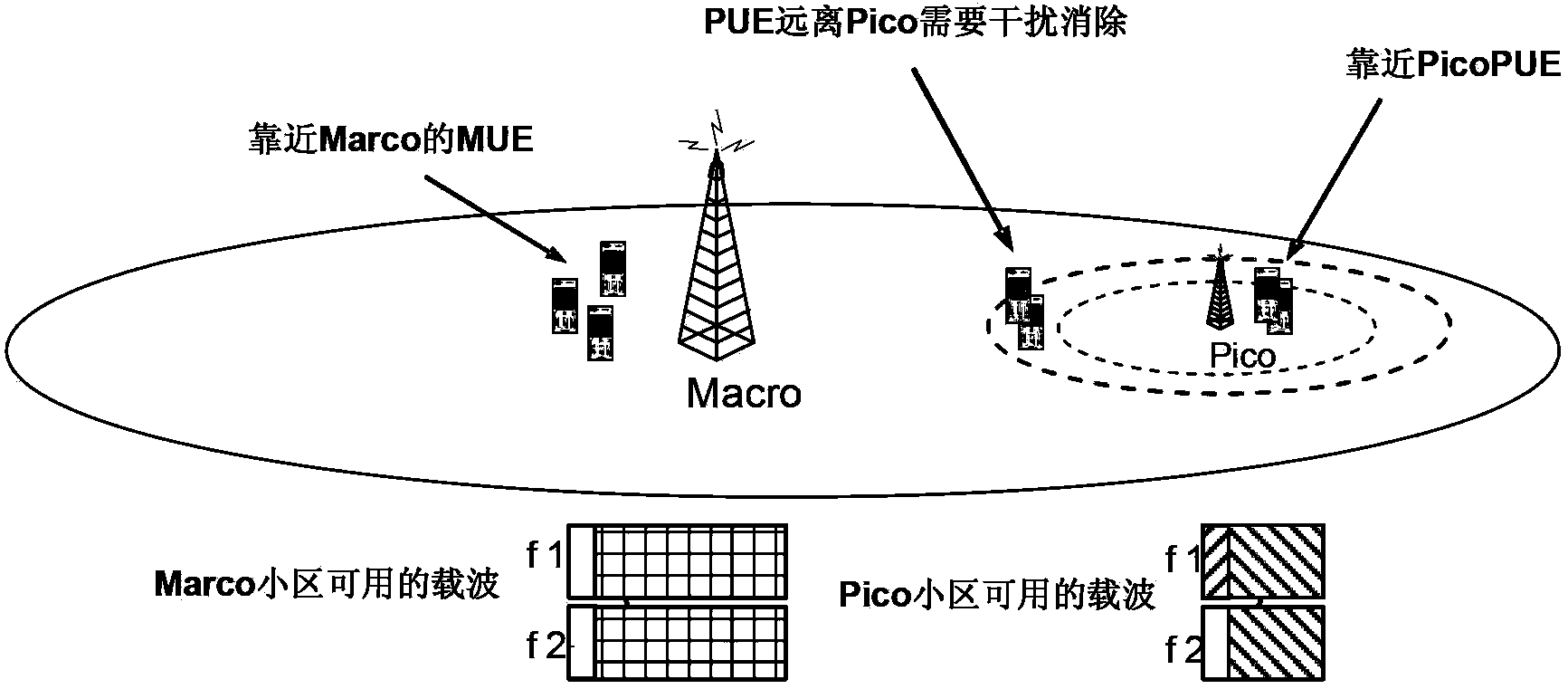
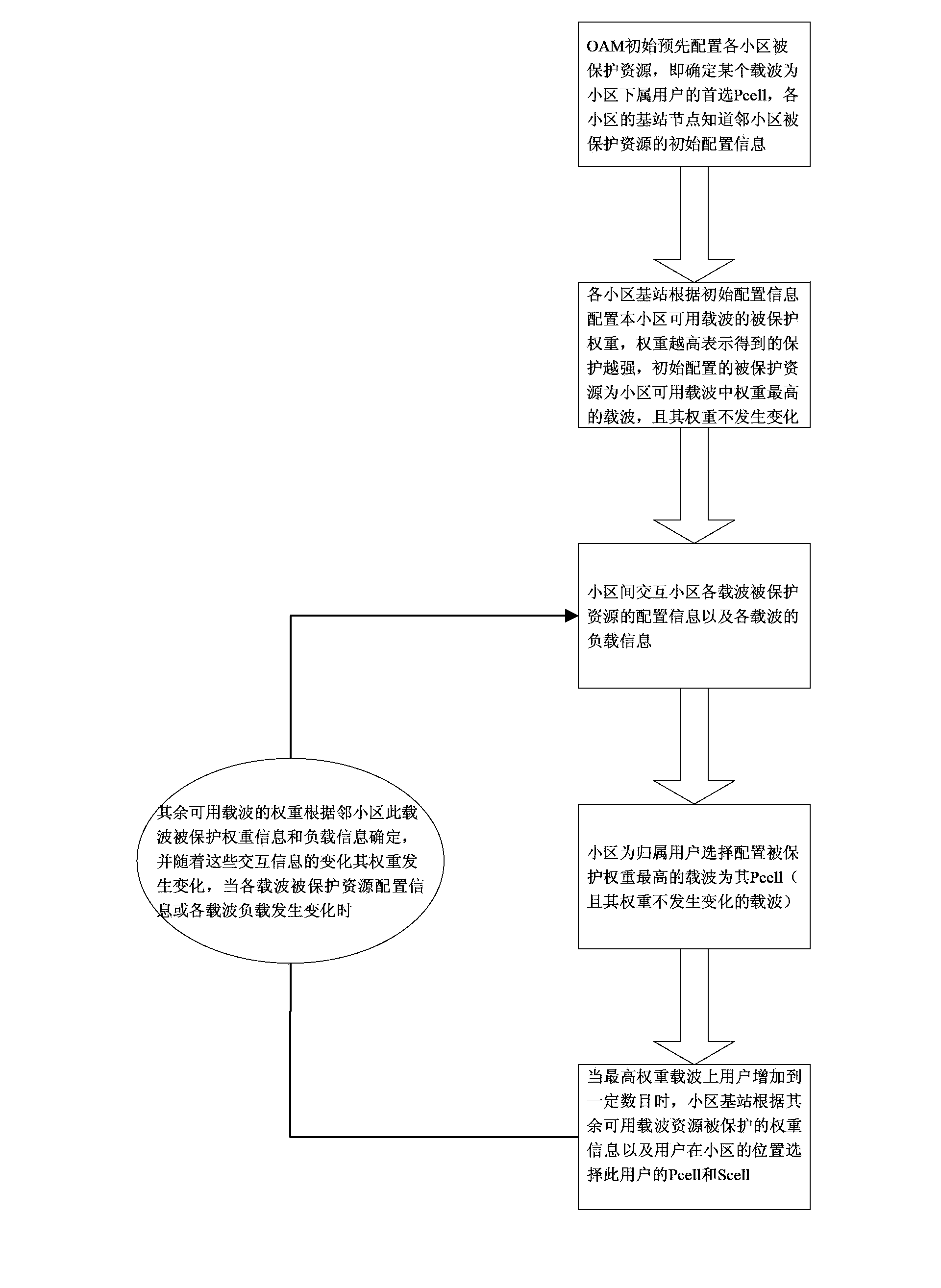
[0030] This embodiment takes figure 1 Taking the interference scenario in the example as an example, the carrier-based downlink interference elimination method in the hybrid network according to the present invention will be described in detail. figure 1 The shown scene includes Marco and Pico nodes, Pico is in the coverage area of Marco, and the available carriers are f1 and f2. The main implementation process of this method is as follows: figure 2 shown, including:
[0031] OAM initially pre-configures the protected resources of each cell, that is, determines a certain carrier as the preferred Pcell of the subordinate users of the cell, and the base station nodes of each cell know the initial configuration information of the protected resources of the neighboring cells;
[0032]The base station node of each cell configures the protected weights of the remaining available carriers in its own cell according to the initial configuration information of the protected resourc...
Embodiment 2
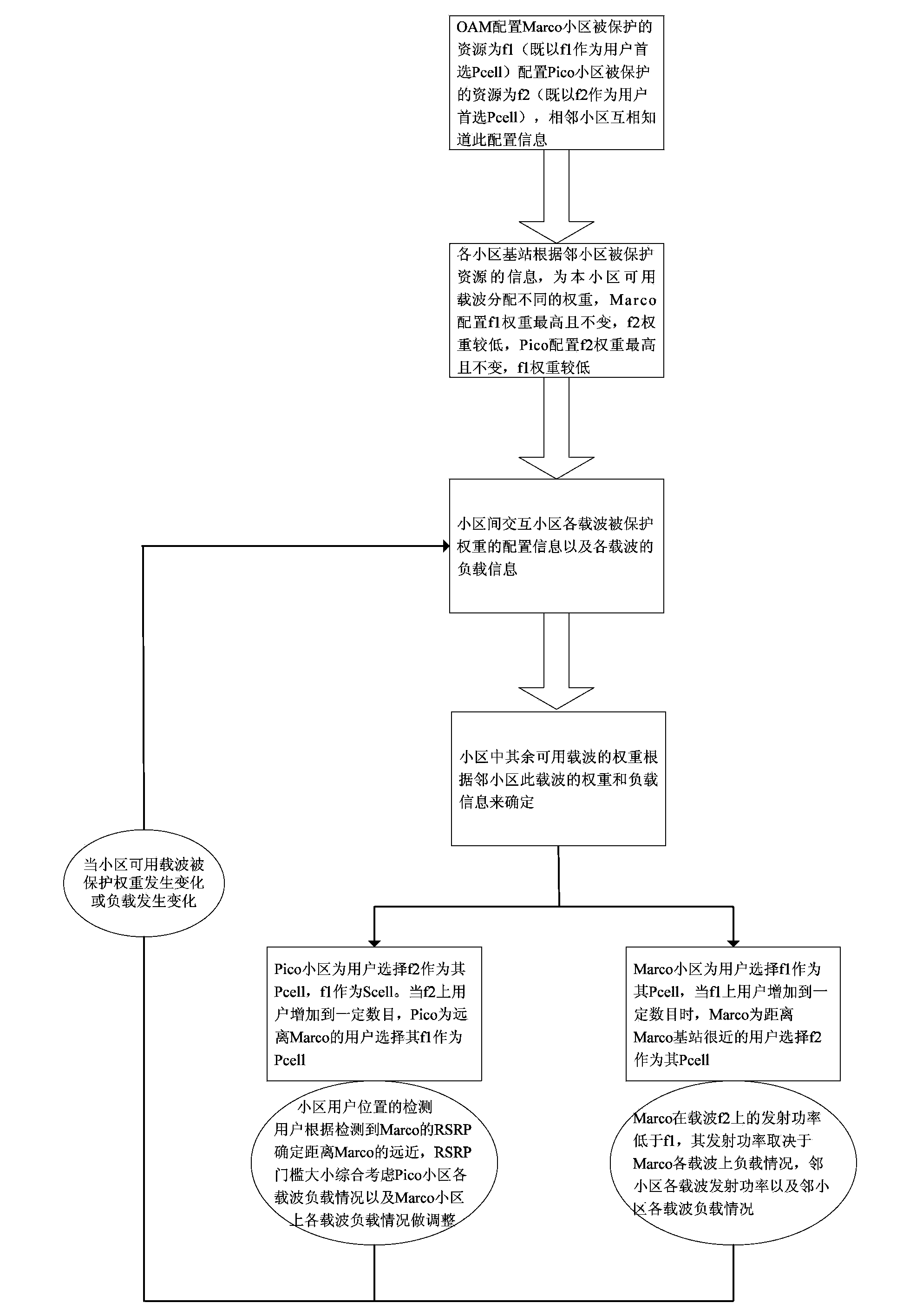
[0038] This embodiment provides a specific implementation of the method described in Embodiment 1, the process of which is as follows image 3 shown, including the following steps:
[0039] S1: OAM configures the protected resource of the Marco cell as f1 (that is, f1 is used as the user's preferred Pcell), configures the protected resource of the Pico cell as f2 (that is, uses f2 as the user's preferred Pcell), and each cell knows the protected resources of neighboring cells Initial configuration information, that is, to know which carrier the Pcell of the neighboring cell mainly serves as the user.
[0040] S2: Each cell base station (eNB) assigns different weights to each carrier available in the cell according to the protected resource information of the neighboring cell: Marco configures f1 with the highest weight and the weight value remains unchanged, and f2 has a lower weight; Pico configures f2 with the highest weight And the weight value remains the same, and the we...
PUM
 Login to View More
 Abstract
Description
Claims
Application Information
 Login to View More