
A method and device for obtaining correlation between multimedia data
A multimedia data and correlation technology, applied in the computer field, can solve the problems of incomplete audio content correlation data, not considering user operation behavior and specific application scenarios, etc.
- Summary
- Abstract
- Description
- Claims
- Application Information
AI Technical Summary
Problems solved by technology
Method used
Image

Examples
Embodiment 1
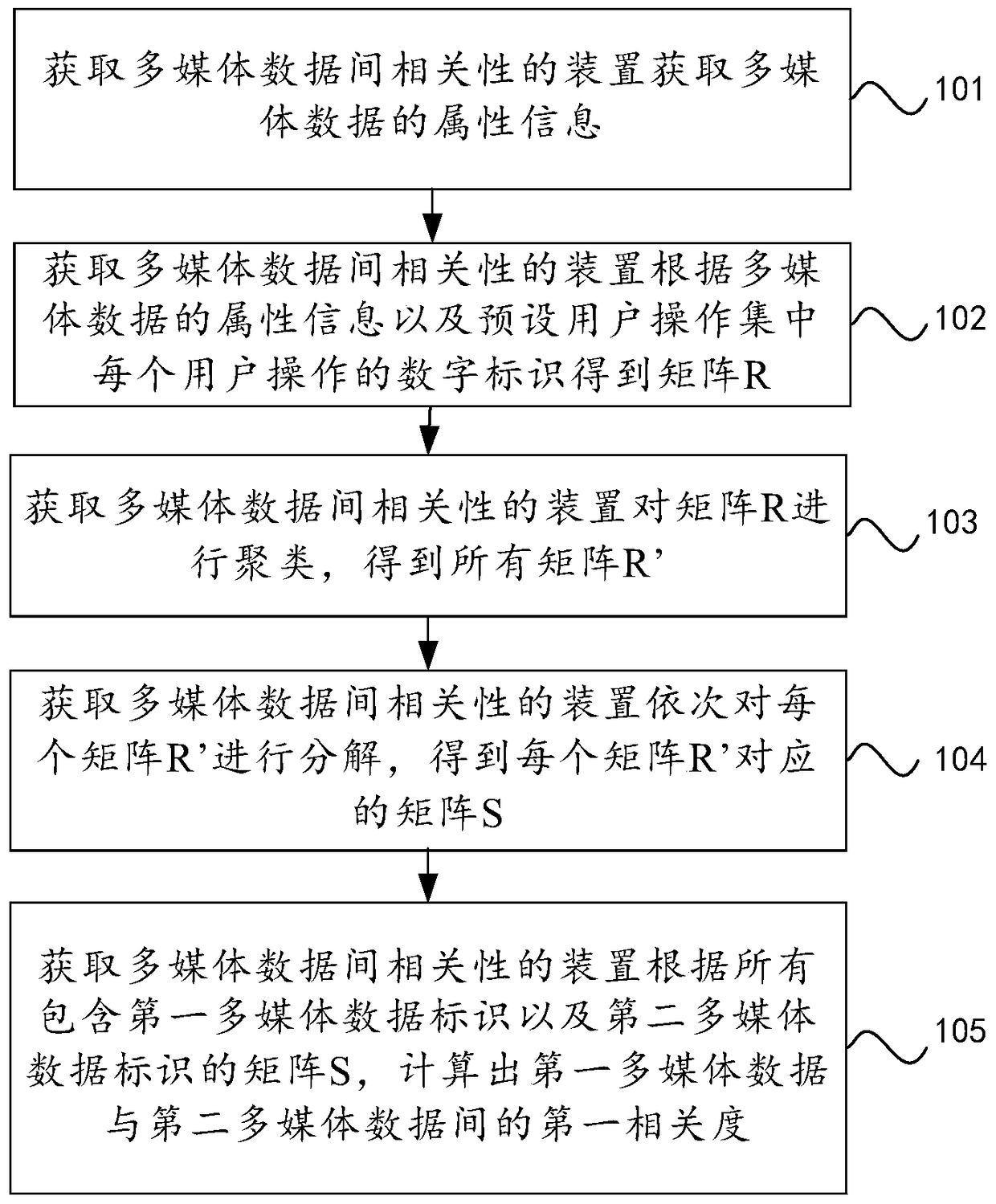
[0045] Exemplarily, when the accumulated value of all elements in the column of each multimedia type of matrix R in step 102 decreases from left to right and the accumulated value of all elements in the row of each user identifier in the matrix R is given by When descending in order from top to bottom, the device for obtaining the correlation between multimedia data in step 103 clusters the matrix R, and the specific clustering process of obtaining a matrix R' can be realized through the following two implementation methods:
[0046] The first implementation mode, according to the expansion mode of expanding the lower right corner of the matrix R first row and then column, any clustering process in step 103 includes the following steps:
[0047] 103a1. The device for obtaining the correlation between multimedia data obtains the sub-matrix R1 from the matrix R, and divides the sum of all elements in the matrix R1 by the number of elements in the matrix R1 to obtain the user oper...
Embodiment 2
[0067] Exemplarily, when the accumulated value of all elements in the column of each multimedia type of matrix R in step 102 increases sequentially from left to right and the accumulated value of all elements in the row of each user identifier in the matrix R is given by When increasing sequentially from top to bottom, the device for obtaining the correlation between multimedia data in step 103 clusters the matrix R, and the specific clustering process of obtaining a matrix R' can be realized in the following two ways:
[0068] The first implementation mode, according to the expansion mode of expanding the upper right corner of the matrix R first row and then column, any clustering process in step 103 includes the following steps:
[0069]103c1. The device for obtaining the correlation between multimedia data obtains the sub-matrix R1' from the matrix R, and divides the sum of all elements in the matrix R1' by the number of elements in the matrix R1' to obtain the user's respon...
Embodiment 3
[0079] Exemplarily, the matrix R shown in Table 2 is taken here as an example. When clustering the matrix R, if the clustering is performed according to the expansion method of expanding to the lower right corner of the matrix R first row and then column, then the clustering The process is as follows:
[0080] First, select any element from the matrix R as the initial element of the first clustering. For example, if U2B1 in the first row and first column is used as the initial point, the first clustering process of the matrix R As follows:
[0081] First, starting from U2B1, calculate the operation density value of a single U2 to B1 based on the user operation density formula, and the density value is 2 / (1)=2;
[0082] Second, since the clustering process is a process of clustering media data types belonging to the same category, the number of users and the number of multimedia data types must be greater than 1 when clustering starts, so add the second column directly at this...
PUM
 Login to View More
 Abstract
Description
Claims
Application Information
 Login to View More