
Platform door direction self-adaption control method and platform door control equipment
A technology for self-adaptive control and control equipment, which is applied in door/window fittings, buildings, operating mechanisms of wing sashes, etc., and can solve the problems of large engineering time and labor costs.
Patent Information
- Authority / Receiving Office
- CN · China
- Current Assignee / Owner
- Publication Date
- 2017-07-14
Smart Images
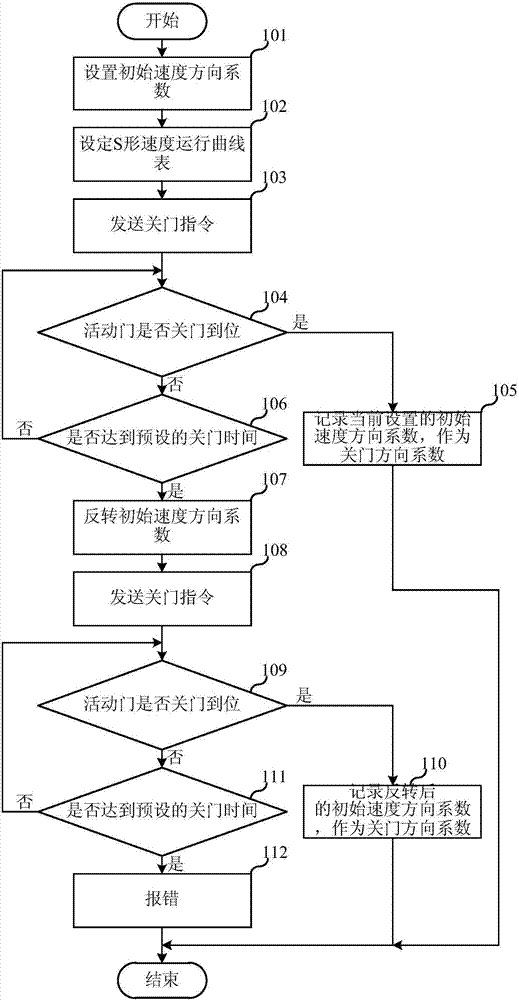
Figure 1 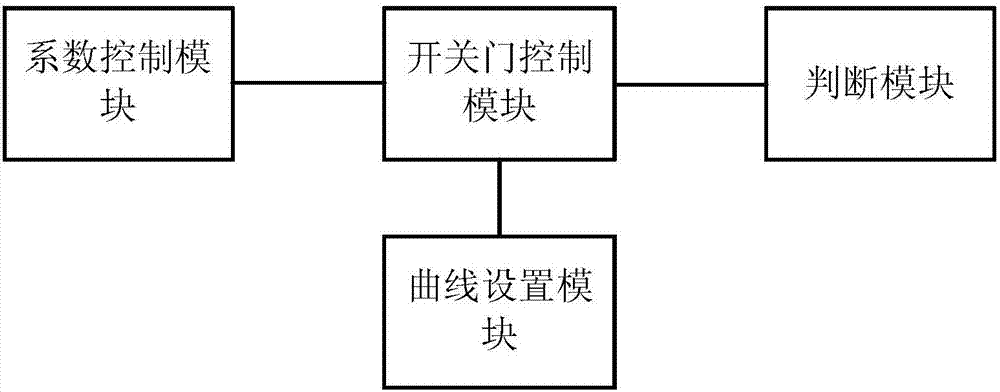
Figure 2
Abstract
Description
technical field
[0001] The invention relates to a platform door direction self-adaptive control technology. Background technique
[0002] The rail transit platform door is installed on the edge of the platform of rail transit stations such as subways and light rails to isolate the track from the platform waiting area. There are movable doors corresponding to the train doors, which can be opened and closed by multi-level control, and fixed doors for isolation and fixing.
[0003] The platform door isolates the platform waiting area from the track. After the train arrives at the station, passengers can directly enter and exit the train compartment through the movable door that is opened synchronously with the train door, providing security for waiting passengers.
[0004] In general, each group of platform doors corresponds to a group of motors, and the platform door motors are installed on both sides of the movable door body, and the movable door body is driven to move by th...
Examples
Embodiment Construction
[0032] In order to make the object, technical solution and advantages of the present invention clearer, various embodiments of the present invention will be described in detail below in conjunction with the accompanying drawings. However, those of ordinary skill in the art can understand that, in each implementation manner of the present invention, many technical details are provided for readers to better understand the present application. However, even without these technical details and various changes and modifications based on the following implementation modes, the technical solution claimed in each claim of the present application can be realized.
[0033] The first embodiment of the present invention relates to a method for adaptively controlling the direction of a platform door. The specific process is as figure 1 shown.
[0034] In step 101, an initial speed direction coefficient MOVDR is set as the door closing direction coefficient. Generally, the initial value o...