
Pedestrian re-recognition method based on depth-learning joint optimization
A pedestrian re-identification and deep learning technology, which is applied in the field of pedestrian re-identification based on deep learning joint optimization, can solve the problems of pedestrian re-identification performance degradation, feature discrimination degradation, and differences, achieving superior performance, enhancing detection capabilities, and solving problems. complex background effects
- Summary
- Abstract
- Description
- Claims
- Application Information
AI Technical Summary
Problems solved by technology
Method used
Image

Examples
Embodiment 1
[0063] A preferred embodiment of the present invention provides a pedestrian re-identification method based on deep learning joint optimization, the method steps are:
[0064] Step 1. Collect and screen a balanced number of positive and negative pedestrian sample pairs to construct a data set. Specifically:
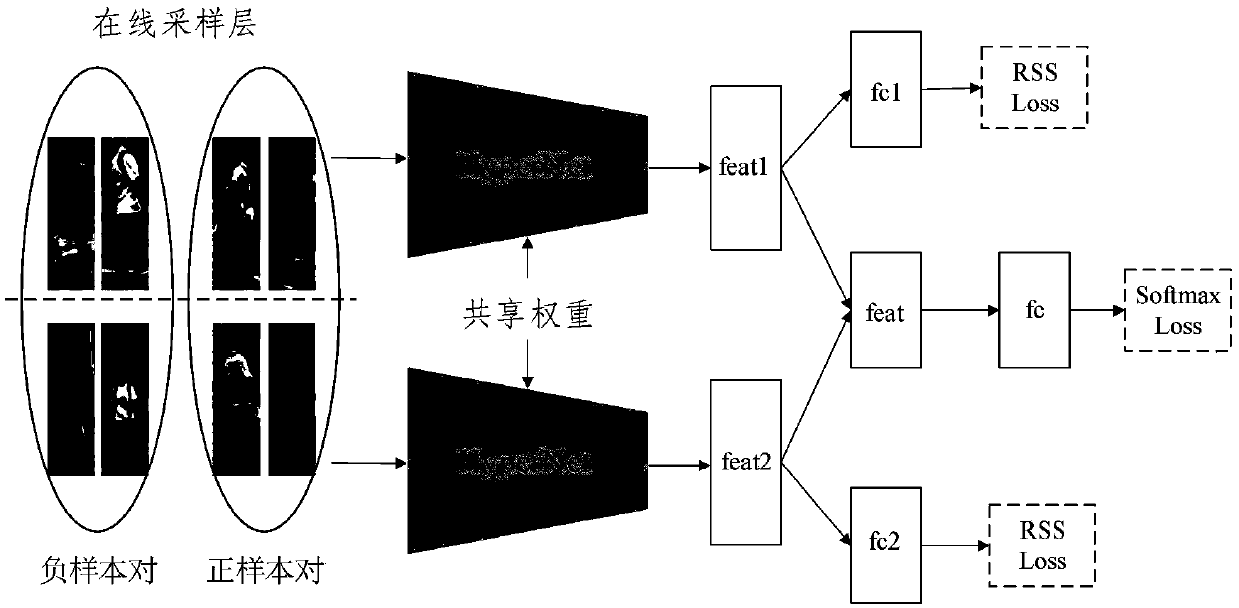
[0065] Step 1.1, randomly select the input pedestrian sample pictures through the online sampling layer;
[0066] Step 1.2. Filter the corresponding labels of positive / negative sample pairs in the pedestrian sample pictures, and obtain a data set composed of positive and negative pedestrian sample pairs with a balanced number.
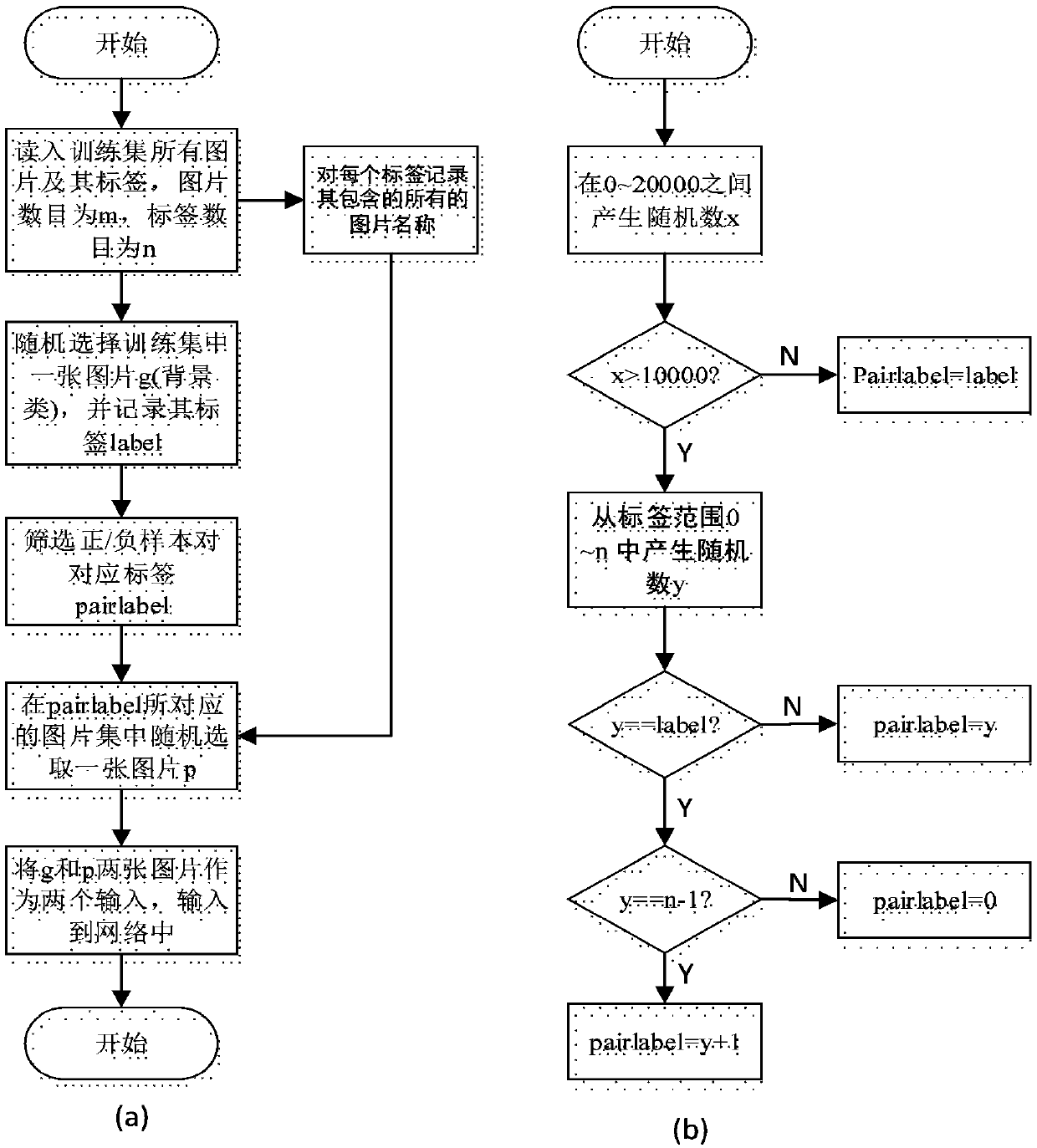
[0067] figure 1It shows the process of collecting sample pairs in this method, including the flow chart of selecting the input picture of the online sampling layer and the flow chart of screening positive / negative sample pairs corresponding to the label pairlabel. The datasets used for network structure training include Market-1501 and CUHK-SYS...
PUM
 Login to View More
 Abstract
Description
Claims
Application Information
 Login to View More