
A deep learning clustering method for noise images
A technology of deep learning and clustering method, which is applied in the field of deep learning clustering for noisy images, which can solve the problem of modeling clustering effect without noise data, and achieves to improve the clustering effect, increase the distance between classes, and improve the accuracy. Effect
- Summary
- Abstract
- Description
- Claims
- Application Information
AI Technical Summary
Problems solved by technology
Method used
Image

Examples
Embodiment Construction
[0030] The present invention will be further described in detail below in conjunction with the embodiments and the accompanying drawings, but the embodiments of the present invention are not limited thereto.
[0031] Example:
[0032] The present embodiment provides a kind of deep learning clustering method for noise image, described method comprises the following steps:
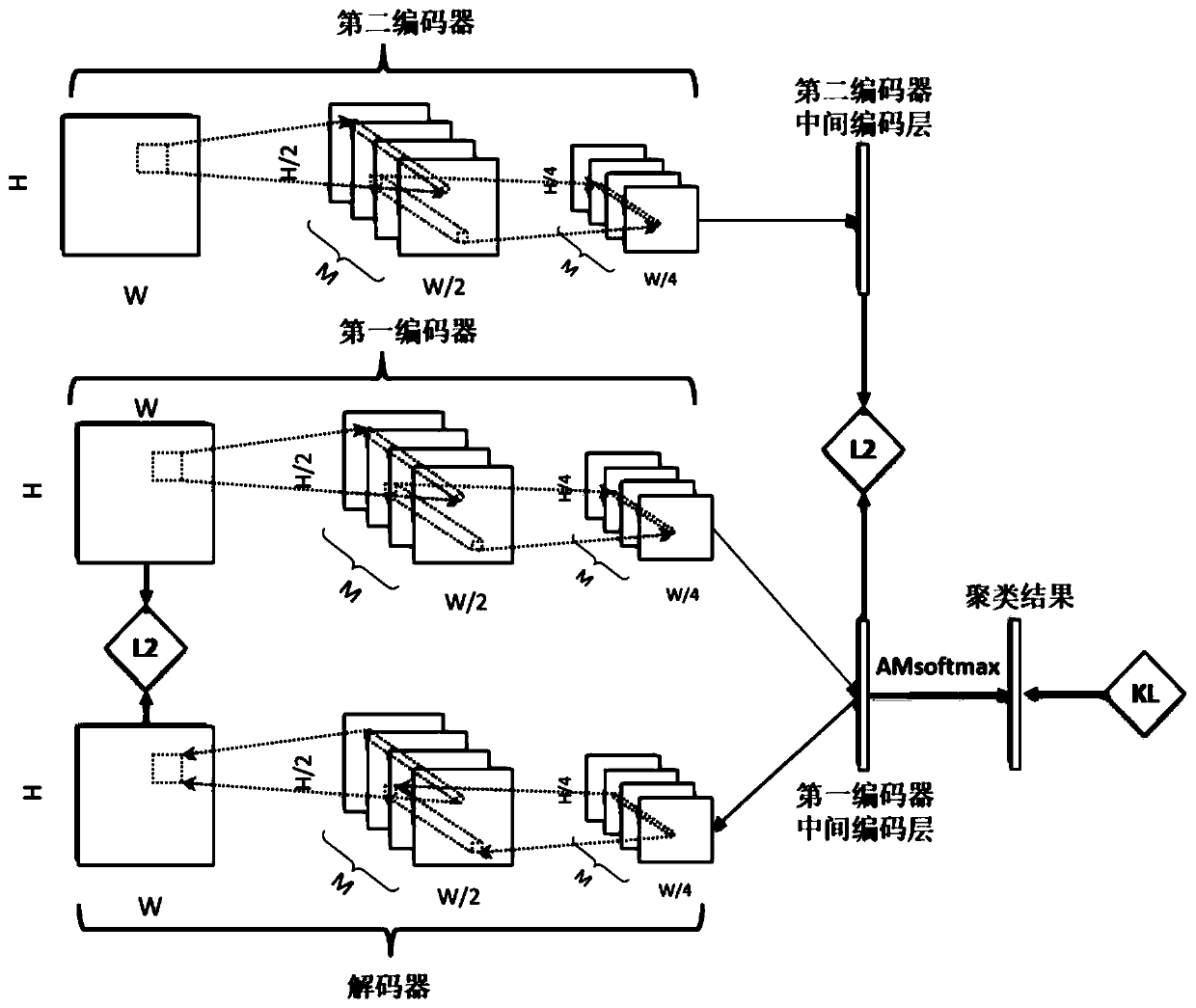
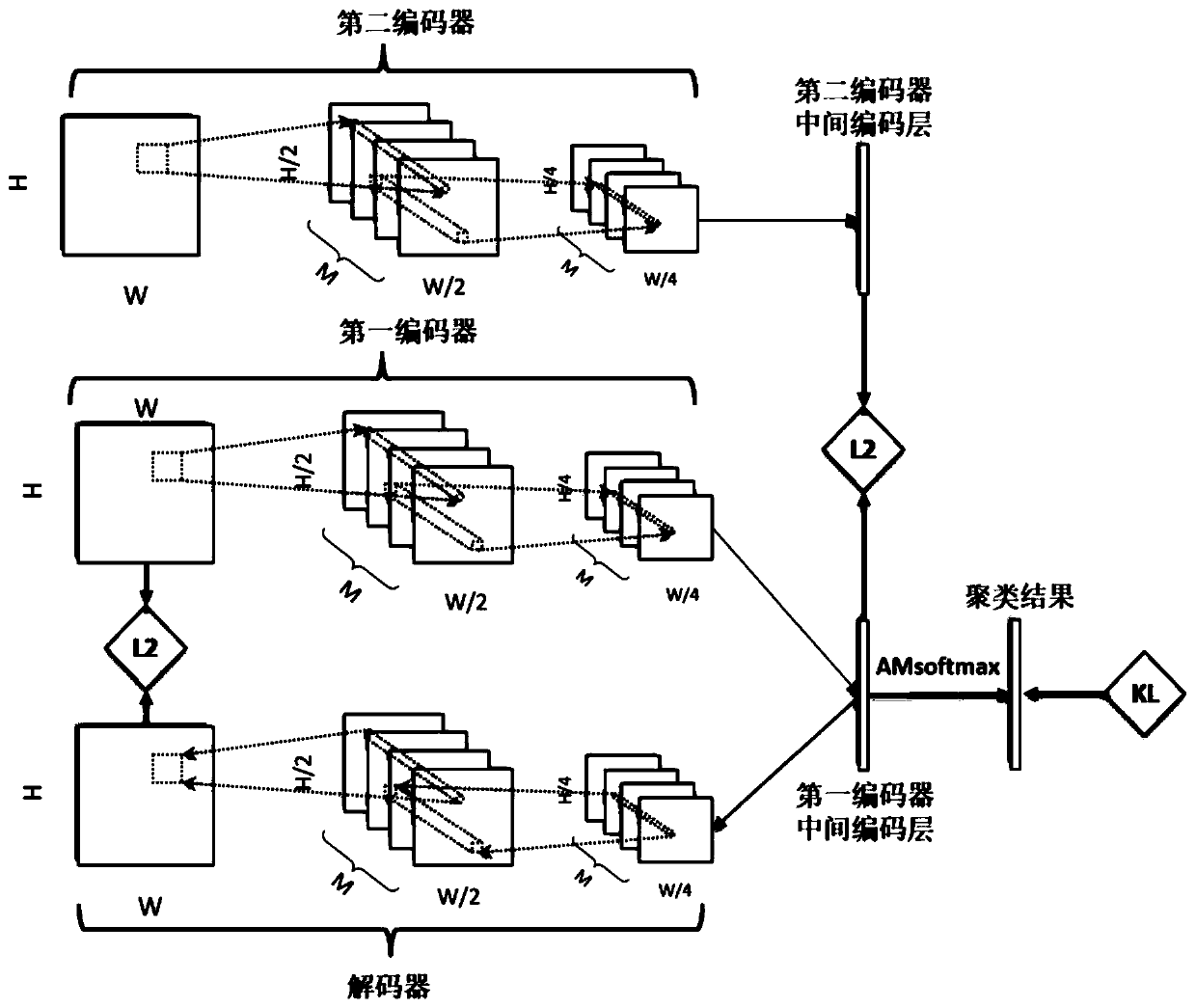
[0033] Step S1: Construct a deep learning clustering model, the deep learning clustering model includes a convolutional autoencoder network and a second encoder, and the convolutional autoencoder network includes a first encoder and a decoder; using noise-containing The image data is used as the input of the convolutional autoencoder network;
[0034] Step S2: Use an AMsoftmax layer (Additive Margin Softmax, a normalized exponential function that increases the boundary) as the clusterer of the deep learning clustering model, and generate it according to the feature vector generated by the middle coding laye...
PUM
 Login to View More
 Abstract
Description
Claims
Application Information
 Login to View More