
Handle free claw clip
a claw clip and claw technology, applied in the field of claw clips, can solve the problems of not being able to grab enough hair, not being able to open the jaw very wide, and the spring, hinge and lever members are not very aesthetically appealing
- Summary
- Abstract
- Description
- Claims
- Application Information
AI Technical Summary
Benefits of technology
Problems solved by technology
Method used
Image

Examples
Embodiment Construction
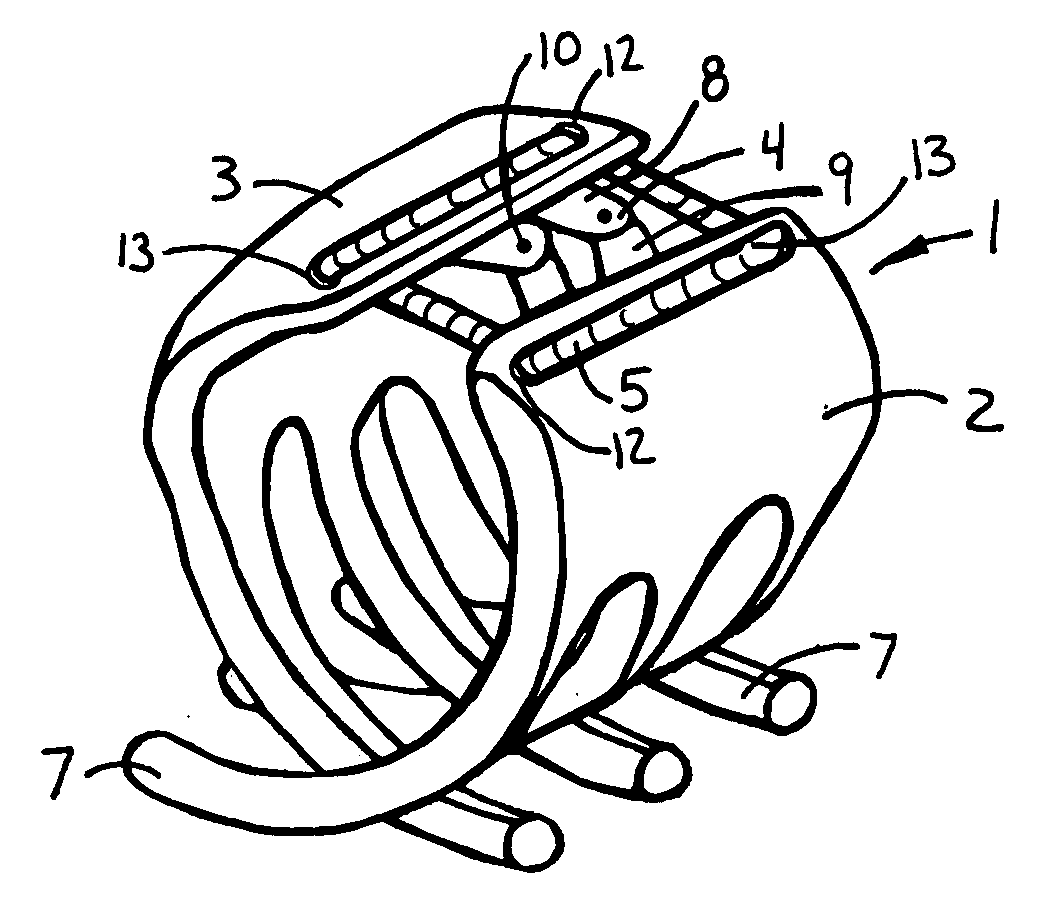
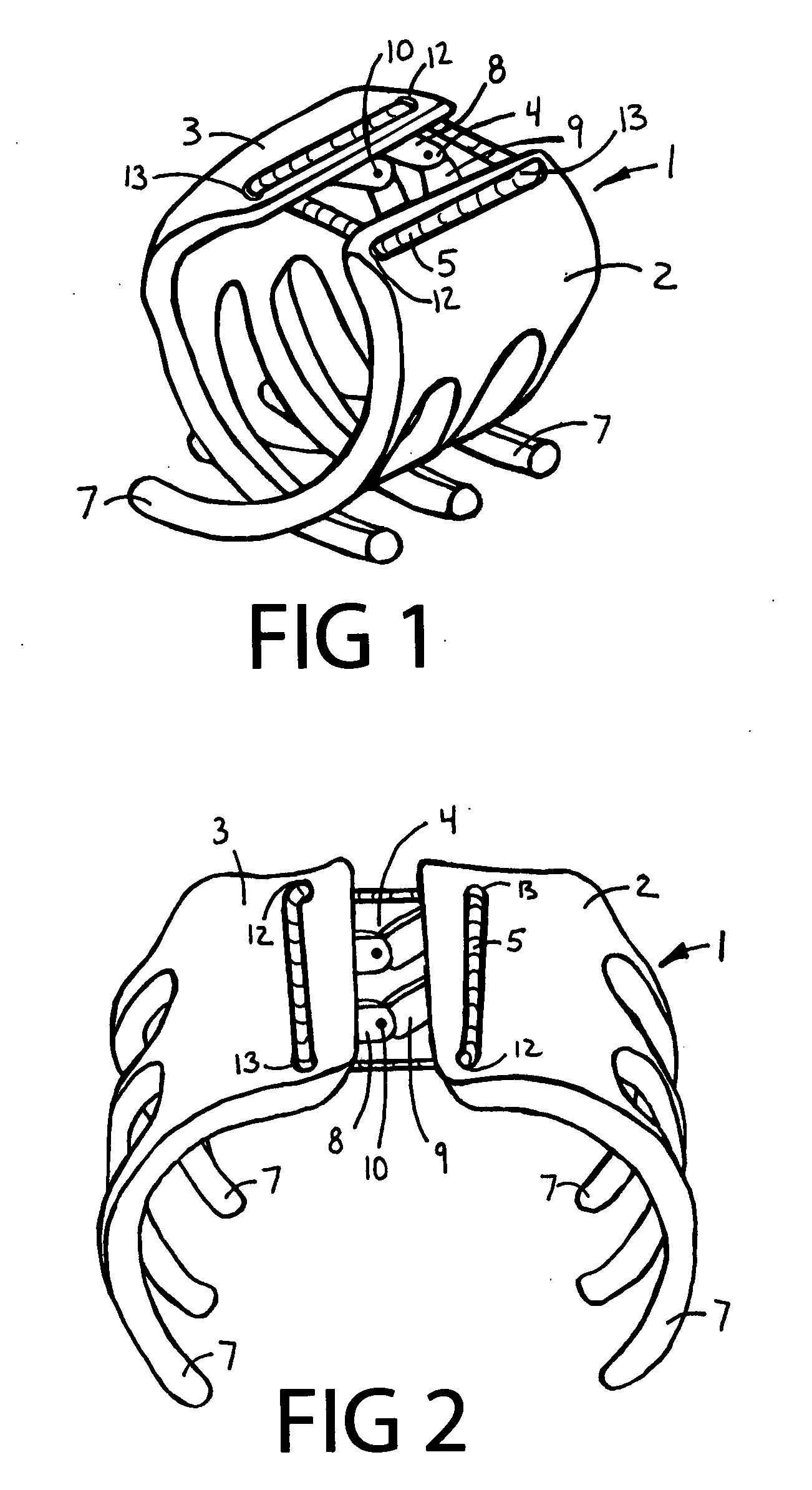
[0026]Referring to FIGS. 1 and 2 of the accompanying drawings, there is illustrated the hair clip embodying the present invention. The clip, generally designated by reference numeral 1 has two jaws 2 and 3 bent in a direction away from the clip pivot 4 in a concave since. Each jaw 1 and 2 has tines 7, and lugs 8 and 9. The lugs 8 and 9 are aligned with a pin 10 placed through holes 11 and 12 in lugs 8 and 9, which create the pivot 4. Wherein the first jaw 2 is secured to the second jaw 3. Preferably the jaws 2 and 3 are made of plastic. An elastic band 5 is attached from the inside of the first jaw 2 to the inside of the second jaw 3. In the preferred embodiment the band 5 is woven through holes 12 and 13 and tied together.
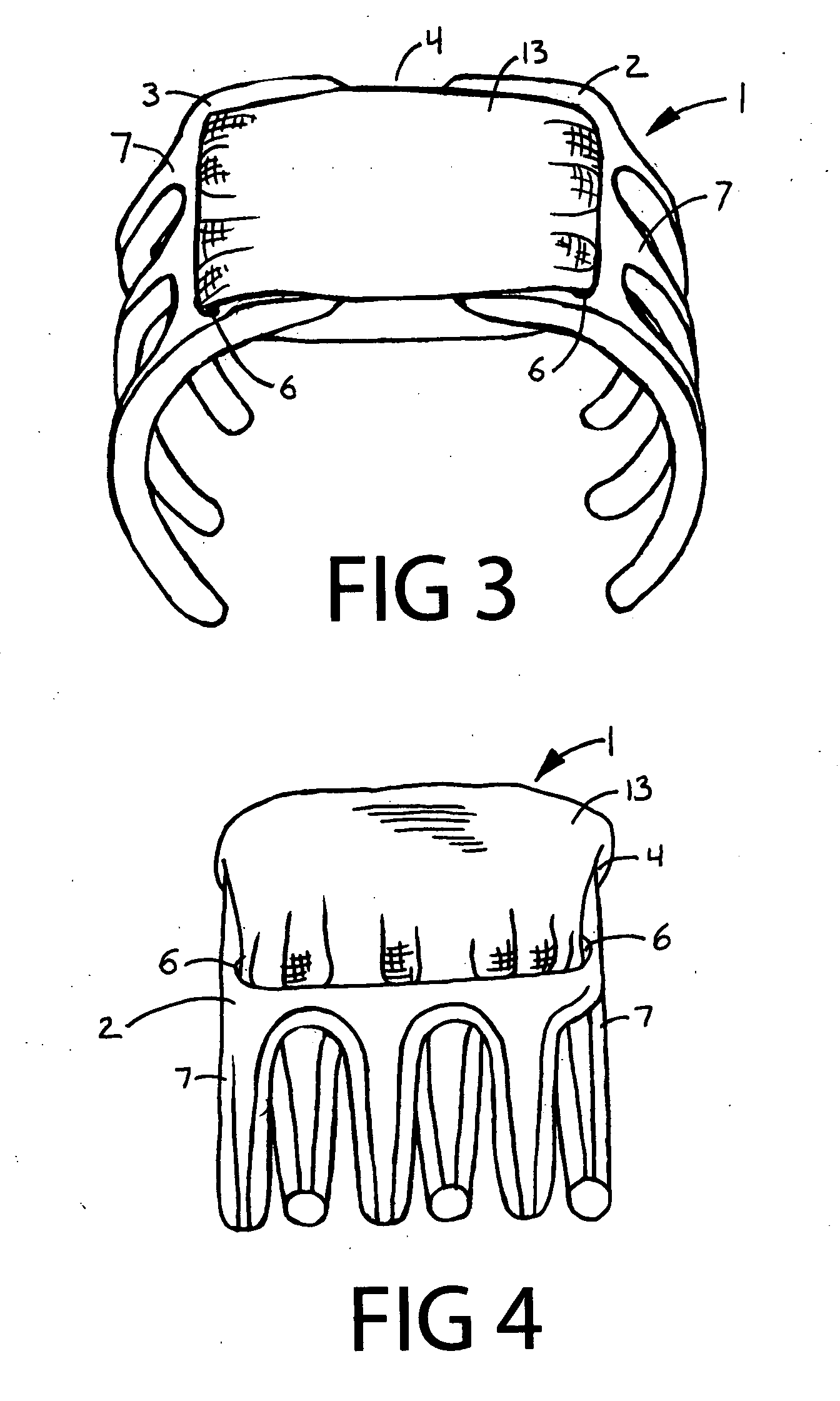
[0027]FIGS. 3 and 4 shows that each jaw 2 and 3 has an elongated grove 6 near the tines 7. Each grove 6 has a length of looped material 13 attached there through.
[0028]FIGS. 5 and 6 shows the clip 1′ fed through a tube of material 14 and secured with only the tine...
PUM
 Login to View More
 Abstract
Description
Claims
Application Information
 Login to View More