
Use of PDE III inhibitors for the reduction of heart size in mammals suffering from heart failure
a technology of phosphodiesterase and inhibitors, which is applied in the direction of biocide, plant growth regulators, dipeptide ingredients, etc., can solve the problems of increased cardiac size, cardiac remodelling, increased arrhythmias and sudden death, etc., and achieve the effect of reducing heart size and reducing heart siz
- Summary
- Abstract
- Description
- Claims
- Application Information
AI Technical Summary
Benefits of technology
Problems solved by technology
Method used
Image


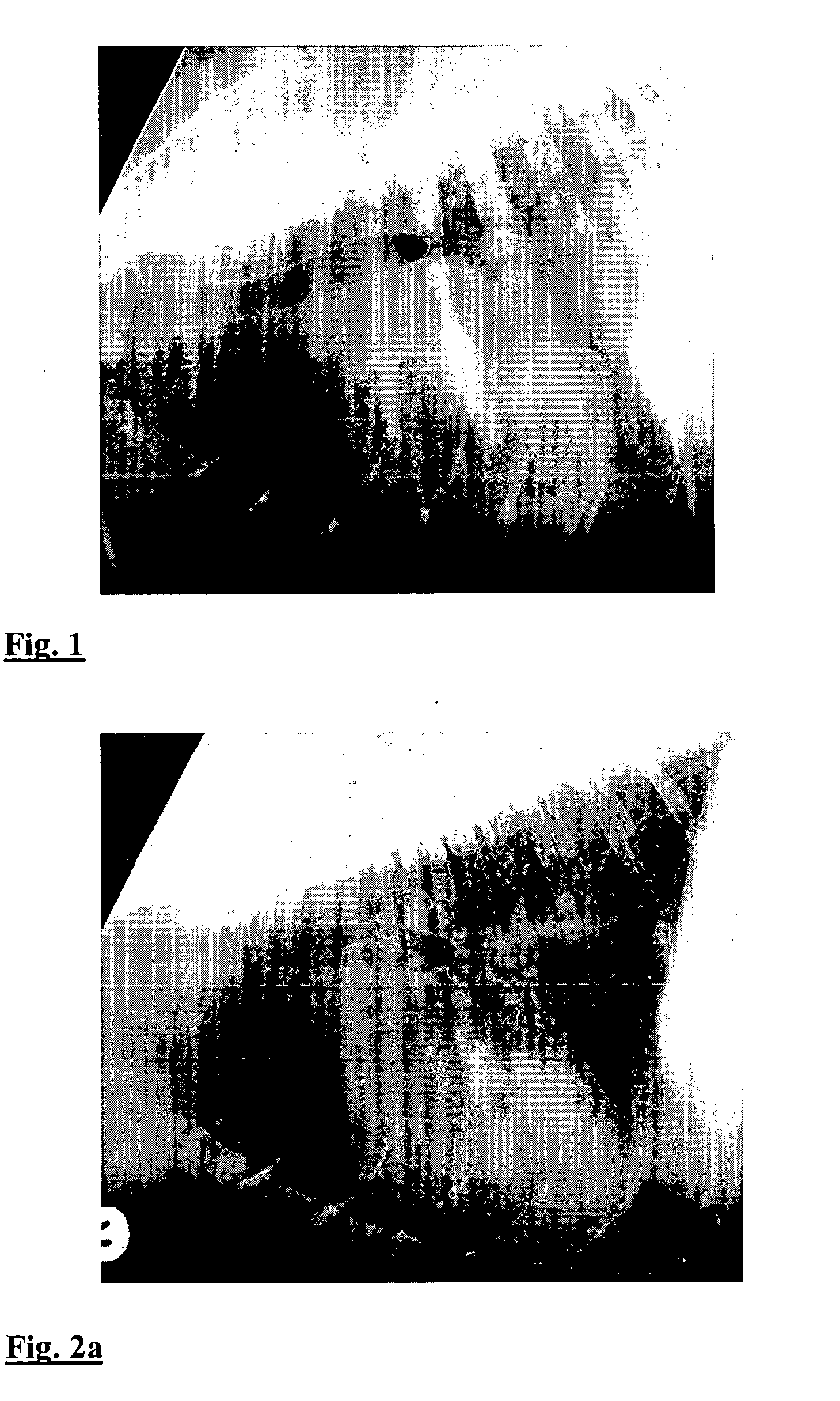
Examples
example 1
[0063]A double-blind study has been carried out in order to evaluate the long-term efficacy and tolerance to pimobendan and its effect on long-term survival in cocker spaniels and Dobermanns with DCM.
[0064]Materials and Methods: Cocker spaniels (n=10) and Dobermanns (n=10) presenting to the Cardiopulmonary Service of the R(D)SVS with DCM were recruited for the study with owners' consent. After stabilisation on conventional therapy with digoxin, enalapril, and frusemide, dogs received in addition either pimobendan (Vetmedin®) or placebo using a double-blind study design.
[0065]Results: The mean survival time for cockers on pimobendan was 612 days (range 61-1428) compared to 589 (range 51-1127) for the placebo group. The difference was not statistically significant (Wilcoxon-Mann-Whitney-U test, p>0.05).
[0066]The mean survival time for Dobermanns on pimobendan was 280 days (range 42-369) compared to 72 days (range 13-196) for the placebo group. The difference was statistically signific...
example 2
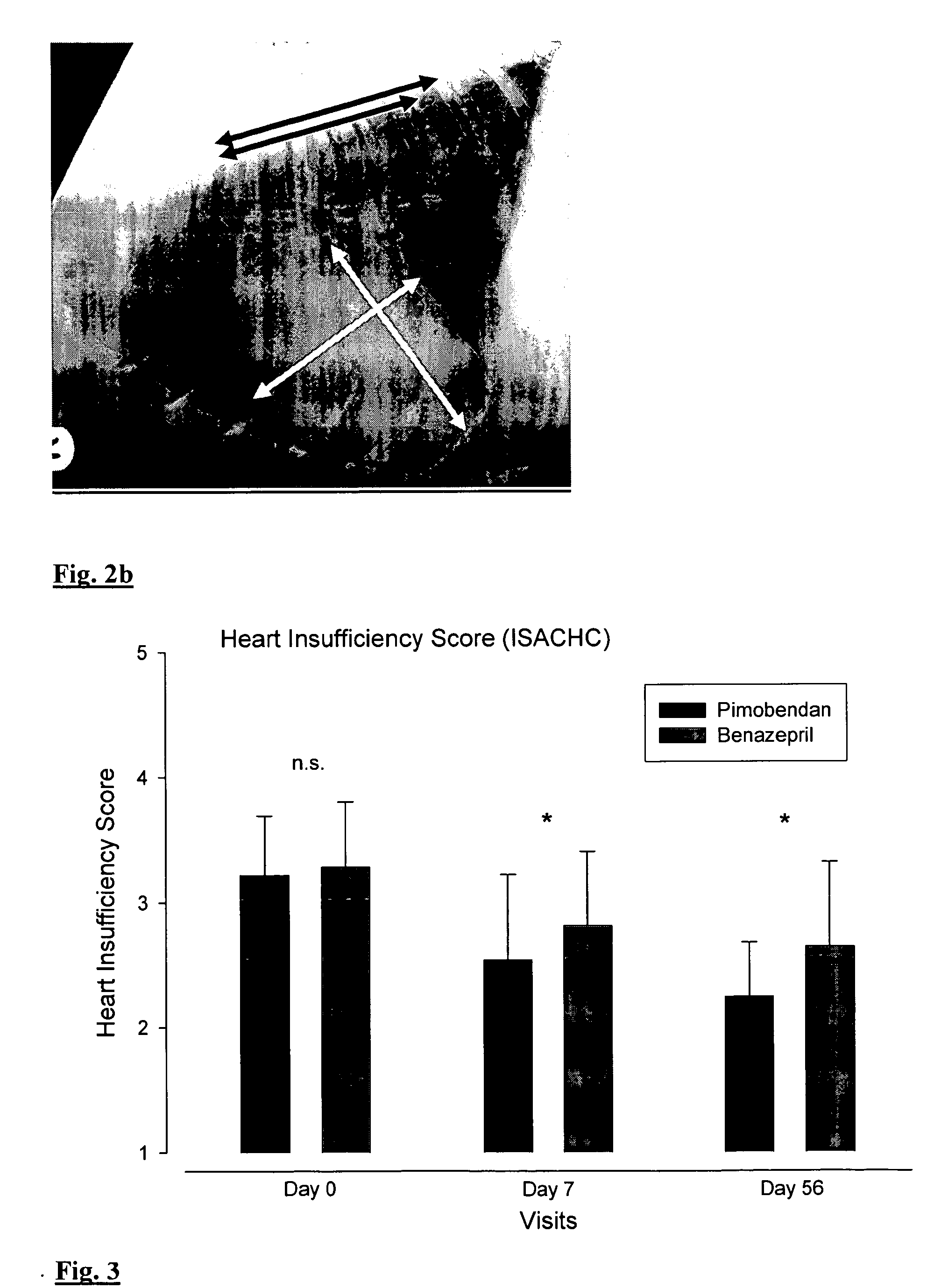
[0070]A double-blind randomised positive controlled multi-centre field trial has been carried out in order to evaluate the clinical efficacy of pimobendan treatment at a daily dose of 0.4-0.6 mg / kg in comparison to an angiotensin-converting-enzyme (ACE) inhibitor treatment with benazepril hydrochloride at a daily dose of approximately 0.25-0.5 mg / kg body weight. Both treatments could be combined with furosemide (up to 8 mg / kg per day) or anti-arrhythmic drugs as appropriate. The study was conducted at 11 centres in Europe by experienced veterinary cardiologists under the rules of Good Clinical Practice (GCP). Mandatory minimum duration of treatment was 56 days for each patient. Dogs were examined on Day 0 prior to first treatment and on Day 7 and 56 after initiation of therapy. In order to obtain long-term survival data, the investigator had the option to continue therapy after Day 56. In the optional study period treatment code for the animal was decoded, as it was not allowed to a...
PUM
| Property | Measurement | Unit |
|---|---|---|
| Time | aaaaa | aaaaa |
| Dimensionless property | aaaaa | aaaaa |
| Dimensionless property | aaaaa | aaaaa |
Abstract
Description
Claims
Application Information
 Login to View More