
Snap together split sprocket
a split sprocket and sprocket technology, applied in the field of split sprockets, can solve the problems of substantial increase in costs, substantial decrease in productivity, and cumbersome disassembly or disassembly of this type of split sprocket, and achieve the effects of reducing the time required to install and remove the sprocket from the shaft, reducing costs, and less downtim
- Summary
- Abstract
- Description
- Claims
- Application Information
AI Technical Summary
Benefits of technology
Problems solved by technology
Method used
Image

Examples
Embodiment Construction
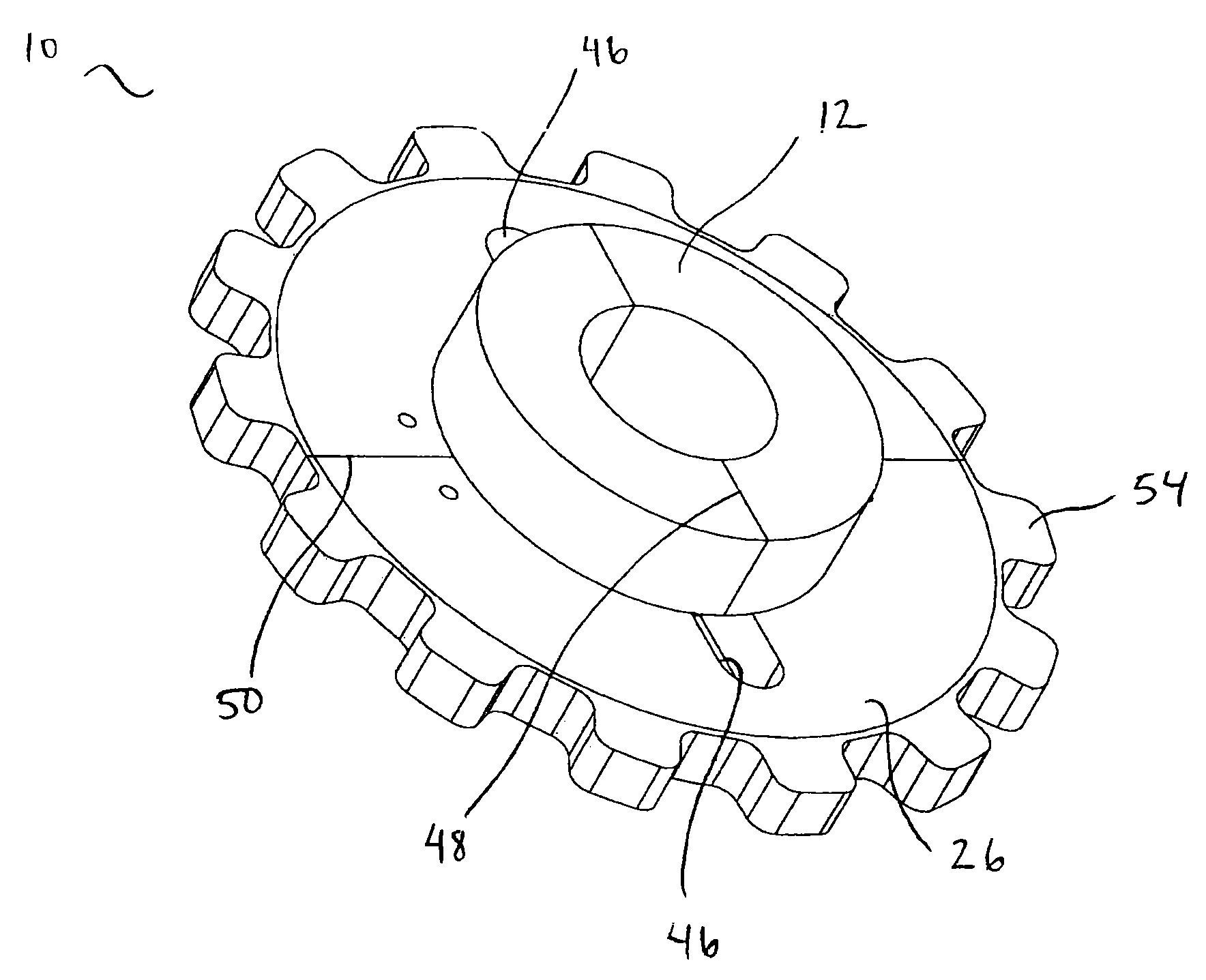
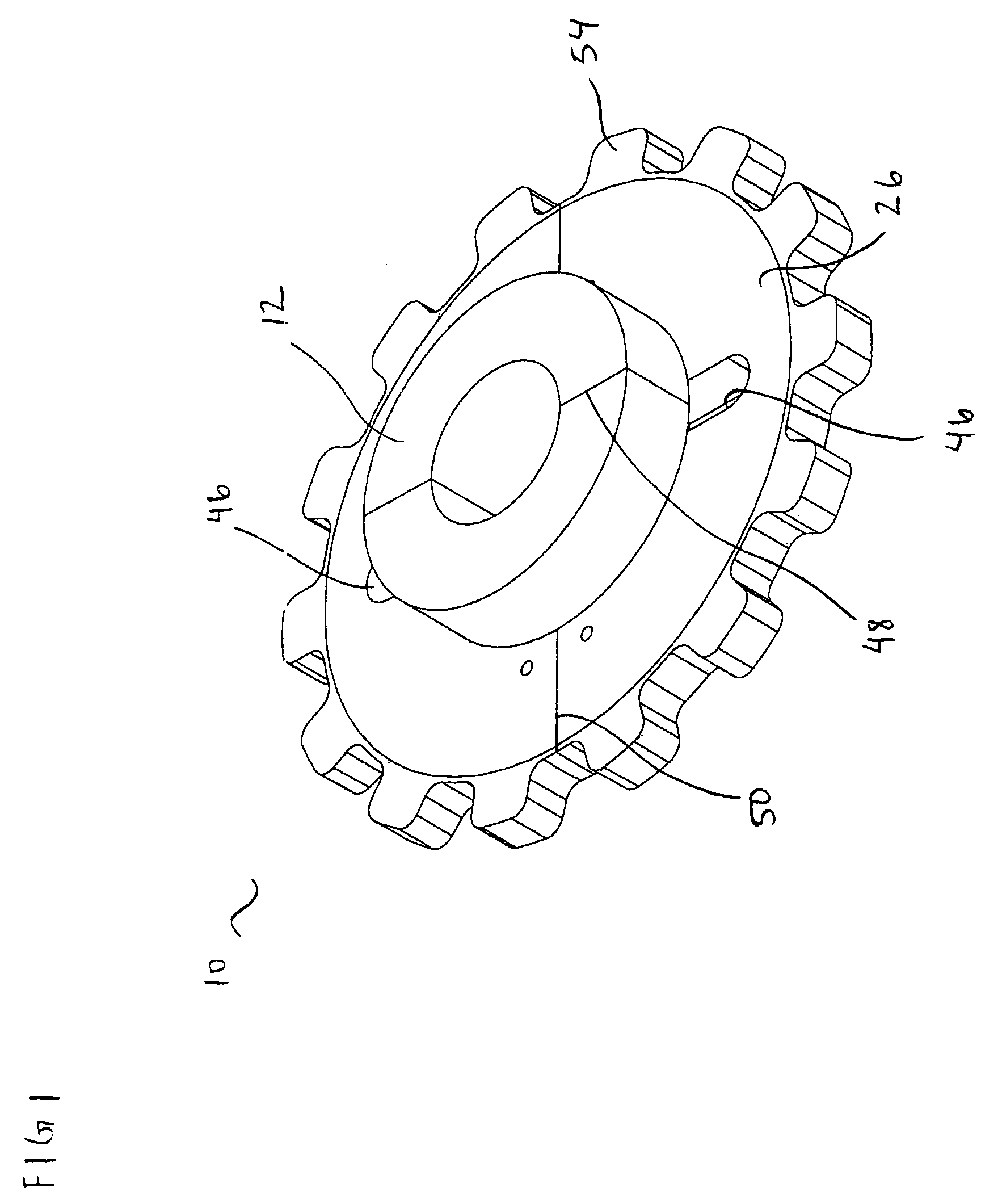
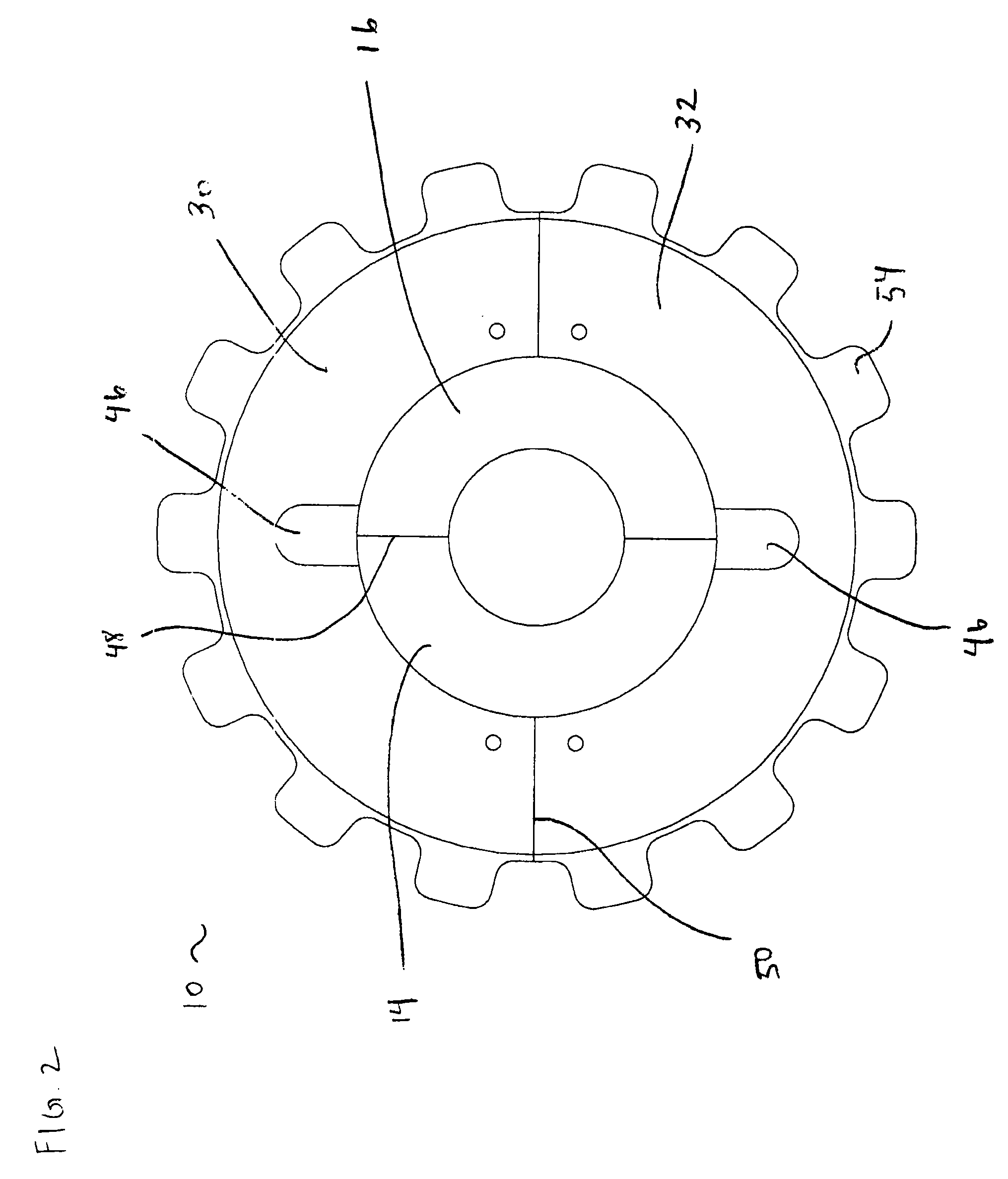
[0023]Sprockets are manufactured in various shapes and sizes and for a variety of purposes. Sprockets include drive sprockets, which are disposed on a driven shaft for transferring energy to a perforated material such as a chain or track; idler sprockets, which do not impart additional energy to the perforated material but are used for purposes such as maintaining tension in the perforated material; and toothless sprockets, which are sprockets that do not use teeth to interface with the perforated material. The conventional “split sprocket” is a type of sprocket that typically includes four components, a two-part hub and a two-part plate that interfaces with the perforated material (“material-interfacing plate”), all of which is held together with nuts and bolts. Advantageously, the split sprocket can be clamped to a shaft at any point along the shaft; disadvantageously, the conventional split sprocket is typically held together using fasteners or welding. Consequently, assembly and...
PUM
 Login to View More
 Abstract
Description
Claims
Application Information
 Login to View More