Metadata management method for nas global namespace design

a technology of global namespace and management method, which is applied in the field of metadata management method for nas global namespace design, can solve the problems of system administrators having to spend a great deal of time reconfiguring the system, system downtime and user interruption, and difficult management of storage and access to information stored therein

US20110231524A1Inactive Publication Date: 2011-09-22HITACHI LTD
9 Cites 48 Cited by

Patent Information

Authority / Receiving Office
US · United States
Current Assignee / Owner
Publication Date
2011-09-22
Estimated Expiration
Not applicable · inactive patent

Smart Images

  • Figure 1
    Figure 1
  • Figure 2
    Figure 2
  • Figure 3
    Figure 3
Patent Text Reader

Abstract

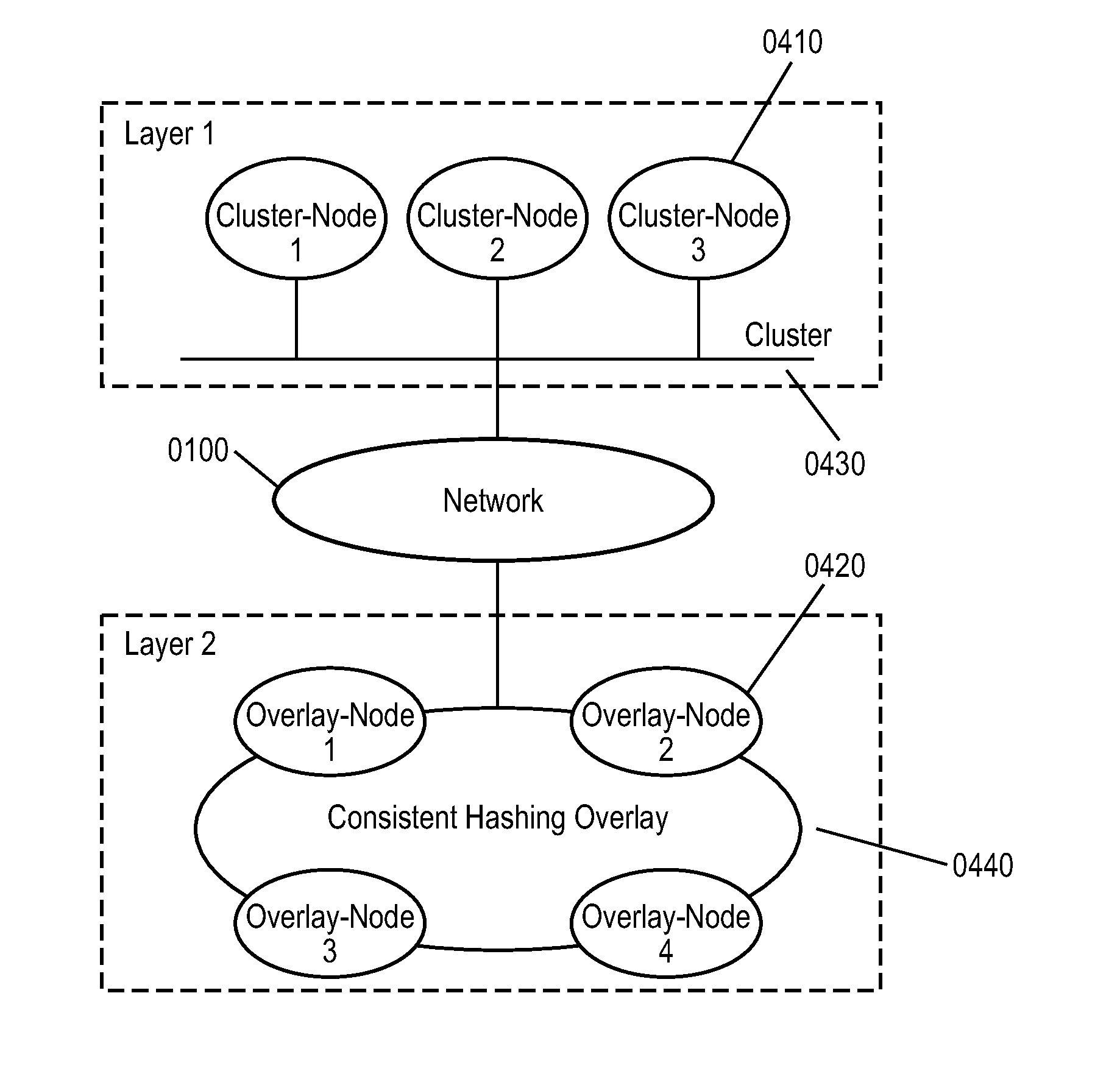
A global namespace (GNS) is constructed across heterogeneous network-attached storage (NAS) devices by organizing metadata servers into a cluster layer having cluster nodes and a consistent hashing overlay layer having overlay nodes. The global namespace is distributed based on workload at the cluster and overlay nodes, and a portion of the GNS namespace may be migrated from one layer to the other. Cluster nodes may be added to the cluster layer, overlay nodes may be added to the consistent hashing overlay layer. Further, a cluster node may become an overlay node or an overlay node may become a cluster node. To access the global namespace, a request for namespace metadata managed by a cluster node is serviced by the cluster node, but if the requested namespace metadata have been migrated to the consistent hashing overlay layer, the cluster node will forward the request to the responsible overlay node for servicing.
Need to check novelty before this filing date? Find Prior Art

Description

BACKGROUND OF THE INVENTION

[0001] The rapid growth of file-based information, and today's fast expanding and diverse business environment, have led to isolated storage islands within organizations. Various NAS (Network-Attached Storage) devices coexist with different performances and different capacities, and even from different vendors, making it very difficult to manage the storage and access the information stored therein. On one hand, end users need to know where files are located and to map / mount the share folders in order to access files from different NAS devices. On the other hand, system administrators need to spend a great deal of time reconfiguring the system, optimizing the storage utilization, and / or migrating the data, due to various needs. These are complicated tasks and may cause system downtime and user interruption, which are very costly.

[0002] A Global Namespace (GNS) that can provide a single access point with location transparent file service to end users and allo...

Examples

Embodiment Construction

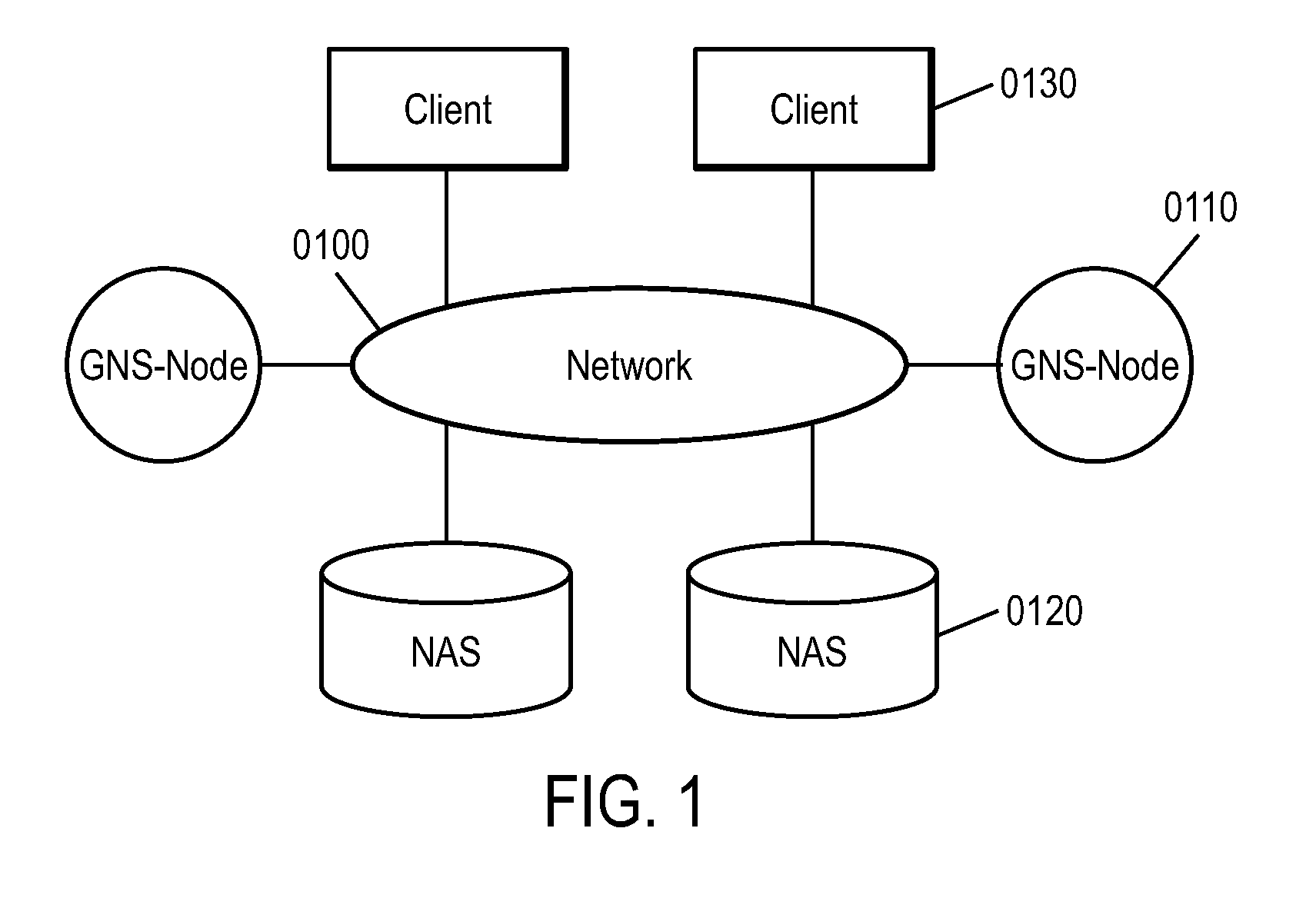
[0059]FIG. 1 is an exemplary diagram of an overall system. The system consists of multiple GNS-Nodes 0110, NAS devices 0120, and Clients 0130 connected to a Network 0100 (such as a local / wide area network). GNS-Nodes 0110 are dedicated metadata servers in this example, and manage the GNS namespace. NAS devices 0120 are heterogeneous NAS devices where user files are stored. Clients 0130 are devices (such as PCs) that utilize the Global Namespace service to access data in the system.

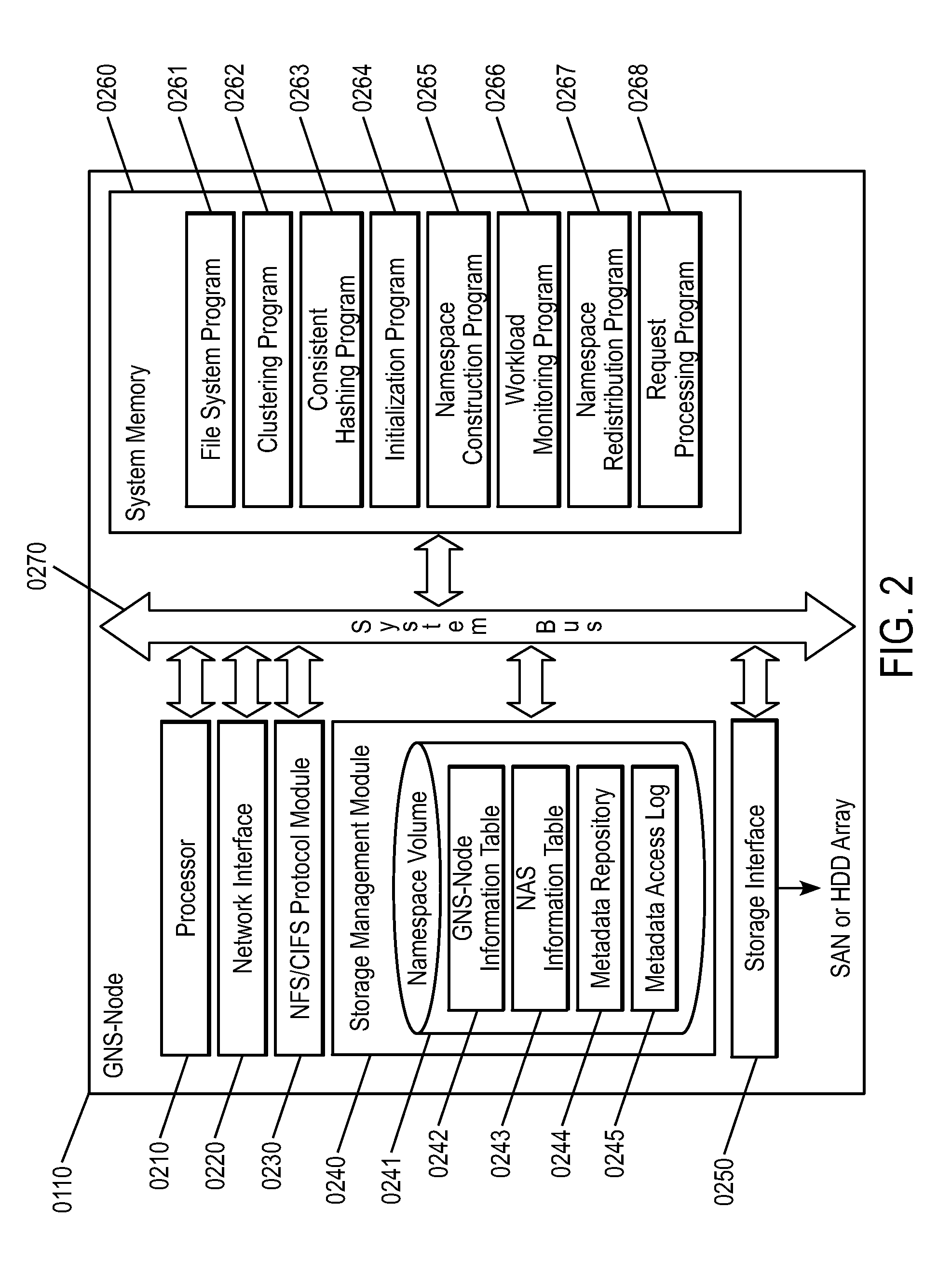
[0060]FIG. 2 is a block diagram illustrating components within a GNS-Node 0110. A GNS-Node may consist of, but is not limited to, a processor 0210, a network interface 0220, a NFS / CIFS (Network File System / Common Internet File System) protocol module 0230, a storage management module 0240, a storage interface 0250, a system memory 0260, and a system bus 0270. The system memory 0260 further includes a file system program 0261, a clustering program 0262, a consistent hashing program 0263, an initialization p...